Connection is not something children can take for granted. For some families, it has been interrupted — by illness, separation, early trauma, changes in care, or circumstances that no one chose. And when the thread between a parent and child has been strained or broken, both the child and the caregiver feel it.
This post explores what attachment is, what disrupted attachment looks like, and how a specialised approach called Parent–Child Attachment Play can help families rebuild the connection they both need and deserve.
What Is Attachment, and Why Does It Matter?
Attachment theory was developed by British psychiatrist and psychoanalyst John Bowlby in the 1950s and 1960s. His core insight was simple but revolutionary: human beings are biologically programmed to seek closeness to a protective caregiver, especially when frightened, hurt, or unwell (Bowlby, 1969).
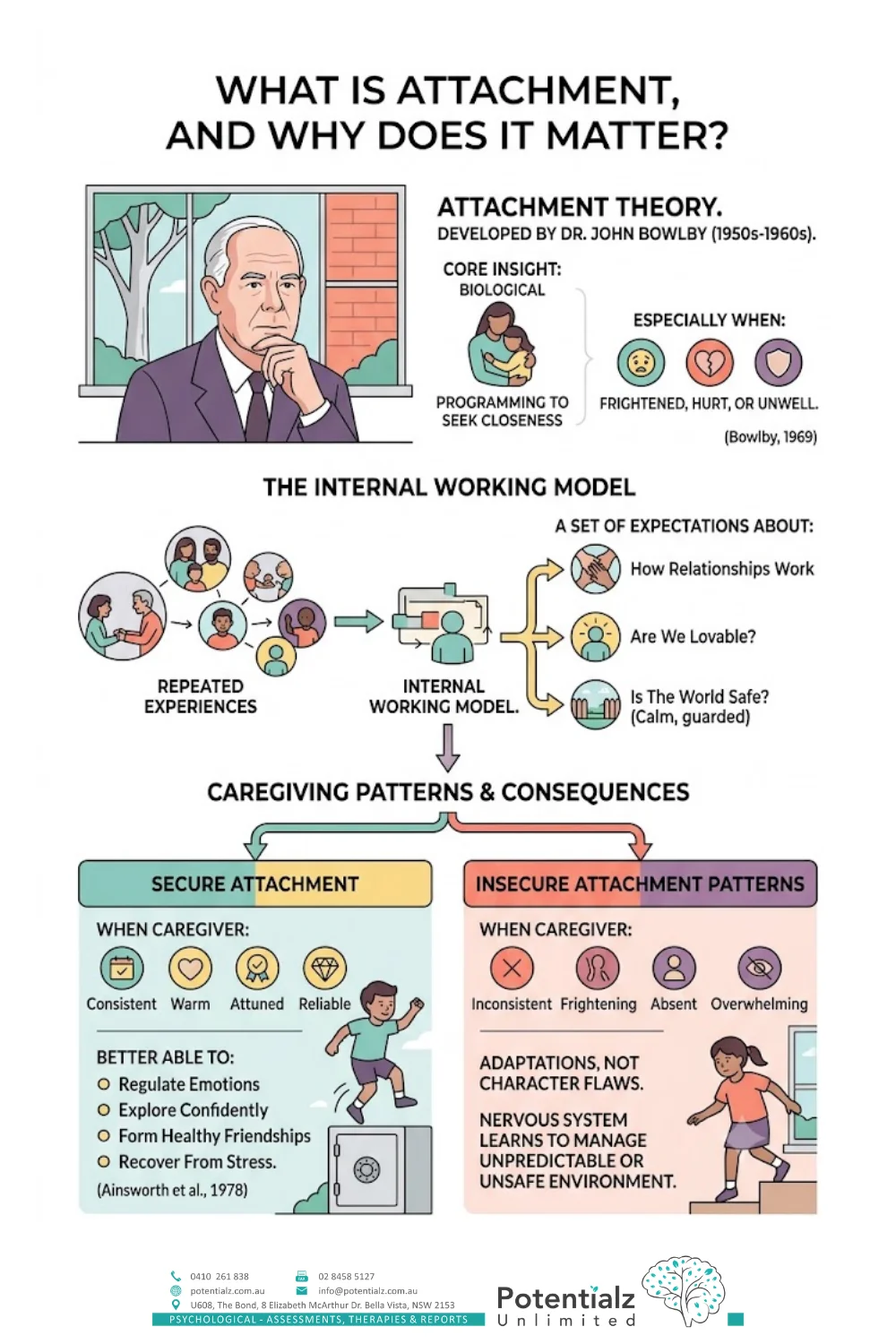
This drive for closeness is not just about survival, though it starts there. Over time, the repeated experiences a child has with their primary caregiver become an internal working model — a set of expectations about how relationships work, whether they themselves are lovable, and whether the world is safe.
When a caregiver consistently responds to a child’s needs with warmth, attunement, and reliability, the child develops what researchers call secure attachment. Securely attached children are better able to regulate their emotions, explore the world with confidence, form healthy friendships, and recover from stress (Ainsworth et al., 1978).
When caregiving has been inconsistent, frightening, absent, or overwhelming, children develop what are called insecure attachment patterns. These are not character flaws — they are adaptations. The child’s nervous system has learned to manage an unpredictable or unsafe caregiving environment as best it can.
What Disrupted Attachment Looks Like in Children
Insecure attachment presents in different ways depending on the child and the type of disruption they have experienced. Researchers typically describe three main insecure patterns, alongside a fourth pattern associated with more significant early trauma.
Anxious-ambivalent (or anxious-resistant) attachment: Children in this pattern cling desperately to their caregiver, are extremely distressed by separation, and are often inconsolable even when the caregiver returns. They cannot quite trust that the caregiver will stay. You might hear parents describe these children as “velcro kids” — they cannot let go, and they seem perpetually anxious about being abandoned.
Avoidant attachment: These children appear independent to the point of seeming unaffected by separation. They may resist cuddles, rarely seek comfort when hurt or upset, and seem emotionally self-sufficient even at young ages. This can be easy for adults to misread as confidence. In reality, research suggests these children are just as physiologically stressed as anxious children — they have simply learned that showing need does not reliably bring comfort (Spangler & Grossmann, 1993).
Disorganised attachment: Associated with caregiving that has been frightening — whether because of abuse, domestic violence, parental mental illness, or the caregiver’s own unresolved trauma — disorganised attachment is the most complex pattern. These children often show contradictory behaviours: they may approach then suddenly freeze, hit out, or collapse. Their caregiver is simultaneously a source of comfort and a source of fear, which creates an unresolvable biological dilemma.
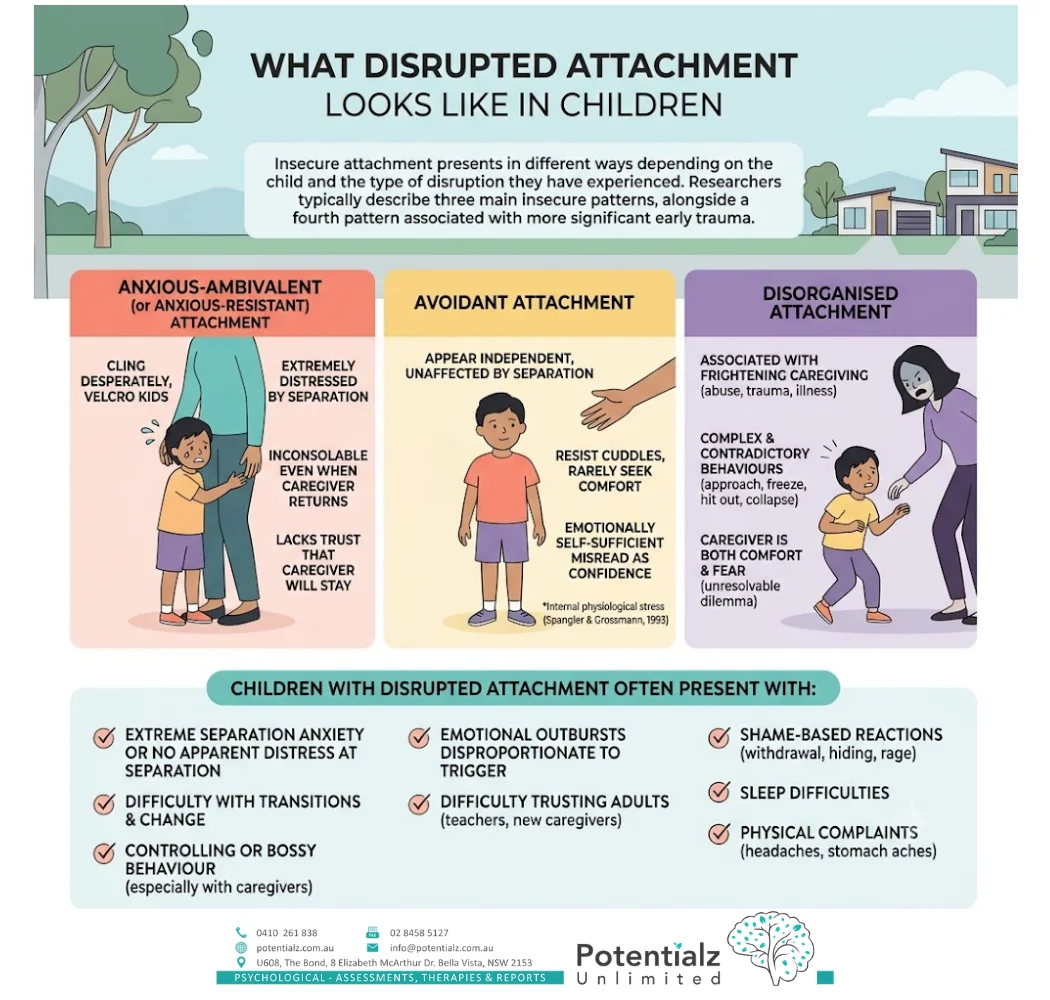
Children with disrupted attachment often present with:
- Extreme separation anxiety or, conversely, no apparent distress at separation
- Difficulty with transitions and change
- Controlling or bossy behaviour (especially with caregivers)
- Emotional outbursts that seem disproportionate to the trigger
- Difficulty trusting adults, including teachers and new caregivers
- Shame-based reactions — withdrawal, hiding, rage at perceived criticism
- Sleep difficulties
- Physical complaints (headaches, stomach aches) without clear medical cause
Many of these presentations can be mistaken for ADHD, oppositional behaviour, or anxiety, which is why a thorough assessment by a qualified practitioner is so important. If you are wondering whether your child may benefit from a child psychologist assessment, Potentialz Unlimited can help.
Families Most Likely to Benefit from Attachment-Focused Therapy
Disrupted attachment does not only happen in families where there has been abuse or neglect. Any significant disruption to the early caregiving relationship can affect attachment. Families who most commonly benefit from attachment-focused approaches include:
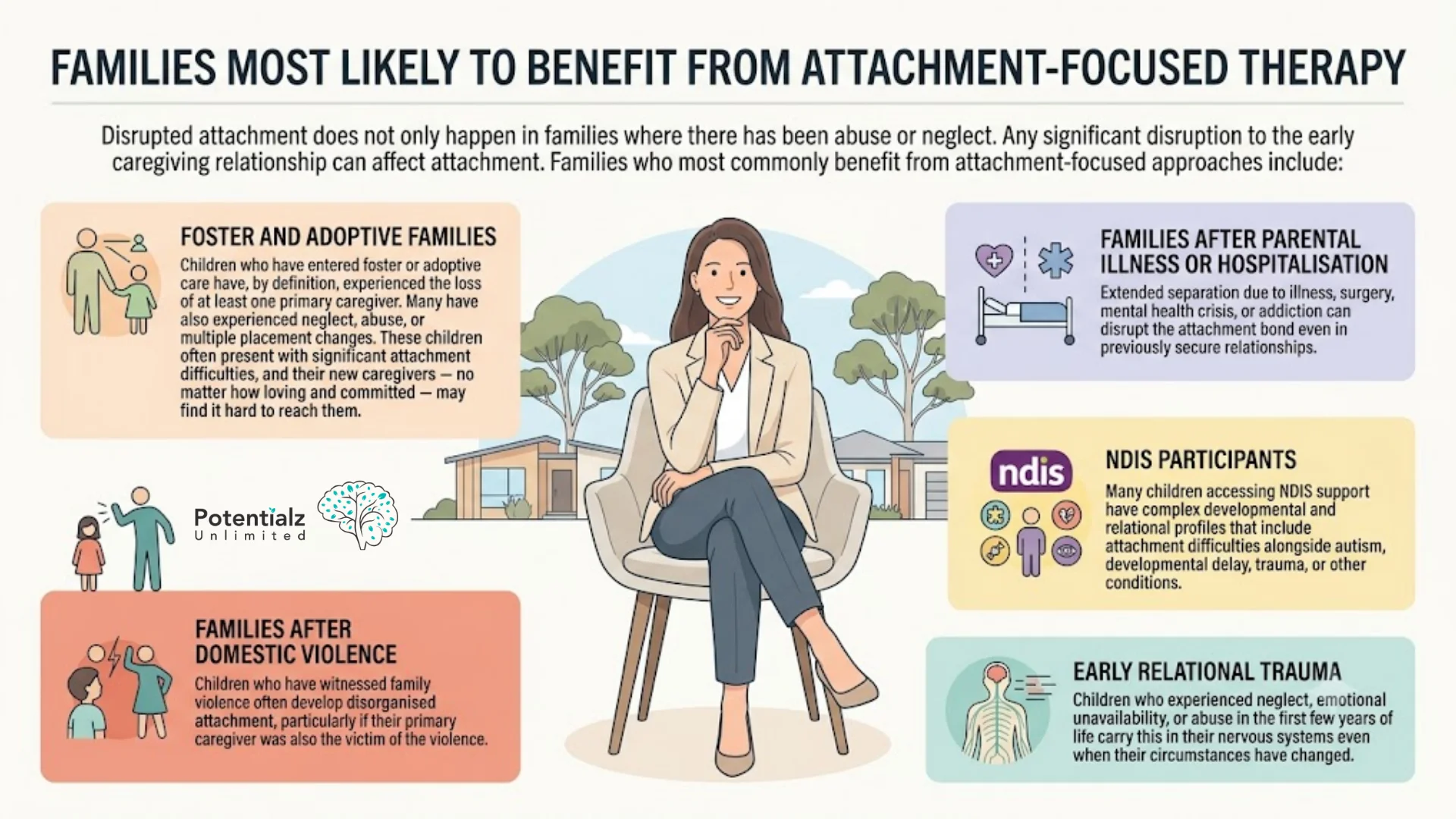
Foster and adoptive families: Children who have entered foster or adoptive care have, by definition, experienced the loss of at least one primary caregiver. Many have also experienced neglect, abuse, or multiple placement changes. These children often present with significant attachment difficulties, and their new caregivers — no matter how loving and committed — may find it hard to reach them.
Families after parental illness or hospitalisation: Extended separation due to illness, surgery, mental health crisis, or addiction can disrupt the attachment bond even in previously secure relationships.
Families after domestic violence: Children who have witnessed family violence often develop disorganised attachment, particularly if their primary caregiver was also the victim of the violence.
Early relational trauma: Children who experienced neglect, emotional unavailability, or abuse in the first few years of life carry this in their nervous systems even when their circumstances have changed.
NDIS participants: Many children accessing NDIS support have complex developmental and relational profiles that include attachment difficulties alongside autism, developmental delay, trauma, or other conditions.
What Is Parent–Child Attachment Play?
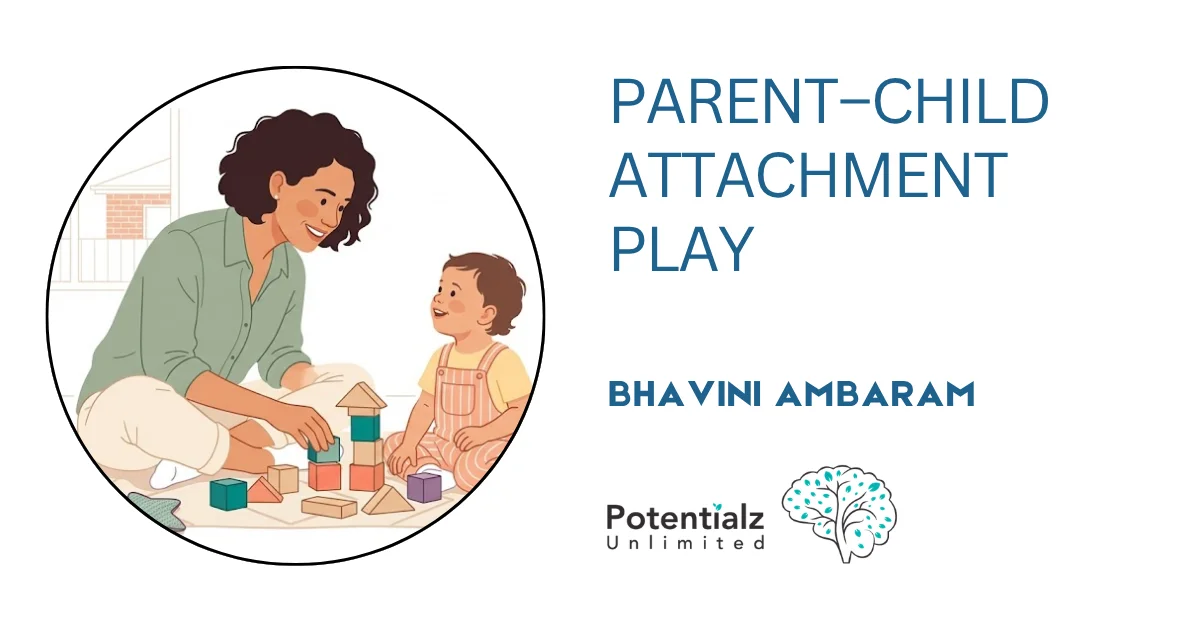
Parent–Child Attachment Play (PCAP) is an evidence-informed therapeutic approach that brings the caregiver and child together in sessions. Unlike traditional child therapy — where the child attends alone and the parent receives periodic updates — PCAP is explicitly a joint intervention.
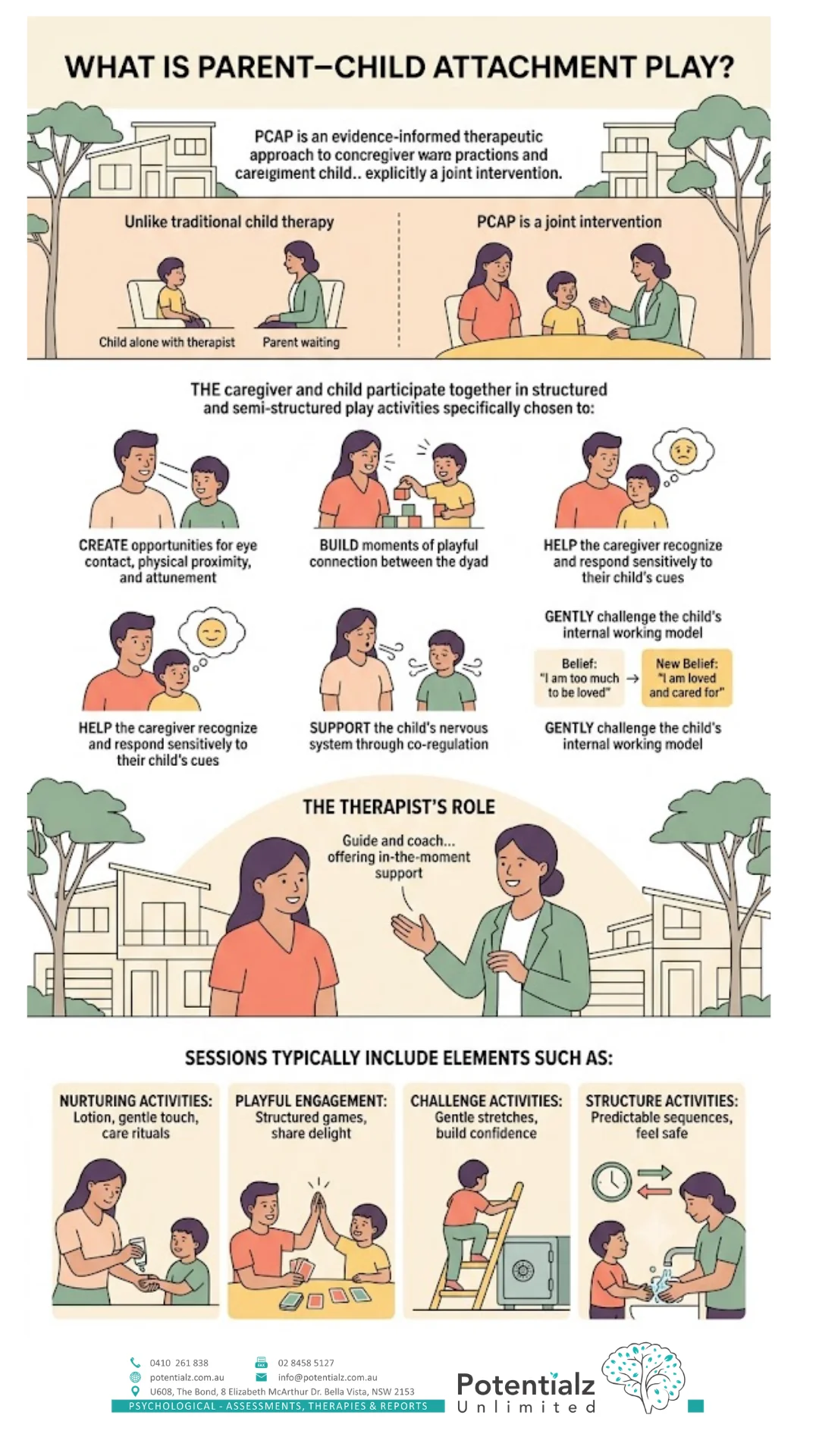
The caregiver and child participate together in structured and semi-structured play activities facilitated by the therapist. These activities are specifically chosen to:
- Create opportunities for eye contact, physical proximity, and attunement
- Build moments of playful connection between the dyad
- Help the caregiver recognise and respond sensitively to their child’s cues
- Support the child’s nervous system through co-regulation
- Gently challenge the child’s internal working model — their belief that “no one comes when I need them” or “I am too much to be loved”
The therapist acts as a guide and coach for the caregiver, helping them understand what their child is communicating through behaviour, and offering in-the-moment support as they try new ways of being together.
Sessions typically include elements such as:
- Nurturing activities: Lotion, gentle touch, and care rituals that create safe, body-based experiences of being cared for
- Playful engagement: Structured games that require the caregiver and child to work together, take turns, and share delight
- Challenge activities: Gentle stretches that build confidence and show the child that their caregiver believes in them
- Structure activities: Predictable sequences that help the child feel safe in the relationship
What the Research Suggests
The evidence base for attachment-focused play therapies has grown steadily over the past two decades. Research consistently points to meaningful improvements in caregiver sensitivity, child behaviour, and relationship quality when parents are actively included in therapeutic work (Schechter et al., 2008).
Filial therapy — the parent-inclusive model that PCAP draws from — has one of the strongest evidence bases in child therapy literature. Bratton et al. (2005) found that filial/parental involvement in play therapy produced effect sizes nearly twice as large as play therapy delivered to the child alone. This makes intuitive sense: a one-hour session each week cannot compete with the 10,000+ hours a child spends with their caregiver. When we help the caregiver become a more attuned therapeutic presence in the child’s everyday life, the impact is exponential.
For children in foster and adoptive families specifically, studies indicate that attachment-focused interventions produce meaningful reductions in behavioural difficulties and improvements in caregiver-reported relationship quality (Dozier et al., 2008). These children often need more time and more repetition before their nervous systems can truly begin to trust — and that is exactly what PCAP is designed to provide.
How PCAP Strengthens Emotional Regulation
One of the most important mechanisms through which PCAP works is co-regulation. This concept comes from polyvagal theory and attachment neuroscience, and it describes the way a regulated adult nervous system can help calm and organise a dysregulated child’s nervous system.
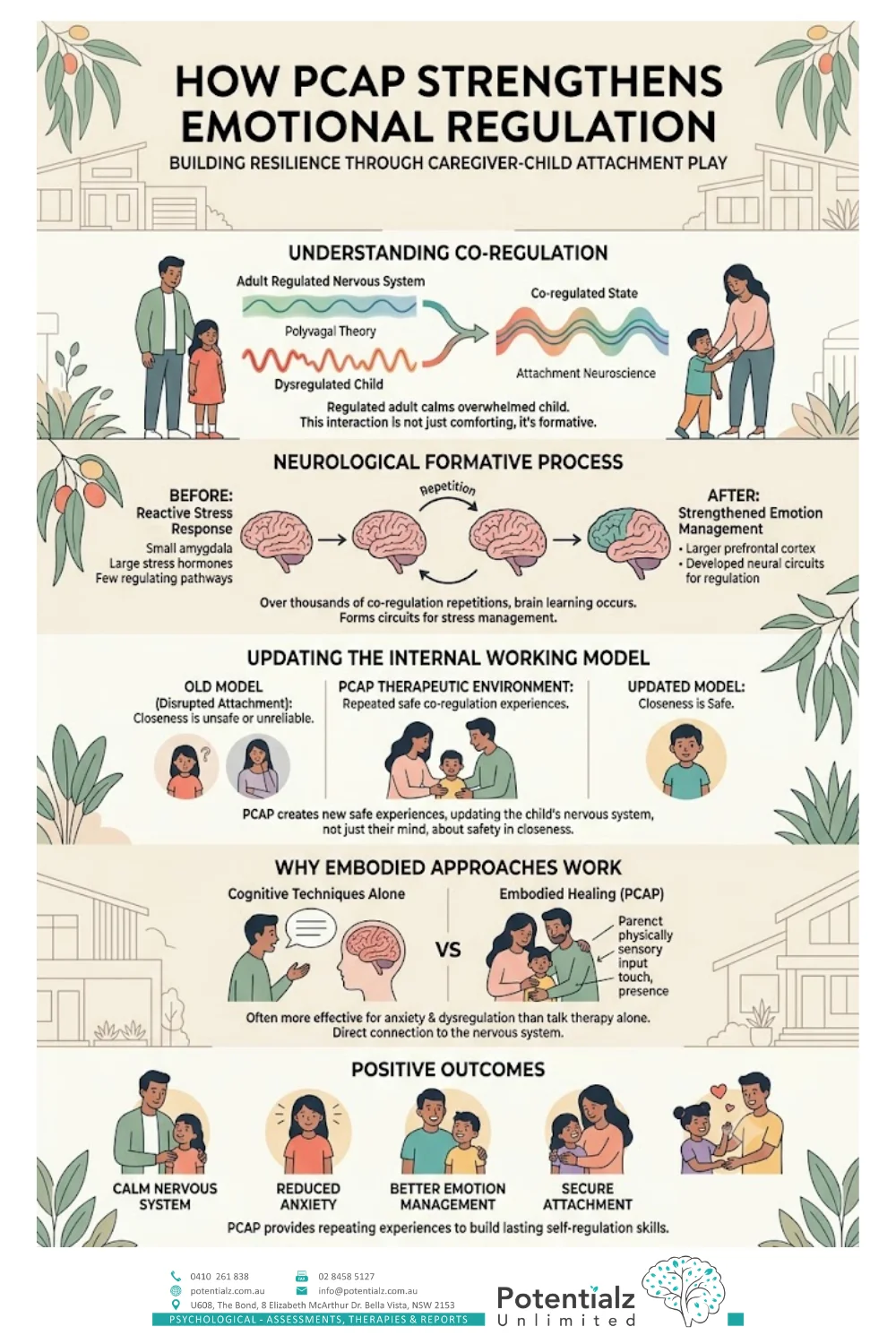
Young children cannot regulate their own emotions independently. They are entirely dependent on their caregivers to help them return to a calm, manageable state when they are overwhelmed. This co-regulation process — being soothed, held, and reassured by a responsive caregiver — is not just emotionally comforting. It is neurologically formative. Over thousands of repetitions, it literally shapes how the child’s brain learns to manage stress.
Children with disrupted attachment have often missed many of these co-regulation experiences, or have had caregiving experiences that made their nervous system less trusting of adult comfort. PCAP creates new co-regulation experiences in a safe, supported therapeutic environment. With enough repetition, these experiences begin to update the child’s internal working model — to teach them, in their nervous system rather than just their mind, that closeness is safe.
For children who struggle with anxiety or emotional dysregulation alongside attachment difficulties, this embodied approach to healing is often more effective than cognitive techniques alone.
A Note for Foster and Adoptive Caregivers
If you are a foster or adoptive carer, you may sometimes feel that no matter how much love you offer, it is not getting through. You may feel rejected, helpless, or confused by your child’s responses. You may be told that your child is “doing well” in placement — sleeping, eating, attending school — while privately feeling that something is missing between you.
This is one of the most painful and least spoken-about aspects of caring for children with attachment difficulties. The behaviours that hurt most — pushing away, controlling behaviour, refusing comfort, saying “you’re not my real parent” — are not rejections of you. They are the child’s nervous system protecting them from a closeness it has learned to fear.
Parent–Child Attachment Play does not just help the child. It helps you, too. It gives you new tools for understanding your child’s behaviour, new ways of connecting that bypass the child’s defences, and the experience of breakthrough moments — small flickers of real connection that remind you why you chose this path.
NDIS families may be able to fund this work through the Capacity Building budget. Speak to your support coordinator, or contact Bhavini directly to discuss what documentation and goals might support a funding request. You can also read more on our dedicated play therapy page.
What to Expect in Sessions with Bhavini
Bhavini Ambaram completed her certification in Parent–Child Attachment Play in 2025. She also holds certifications in Synergetic Play Therapy (2025), LEGO® Based Therapy (2025), and Play Therapy International (PTUK/PTSA, 2021), giving her a rich and integrative toolkit for working with attachment difficulties.
An initial session with Bhavini begins with a thorough assessment of the child’s history, the caregiver’s goals, and the nature of the relational challenges. She takes time to understand the whole picture — including cultural background, family structure, NDIS status, and any previous therapeutic work.
From there, sessions are carefully sequenced to build safety first, then connection, then challenge. Bhavini coaches caregivers in real time, celebrating small wins and gently redirecting when the interaction gets difficult. She provides written documentation of goals and progress, which is useful both for families and for NDIS plan reviews.
Sessions are held at Potentialz Unlimited in Bella Vista and are available Monday to Friday, 10am to 7pm.
Key Takeaways
- Attachment is the emotional bond between a child and their caregiver. It shapes how children feel about themselves and relationships for life.
- Disrupted attachment can show up as clinginess, avoidance, controlling behaviour, or emotional shutdown in children.
- Parent–Child Attachment Play (PCAP) is a joint intervention — both the caregiver and the child attend and participate in sessions together.
- Research suggests PCAP strengthens the caregiver–child relationship and supports children’s emotional regulation.
- It is particularly valuable for foster and adoptive families, children who have experienced early relational trauma, and NDIS participants.
- Bhavini Ambaram at Potentialz Unlimited is certified in Parent–Child Attachment Play (2025).
How Potentialz Can Help
If your child shows signs of attachment difficulties — or if your relationship with your child has been strained by separation, trauma, or change — Parent–Child Attachment Play may be exactly what your family needs.
You do not need to wait until things are crisis-level. Early support is always more effective than waiting. Reaching out is an act of courage, and it is one of the most important things a caregiver can do for their child.
Book a session online: live.potentialz.com.au/online-scheduling Call us: 0410 261 838 Visit us: Unit 608, 8 Elizabeth Macarthur Drive, Bella Vista NSW 2153
You can also explore our full range of play therapy services in Bella Vista, our support for child anxiety, and our child psychology services. For psychological assessment, diagnosis, or treatment of mental health conditions, our team of AHPRA-registered psychologists is available.
References (APA 7th Edition)
Ainsworth, M. D. S., Blehar, M. C., Waters, E., & Wall, S. (1978). Patterns of attachment: A psychological study of the strange situation. Lawrence Erlbaum.
Bowlby, J. (1969). Attachment and loss: Vol. 1. Attachment. Basic Books.
Bratton, S. C., Ray, D., Rhine, T., & Jones, L. (2005). The efficacy of play therapy with children: A meta-analytic review of treatment outcomes. Professional Psychology: Research and Practice, 36(4), 376–390. https://doi.org/10.1037/0735-7028.36.4.376
Dozier, M., Peloso, E., Lewis, E., Laurenceau, J. P., & Levine, S. (2008). Effects of an attachment-based intervention on the cortisol production of infants and toddlers in foster care. Development and Psychopathology, 20(3), 845–859. https://doi.org/10.1017/S0954579408000400
Schechter, D. S., Coates, S. W., Kaminer, T., Coots, T., Zeanah, C. H., Davies, M., Schonfield, I. S., Marshall, R. D., Liebowitz, M. R., Trabka, K. A., McCaw, J., & Myers, M. M. (2008). Distorted maternal mental representations and atypical behavior in a clinical sample of violence-exposed mothers and their toddlers. Journal of Trauma & Dissociation, 9(2), 123–147. https://doi.org/10.1080/15299730802045666
Spangler, G., & Grossmann, K. E. (1993). Biobehavioral organization in securely and insecurely attached infants. Child Development, 64(5), 1439–1450. https://doi.org/10.2307/1131544
Related Reading on potentialz.com.au
- Play Therapy Services in Bella Vista
- Child Psychology Services
- NDIS Psychology and Play Therapy
- Anxiety Psychology Services
- What Is Synergetic Play Therapy? A Trauma-Informed Approach for Children
- Parent Consultations in Play Therapy: Your Role in Your Child’s Healing
- Big Emotions in Children: How Play Therapy Helps
- Our Team
- Contact us
Disclaimer: This information is general in nature. Bhavini Ambaram is a Practitioner in Therapeutic Play accredited by Play Therapy International (PTUK/PTSA) and is not AHPRA-registered as a psychologist or counsellor. For psychological assessment, diagnosis, or treatment of mental health conditions, please consult an AHPRA-registered practitioner. The team at Potentialz Unlimited includes AHPRA-registered psychologists.
Crisis support: If you or someone you know needs immediate support, please contact Lifeline on 13 11 14, Beyond Blue on 1300 22 4636, Kids Helpline on 1800 55 1800, or call 000 in an emergency.
Knowledge Check Quiz
Test what you have just read. Choose your answer for each question, then submit to reveal the answers and your score.
Need Professional Support?
If you're experiencing mental health concerns, our team is here to help.