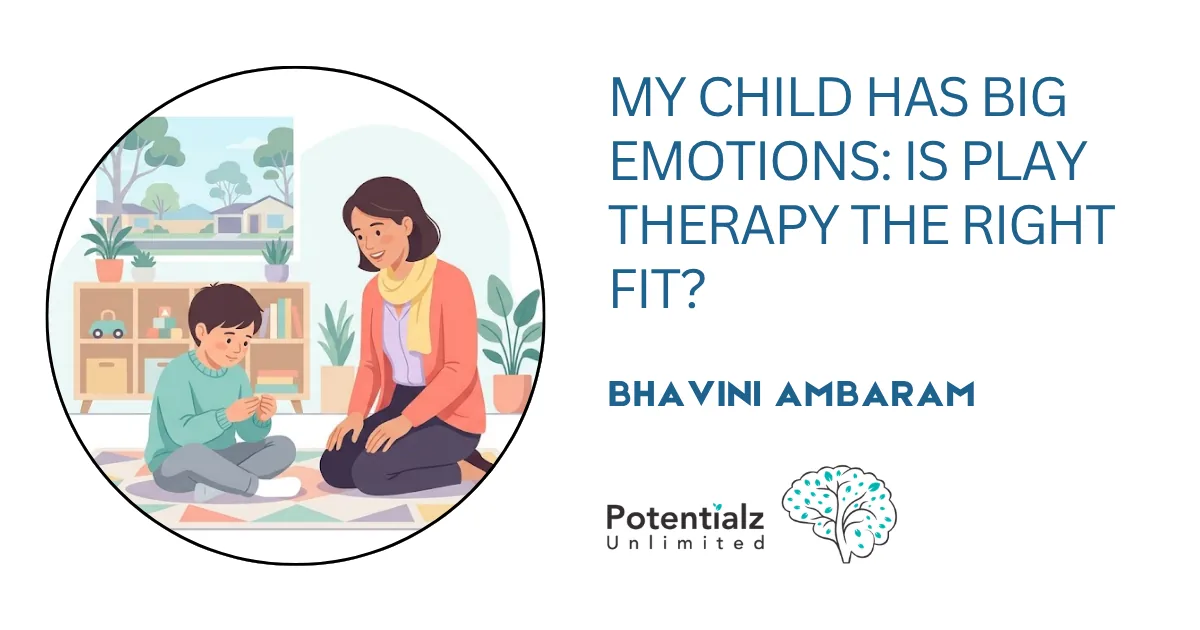
Every parent has been there. Your child loses it over something that seems small — a wrong-coloured cup, a sock that feels wrong, a game that ended too soon. But what you are witnessing is not a small reaction. It is a full-body storm. Screaming, hitting, throwing — or the opposite, complete withdrawal, silence, going blank.
You try everything you know. Calm voice. Firm voice. Distraction. Time-out. Reasoning. None of it works. The storm has to pass on its own terms.
Afterwards, everyone is exhausted. Your child is often flooded with shame. You are depleted. And you are starting to wonder: is this normal? Is something wrong? And what on earth can I do?
This post is for you.
What “Big Emotions” Actually Look Like
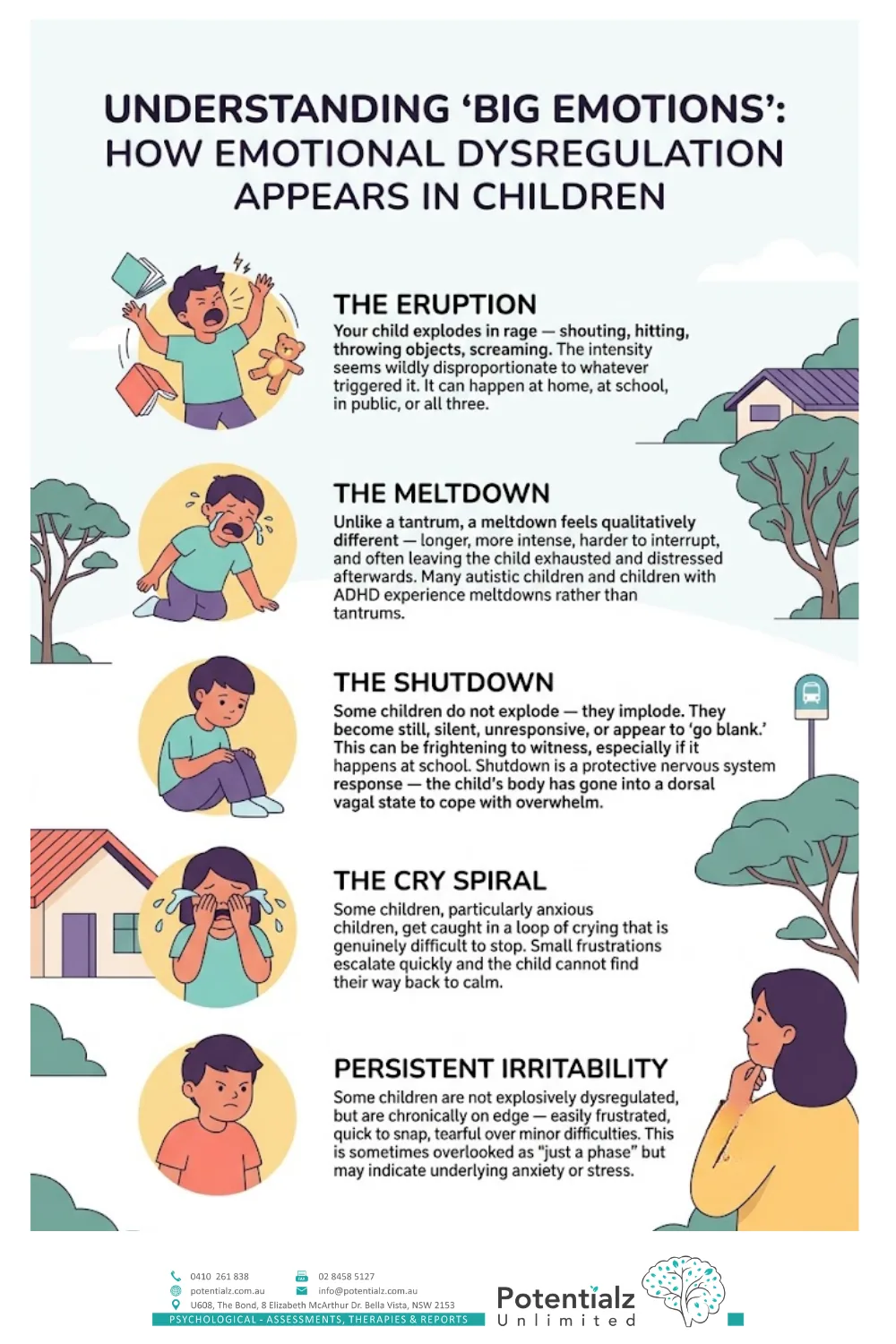
Emotional dysregulation in children shows up differently depending on the child’s age, temperament, and history. Some common presentations include:
The eruption. Your child explodes in rage — shouting, hitting, throwing objects, screaming. The intensity seems wildly disproportionate to whatever triggered it. It can happen at home, at school, in public, or all three.
The meltdown. Unlike a tantrum, a meltdown feels qualitatively different — longer, more intense, harder to interrupt, and often leaving the child exhausted and distressed afterwards. Many autistic children and children with ADHD experience meltdowns rather than tantrums.
The shutdown. Some children do not explode — they implode. They become still, silent, unresponsive, or appear to go blank. This can be frightening to witness, especially if it happens at school. Shutdown is a protective nervous-system response: the child’s body has moved into a dorsal vagal state to cope with overwhelm.
The cry spiral. Some children, particularly anxious children, get caught in a loop of crying that is genuinely difficult to stop. Small frustrations escalate quickly and the child cannot find their way back to calm.
Persistent irritability. Some children are not explosively dysregulated, but are chronically on edge — easily frustrated, quick to snap, tearful over minor difficulties. This is sometimes overlooked as “just a phase” but may indicate underlying anxiety in children or accumulated stress.
Normal Tantrums vs Emotional Dysregulation: Knowing the Difference
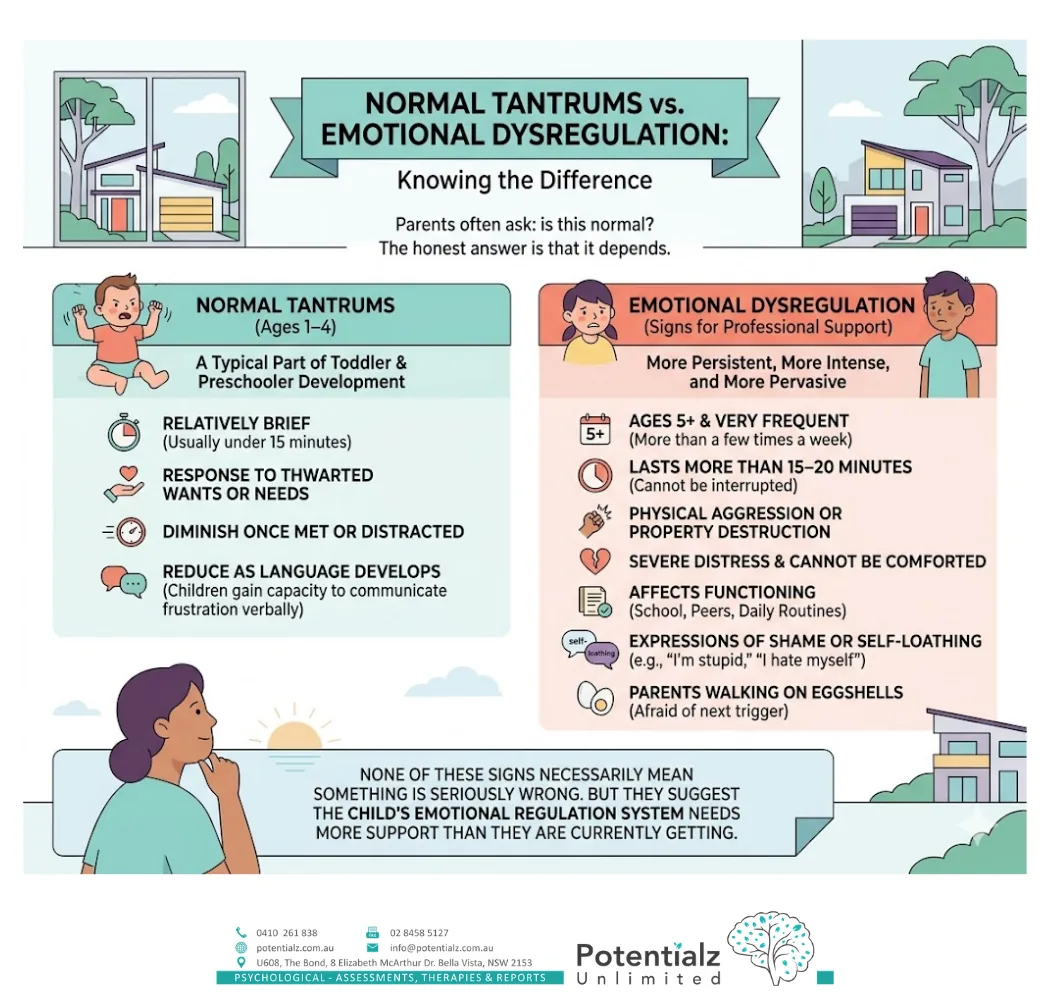
Parents often ask: is this normal? The honest answer is that it depends.
Normal tantrums are a typical part of development in toddlers and young preschoolers (ages 1 to 4). They are relatively brief — usually under fifteen minutes — happen in response to thwarted wants or needs, and tend to ease once the want is met or the child is distracted. They reduce significantly as language develops and the child gains more capacity to communicate frustration verbally.
Emotional dysregulation is something more persistent, more intense, and more pervasive. Signs that suggest professional support might be helpful include:
- Tantrums or meltdowns in a child aged 5 or older that are very frequent (more than a few times a week)
- Explosions that last more than 15 to 20 minutes and cannot be interrupted
- Physical aggression towards people or significant destruction of property
- The child is severely distressed (not just frustrated) and cannot be comforted
- Dysregulation is affecting the child’s functioning at school, with peers, or in daily routines
- The child expresses shame, self-loathing, or hopelessness after episodes — phrases like “I’m stupid”, “I always ruin everything”, “I hate myself”
- You as a parent feel you are walking on eggshells, afraid of what might trigger the next episode
None of these signs necessarily mean something is seriously wrong. But they do suggest the child’s emotional regulation system needs more support than they are currently getting.
If you are worried about your child’s emotional wellbeing, consulting a child psychologist in Bella Vista is a sensible starting point. You do not need to wait for a crisis.
The Neuroscience of the Developing Brain
Understanding why children struggle with big emotions requires a brief detour into brain development. Bear with me — this part genuinely helps.
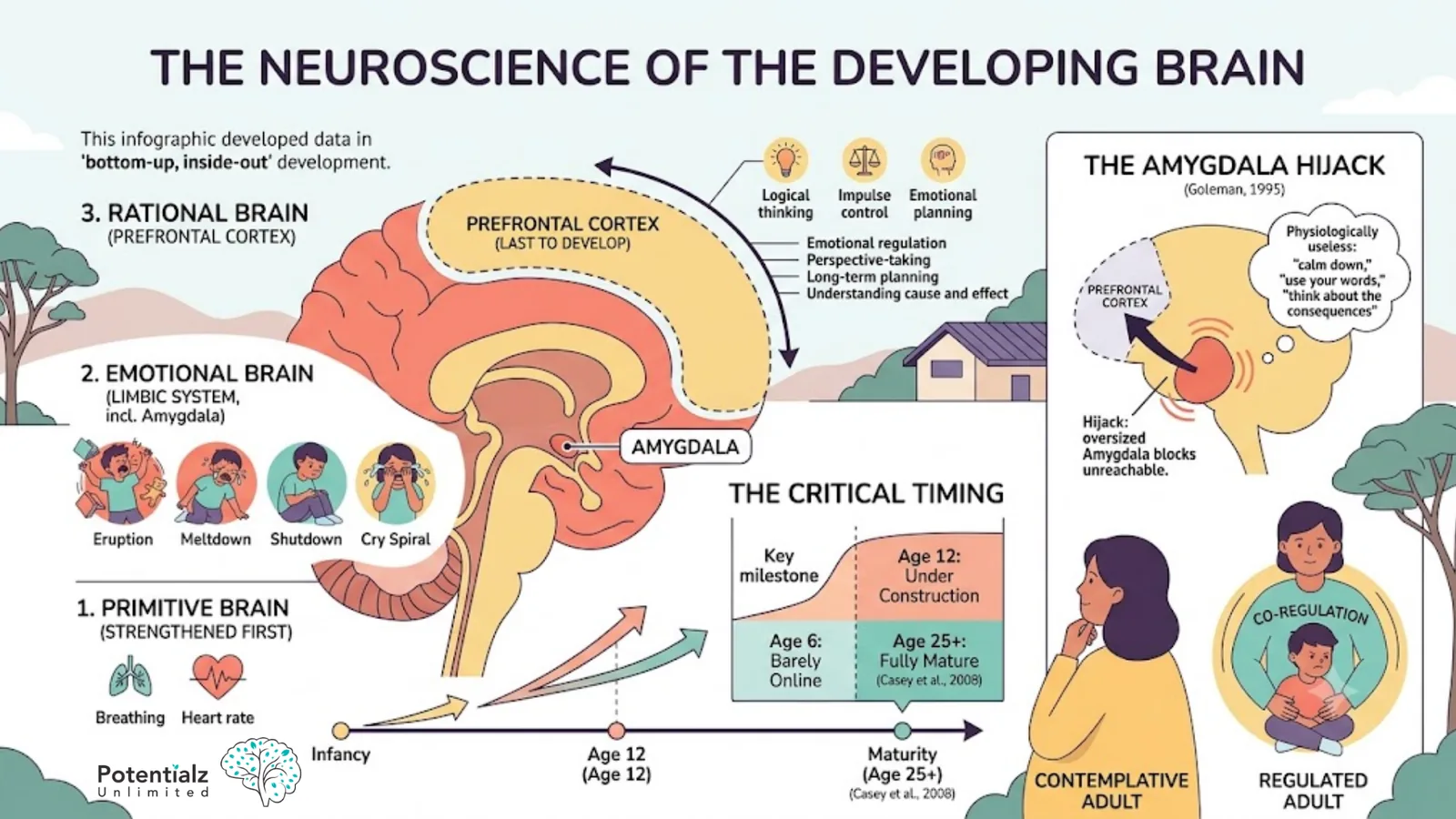
The human brain develops from the bottom up and from the inside out. The most primitive brain regions — those controlling basic survival functions like breathing and heart rate — develop first. The emotional centres (the limbic system, including the amygdala) develop next. The rational, thinking brain — the prefrontal cortex — develops last.
The prefrontal cortex is the part of the brain responsible for:
- Logical thinking and problem-solving
- Impulse control
- Emotional regulation
- Perspective-taking
- Long-term planning
- Understanding cause and effect
Here is the critical piece: the prefrontal cortex does not reach full maturity until approximately age 25 (Casey et al., 2008). In a six-year-old, it is barely online. In a twelve-year-old, it is still very much under construction.
This means that when a young child is overwhelmed by emotion, they are — neurologically — not in a position to think their way through it. The prefrontal cortex has been “hijacked” by the emotional brain. This is sometimes described as an amygdala hijack, a term coined by psychologist Daniel Goleman (1995).
In this state, telling a child to “calm down”, “use your words”, or “think about the consequences” is physiologically useless. Those parts of their brain are not accessible. What they need first is to return to a regulated state — and young children cannot do this alone. They need a regulated adult.
What Is Co-Regulation?
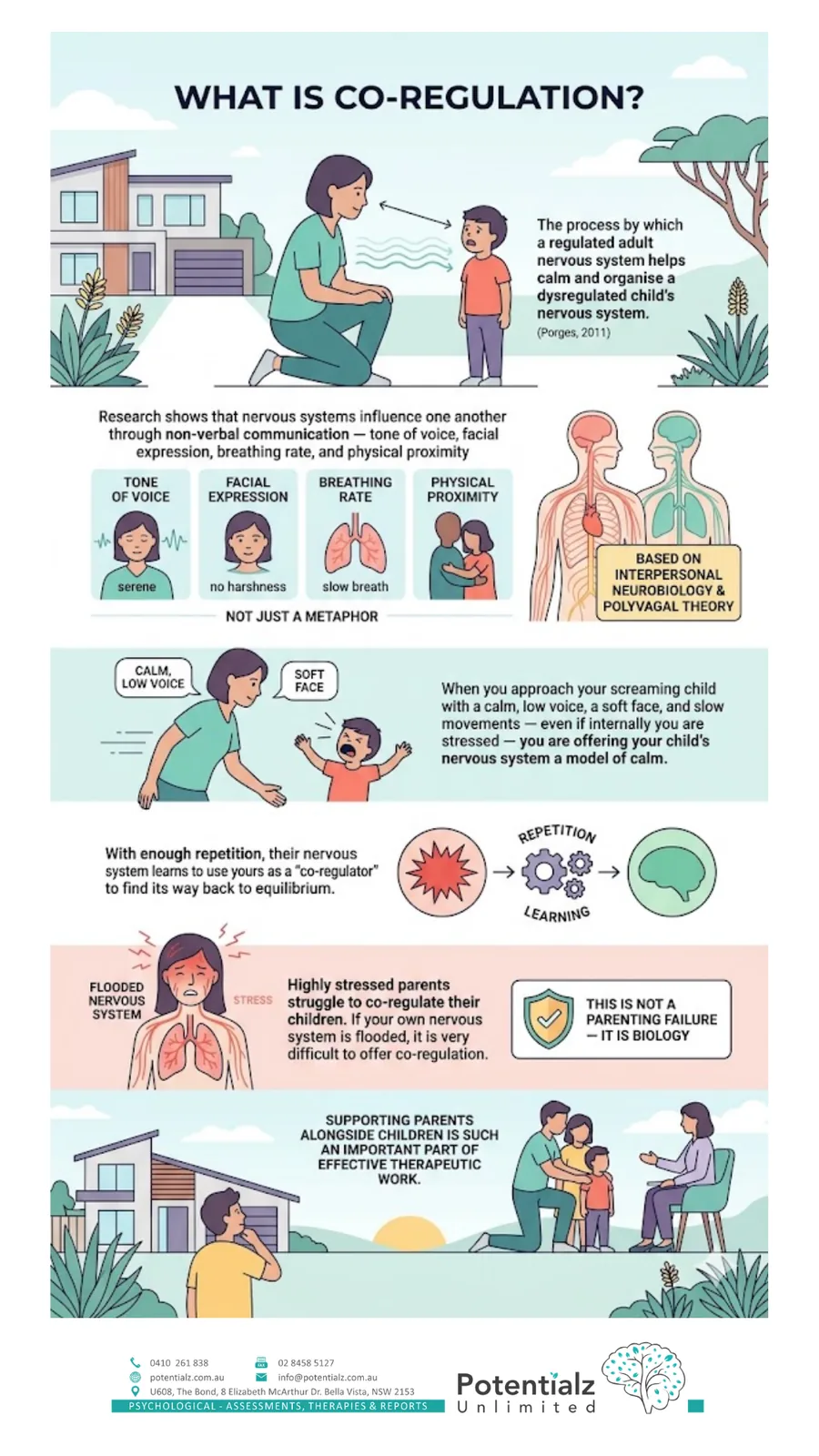
Co-regulation is the process by which a regulated adult nervous system helps calm and organise a dysregulated child’s nervous system. This is not just a metaphor. Research in interpersonal neurobiology and polyvagal theory shows that nervous systems literally influence one another through non-verbal communication — tone of voice, facial expression, breathing rate, and physical proximity (Porges, 2011).
When you approach your screaming child with a calm, low voice, a soft face, and slow movements — even if internally you are stressed — you are offering your child’s nervous system a model of calm. With enough repetition, their nervous system learns to use yours as a co-regulator to find its way back to equilibrium.
This is also why highly stressed parents struggle to co-regulate their children. If your own nervous system is flooded, it is very difficult to offer co-regulation. This is not a parenting failure — it is biology. It is also why supporting parents alongside children is such an important part of effective therapeutic work, which is why Bhavini offers ongoing parent consultations as part of the play therapy process.
How Play Therapy Teaches Emotional Regulation
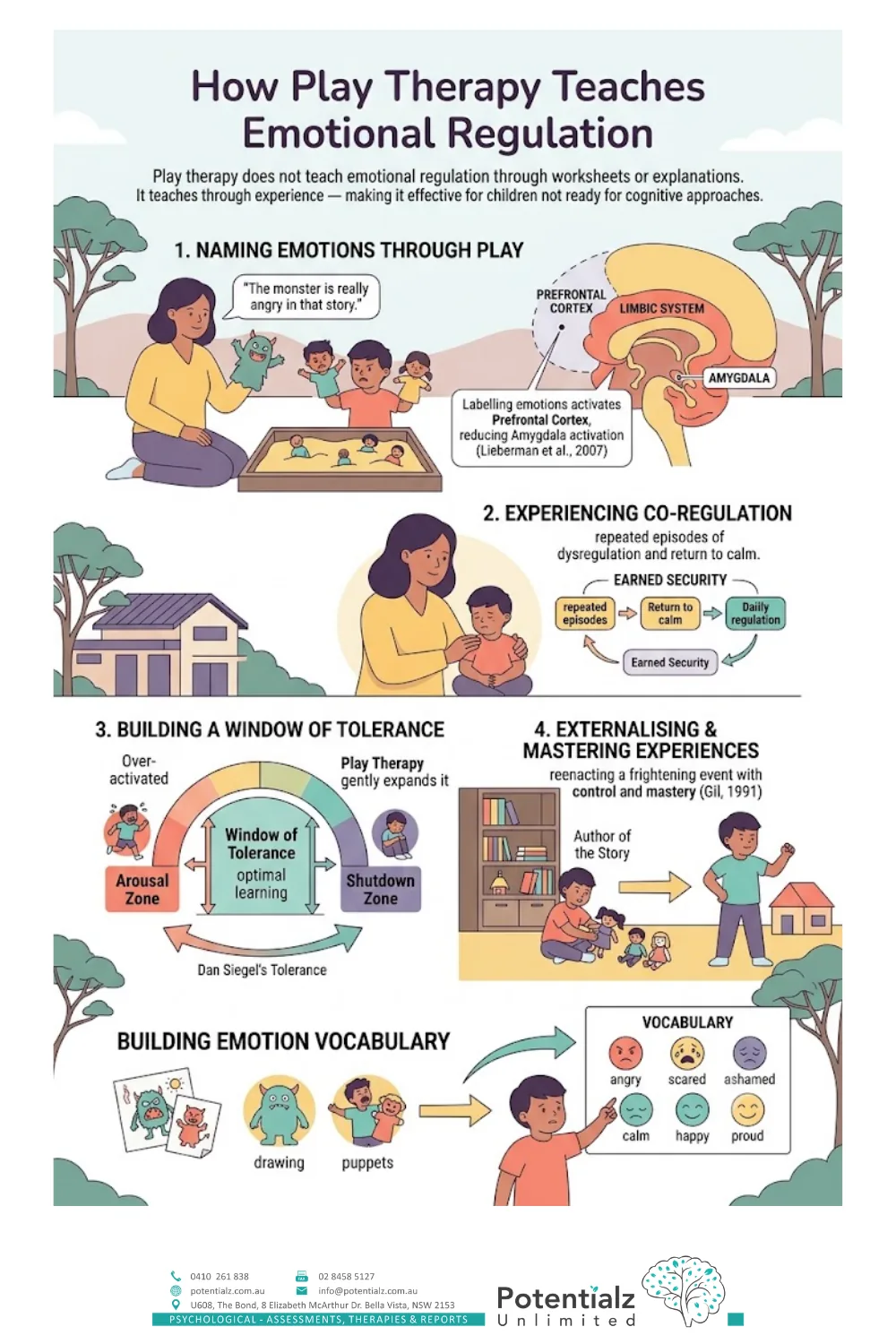
Play therapy does not teach emotional regulation through worksheets, videos, or explanations. It teaches it through experience — and this is why it is so effective for children whose brains are not yet ready for cognitive approaches.
In the therapeutic play environment, several important things happen:
Naming emotions through play. Children often cannot say “I feel terrified” or “I feel ashamed”. But through play — enacting scenes with puppets, burying and uncovering figures in the sand tray, drawing monsters or storms — they can represent these feelings symbolically. The therapist gently names what they observe: “The monster is really angry in that story.” This process of labelling emotions — even through metaphor — activates the prefrontal cortex and actually reduces the intensity of the emotional response. Research by Lieberman et al. (2007) found that simply labelling an emotion significantly reduces amygdala activation.
Experiencing co-regulation with the therapist. In the safety of the therapeutic relationship, children experience repeated episodes of dysregulation and return to calm — with the therapist acting as the co-regulator. Over time, this builds what is sometimes called earned security: the child’s nervous system internalises the experience of being soothed and learns to self-soothe more effectively. This is a core mechanism in Synergetic Play Therapy.
Building a window of tolerance. Psychologist Dan Siegel coined the term “window of tolerance” to describe the optimal zone of arousal — not too activated, not too shut down — in which learning and connection are possible. Children with big emotions have a narrow window of tolerance. Play therapy gently expands it through repeated, safe experiences of moving towards and away from activating material.
Externalising and mastering experiences. When children reenact frightening, confusing, or distressing experiences in play, they gain a measure of control. They are no longer just a passive recipient of overwhelming feelings. They are the author of the story. This shift from passivity to mastery is a core mechanism of healing in play therapy (Gil, 1991).
Building emotion vocabulary. Over the course of therapy, children naturally develop a richer vocabulary for their emotional experiences. This increased capacity to identify and name feelings is consistently linked to improved emotional regulation (Brackett et al., 2012). For older children, structured approaches such as LEGO® Based Therapy build the same skills through collaborative play.
You can read more about how play therapy in Bella Vista is delivered at Potentialz Unlimited on our dedicated service page.
Anxiety, ADHD and Emotional Dysregulation
Anxiety and emotional dysregulation frequently co-occur. Children who are anxious live in a chronic state of low-grade nervous system activation. Their amygdala is essentially always scanning for threat. When something triggers a fear response on top of this already-elevated baseline, the result is an explosion or shutdown that looks disproportionate — because from the outside, we are only seeing the last straw, not the accumulated stress load.
If your child has big emotional reactions that seem especially tied to transitions, changes in routine, social situations, new environments, or perceived failure, anxiety may be a significant contributing factor. Our anxiety support for children page has more information on how Potentialz Unlimited can help.
For children with ADHD, emotional dysregulation is one of the most challenging and often underemphasised features of the condition. ADHD affects not just attention and impulse control, but also emotional impulsivity — the speed and intensity with which emotions are felt and expressed. You can read more on our ADHD psychologist Bella Vista page.
What Parents Can Do Between Sessions
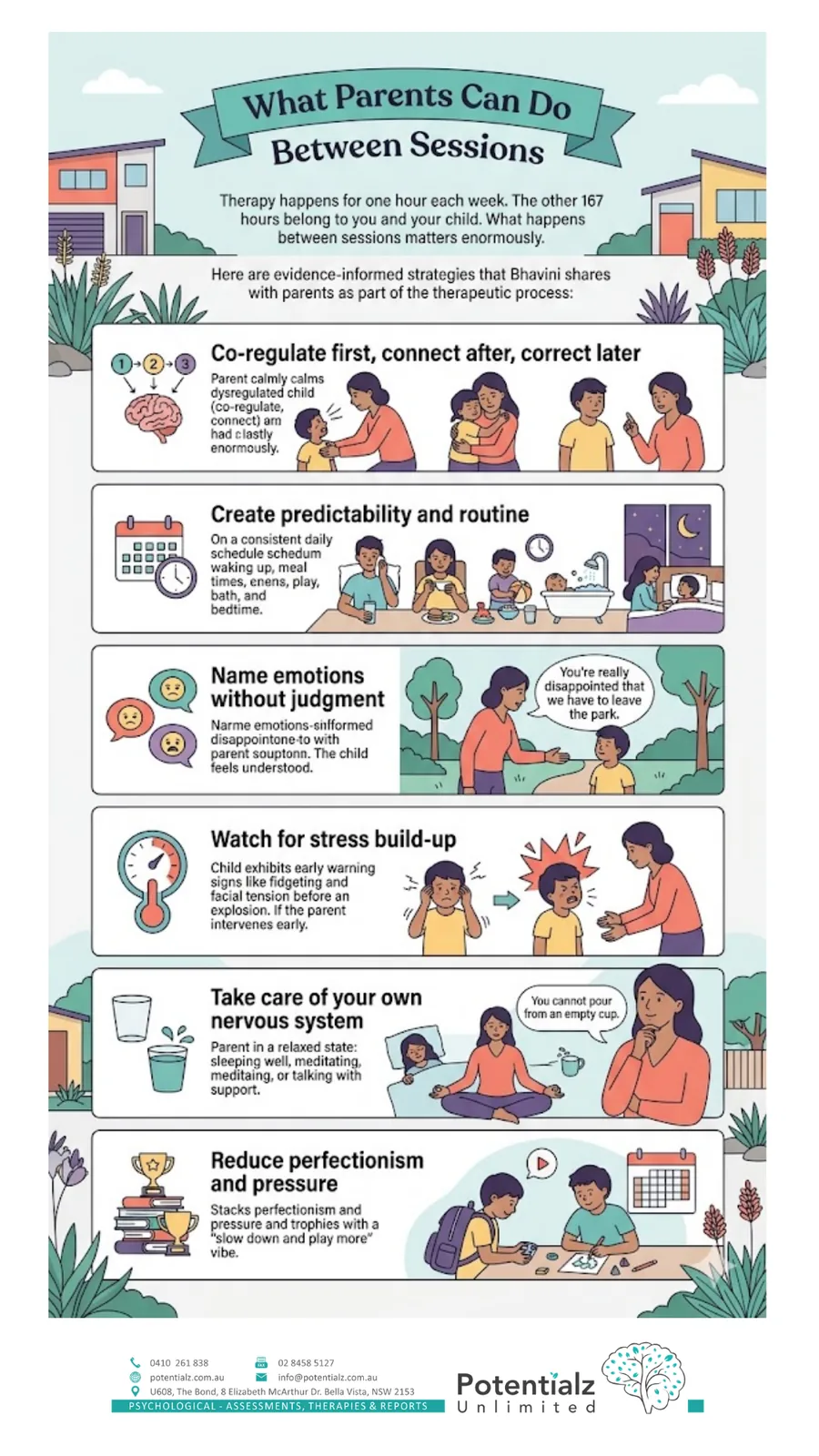
Therapy happens for one hour each week. The other 167 hours belong to you and your child. What happens between sessions matters enormously.
Here are evidence-informed strategies that Bhavini shares with parents as part of the therapeutic process:
Co-regulate first, connect after, correct later. When your child is dysregulated, this is not the moment for lessons, consequences, or problem-solving. First, help them return to a regulated state. Then, once they are calm, reconnect with warmth and empathy. Only then — and only briefly — address the behaviour if needed. This sequence follows the neuroscience of the developing brain.
Create predictability and routine. Children with dysregulation challenges feel safer when they know what to expect. Consistent routines around waking, meals, transitions, and bedtime reduce the ambient anxiety that makes emotions harder to manage.
Name emotions without judgment. “You’re really disappointed that we have to leave the park.” “That felt really scary.” Simply naming what you observe helps build your child’s emotional vocabulary and lets them feel understood — even if nothing can change.
Watch for stress build-up. Many children have a tell — subtle signs that their stress is building before the explosion happens. Learning your child’s early warning signs lets you intervene with co-regulation before the point of no return.
Take care of your own nervous system. You cannot pour from an empty cup. Your child’s ability to regulate depends significantly on your ability to stay (relatively) regulated. Sleep, support, your own therapy if needed — these are not luxuries. They are part of your child’s treatment plan.
Reduce perfectionism and pressure. For many children, academic pressure, extra-curricular overload, or high parental expectations contribute significantly to emotional dysregulation. Sometimes the most therapeutic thing a family can do is slow down and play more.
When to Reach Out for Professional Support
You do not need to wait until things are desperate. Research consistently shows that earlier intervention produces better outcomes than delayed support. If you are asking yourself whether your child might benefit from professional help, that instinct is worth listening to.
Specific signs that suggest it is time to make an appointment:
- Emotional episodes are becoming more frequent or intense over time
- Your child is expressing suicidal thoughts, self-harm, or hopelessness — please contact Kids Helpline on 1800 55 1800 or Lifeline on 13 11 14 immediately if this is the case
- Dysregulation is significantly impacting your child’s school attendance, friendships, or family relationships
- Your child is avoiding activities they previously enjoyed
- You as a parent feel you cannot cope, are afraid of your child’s reactions, or have started managing your whole family around the child’s emotional state
- Your child is in physical pain (headaches, stomach aches) with no medical explanation — this is very commonly linked to emotional stress
An initial consultation with Bhavini at Potentialz Unlimited is a low-pressure way to discuss your concerns and get a professional perspective on what your child might need. See also our NDIS psychologist page if your child has an NDIS plan.
What to Expect in Play Therapy for Emotional Regulation
If you decide to proceed with play therapy at Potentialz Unlimited, here is a general picture of what the journey looks like:
Assessment phase. Bhavini conducts a thorough intake session, reviewing your child’s history, current functioning, what has been tried before, and your family’s goals. She may ask questions about your child’s developmental history, temperament, family structure, and any diagnoses.
Building the therapeutic relationship. The first few sessions focus on establishing safety and trust. The child is not pushed to do anything. They are given freedom to explore the playroom and lead. This is not wasted time — it is foundational to everything that follows.
Therapeutic work. As trust builds, children begin to use play to process and communicate. Bhavini tracks themes, tracks the child’s nervous system state, and provides the co-regulation and attunement that allows healing.
Parent sessions. Bhavini regularly checks in with parents to share observations (without breaching the child’s confidentiality), coach regulation strategies, and ensure the work in sessions is being supported at home. Many families find Bhavini’s parent consultations the most useful part of the work.
Progress and review. At agreed intervals, Bhavini reviews progress and discusses next steps with parents. Therapy is not open-ended; it moves towards specific goals and is regularly reviewed.
How Potentialz Can Help
If your child is struggling with big emotions and you want support that actually works with how their brain develops — not against it — Bhavini Ambaram at Potentialz Unlimited is ready to help.
You are not alone. Your child is not broken. And it is never too early to reach out.
Fees:
- Initial parent consultation: $250
- Play therapy sessions: $190 per session
- Parent review sessions: $190 (approximately every six weeks)
- Package discounts available for upfront payment
- NDIS self-managed plans accepted
Book a session online: live.potentialz.com.au Call us: 0410 261 838 Visit us: Unit 608, 8 Elizabeth Macarthur Drive, Bella Vista NSW 2153 Hours: Monday to Friday, 10am–7pm | Saturday and after-hours available | Telehealth via phone or Zoom
You can also explore our NDIS-funded support options, meet our team, or get in touch with any questions.
Key Takeaways
- Big emotions in children — explosive meltdowns, intense crying, shutdown, and rage — are usually signs of an underdeveloped emotional regulation system, not bad behaviour
- The developing brain, particularly the prefrontal cortex, is not yet equipped to manage intense emotions without adult support — it does not fully mature until around age 25
- Emotional dysregulation is different from normal tantrums and has specific red flags that may point to the need for professional support
- Play therapy teaches emotional regulation through experiential learning and co-regulation — not lectures or worksheets
- Parents play a vital role between sessions, and Bhavini coaches caregivers in practical, evidence-informed strategies
- A landmark meta-analysis by Bratton et al. (2005) found play therapy produced a large overall treatment effect across 93 controlled studies — particularly for emotional and behavioural difficulties in children aged 3–12
References
Bratton, S. C., Ray, D., Rhine, T., & Jones, L. (2005). The efficacy of play therapy with children: A meta-analytic review of treatment outcomes. Professional Psychology: Research and Practice, 36(4), 376–390. https://doi.org/10.1037/0735-7028.36.4.376
Brackett, M. A., Rivers, S. E., Reyes, M. R., & Salovey, P. (2012). Enhancing academic performance and social and emotional competence with the RULER feeling words curriculum. Learning and Individual Differences, 22(2), 218–224. https://doi.org/10.1016/j.lindif.2010.10.002
Casey, B. J., Getz, S., & Galvan, A. (2008). The adolescent brain. Developmental Review, 28(1), 62–77. https://doi.org/10.1016/j.dr.2007.08.003
Gil, E. (1991). The healing power of play: Working with abused children. Guilford Press.
Goleman, D. (1995). Emotional intelligence: Why it can matter more than IQ. Bantam Books.
Lieberman, M. D., Eisenberger, N. I., Crockett, M. J., Tom, S. M., Pfeifer, J. H., & Way, B. M. (2007). Putting feelings into words: Affect labeling disrupts amygdala activity in response to affective stimuli. Psychological Science, 18(5), 421–428. https://doi.org/10.1111/j.1467-9280.2007.01916.x
Porges, S. W. (2011). The polyvagal theory: Neurophysiological foundations of emotions, attachment, communication, and self-regulation. W. W. Norton.
Siegel, D. J. (2012). The developing mind: How relationships and the brain interact to shape who we are (2nd ed.). Guilford Press.
Disclaimer: This information is general in nature. Bhavini Ambaram is a Practitioner in Therapeutic Play accredited by Play Therapy International (PTUK/PTSA) and is not AHPRA-registered as a psychologist or counsellor. Play therapy does not constitute psychological assessment, diagnosis, or treatment of clinical mental health conditions. For assessment or diagnosis of mental health conditions, please consult an AHPRA-registered practitioner. The team at Potentialz Unlimited includes AHPRA-registered psychologists available for assessment and diagnosis.
Crisis Resources: If you or someone you know needs support right now, please contact Lifeline on 13 11 14, Beyond Blue on 1300 22 4636, or Kids Helpline on 1800 55 1800. For emergencies, call 000.
Knowledge Check Quiz
Test what you have just read. Choose your answer for each question, then submit to reveal the answers and your score.
Need Professional Support?
If you're experiencing mental health concerns, our team is here to help.