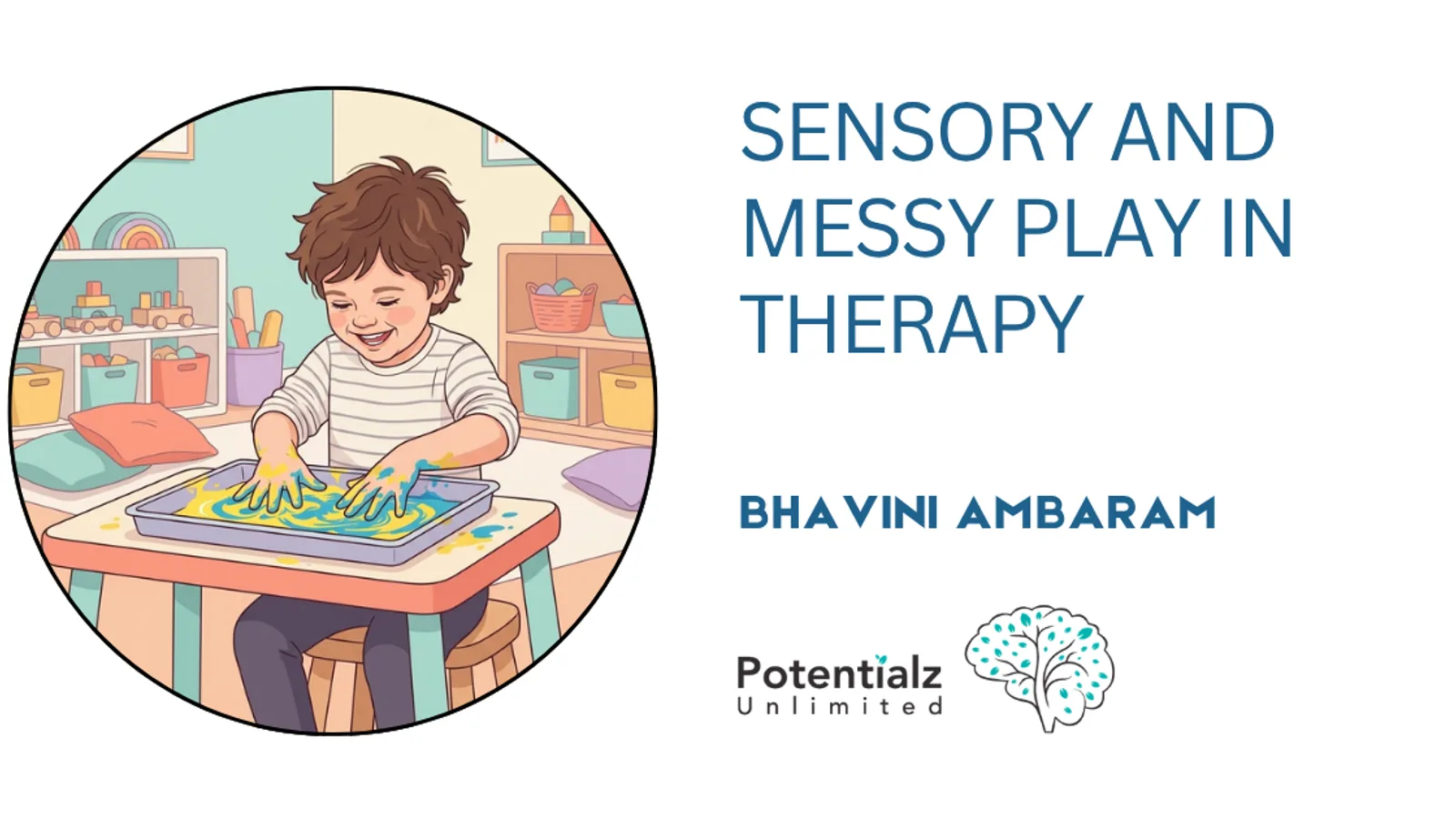
Your child plunges their hands into the paint without a moment’s hesitation. Or they refuse to touch anything wet, sticky, or slimy — and the look on their face when they accidentally step in mud tells you this is not just preference, it’s something more. Whether your child seeks sensory experience intensely or avoids it carefully, there is something important happening in that response. And in a therapeutic context, that something is information.
Sensory play and messy play are not simply enjoyable activities for children. They are one of the oldest and most powerful therapeutic tools available — used deliberately in therapeutic play to support nervous system regulation, emotional processing, and child development in ways that no amount of talking could achieve.
This post is for parents who are curious about why messy play features so prominently in therapeutic work — and why our practice runs sensory-based holiday workshops at Potentialz Unlimited.
What Is Sensory Play?
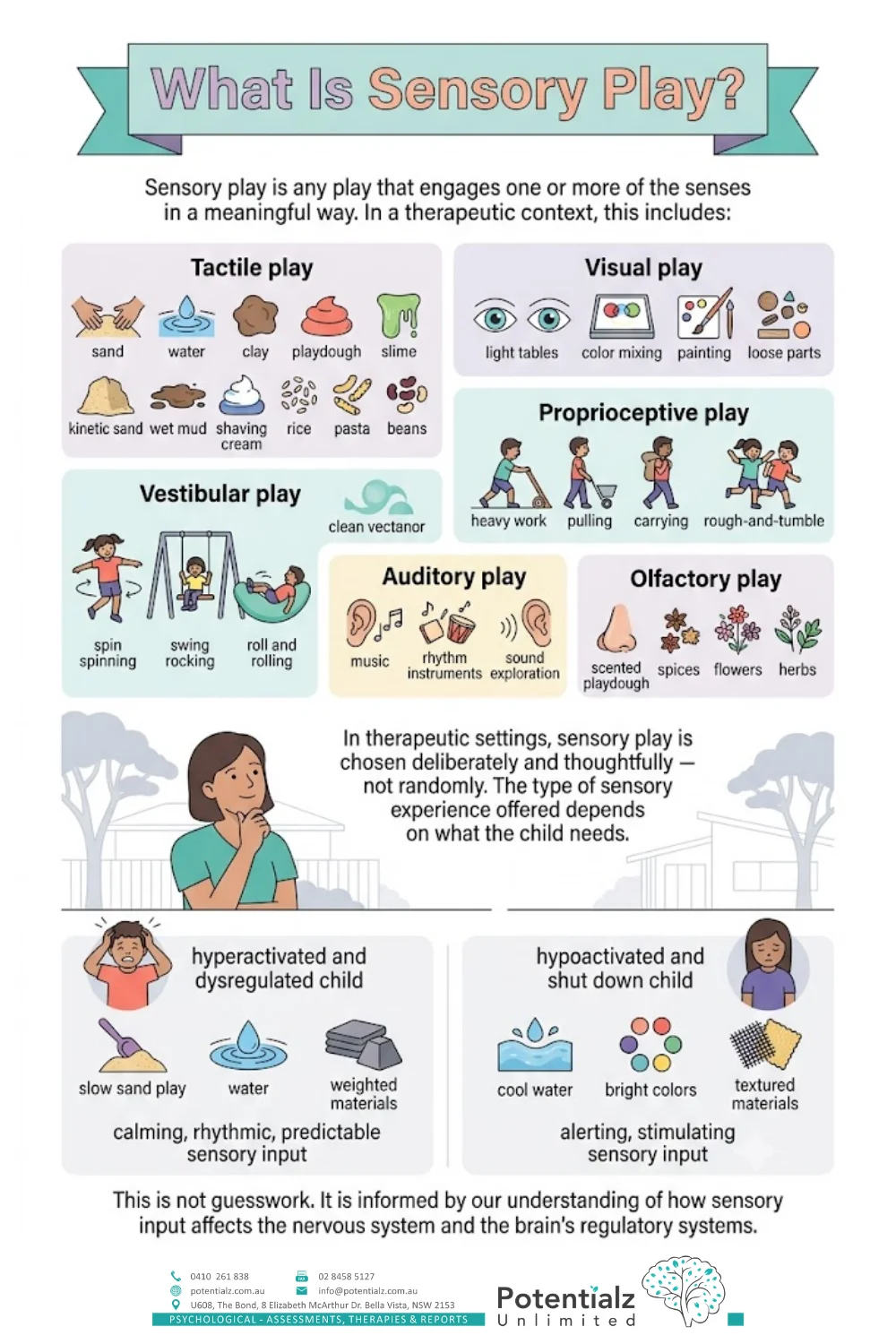
Sensory play is any play that engages one or more of the senses in a meaningful way. In a therapeutic context, this includes:
- Tactile play: sand, water, clay, playdough, slime, kinetic sand, wet mud, shaving cream, rice, pasta, beans
- Visual play: light tables, colour mixing, painting, loose parts
- Proprioceptive play: heavy work, pushing and pulling, carrying, rough-and-tumble
- Vestibular play: spinning, swinging, rocking, rolling
- Auditory play: music, rhythm instruments, sound exploration
- Olfactory play: scented playdough, spices, flowers, herbs
In therapeutic settings, sensory play is chosen deliberately and thoughtfully — not randomly. The type of sensory experience offered depends on what the child needs. A child who is hyperactivated and dysregulated may benefit from calming, rhythmic, predictable sensory input (slow sand play, water, weighted materials). A child who is hypoactivated and shut down may benefit from alerting, stimulating sensory input (cool water, bright colours, textured materials).
This is not guesswork. It is informed by our understanding of how sensory input affects the nervous system and the brain’s regulatory systems.
The Neuroscience of Sensory Play
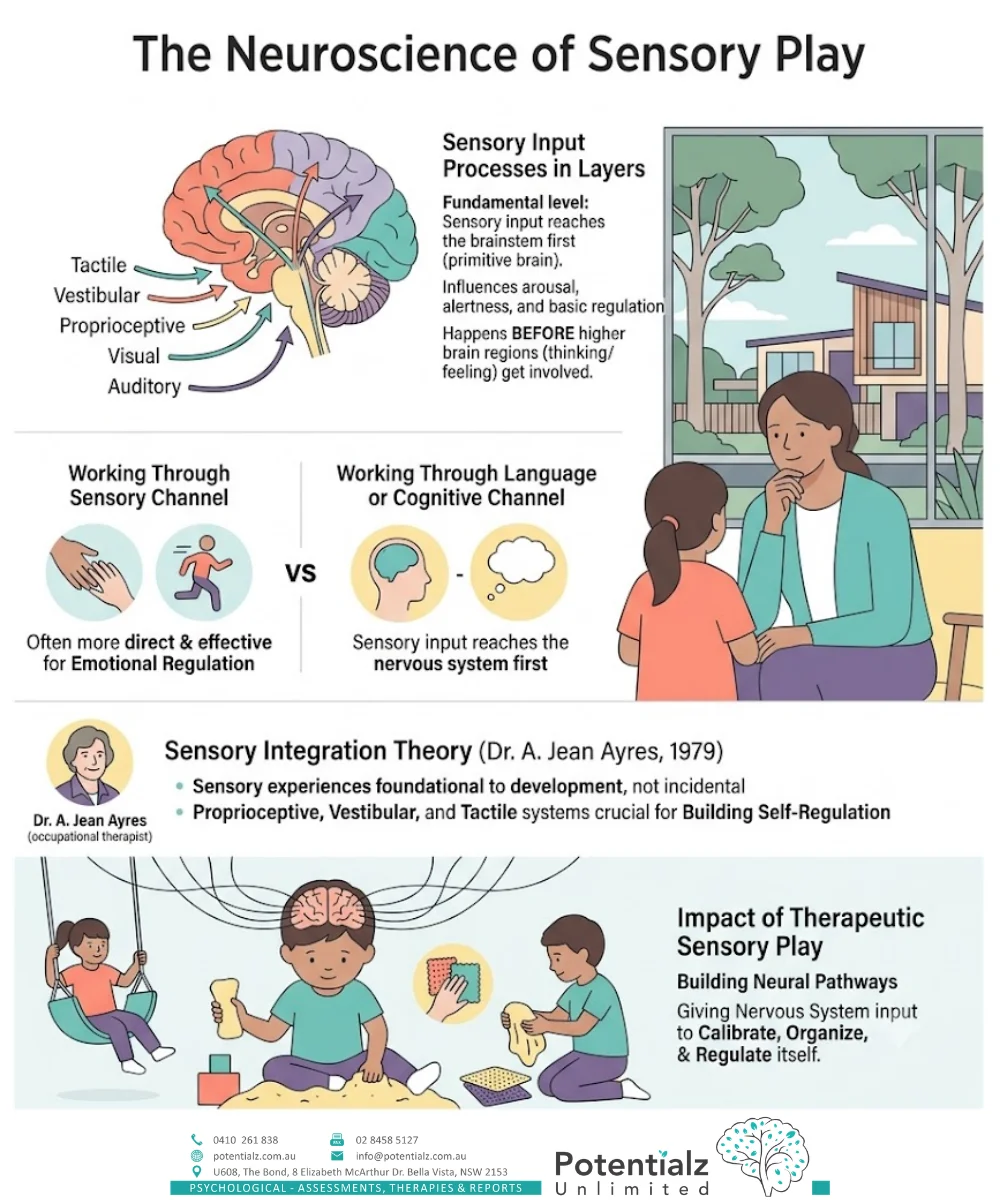
The brain processes sensory information in layers. At the most fundamental level, sensory input reaches the brainstem — the most primitive part of the brain — where it influences arousal, alertness, and the basic regulation of the nervous system. This happens before the higher brain regions involved in thinking and feeling even get involved.
This matters for therapeutic work. When we want to support a child’s emotional regulation — their ability to manage feelings, stay engaged, and function well — working through the sensory channel is often more direct and more effective than working through language or cognitive understanding. Sensory input reaches the nervous system first.
Research by Dr A. Jean Ayres, the occupational therapist who developed Sensory Integration theory, demonstrated that sensory experiences are not incidental to development — they are foundational to it. The proprioceptive, vestibular, and tactile systems in particular play a critical role in building the nervous system’s capacity for self-regulation (Ayres, 1979).
When children engage in therapeutic sensory play, they are not just having fun. They are building neural pathways. They are giving their nervous system the input it needs to calibrate, organise, and regulate itself.
What Sensory Play Does Emotionally
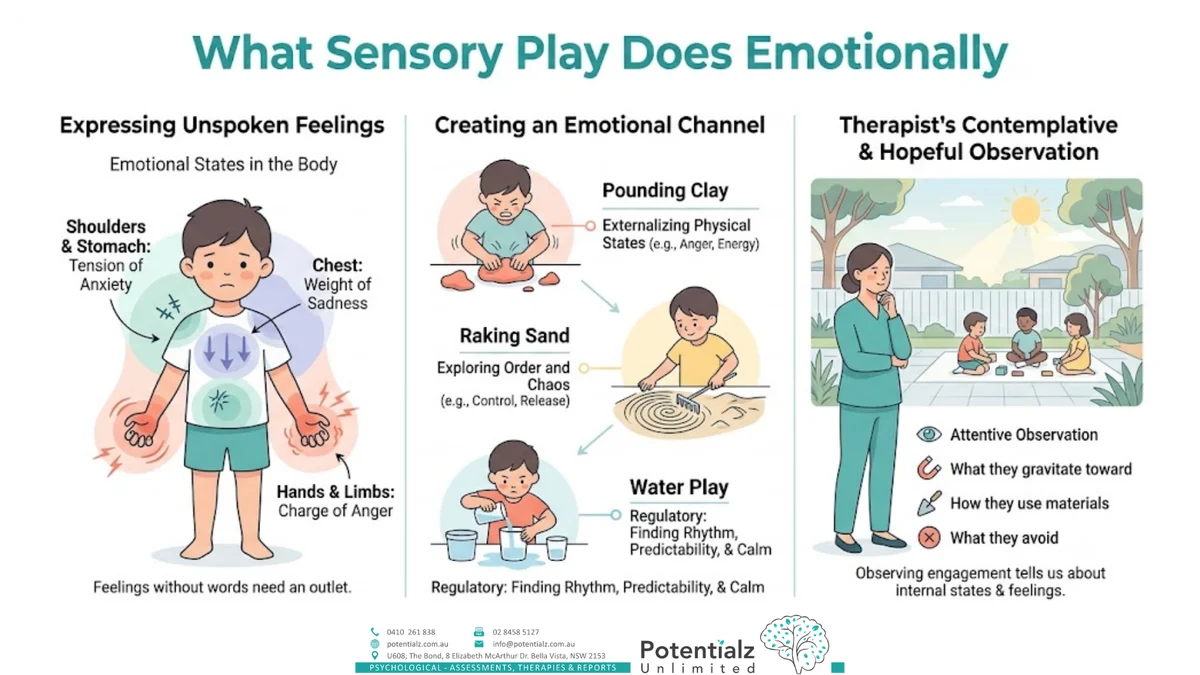
Beyond its neurological effects, sensory play does something important at the emotional and psychological level: it creates a direct channel for the expression and processing of inner states that cannot be put into words.
Children — especially young children, or children whose emotional vocabulary is limited — often hold their feelings in their bodies. The tension of anxiety is felt in the shoulders and stomach. The weight of sadness is felt in the chest. The charge of anger is felt in the hands and limbs. These physical sensations of emotion do not always have words attached to them, but they are real and they need somewhere to go.
Sensory play provides that somewhere. When a child pounds clay, they are externalising something physical. When a child rakes sand into elaborate patterns and then destroys them, they are working through something about order and chaos. When a child fills and empties containers of water with intense focus, they are doing something regulatory — finding rhythm, finding predictability, finding calm.
Our Practitioner in Therapeutic Play observes children in sensory play with the same attentiveness brought to all play therapy. The way children engage with materials — what they gravitate toward, how they use it, what they avoid — tells the clinician a great deal about what is happening for them internally.
Children Who Seek Sensory Input
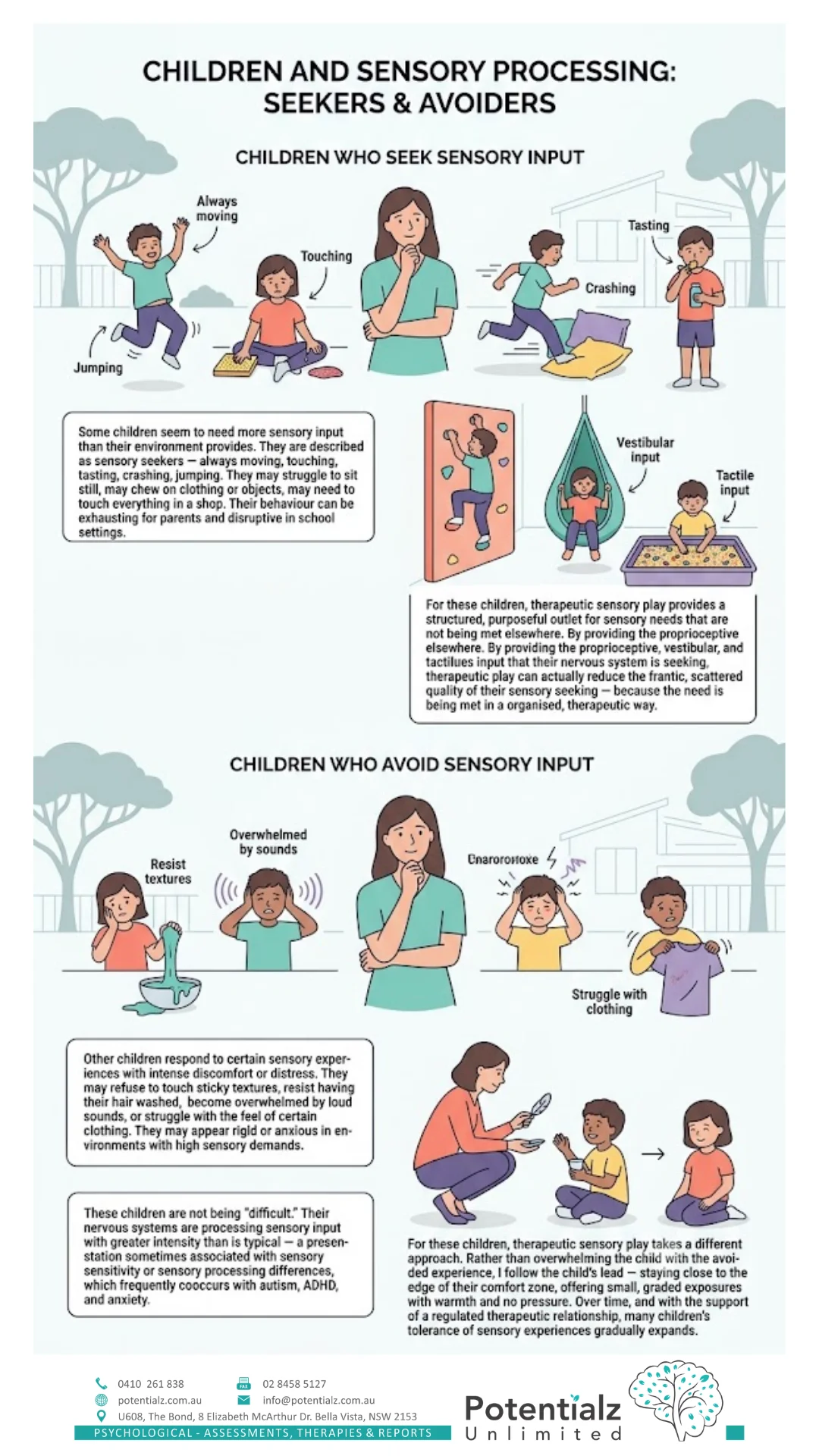
Some children seem to need more sensory input than their environment provides. They are described as sensory seekers — always moving, touching, tasting, crashing, jumping. They may struggle to sit still, may chew on clothing or objects, may need to touch everything in a shop. Their behaviour can be exhausting for parents and disruptive in school settings.
For these children, therapeutic sensory play provides a structured, purposeful outlet for sensory needs that are not being met elsewhere. By providing the proprioceptive, vestibular, and tactile input that their nervous system is seeking, therapeutic play can actually reduce the frantic, scattered quality of their sensory seeking — because the need is being met in an organised, therapeutic way.
Children Who Avoid Sensory Input
Other children respond to certain sensory experiences with intense discomfort or distress. They may refuse to touch sticky textures, resist having their hair washed, become overwhelmed by loud sounds, or struggle with the feel of certain clothing. They may appear rigid or anxious in environments with high sensory demands.
These children are not being “difficult.” Their nervous systems are processing sensory input with greater intensity than is typical — a presentation sometimes associated with sensory sensitivity or sensory processing differences, which frequently co-occurs with autism, ADHD, and anxiety.
For these children, therapeutic sensory play takes a different approach. Rather than overwhelming the child with the avoided experience, our Practitioner in Therapeutic Play follows the child’s lead — staying close to the edge of their comfort zone, offering small, graded exposures with warmth and no pressure. Over time, and with the support of a regulated therapeutic relationship, many children’s tolerance of sensory experiences gradually expands.
Therapeutic Holiday Workshops: Sensory Play in a Group
At Potentialz Unlimited, our practice runs therapeutic holiday workshops for children during school holiday periods. These workshops incorporate messy play, LEGO® projects, and sensory activities in a small-group, supported therapeutic environment.
These workshops are not childcare and they are not activity camps. They are structured therapeutic programs, run by our accredited Practitioner in Therapeutic Play, specifically designed to support children’s emotional and social development through the medium of sensory and creative play.
Holiday workshops are particularly valuable for:
- Children who struggle with the unstructured time and disrupted routines of school holidays
- Children who are working on social skills and friendships — the small group setting provides supported peer interaction
- Children who benefit from sensory experiences but need a safe, organised context for them
- Children who are anxious or have difficulty transitioning — workshops provide predictable structure within a therapeutic framework, and can complement work on school refusal and getting back to school
Parents who are interested in workshop programs are welcome to contact Potentialz Unlimited to discuss current availability and scheduling.
What Messy Play at Home Can Look Like
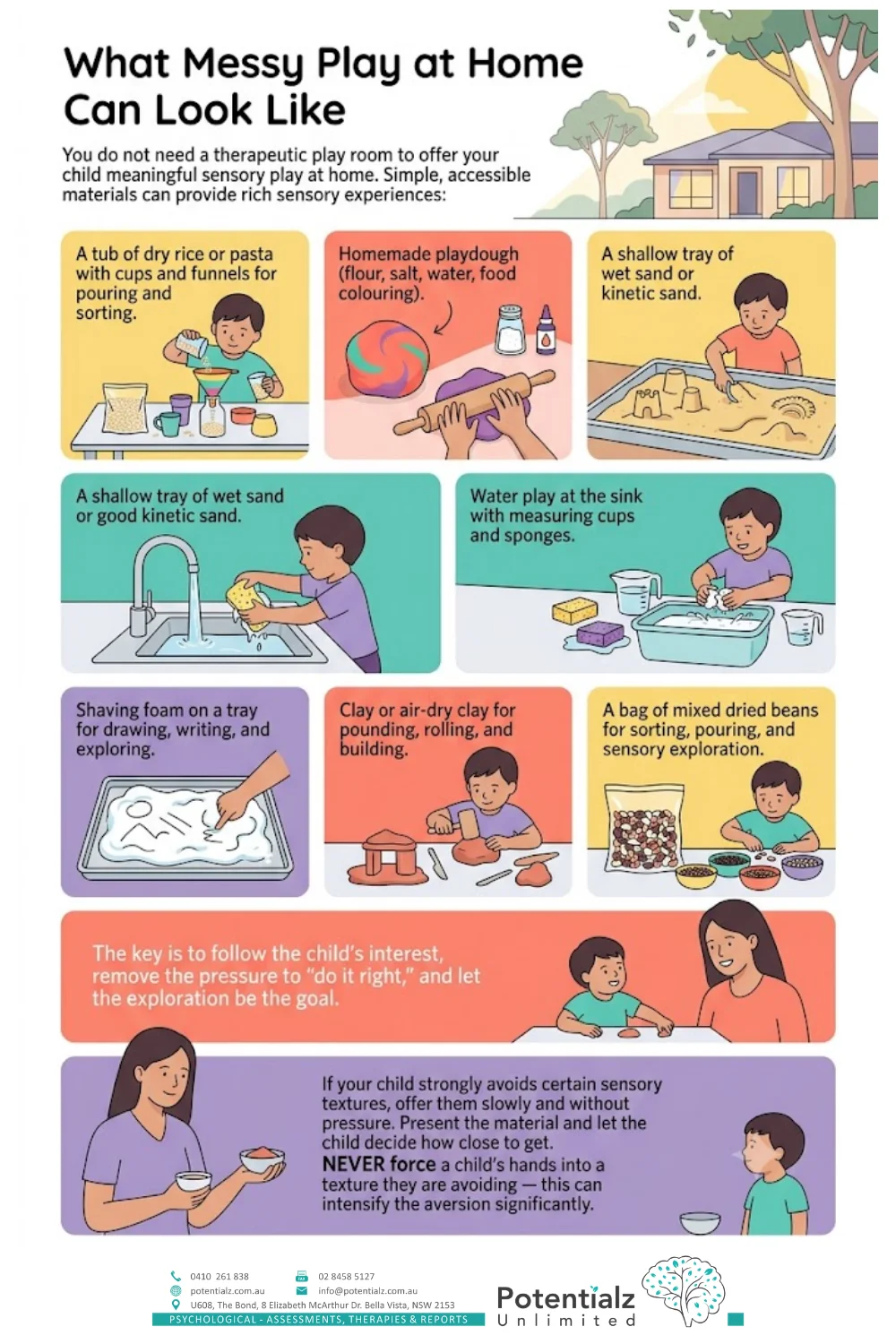
You do not need a therapeutic play room to offer your child meaningful sensory play at home. Simple, accessible materials can provide rich sensory experiences:
- A tub of dry rice or pasta with cups and funnels for pouring and sorting
- Homemade playdough (flour, salt, water, food colouring)
- A shallow tray of wet sand or kinetic sand
- Water play at the sink with measuring cups and sponges
- Shaving foam on a tray for drawing, writing, and exploring
- Clay or air-dry clay for pounding, rolling, and building
- A bag of mixed dried beans for sorting, pouring, and sensory exploration
The key is to follow the child’s interest, remove the pressure to “do it right,” and let the exploration be the goal.
If your child strongly avoids certain sensory textures, offer them slowly and without pressure. Present the material and let the child decide how close to get. Never force a child’s hands into a texture they are avoiding — this can intensify the aversion significantly.
Key Takeaways
- Sensory play is clinically purposeful, not just fun — it directly affects the nervous system’s capacity for self-regulation through the sensory-motor systems of the brainstem
- Different types of sensory input have different regulatory effects — calming inputs (slow, rhythmic, deep pressure) and alerting inputs (cool, bright, textured) are chosen deliberately in therapeutic work
- Children who seek sensory input intensely and children who avoid sensory experiences both have regulatory needs that sensory play can address
- Messy and sensory play provides a direct channel for emotional expression and processing that does not require words
- Therapeutic holiday workshops at Potentialz Unlimited provide structured sensory play in a supported small-group therapeutic context during school holidays
- Simple sensory play at home — with playdough, water, sand, and clay — can support emotional regulation and development
How Potentialz Can Help
At Potentialz Unlimited in Bella Vista, our Practitioner in Therapeutic Play incorporates sensory and messy play throughout therapeutic work with children aged 3–12. The practice runs therapeutic holiday workshops during school holiday periods, and individual play therapy sessions draw on sensory materials as appropriate to each child’s needs.
If your child is a sensory seeker, a sensory avoider, or if you are simply curious about what sensory play might offer, we welcome you to reach out.
- Initial consultation: $250
- Play therapy sessions: $190 per session
- Holiday workshop programs: contact for current pricing and dates
- Package discounts available for upfront payment
- NDIS self-managed plans accepted
Book at live.potentialz.com.au or call 0410 261 838.
Potentialz Unlimited | Unit 608, 8 Elizabeth Macarthur Drive, Bella Vista NSW 2153 Hours: Monday to Friday, 10am–7pm | Saturday and after-hours available
Disclaimer: This article is a Potentialz Unlimited editorial piece drawing on our clinical team’s experience. It is for general education and information only, not clinical advice for your particular child. Potentialz Unlimited is a psychology practice based in Bella Vista NSW; our clinical team includes Registered Psychologists and a Clinical Psychologist (registered with AHPRA) and an accredited Play Therapist. Please consult a qualified health professional for your individual circumstances. If your child is experiencing a mental health crisis, contact your GP, call Kids Helpline on 1800 55 1800, or go to your nearest emergency department.
If your child’s distress ever feels acute — persistent thoughts of self-harm, danger to themselves or others — please contact Kids Helpline on 1800 55 1800, Lifeline on 13 11 14, or in an emergency call 000.
References
Ayres, A. J. (1979). Sensory integration and the child. Western Psychological Services.
Bundy, A. C., Lane, S. J., & Murray, E. A. (2002). Sensory integration: Theory and practice (2nd ed.). F.A. Davis.
Miller, L. J. (2014). Sensational kids: Hope and help for children with sensory processing disorder (Rev. ed.). TarcherPerigee.
Porges, S. W. (2011). The polyvagal theory: Neurophysiological foundations of emotions, attachment, communication, and self-regulation. W. W. Norton.
Related Reading
- Book: Play Therapy at Potentialz Bella Vista → — play therapist near me for children ages 3–12 in the Hills District
- Anxiety in Children: How Play Therapy for Anxiety Helps
Knowledge Check Quiz
Test what you have just read. Choose your answer for each question, then submit to reveal the answers and your score.
Need Professional Support?
If you're experiencing mental health concerns, our team is here to help.