Key Takeaways
- An adult ADHD assessment is not a single test — it is a structured process combining a detailed clinical interview, standardised self-report measures (such as the CAARS and ASRS), collateral history where possible, and often a cognitive screen to map co-occurring learning and attention patterns.
- Adults who seek assessment most often fall into a few recognisable groups: people who were “quietly missed” at school, women whose inattentive presentation was mistaken for anxiety or perfectionism, and high-effort compensators who are suddenly running out of runway in their late twenties, thirties, or forties.
- The three DSM-5 ADHD presentations — predominantly inattentive, predominantly hyperactive-impulsive, and combined — describe the shape of your attention system, not your worth or intelligence.
- A diagnosis tells you what pattern is going on and opens doors (psychology, GP and psychiatrist pathway, workplace and study accommodations, and — where there is significant, permanent functional impairment or co-occurring disability — pathways into NDIS psychological support and functional capacity assessment); it does not tell you who you are or dictate that you must take medication.
- After assessment, the useful next step is almost always therapy and skill-building — CBT and ACT both have a strong evidence base for adult ADHD, particularly for the anxiety, low mood, and self-criticism that so often ride alongside it.
- Common myths — “ADHD is a fad”, “everyone’s a bit ADHD”, “stimulants are cheating” — do real damage and keep people from getting help that would meaningfully change their day-to-day life.
- At Potentialz Unlimited in Bella Vista, our Registered Psychologist team offers adult ADHD assessment and post-assessment therapy for adults 18+, drawing on cognitive assessment experience across Australian clinical, educational, and public-sector settings.
”I’ve Wondered About This for Years” — Why Adults Come In
If you have found yourself, over the last year or two, quietly reading about ADHD late at night, watching videos and thinking that is me, and then putting the phone down and telling yourself you’re just tired, you are in very familiar company. In our work with adults at Potentialz Unlimited the practice hears a version of this most weeks. Someone in their thirties or forties books in, sits down, and says something like: “I don’t know if this is a real thing, but I’ve wondered about ADHD for a long time — and I finally want to actually find out.”
At the start: wanting to find out is not weakness or self-diagnosis or jumping on a trend. It is the entirely reasonable response to a mismatch you have probably been living with for a very long time — between how hard you are working and what you are actually able to get done, between how bright people tell you that you are and how disorganised your inner life feels, between the version of yourself you show up as at 9am and the version who collapses at 9pm.
An adult ADHD assessment is the process of taking that lived experience seriously, examining it against clear diagnostic criteria, and turning it into something you can work with. This is a Potentialz Unlimited editorial piece drawing on our clinical team’s experience — an honest walk-through of what that assessment actually looks like, who most often seeks one, what the results do and do not tell you, and what usually happens next.
Our Registered Psychologist team at Potentialz Unlimited in Bella Vista sees adults, young adults, adolescents, and children (aged 8 and up) — and has worked with ADHD across all of those age groups, drawing on cognitive-assessment experience across Australian clinical, educational, and public-sector settings. The team uses Cognitive Behavioural Therapy (CBT), Acceptance and Commitment Therapy (ACT), and Solution-Focused Therapy in the post-assessment phase. The goal of this article is to leave you with a clear picture of what the process is, and a warm invitation to book in if it is time.
What an Adult ADHD Assessment Actually Involves
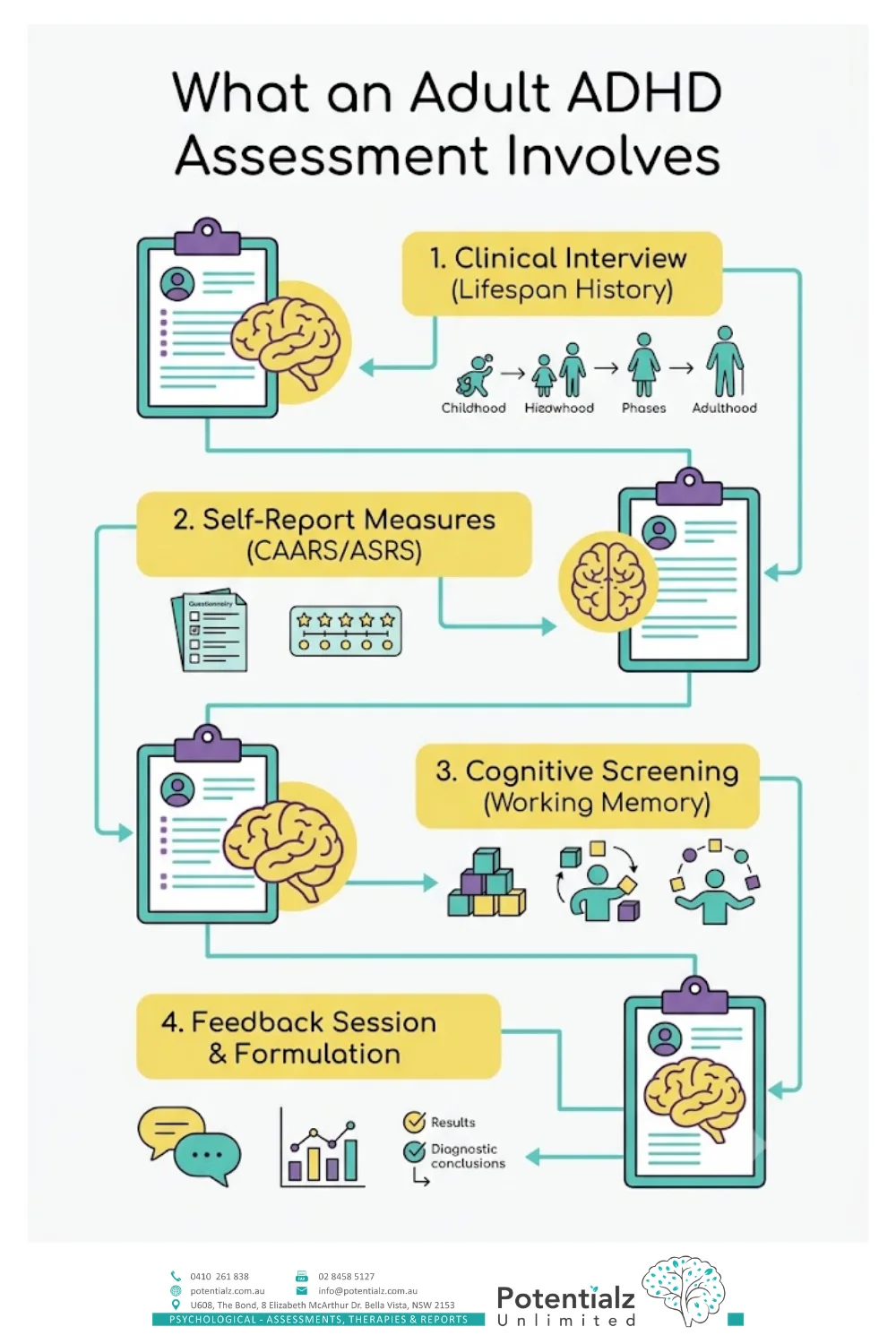
There is a widespread expectation that an ADHD assessment is a single online questionnaire, a brain scan, or a computer-based attention test that spits out a result. It is not. A properly conducted adult ADHD assessment is a structured clinical process that typically involves several strands woven together over a small number of sessions. Here is what each strand does and why it matters.
The clinical interview
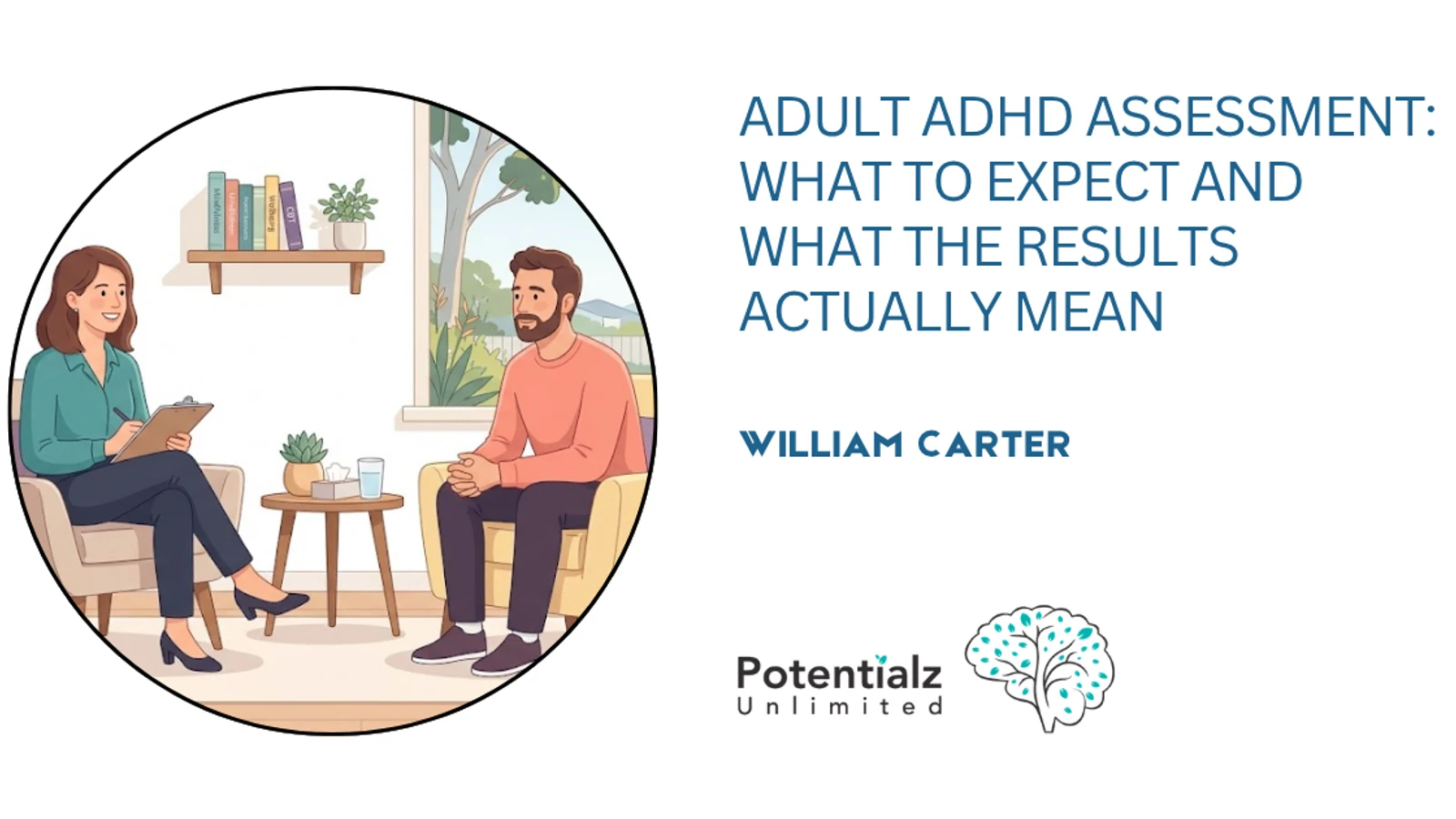
This is the backbone of the whole assessment. In practice it means two or three sessions where the clinician sits down with you and goes through your history in detail. Together we look at your childhood — school reports if you can find them, memories of primary school, anything you can recall about how you handled sitting still, following instructions, finishing homework, keeping track of belongings. We look at adolescence, at what happened in high school and how you experienced study, friendships, and the transition to increased independence. We look at your adult life — work, study, relationships, home management, finances, driving, sleep, screen use, mood, and anxiety. And we look very carefully at the present: what a typical day genuinely feels like from the inside, what you notice yourself doing and not doing, what has already been tried, and what you are hoping might change.
Two things about the clinical interview that people are often surprised by. First, the clinician is not just looking for whether you have symptoms of inattention or impulsivity — the assessment is looking at whether those symptoms have been present in some form since childhood, whether they show up across more than one setting (not only at work, not only at home), and whether they are actually interfering with your functioning. The DSM-5 criteria are quite specific about all of these, and part of the clinician’s job is to make sure these are tested properly rather than treating a rough impression as a diagnosis.
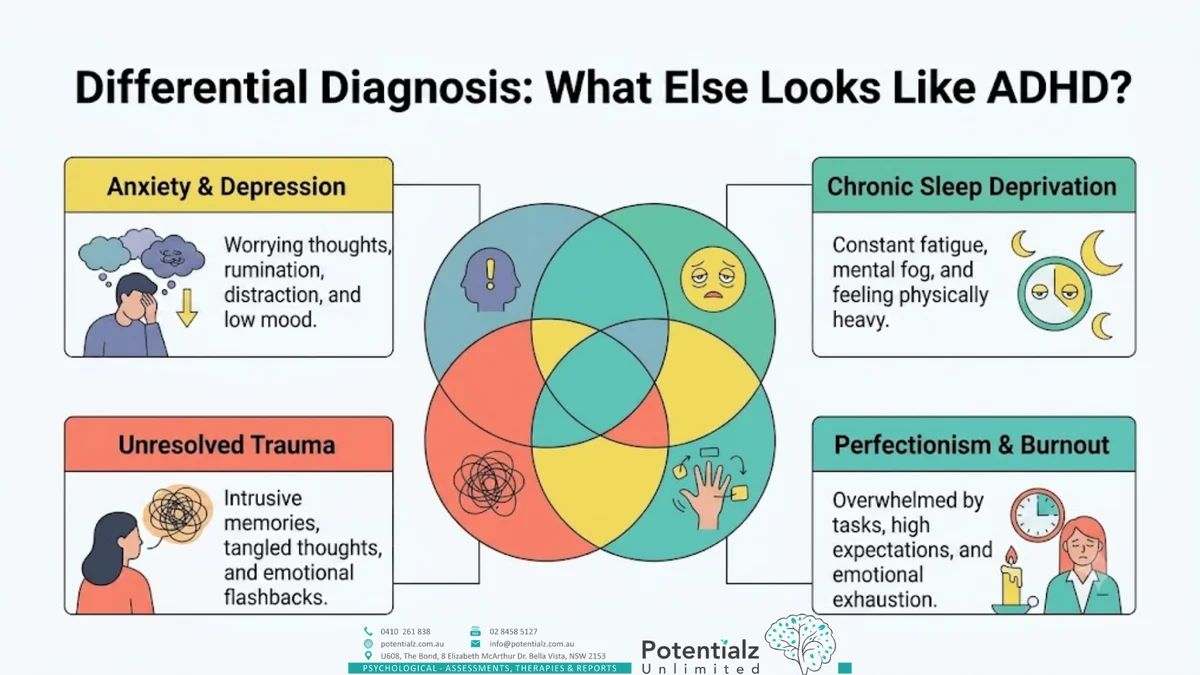
Second, the interview is also a differential diagnosis process. Anxiety, depression, chronic sleep deprivation, thyroid issues, unresolved grief, undiagnosed autism, chronic overwork, and long-term perfectionism can all look like ADHD from the outside — and some of them can co-occur with ADHD. Part of the reason the process goes slowly is so we can tell the difference, or, more often, so we can tell you honestly how much of what you are experiencing is explained by ADHD, how much by something else, and how much by the pile-up between them.
Standardised self-report measures
The two most commonly used in an adult ADHD assessment are the CAARS (Conners’ Adult ADHD Rating Scales) and the ASRS (Adult ADHD Self-Report Scale developed with the World Health Organisation). Both are well-validated questionnaires that ask you to rate a large set of statements about your attention, focus, restlessness, impulsivity, organisation, and emotional regulation. The CAARS is longer and more clinically detailed; the ASRS is briefer and often used as a screener.
These measures are not “the test”. They do not diagnose ADHD on their own. What they do is give the clinician a structured, comparable, norm-referenced picture of where your self-reported experience sits relative to the general adult population — and that gets weighted alongside the clinical interview and everything else.
Where possible, an observer-report version of the CAARS is also obtained from a partner, a parent, or a close friend who has known you a long time. It is not compulsory, and if it is not available the assessment works without it. But it can be a useful cross-check, because self-report has real strengths and real blind spots — some adults over-report symptoms because they have been living inside the pattern for so long, and some under-report because they have quietly compensated for years and no longer notice what they are doing.
Cognitive screening
At Potentialz, drawing on our team’s experience administering cognitive assessments across Australian clinical, educational, and public-sector settings (WISC, WPPSI, WAIS-II, PAI, WHODAS), a cognitive screen is often included as part of an adult ADHD assessment. This is not because a cognitive assessment diagnoses ADHD — it does not, and any clinician who tells you a WAIS result “confirms ADHD” is overstating the case. It is because a cognitive screen adds real value in three specific ways.
First, it maps your intellectual profile, which is genuinely helpful for post-assessment planning. A person with strong verbal reasoning and slower processing speed will find different life strategies useful than a person whose scores sit the other way around.
Second, it can identify a co-occurring learning profile — a specific learning difficulty in reading, writing, or maths, for example — that has been quietly making life harder and has never been named.
Third, it gives us objective data on working memory and processing speed, both of which are often (though not always) affected in adult ADHD and can help contextualise the self-report picture.
If it is decided together that a full cognitive assessment is not needed, it can be skipped. If it is worth including, the clinician will explain exactly what is involved and how it fits into the overall report.
The feedback session
The final piece of a properly conducted assessment is the feedback session. This is not a two-line “yes you have it / no you don’t”. It is a dedicated appointment where the full formulation is gone through together — what the interview showed, what the questionnaires showed, what the cognitive screen (if any) showed, how it all fits, whether the criteria for ADHD are met and if so which presentation, what else was noticed along the way, and what the recommended next steps are. You leave with a written report and, more importantly, a clear understanding of what your own results actually mean.
Who Typically Seeks Assessment as an Adult
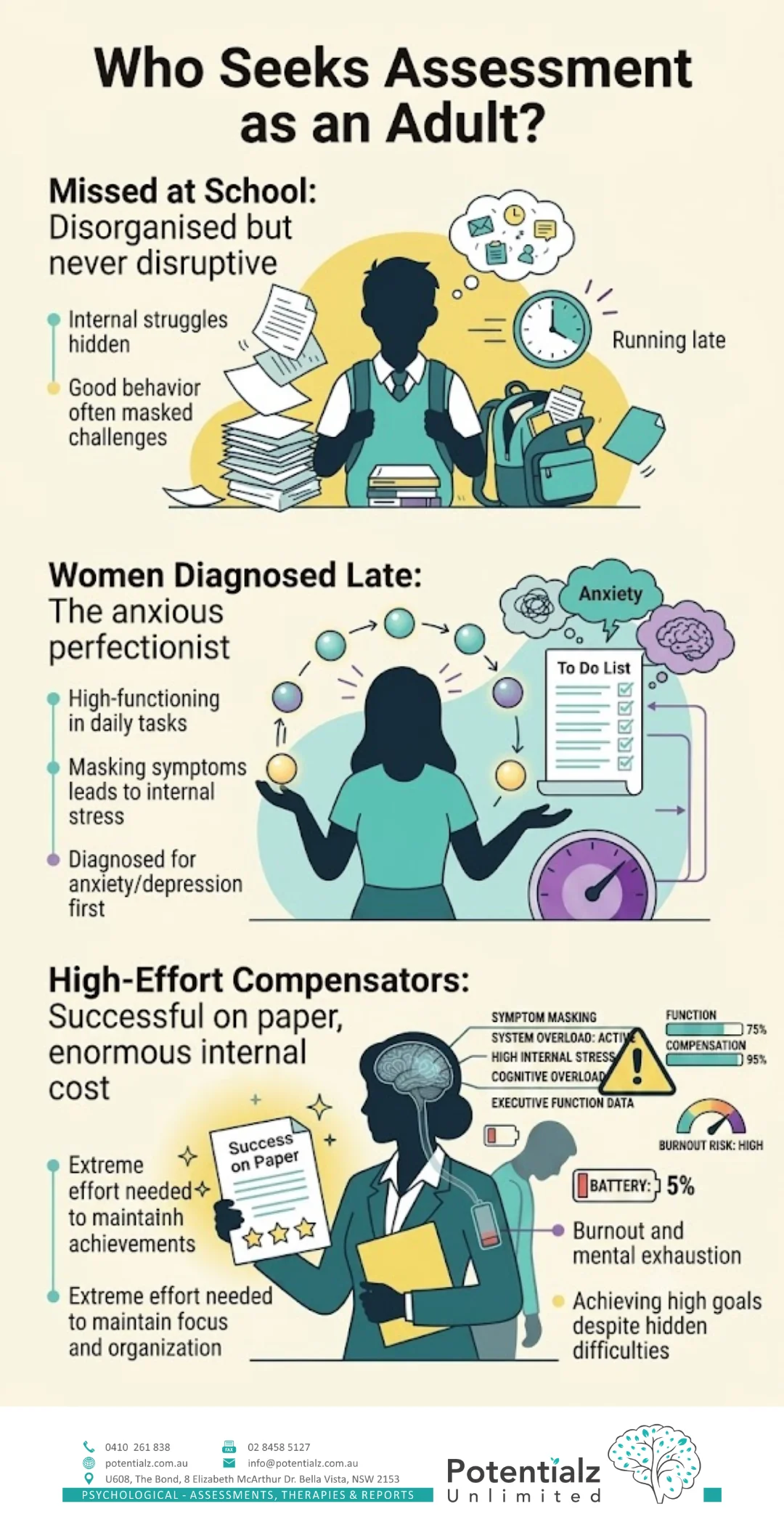
There is no single “type” of adult who comes in for an ADHD assessment. But across the people the practice has worked with, a few groups recur often enough to be worth naming — because if you recognise yourself in one of them, that recognition itself can be a small, quiet relief.
The person who was “missed at school”. Bright enough to coast through primary school on natural ability. Quietly disorganised but never disruptive. Slid through high school with a mix of last-minute cramming, teacher goodwill, and a lot of shame that they were not living up to their potential. Got to university or the workforce, where the external structure suddenly disappeared, and everything started to fall apart in slow motion. When they read about ADHD, especially the inattentive presentation, something clicks.
Women diagnosed late. ADHD in girls has been chronically under-recognised for decades, in large part because the diagnostic picture was built around hyperactive boys in the 1970s and 1980s. Many women the practice speaks with were the “daydreamer” or the “sensitive one” or the “anxious perfectionist” at school. They went on to build careers, run households, and carry enormous cognitive loads while quietly drowning in mental to-do lists, missed appointments, and the recurring sense that everyone else has been handed a manual they were not given. For many, the trigger for assessment is either postpartum burnout, a child being assessed and the pattern suddenly being recognisable in themselves, or a friend’s diagnosis in their late thirties or forties.
High-effort compensators. These are the adults who look, from the outside, like the last people who could have ADHD. They are often high performers on paper — successful careers, high academic achievement, functional relationships. Internally, the cost is enormous. They rely on colossal amounts of anxiety, caffeine, deadline pressure, colour-coded systems, and after-hours catch-up work to hold everything together. They usually come in either because a system that worked for years has finally collapsed (a promotion, a new baby, a health issue), or because they have finally allowed themselves to ask why the same amount of effort produces so much more suffering for them than for the people around them.
Adults with anxiety or depression that has not fully responded to treatment. Sometimes, treated anxiety or depression improves — but a stubborn layer of attention, focus, and follow-through problems remains. Assessing for ADHD in this context is not about replacing the previous diagnosis; it is about asking whether there is an underlying attentional pattern that has been contributing to (and being masked by) the mood picture.
Adults with a family member who was recently diagnosed. ADHD has a strong heritability component. When a child, sibling, or parent is diagnosed, the family often begins to see the pattern in themselves.
If you see yourself in any of these — or in none of them but still with a persistent sense that something is off — that is a legitimate reason to seek assessment. You do not have to have a dramatic story. You do not need to justify your interest.
The Three Presentations, in Plain English
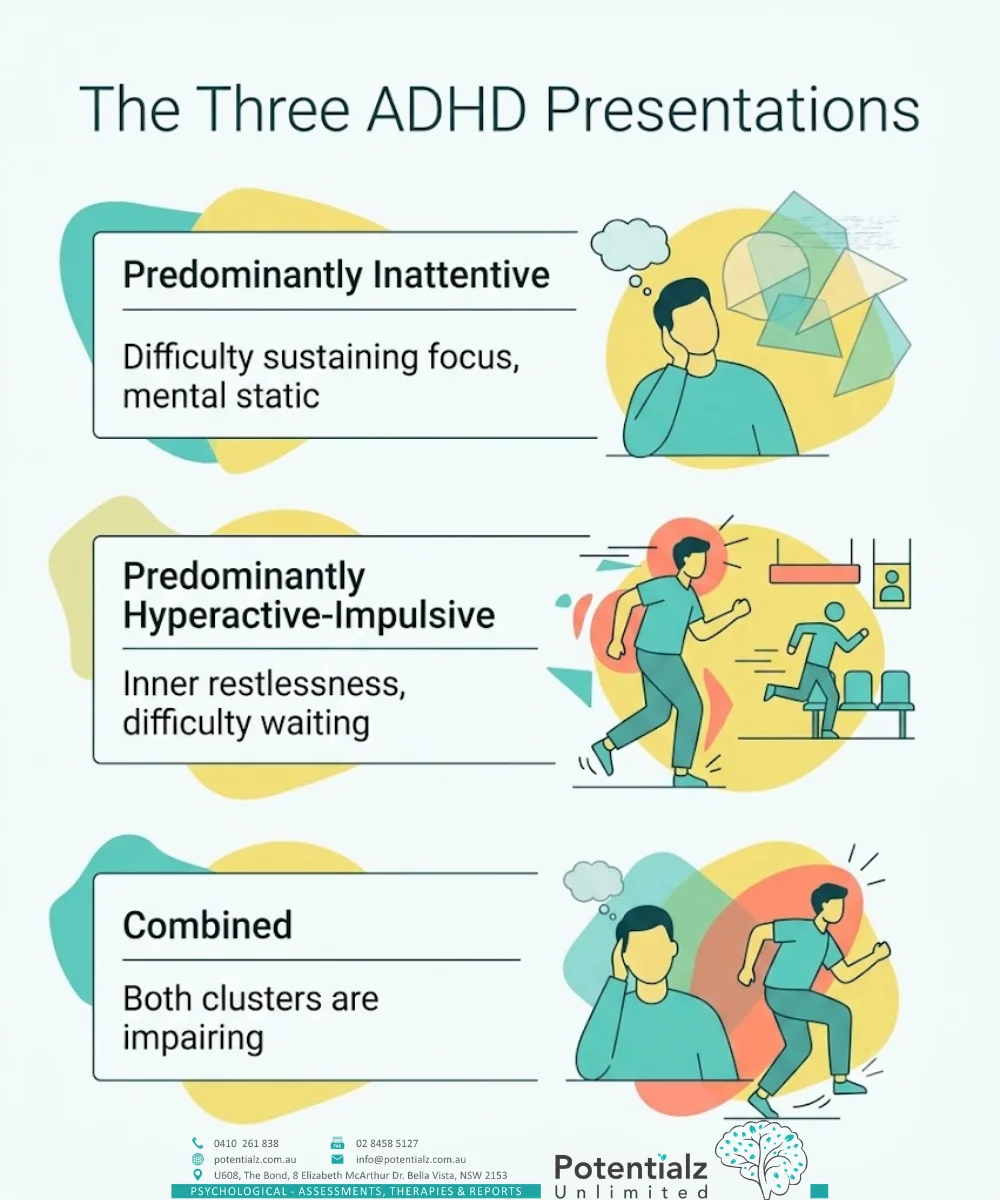
The DSM-5 organises ADHD into three presentations, based on which cluster of symptoms is most prominent for you over the past six months.
Predominantly inattentive presentation. This is the presentation most often missed, especially in girls and women. Its features are things like difficulty sustaining attention on tasks that are not intrinsically interesting, being easily distracted, making careless mistakes, losing track of belongings, forgetting appointments and commitments, chronic difficulty starting tasks (particularly non-preferred ones), and a mental experience that many people describe as “static” or “TV channels flipping on their own”. Hyperactivity is not prominent; the person is often quiet, thoughtful, and internally busy.
Predominantly hyperactive-impulsive presentation. This is the presentation the general public most associates with ADHD, particularly in children. In adults, “hyperactivity” often looks less like literal running around and more like an inner restlessness — a physical inability to sit through long meetings, fidgeting, talking over people, interrupting, difficulty waiting, blurting things out, taking action on decisions before fully thinking them through. Impulsivity can show up in spending, driving, substance use, or in words that get out before the internal filter catches them.
Combined presentation. This is where symptoms from both clusters are present and both are impairing. This is the most commonly diagnosed presentation across the lifespan.
A few important clarifications. First, the presentation you meet criteria for now might not be the presentation you would have met as a child; presentations can shift as people mature, and adult ADHD often looks a bit different from childhood ADHD. Second, “predominantly inattentive” does not mean “less real” — it is not a milder version of hyperactive-impulsive ADHD, it is a different profile with its own significant costs. Third, none of these presentations are a description of your character. They describe how your attention system tends to operate. That is all.
What the Results Actually Tell You (And What They Don’t)
This is the part of the assessment conversation that our team thinks matters most, because expectations about what a diagnosis will and will not deliver are often the difference between an assessment that helps a person’s life and one that leaves them flat.
What a diagnosis does tell you
A diagnosis of ADHD tells you that a well-defined clinical pattern is present, that it has been present in some form since childhood, that it affects more than one area of your life, and that it is not better explained by another condition. It tells you that your experience of your own attention, effort, and follow-through is not a character flaw or a moral failing — it is a real cognitive pattern with a substantial neurobiological basis. It gives you and any clinicians involved a shared, evidence-based framework for understanding what is happening and what to do about it.
A diagnosis opens doors. It gives you access, if you want it, to the GP and psychiatrist pathway for medication assessment. It gives you a legitimate basis for requesting workplace and study accommodations under the Disability Discrimination Act 1992 (Cth) — things like extended time on exams, quieter workspaces, written follow-ups to verbal meetings, flexible deadlines where feasible. It gives you a framework for understanding recurring patterns in relationships and daily life that have never previously had a name.
What a diagnosis does not tell you
A diagnosis does not tell you who you are. It is not an identity, though many people find identifying with the ADHD community meaningful and useful. It does not, by itself, change anything about your daily experience — the changes come from what you do next.
A diagnosis does not oblige you to take medication. Many adults with ADHD choose to try medication, many do not, and both are legitimate choices depending on your values, circumstances, and how ADHD is affecting you. Medication is a decision made between you, your GP, and a psychiatrist — psychologists do not prescribe, and our Registered Psychologist team has no stake in you making one choice or the other.
A diagnosis does not explain everything about your life. If you have been carrying trauma, unprocessed grief, chronic overwork, or relational pain, those will still be there after diagnosis and will still deserve their own attention. ADHD is often part of the picture, not the whole picture.
Perhaps most importantly, a diagnosis does not mean your strengths are somehow explained away. Many adults with ADHD are creative, energetic, deeply curious, capable of hyperfocused deep work under the right conditions, and genuinely gifted in ways that are not despite their ADHD but interwoven with it. A good assessment holds both sides of that honestly.
What Happens After the Assessment
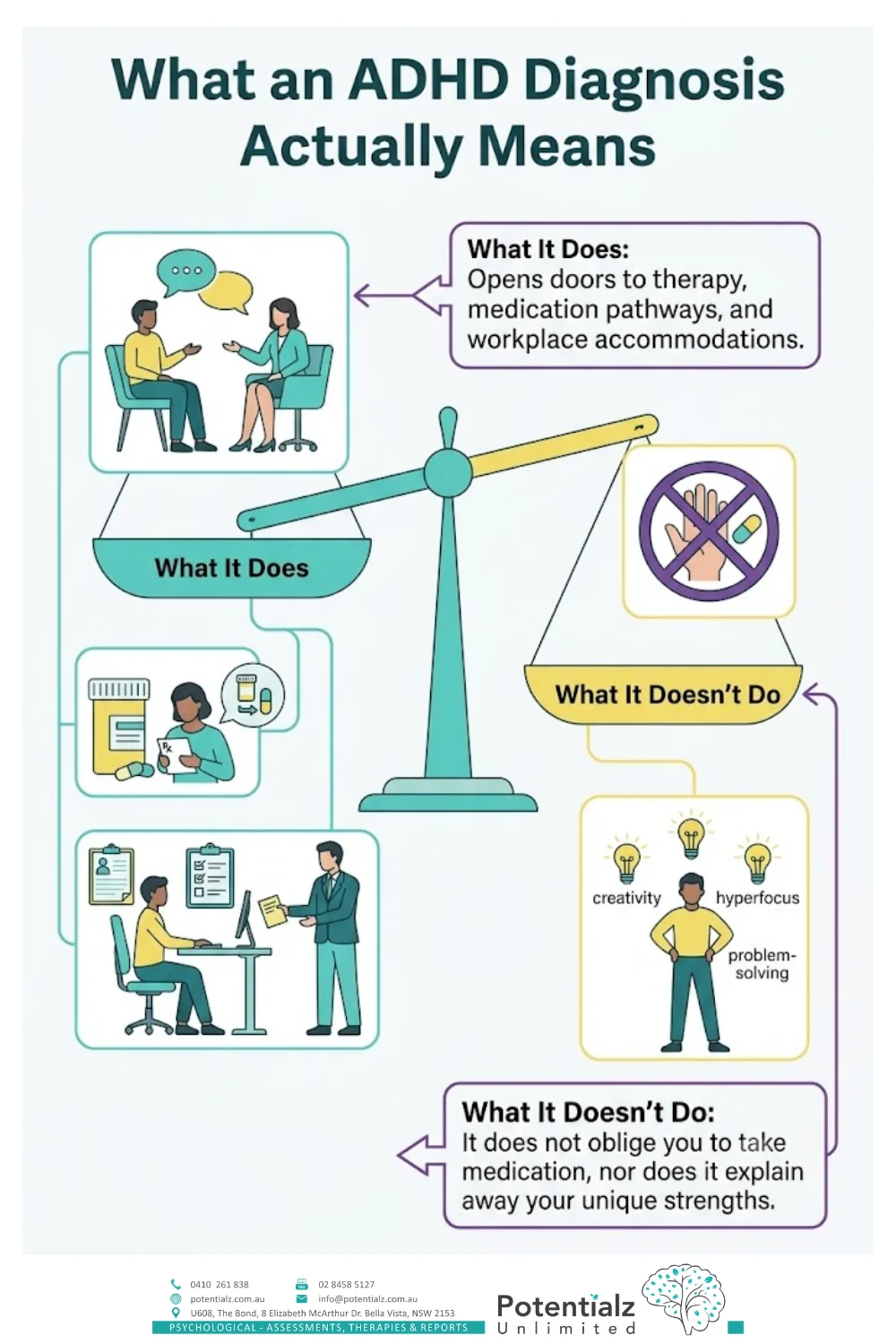
The feedback session is not the end of the process — it is the beginning of the useful part. Depending on what we find and what you want to do with it, next steps commonly include some combination of the following.
Therapy. In practice this is where most of the real day-to-day change happens. Both Cognitive Behavioural Therapy and Acceptance and Commitment Therapy have a strong evidence base for adult ADHD, and our team uses both. CBT for adult ADHD often focuses on very concrete things — building external structures for tasks that internal executive function is not reliably delivering (calendars that actually get looked at, task-breakdown skills, environmental design), managing the shame spiral that ADHD-adjacent failures so often trigger, and treating the anxiety and low mood that ride alongside ADHD for most adults the team sees. It is also where the team addresses the ADHD–procrastination link directly, since task avoidance is so often where the daily struggle actually shows up. ACT works on the values piece — what actually matters to you, what a workable life looks like, and how to keep moving towards that life without waiting for the difficult ADHD moments to first disappear. Psychological flexibility, self-compassion, and unhooking from the internal critic are ACT’s particular contributions here and they matter enormously for adults who have spent decades feeling like they were failing at things other people found easy.
GP and psychiatrist pathway for medication (if you want it). In Australia, ADHD medication is prescribed by a psychiatrist (initial prescription and ongoing script authorisation, with your GP typically continuing repeat scripts once things are stable). If you would like to explore medication, our team can support you to take the assessment report to your GP and discuss a psychiatry referral. This is entirely optional. Some adults find medication genuinely life-changing; others do not tolerate it well or do not want to try it, and psychology-only pathways are absolutely valid.
Workplace or study accommodations. With your permission, the assessment report can be shared with a university disability service, a professional body, or an employer’s HR / occupational health team to support reasonable adjustments. Common ones include extended assessment time, extensions on deadlines where feasible, written follow-ups to verbal instructions, quieter work environments, and flexibility in meeting scheduling.
Self-understanding and community. The quieter but often most powerful piece. Many adults describe the months after diagnosis as a slow, sometimes emotional re-reading of their own life — re-examining old school reports, past jobs, relationships, previous therapy — through a lens that finally fits. Grief is a very common part of this (“if only someone had noticed when I was ten”). So is relief. So is a re-forming sense of self-compassion. All of that is legitimate, and it is one of the things our team holds space for in the post-assessment therapy work.
Myths Worth Naming Directly
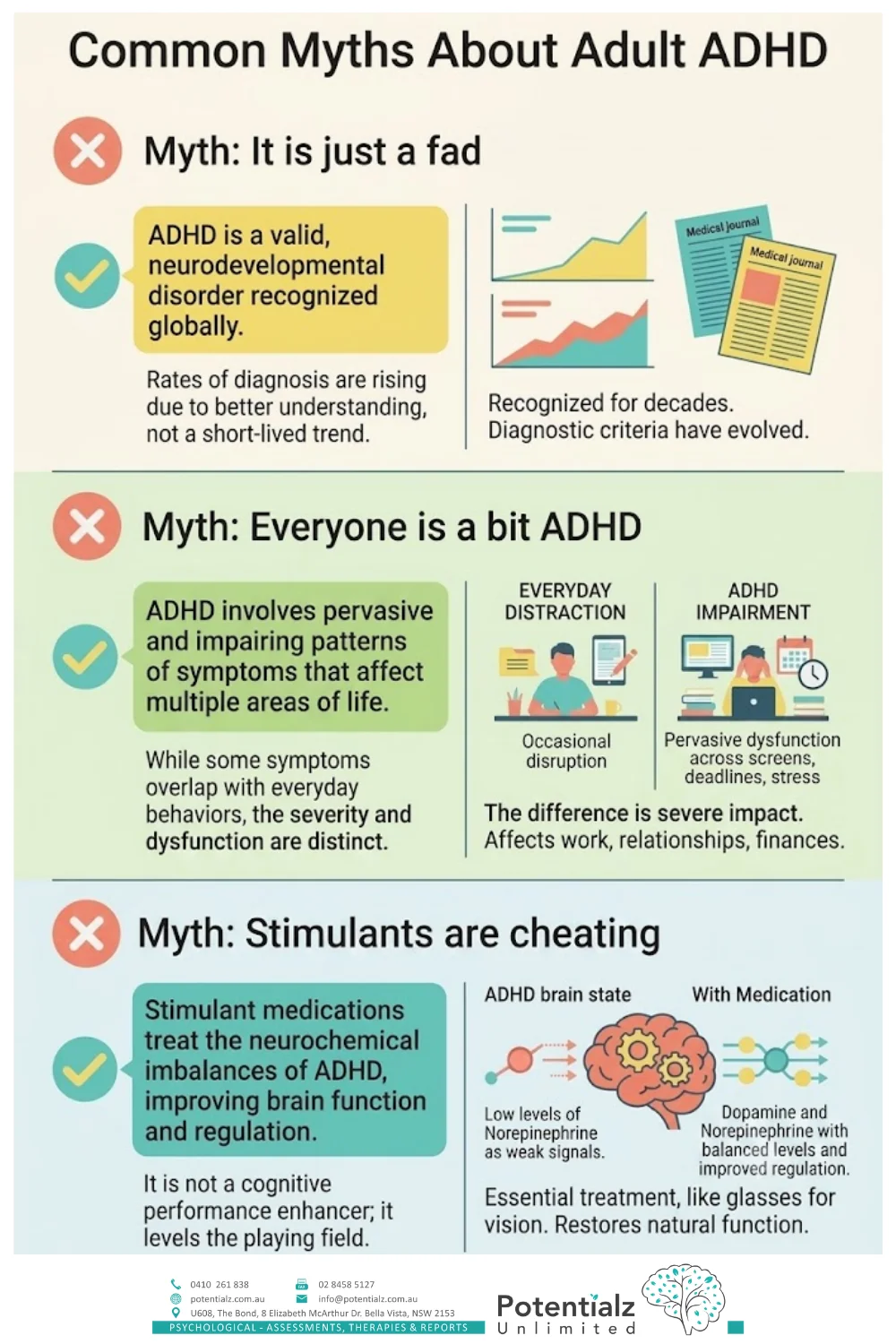
Because these come up in the room often, and because they keep good people from getting help, a few of the most common myths about adult ADHD are worth naming as directly as possible.
“ADHD is a fad.” ADHD as a clinical entity has been consistently described in the medical literature for over a century — the current diagnostic criteria are a modern refinement of a very long clinical tradition. What is genuinely more recent is the recognition that ADHD persists into adulthood in most cases, that it presents differently in women and girls than in the population it was originally described in, and that late-diagnosed adults have often been suffering quietly for decades. Increased recognition is not a fad; it is a partial correction of a long, gendered under-recognition.
“Everyone’s a bit ADHD.” Everyone occasionally forgets things, gets distracted, or feels restless in a boring meeting. That is normal cognitive variability. ADHD is not defined by any single symptom occurring occasionally; it is defined by a specific pattern of persistent, cross-setting, impairing symptoms that have been present since childhood. The threshold is meaningful, and the assessment is designed precisely to distinguish “occasionally distracted” from “clinically impairing attentional pattern”.
“Stimulants are cheating.” Stimulant medication (where prescribed and taken as directed) helps ADHD brains regulate attention and executive function to something closer to the baseline that non-ADHD brains have without medication. This is not an unfair advantage; it is a partial correction. Treating an ADHD adult with appropriate medication is no more “cheating” than treating a person with poor vision with glasses. That said, medication is genuinely not for everyone, and no one should be pressured either into taking it or into refusing it.
“You’ve done well in life, so you can’t have ADHD.” Some of the adults the practice has assessed with the clearest ADHD presentations are also among the most externally successful. High effort and high compensation are compatible with ADHD; they are often part of the reason the picture has been missed. What matters diagnostically is not what your CV looks like but what the internal cost of that CV has been.
“If it were real ADHD, you’d have had it as a child.” Yes — and you did. That is the whole point of the childhood-history strand of the assessment. Adult ADHD is childhood ADHD that has persisted into adulthood; the criteria explicitly require evidence of some symptoms before age 12. What is often the case is not that the ADHD emerged in adulthood, but that the impairment became visible in adulthood, when external supports were removed and the internal load was no longer sustainable.
How Potentialz Can Help
Our Registered Psychologist team offers adult ADHD assessment and assessment-first psychology treatment at Potentialz Unlimited in Bella Vista for adults 18 and over. The typical arrangement is a small number of assessment appointments (clinical interview, questionnaires, cognitive screen if indicated, feedback session and written report), followed by whatever ongoing therapy or referral pathway is agreed together.
The team’s cognitive-assessment experience spans WISC, WPPSI, WNV, BASC, Vineland, ABAS, WAIS-II, PAI, and WHODAS across Australian clinical, educational, and public-sector settings. At Potentialz that same careful, evidence-based approach is brought to adult work, combined with the relational, values-led, ACT-and-CBT-informed therapy that most post-assessment clients find useful.
A few honest boundaries worth naming up front. Psychologists do not prescribe medication — that is the psychiatrist’s role, and if a medication pathway becomes relevant the team will support you in taking your report to your GP for a psychiatry referral. If your ADHD is entangled with significant complex trauma that would benefit from a specialist trauma modality like EMDR, EMDR-trained members of our clinical team can pick that work up, and the practice will refer internally.
If any of this resonates, you are welcome to book a first session — that time is spent getting to know what you are actually hoping to work out, and the clinician will walk you through what an assessment would look like in your specific situation.
To book, visit live.potentialz.com.au or call 0410 261 838. Unit 608, 8 Elizabeth Macarthur Drive, Bella Vista NSW 2153. Telehealth available across NSW. NDIS (self-managed and plan-managed) and private-pay bookings accepted; please check with reception regarding current rebate arrangements before your appointment.
If your low mood or worry ever brings thoughts of not wanting to be here, please reach out for urgent support now: call Lifeline on 13 11 14, or in an emergency call 000.
References
Faraone, S. V., Banaschewski, T., Coghill, D., Zheng, Y., Biederman, J., Bellgrove, M. A., Newcorn, J. H., Gignac, M., Al Saud, N. M., Manor, I., Rohde, L. A., Yang, L., Cortese, S., Almagor, D., Stein, M. A., Albatti, T. H., Aljoudi, H. F., Alqahtani, M. M. J., Asherson, P., … Wang, Y. (2021). The World Federation of ADHD International Consensus Statement: 208 evidence-based conclusions about the disorder. Neuroscience & Biobehavioral Reviews, 128, 789–818. https://doi.org/10.1016/j.neubiorev.2021.01.022
Kessler, R. C., Adler, L., Barkley, R., Biederman, J., Conners, C. K., Demler, O., Faraone, S. V., Greenhill, L. L., Howes, M. J., Secnik, K., Spencer, T., Ustun, T. B., Walters, E. E., & Zaslavsky, A. M. (2006). The prevalence and correlates of adult ADHD in the United States: Results from the National Comorbidity Survey Replication. American Journal of Psychiatry, 163(4), 716–723. https://doi.org/10.1176/ajp.2006.163.4.716
Barkley, R. A., Murphy, K. R., & Fischer, M. (2008). ADHD in adults: What the science says. Guilford Press.
Solanto, M. V., Marks, D. J., Wasserstein, J., Mitchell, K., Abikoff, H., Alvir, J. M. J., & Kofman, M. D. (2010). Efficacy of meta-cognitive therapy for adult ADHD. American Journal of Psychiatry, 167(8), 958–968. https://doi.org/10.1176/appi.ajp.2010.09081123
Young, Z., Moghaddam, N., & Tickle, A. (2020). The efficacy of cognitive behavioral therapy for adults with ADHD: A systematic review and meta-analysis of randomized controlled trials. Journal of Attention Disorders, 24(6), 875–888. https://doi.org/10.1177/1087054716664413
Kessler, R. C., Adler, L. A., Gruber, M. J., Sarawate, C. A., Spencer, T., & Van Brunt, D. L. (2007). Validity of the World Health Organization Adult ADHD Self-Report Scale (ASRS) Screener in a representative sample of health plan members. International Journal of Methods in Psychiatric Research, 16(2), 52–65. https://doi.org/10.1002/mpr.208
Related Reading
Knowledge Check Quiz
Test what you have just read. Choose your answer for each question, then submit to reveal the answers and your score.
Need Professional Support?
If you're experiencing mental health concerns, our team is here to help.