The Moment You Wish You Could Take Back
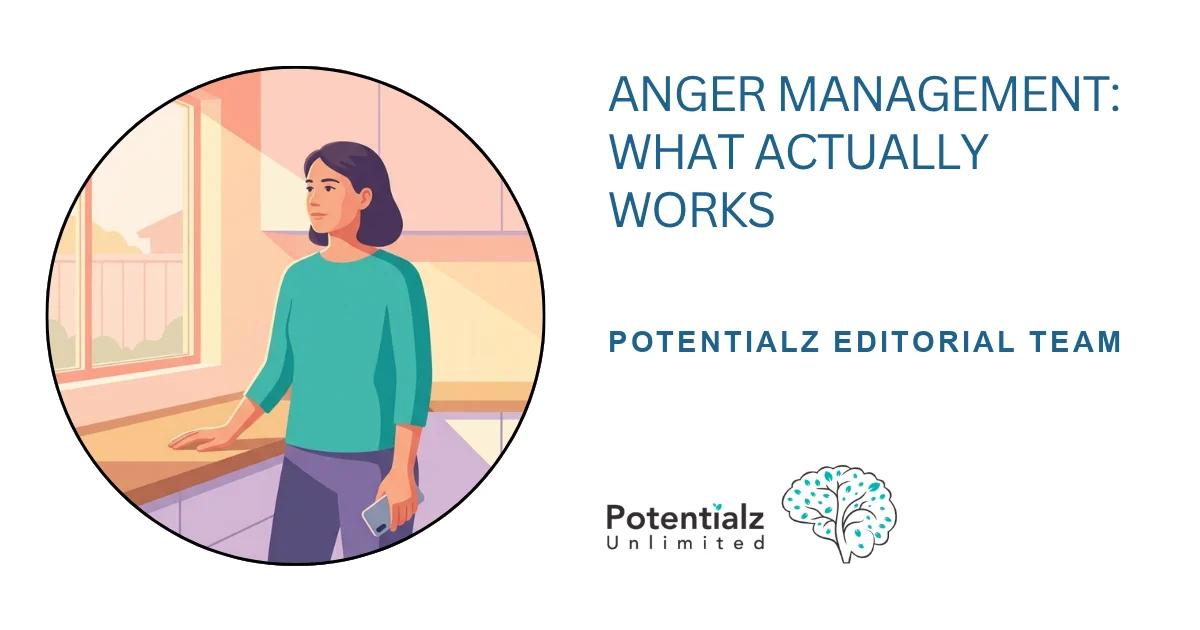
It is 6:52pm on a Tuesday. You are in the kitchen. Your child has spilled something for the third time this evening. Your partner has said something reasonable in a tone that felt slightly less than reasonable. Your inbox at 5:30pm had two things in it that you have not yet had the mental space to process. And then, before you have consciously decided anything, you have raised your voice in a way you promised yourself you would not raise it again, and everyone in the room has gone still, and the familiar internal freeze has begun: I did it again. I always do this. Why can I not just be a normal person about this?
The moment passes. You apologise. You put the kids to bed. You do the dishes with a specific kind of hollow ache in your chest. And later, in the quiet, you make yet another private promise: tomorrow I will be different.
If this pattern is familiar, please read on. Adult anger difficulties are one of the most treatable — and one of the most under-treated — presentations in Australian mental health. The reason is partly cultural: we treat anger as a character issue rather than as a clinical one, so people carry the shame instead of seeking help. But anger regulation is a skill, the science of anger treatment is unusually well developed, and durable change is genuinely available.
What Anger Actually Is
In contemporary emotion science, anger is a universal, functional, information-carrying emotion. Its evolutionary job is to signal a perceived threat, a blocked goal, or a violated value — and to mobilise energy to respond. Anger is not the enemy. Anger is not a flaw. In many situations, healthy anger is exactly the right response — it is what tells you when a boundary has been crossed, when a value has been trampled, when something needs to change.
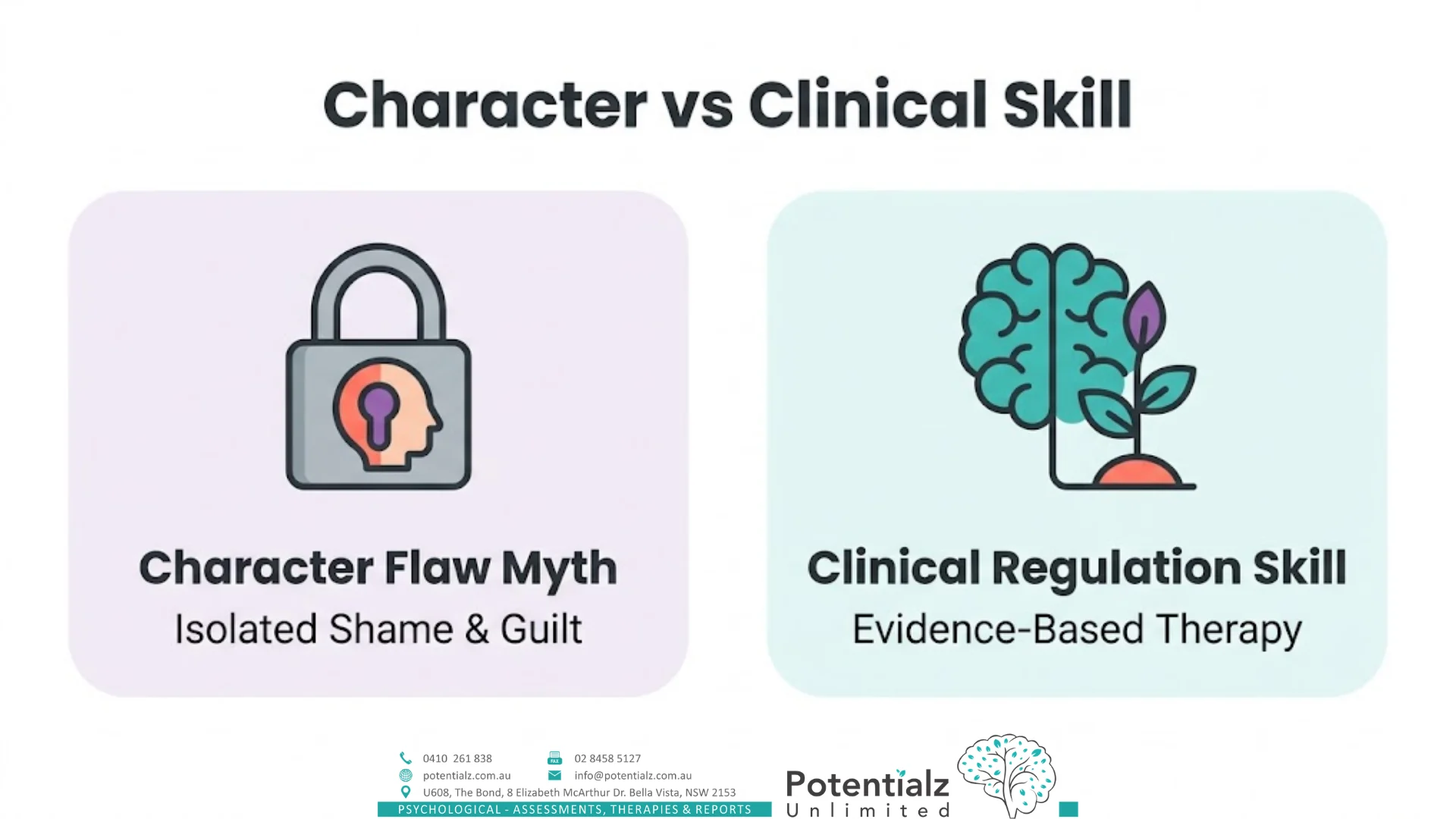
Anger becomes a clinical problem when its regulation — not its existence — breaks down. That can look like several different patterns, and the pattern matters for treatment.
- Chronic irritability — a persistently low frustration threshold, everything feels like an imposition, small things trigger disproportionate internal charge
- Explosive outbursts — periods of relative calm interrupted by episodes of shouting, aggression, or verbal cruelty that arrive fast and are later deeply regretted
- Passive-aggressive expression — anger that cannot be voiced directly gets expressed through withdrawal, silence, sarcasm, or subtle undermining
- Avoidance-then-eruption cycles — long periods of suppressed anger followed by a single triggering event and a large, seemingly disproportionate response
- Internalised anger — anger turned inward as self-criticism, self-hatred, or (in some presentations) self-harm
None of these is “just how I am.” Each is a learned pattern shaped by temperament, family-of-origin modelling, cultural context, and life experience — and each is a pattern that can be reshaped with the right work.
Novaco’s Model — the Backbone of Evidence-Based Anger Treatment
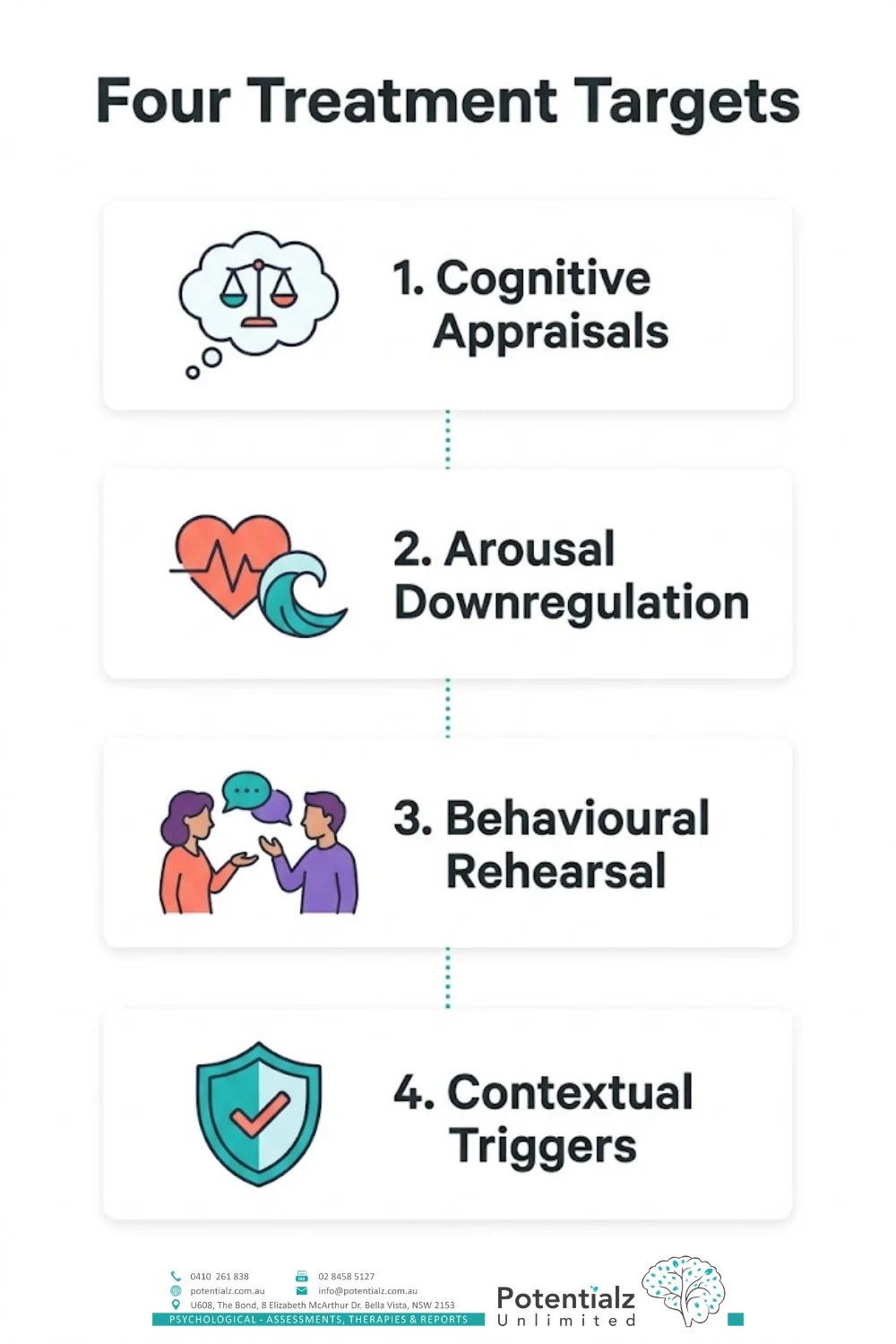
The most extensively developed and tested framework for anger treatment is Raymond Novaco’s anger regulation model, developed from the 1970s and refined over decades (Novaco, 2016). Novaco integrated cognitive theory, stress inoculation, and behavioural principles into a coherent treatment approach. His model has four intervention targets:
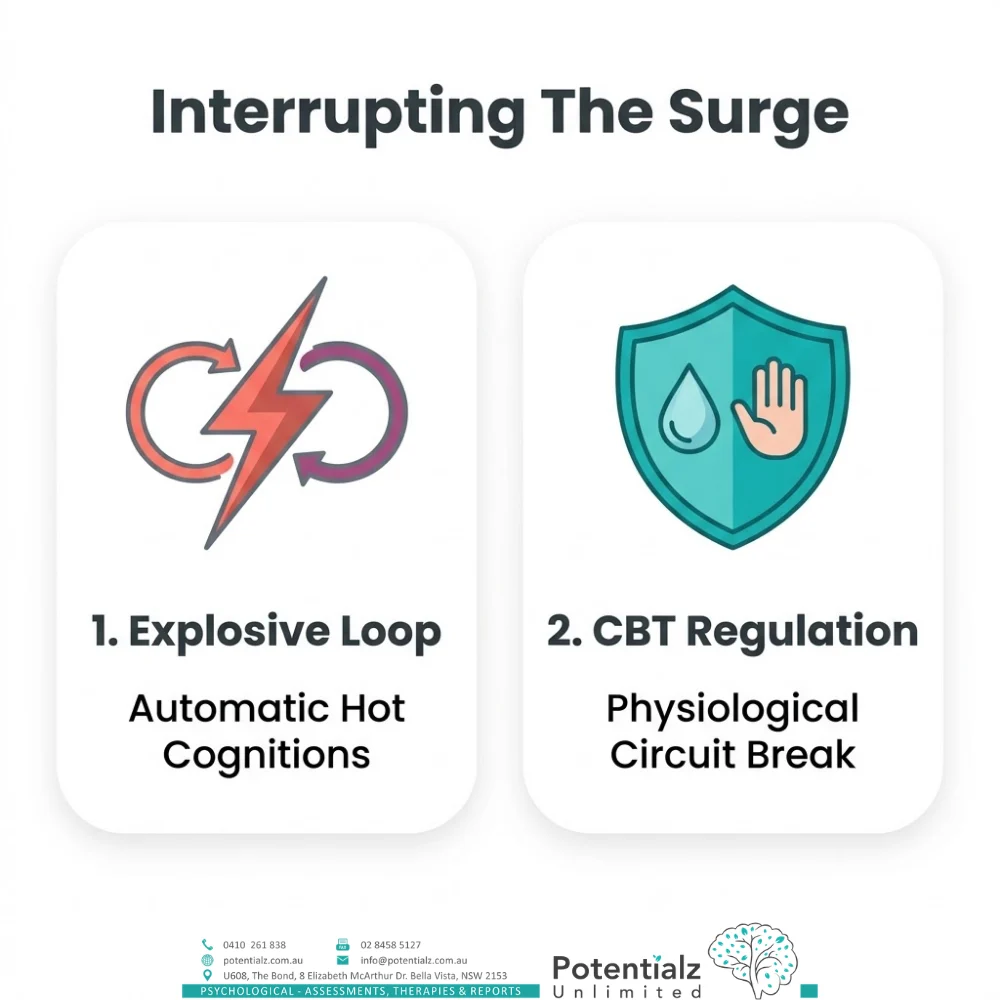
- Cognitive — the appraisals, expectations, and interpretations that turn a neutral event into a provocation (“they did that on purpose”, “this always happens to me”, “this is unacceptable”)
- Arousal — the physiological activation that primes the body for aggression; when arousal is high, cognitive skills go offline
- Behavioural — the learned response patterns that are triggered and rehearsed each time
- Contextual — the environments, relationships, and stressors that maintain and amplify the pattern
Deffenbacher’s meta-analytic work (Deffenbacher, 2011) confirms that cognitive-behavioural interventions built on this model produce moderate-to-large, durable reductions in trait anger, aggression, and functional impairment. This is not one of the “hopeful but unproven” areas of psychology. Anger treatment works when it is done well.
What Often Sits Underneath a Chronic Anger Presentation
Here is the clinical honesty most anger-management courses skip: anger is rarely the whole problem. In our clinical experience, chronic or explosive anger in adults is almost always downstream of something else — and treating the anger without addressing the driver produces short-lived improvement at best.
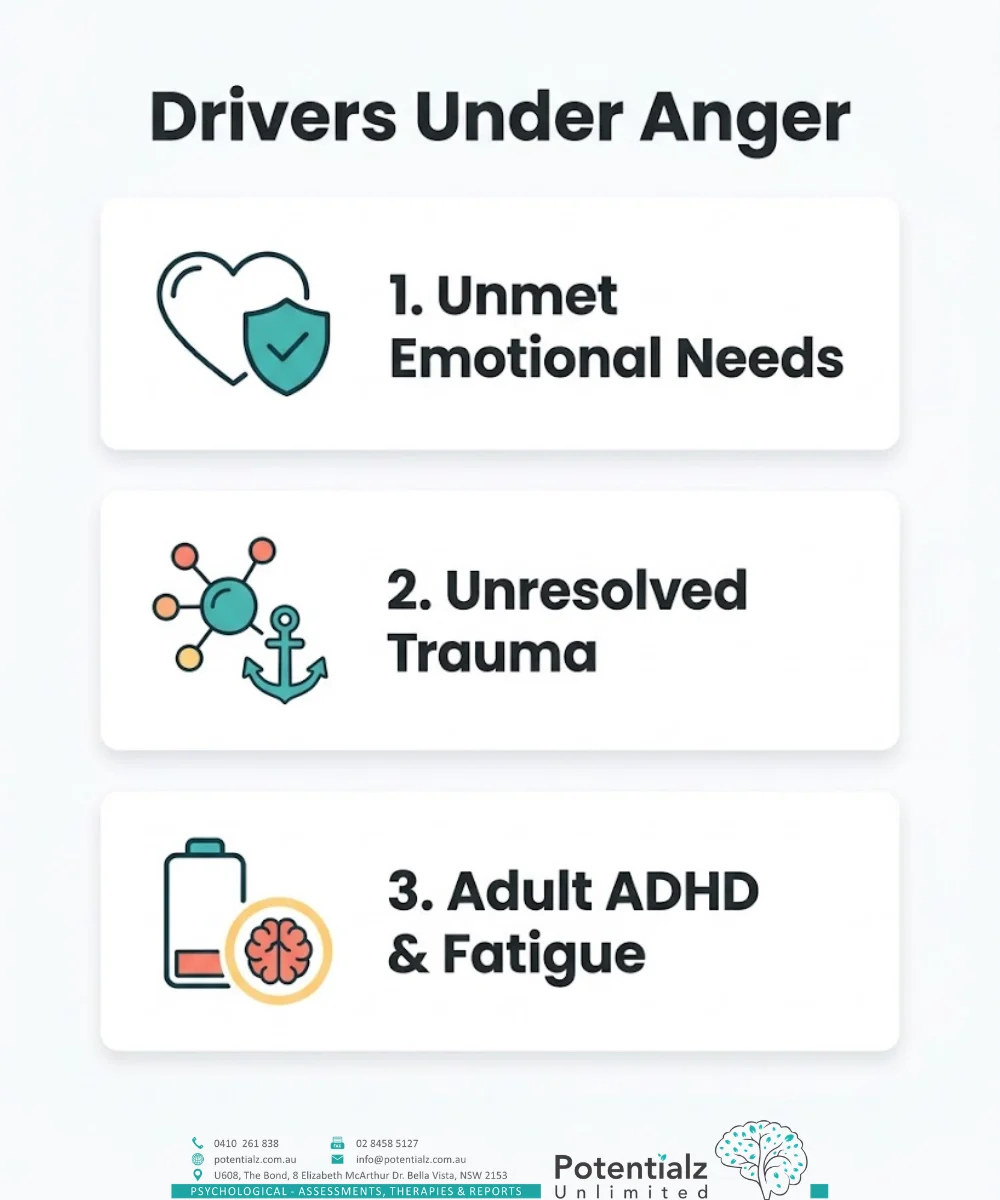
Unmet emotional needs. Anger is often the only emotion that felt permissible growing up, or the only one that reliably got a response. Adults who never learned to name and voice sadness, fear, loneliness, or vulnerability often experience the whole emotional spectrum as anger, because that is the channel their nervous system defaults to.
Unresolved trauma. A trauma-shaped nervous system runs closer to the threat threshold. Small provocations trigger big physiological responses. Hyperarousal, hypervigilance, and reactive aggression are documented features of PTSD and complex trauma (Novaco & Chemtob, 2015), and treating the anger without treating the trauma is treating a symptom.
Adult ADHD. Emotional dysregulation is now recognised as a core feature of adult ADHD (Faraone et al., 2021). Many adults with undiagnosed ADHD present first for “anger management” and only later discover that the underlying attention and executive-function pattern is the driver. Treating the ADHD often reduces the anger substantially.
Chronic stress and sleep debt. A depleted nervous system cannot regulate. Sustained work stress, financial stress, caregiver stress, or chronic under-sleep progressively narrows the window between provocation and outburst. Many adults referred for anger difficulties are not primarily angry — they are exhausted, and anger is what breaks through when the executive tank empties.
Masked depression. In men particularly, depression often presents as irritability, cynicism, and short temper rather than as sadness. Screening for depression is a routine part of any careful anger assessment.
Good treatment maps the driver first. A thorough assessment often changes the treatment plan substantially — from “learn to control your anger” to “let us address the trauma / the ADHD / the sleep / the depression that is driving the reactivity, and build anger regulation skills alongside.”
Intermittent Explosive Disorder — When It Is Worth a Diagnosis
Intermittent Explosive Disorder (IED) is a specific DSM-5 diagnosis, and it is meaningfully under-recognised in adults. Its features are: recurrent aggressive outbursts (verbal or physical) that are impulsive rather than premeditated, grossly disproportionate to the provocation, not better accounted for by another disorder, and causing significant distress or impairment. Coccaro’s epidemiological work suggests lifetime prevalence around 4–7% — meaningfully more common than many people assume (Coccaro, 2012).
Naming IED where it fits is clinically useful. It moves the framing from “you are a bad person who cannot control themselves” to “you have a treatable condition characterised by episodic dyscontrol of an impulsive kind.” The evidence base supports CBT, often supplemented with pharmacotherapy prescribed by a psychiatrist (SSRIs and mood stabilisers have some evidence in IED). It is one of the presentations where an accurate diagnosis meaningfully changes the treatment plan.
What Actually Helps: Integrated CBT + DBT + ACT
Evidence-based treatment for adult anger difficulties is well-defined. In our clinical practice, we typically integrate three strands.
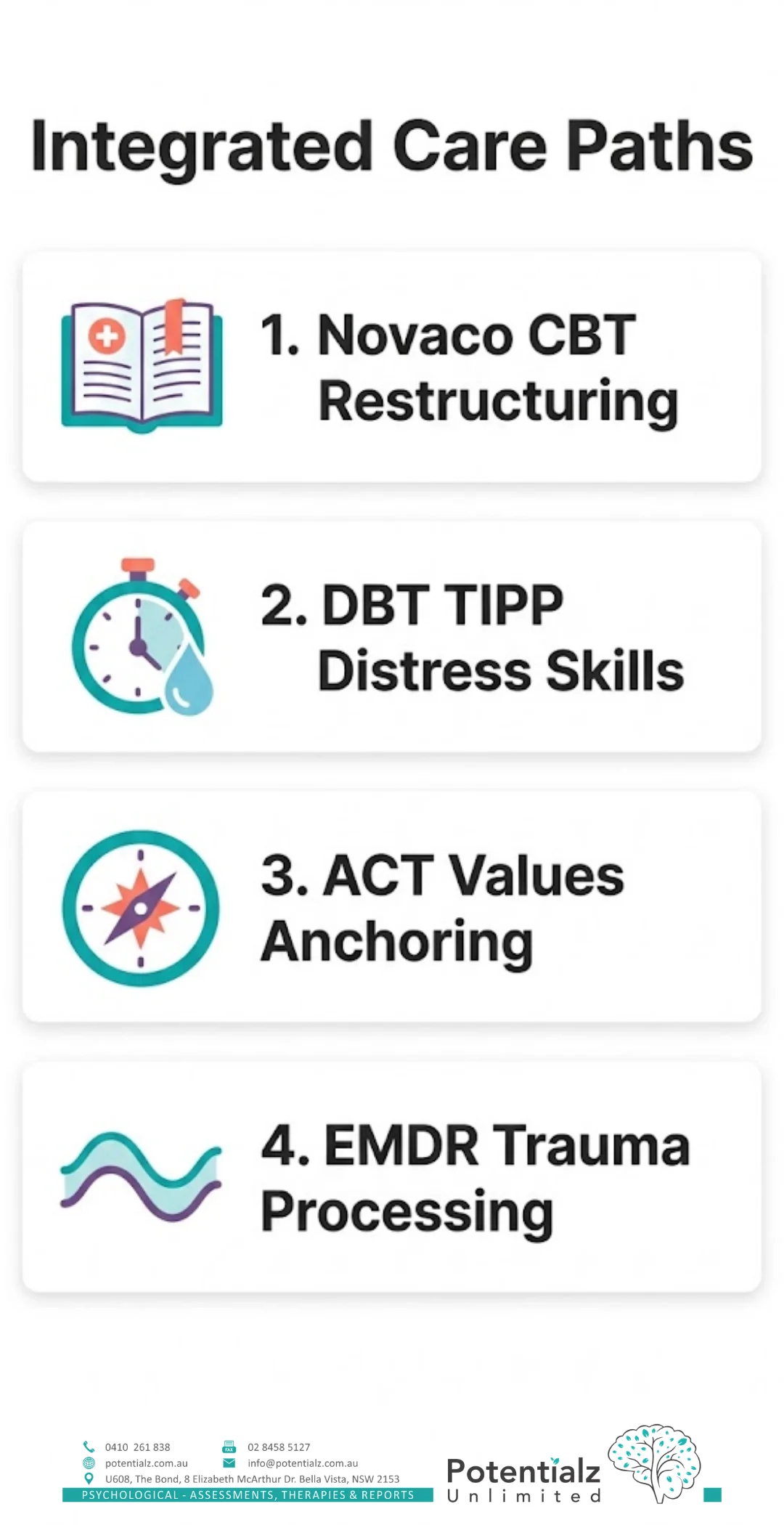
Cognitive-behavioural therapy — specifically the Novaco / Deffenbacher / Beck tradition — is the core. This means identifying and reappraising the specific hot cognitions that fuel the anger sequence (“they should know better”, “this is deliberate”, “I cannot let this stand”), tracking the physiological arousal curve, learning arousal-reduction skills for high-arousal moments, and rehearsing new behavioural responses through role-play and homework.
DBT distress-tolerance skills — particularly TIPP, STOP, and radical acceptance — are enormously useful for the specific moment when arousal is already at 8 out of 10 and cognitive skills have gone offline. Cold water on the face, a hard 60-second walk, and slow paced breathing can shift physiology enough to buy the pause inside which everything else becomes possible. This is not soft advice. It is applied physiology.
ACT-based values work anchors the whole treatment. Change is hard, and generic behaviour-change motivation does not last. What lasts is a clear, personally-owned answer to why does this matter? — usually a specific vision of the parent, partner, colleague, or friend the person wants to be, and the recognition that current anger patterns are moving them steadily away from that vision. That anchor pulls people through the harder parts of the work.
Where trauma is underneath, EMDR is added at the appropriate stage — typically after enough regulation capacity is in place to make trauma processing tolerable rather than destabilising.
If your anger ever includes urges to harm yourself or others, or if you have already done so, please reach out for urgent support now: call Lifeline on 13 11 14, contact Beyond Blue on 1300 22 4636, or in an emergency call 000. If there is immediate risk to a family member, contact the 1800RESPECT national line on 1800 737 732.
What Anger Treatment Actually Looks Like in the Room
A typical course of anger-focused therapy here runs across roughly 8–15 sessions, longer where trauma, ADHD, or complex comorbidity is present. Early sessions focus on assessment and formulation — mapping the specific pattern (chronic irritability, explosive outbursts, avoidance-then-eruption, or internalised anger), identifying likely drivers, and screening for the common underneath-conditions (trauma, ADHD, sleep disorder, depression, substance patterns). This is not a formality. The formulation shapes everything that follows.
Middle sessions do the concrete cognitive-behavioural work. We take specific recent incidents and reconstruct them slowly — the trigger, the automatic thought, the physiological arousal, the behavioural response, the aftermath. Patterns emerge quickly when three or four incidents are laid out this way. From that we build the intervention set: the specific hot cognitions to challenge, the arousal-reduction skills to have ready, the environmental modifications that reduce provocation load, and the behavioural rehearsals that build a new default response. Between-session practice is not optional — anger patterns are behavioural patterns, and behavioural patterns only shift through repetition in real-life conditions.
Later sessions consolidate the skills into daily life, address the setbacks that inevitably come, and integrate any parallel work — trauma processing, ADHD-adapted CBT, couples work, or workplace conversations. Progress is not linear. Old patterns re-emerge under stress. Setbacks are data, not failure.
What Anger Costs — the Honest Conversation
Part of what keeps people out of treatment is the private minimisation: it is not that bad, everyone gets angry, I only raise my voice, I have never actually hit anyone. Sometimes that is accurate. Often it is not. Chronic dysregulated anger is one of the most reliable predictors of relationship breakdown, workplace performance issues, cardiovascular disease, alcohol misuse, and estrangement from adult children. It shortens lives and hollows out relationships, and it does both quietly enough that the cost is only fully visible in hindsight.
Naming this without shame is part of good treatment. Not to guilt anyone into therapy, but to let the reality of what is at stake do the motivational work it is meant to do.
Anger in Relationships — the Slow Erosion
The relational cost of chronic anger is where most people eventually seek help — not because they suddenly decide the pattern is unacceptable, but because a partner draws a line, an adult child stops calling, or a colleague raises it formally. In couples work, one of the most consistent findings is that partners of chronically dysregulated adults do not usually leave because of the biggest outbursts. They leave because of the accumulation of smaller ones — the constant low-grade unpredictability, the sense of walking on eggshells, the exhaustion of being the emotional shock absorber for someone else’s dysregulation. Naming this in individual therapy (without the partner in the room) is often the moment the work becomes real. It is also the moment a couples referral becomes worth considering, if the relationship is one both partners want to preserve.
Parenting is the other domain where the cost is often clearest. Children of chronically angry parents do not remember the specific incidents in the way parents fear they will; what they carry forward is a nervous-system template — a body that stays vigilant around loud voices, a set of internalised beliefs about their own worth, and, often, their own difficulties with anger regulation in adulthood. Breaking that cycle — for the sake of children, and for the sake of the parent’s future relationship with adult children — is one of the most compelling motivations we hear in the room.
Multicultural Context — Anger, Masculinity, and Migration
In many of the cultural contexts we work with — including South Asian communities across Sydney’s Hills District — anger sits inside a specific set of unwritten rules. Men are often permitted to express anger openly but not sadness, fear, or vulnerability, which concentrates the whole emotional spectrum into a single channel. Women are often permitted the reverse — sadness and self-blame are accepted but direct anger is culturally penalised — which drives anger into passive-aggressive expression or somatic symptoms. Migration adds a layer: the daily grind of navigating a system in a second or third language, of workplaces that discount your qualifications, of parenting in a culture different from the one you grew up in, quietly depletes regulatory capacity. Naming these contextual pressures — without excusing the behaviour they contribute to — is part of the honest formulation.
Practical First Steps While You Book
Whether or not you end up in therapy, these are useful:
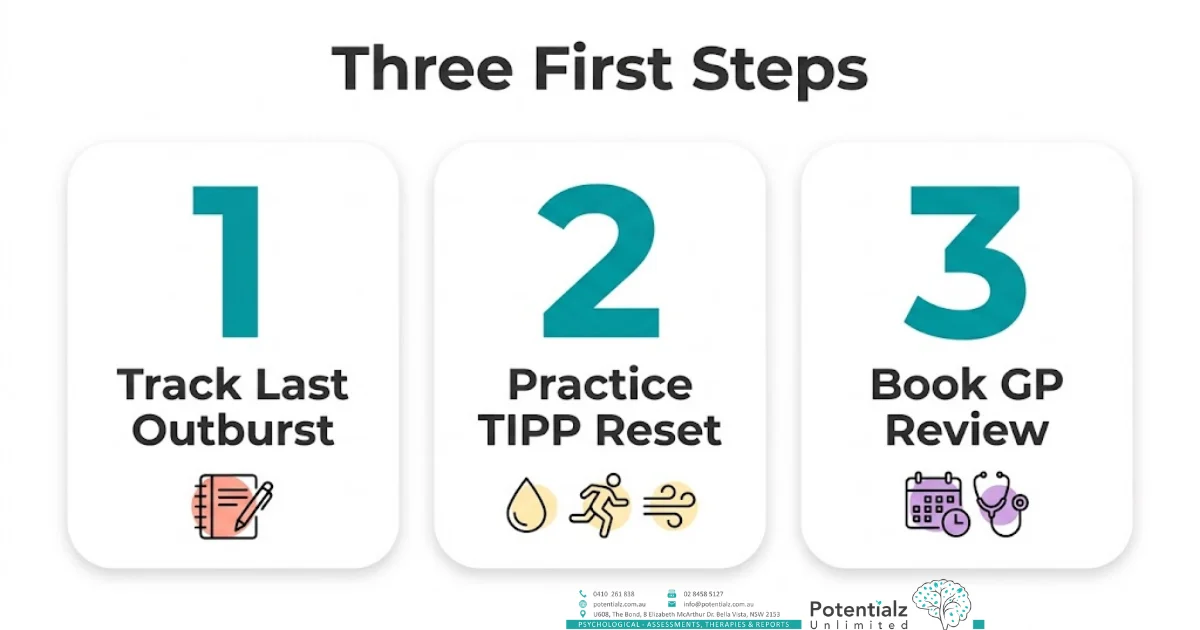
- Track the last three outbursts — trigger, thought, physical arousal, action, aftermath. The pattern usually becomes visible after three
- Rate your baseline — on a 0–10 scale where 0 is completely calm and 10 is peak activation, where does your day-to-day baseline sit? Adults with chronic anger often live at 5 or 6 and do not realise it
- Sleep first — protect a consistent wake time; sleep-deprived nervous systems cannot regulate
- Movement most days — 30 minutes of moderate exercise five days a week reliably reduces trait anger
- Cold water on the face, once, in a calm moment — so the TIPP skill is familiar before you need it in a crisis
- Reduce inflammatory input at the peak-vulnerability hour — for most people that is the 5–7pm transition; not the moment for the difficult conversation, the tax return, or the news feed
- Book your GP — for a Mental Health Care Plan referral, and to consider screening for ADHD, sleep disorders, and depression that may be underneath
How Potentialz Unlimited Can Help
Potentialz Unlimited is a clinical psychology practice based in Bella Vista, NSW, serving adults and families across the Hills District — Norwest, Castle Hill, Kellyville, Baulkham Hills, Rouse Hill, and Glenhaven.
Anger work here is led by our Clinical Psychologist, who has over 25 years of experience. We offer evidence-based individual psychological therapy for adult anger difficulties — integrating cognitive-behavioural therapy in the Novaco / Deffenbacher tradition, DBT distress-tolerance and emotion-regulation skills, and ACT-based values work, alongside EMDR where trauma is present. Where adult ADHD or another driver sits underneath the anger pattern, we offer or coordinate the appropriate assessment. Sessions available in English, Hindi, Punjabi, and Urdu. Medicare rebates are available with a GP Mental Health Care Plan. You can contact the clinic or book directly at live.potentialz.com.au.
Crisis Resources
If you or someone you know needs immediate support:
- Lifeline — 13 11 14 (24/7)
- Beyond Blue — 1300 22 4636 (24/7)
- MensLine Australia — 1300 78 99 78 (24/7)
- 1800RESPECT — 1800 737 732 (24/7, family and domestic violence)
- Emergency — 000
If anger in your household has become frightening for anyone in it, please reach out to 1800RESPECT. Safety comes before therapy.
References
Beck, A. T. (1999). Prisoners of hate: The cognitive basis of anger, hostility, and violence. HarperCollins.
Coccaro, E. F. (2012). Intermittent explosive disorder as a disorder of impulsive aggression for DSM-5. American Journal of Psychiatry, 169(6), 577–588. https://doi.org/10.1176/appi.ajp.2012.11081259
Deffenbacher, J. L. (2011). Cognitive-behavioral conceptualization and treatment of anger. Cognitive and Behavioral Practice, 18(2), 212–221. https://doi.org/10.1016/j.cbpra.2009.12.004
Del Vecchio, T., & O’Leary, K. D. (2004). Effectiveness of anger treatments for specific anger problems: A meta-analytic review. Clinical Psychology Review, 24(1), 15–34. https://doi.org/10.1016/j.cpr.2003.09.006
Faraone, S. V., Banaschewski, T., Coghill, D., Zheng, Y., Biederman, J., Bellgrove, M. A., Newcorn, J. H., Gignac, M., Al Saud, N. M., Manor, I., Rohde, L. A., Yang, L., Cortese, S., Almagor, D., Stein, M. A., Albatti, T. H., Aljoudi, H. F., Alqahtani, M. M. J., Asherson, P., … Wang, Y. (2021). The World Federation of ADHD International Consensus Statement: 208 evidence-based conclusions about the disorder. Neuroscience & Biobehavioral Reviews, 128, 789–818. https://doi.org/10.1016/j.neubiorev.2021.01.022
Linehan, M. M. (2015). DBT skills training manual (2nd ed.). Guilford Press.
Novaco, R. W. (2016). Anger. In G. Fink (Ed.), Stress: Concepts, cognition, emotion, and behavior (pp. 285–292). Academic Press. https://doi.org/10.1016/B978-0-12-800951-2.00035-2
Novaco, R. W., & Chemtob, C. M. (2015). Violence associated with combat-related posttraumatic stress disorder: The importance of anger. Psychological Trauma: Theory, Research, Practice, and Policy, 7(5), 485–492. https://doi.org/10.1037/tra0000067
Saini, M. (2009). A meta-analysis of the psychological treatment of anger: Developing guidelines for evidence-based practice. Journal of the American Academy of Psychiatry and the Law, 37(4), 473–488.
Disclaimer
This article is general information, not psychological advice, and does not create a practitioner–client relationship. Anger that is causing harm — to you or to anyone around you — deserves an individual assessment. Potentialz Unlimited is not a registered NDIS provider; we work with self-managed and plan-managed NDIS participants.
Knowledge Check Quiz
Test what you have just read. Choose your answer for each question, then submit to reveal the answers and your score.
Need Professional Support?
If you're experiencing mental health concerns, our team is here to help.