The Twinge That Took Over the Week
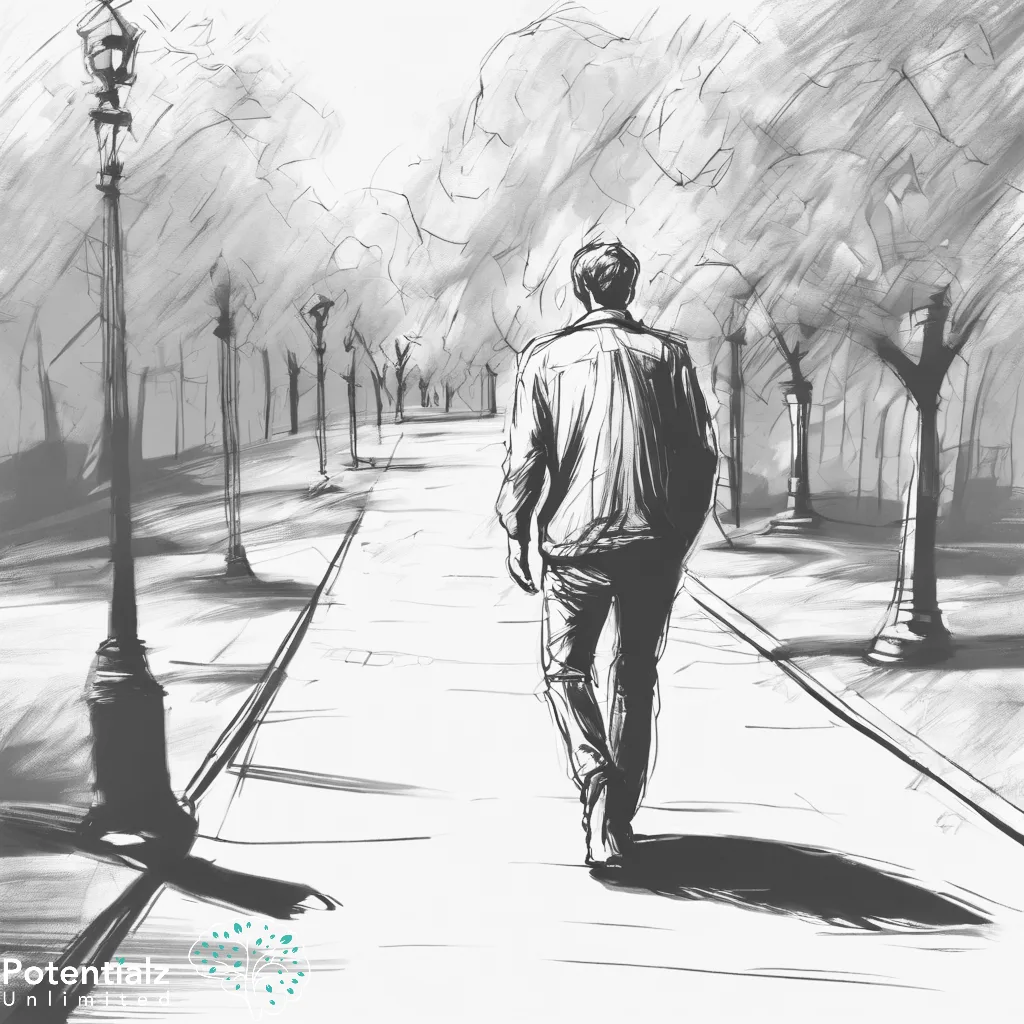
It started with a headache. Just an ordinary headache after a long week of school pick-ups, work deadlines, and not enough sleep. But for Priya, a busy mum in Bella Vista, an ordinary headache did not stay ordinary for long.
By lunchtime she had searched “headache behind eyes serious” three times. By dinner she had read about brain tumours, pressed on the side of her head to “check” it again and again, and texted her sister twice asking, “Does this sound dangerous to you?” The relief from her sister’s “You’re fine!” lasted about ten minutes. Then the worry crept back, louder.
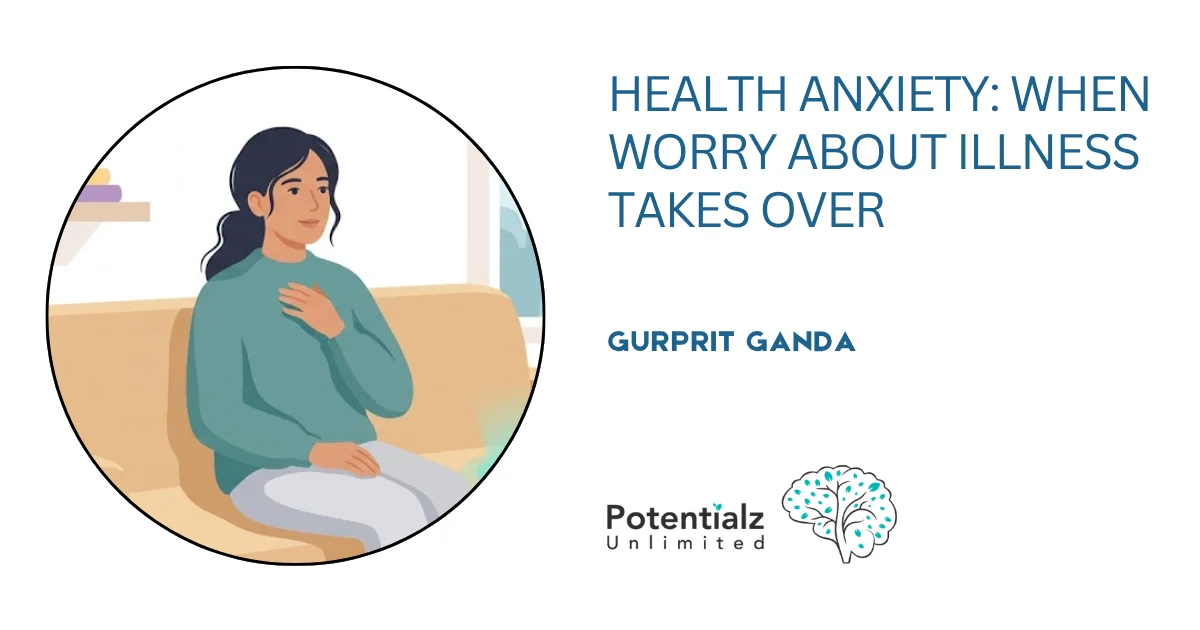
If this feels familiar, you are not alone, and you are not being silly. This pattern has a name. It is called health anxiety, and it is one of the most treatable problems a psychologist in Bella Vista sees. This article explains what health anxiety is, why reassurance and “Dr Google” make it worse, and how evidence-based treatment can help you get your days back.
What Health Anxiety Actually Is
Health anxiety is a persistent, distressing preoccupation with the idea that you have, or are about to get, a serious illness. It is the fear itself that takes over — not just an occasional worry, but a pattern that drains your time, energy, and peace of mind.
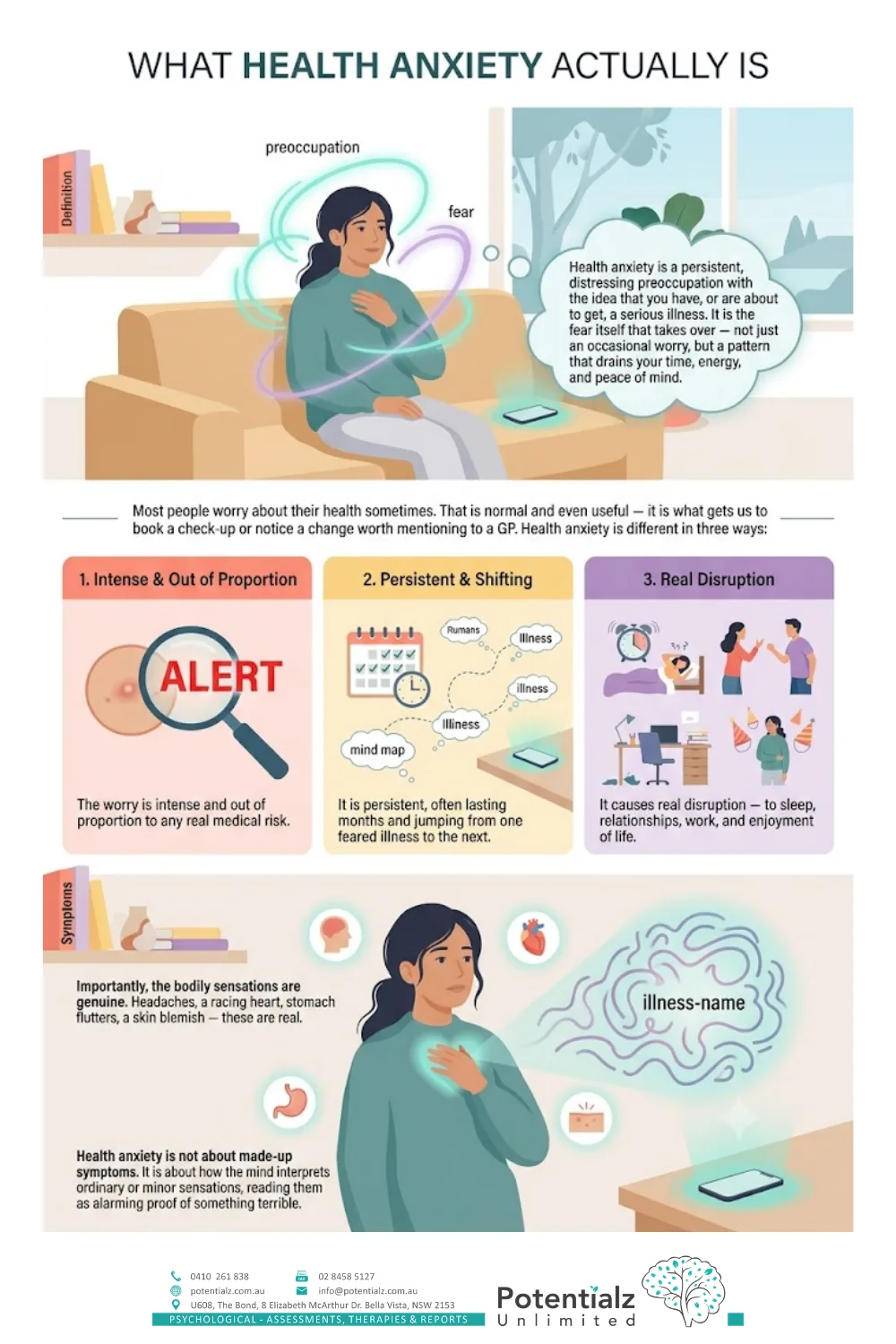
Most people worry about their health sometimes. That is normal and even useful — it is what gets us to book a check-up or notice a change worth mentioning to a GP. Health anxiety is different in three ways:
- The worry is intense and out of proportion to any real medical risk.
- It is persistent, often lasting months and jumping from one feared illness to the next.
- It causes real disruption — to sleep, relationships, work, and enjoyment of life.
Importantly, the bodily sensations are genuine. Headaches, a racing heart, stomach flutters, a skin blemish — these are real. Health anxiety is not about made-up symptoms. It is about how the mind interprets ordinary or minor sensations, reading them as alarming proof of something terrible.
Illness Anxiety Disorder vs Somatic Symptom Disorder
For years the word “hypochondriasis” (or the unkind label “hypochondriac”) was used. The current diagnostic manual, the DSM-5-TR, has retired that term and replaced it with two clearer diagnoses (American Psychiatric Association, 2022):
- Illness anxiety disorder. Here the person has few or no physical symptoms, but is intensely preoccupied with the fear of having or developing a serious disease. The distress comes from the meaning they attach to their health, not from the symptoms themselves.
- Somatic symptom disorder. Here the person does have one or more distressing physical symptoms, and their thoughts, feelings, and behaviours about those symptoms are excessive and take over daily life.
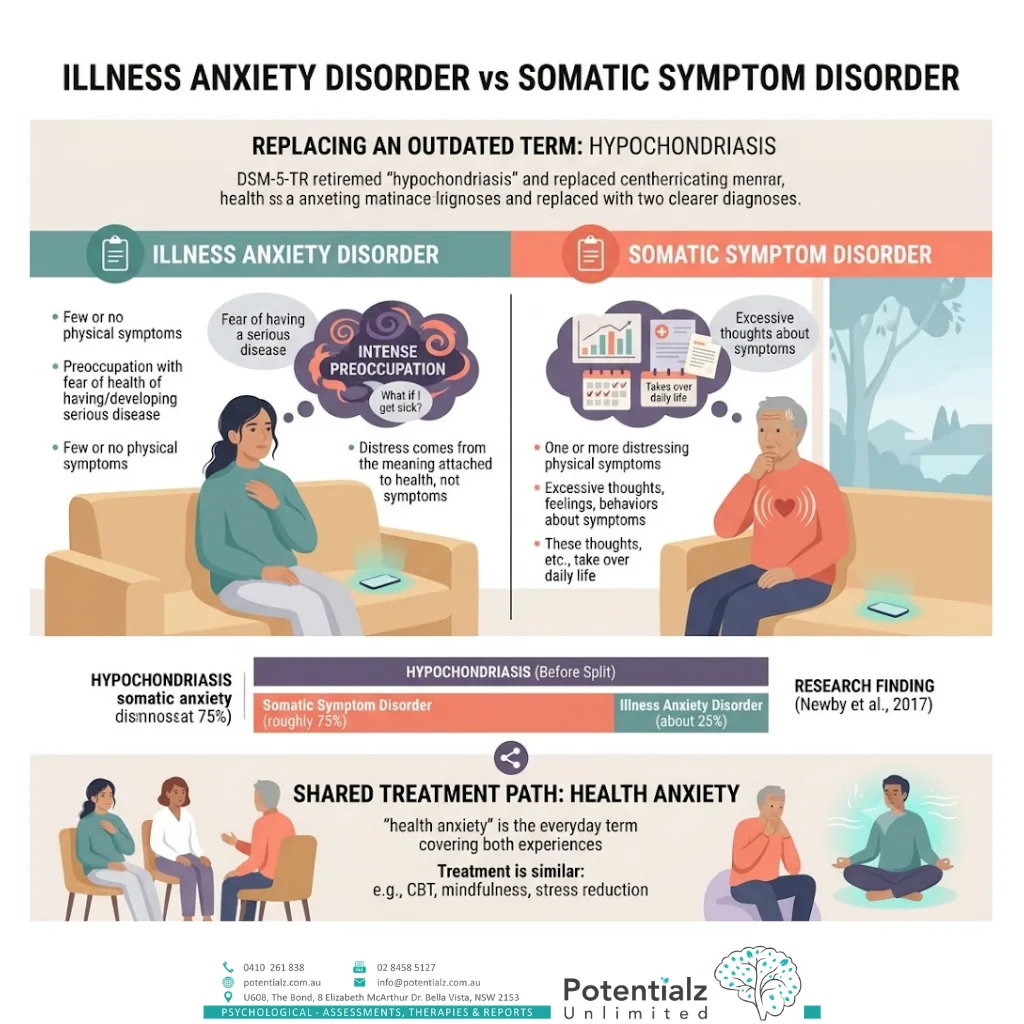
When hypochondriasis was split into these two categories, research found that roughly three-quarters of people who would once have been diagnosed with hypochondriasis fit somatic symptom disorder, and about one-quarter fit illness anxiety disorder (Newby et al., 2017). The everyday term “health anxiety” covers both experiences, and the good news is that the treatment path is very similar.
The Worry–Checking–Reassurance Cycle
Health anxiety keeps itself going through a cycle that psychologists understand well. The cognitive-behavioural model developed by Salkovskis and Warwick maps it clearly (Salkovskis et al., 2003):
- A trigger. A bodily sensation (a twinge, a lump, a fast heartbeat) or a piece of health information (a news story, a friend’s diagnosis).
- A catastrophic interpretation. The mind jumps to the worst: “This headache is a tumour.” The chance and seriousness of illness are both overestimated.
- Anxiety rises. The body switches on its alarm system. Stress can create more sensations — a thumping heart, tense muscles, a churning stomach — which feel like more “evidence.”
- Safety behaviours. To ease the dread, the person checks their body, searches online, books extra tests, or asks loved ones, “Do you think it’s serious?”
- Brief relief, then return. The reassurance soothes for a short while. But because the underlying fear was never truly tested, the worry comes back — often stronger. And so the loop spins again.
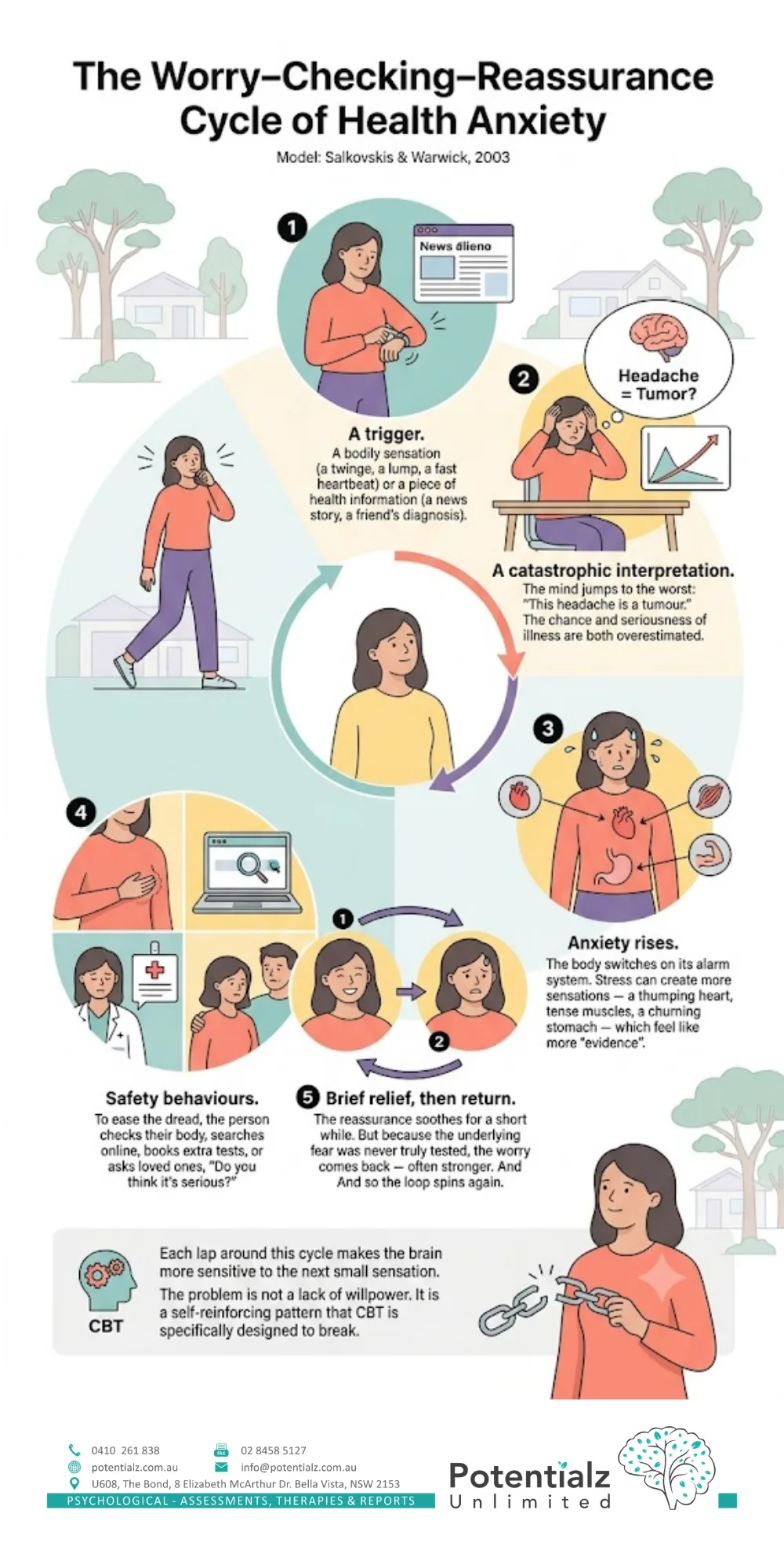
Each lap around this cycle makes the brain more sensitive to the next small sensation. The problem is not a lack of willpower. It is a self-reinforcing pattern that CBT is specifically designed to break.
How “Dr Google” Feeds Health Anxiety
Searching symptoms online feels like taking control. In reality, for an anxious mind it usually pours fuel on the fire. Researchers call this cyberchondria — repeated online health searches that raise anxiety rather than calm it.
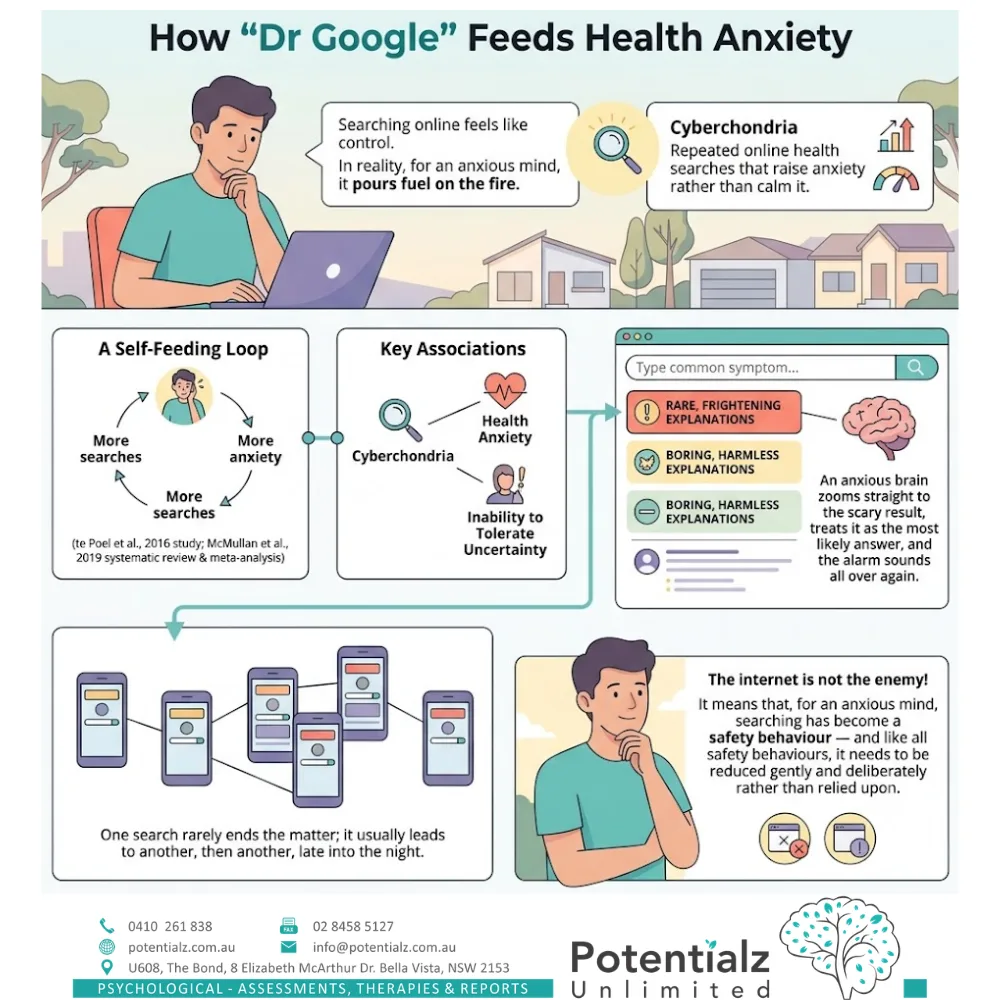
A longitudinal study found the relationship runs both ways: people who are more health-anxious search more, and more searching makes them more anxious — a self-feeding loop (te Poel et al., 2016). A later systematic review and meta-analysis confirmed that cyberchondria is strongly linked with health anxiety and with the inability to tolerate uncertainty (McMullan et al., 2019).
The trap is built into how search engines work. Type in a common symptom and the rare, frightening explanations are right there beside the boring, harmless ones. An anxious brain zooms straight to the scary result, treats it as the most likely answer, and the alarm sounds all over again. One search rarely ends the matter; it usually leads to another, then another, late into the night. This does not mean the internet is the enemy or that you can never look anything up. It means that, for an anxious mind, searching has become a safety behaviour — and like all safety behaviours, it needs to be reduced gently and deliberately rather than relied upon.
Why Reassurance Backfires
This is one of the hardest things to accept, because reassurance feels so helpful. When you ask your partner, your GP, or the internet, “Am I okay?” and hear “Yes,” you feel better — for a moment.
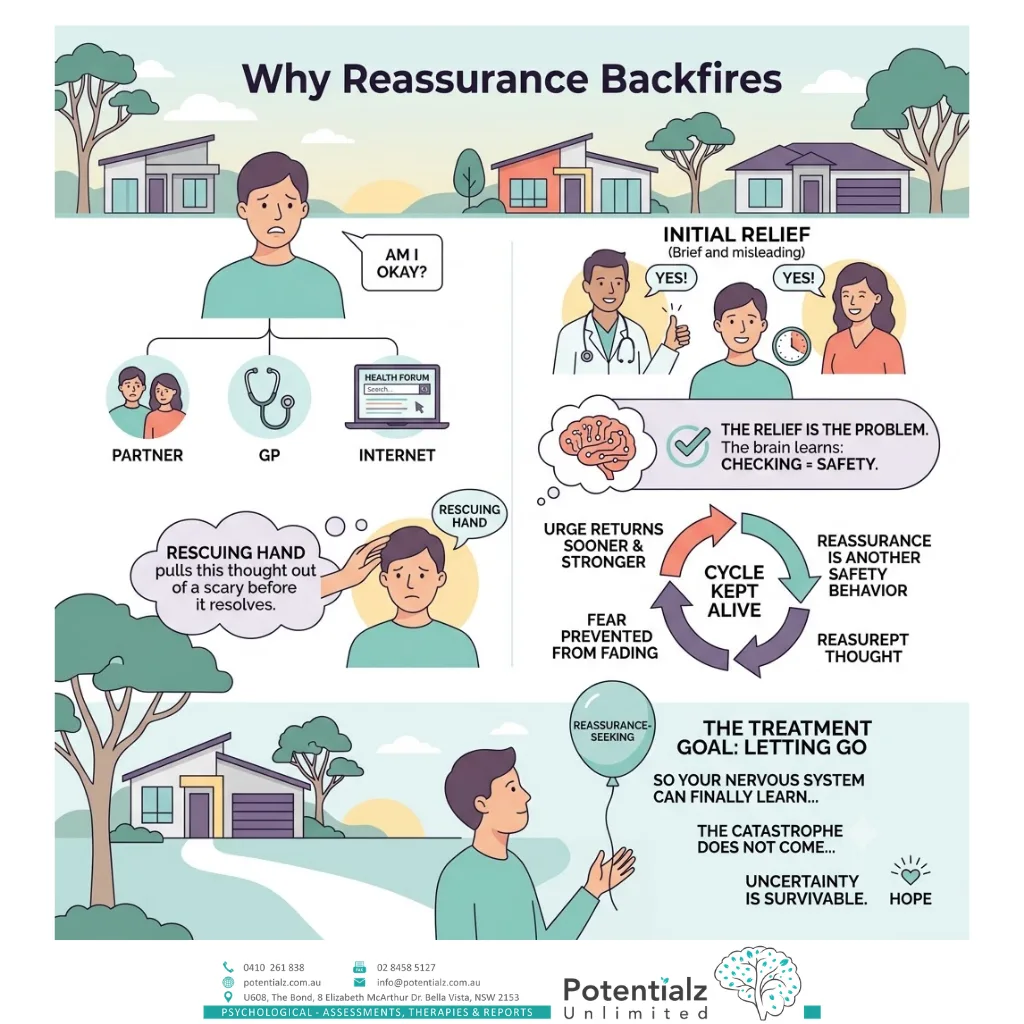
But that relief is the problem. The brain learns: the only way I felt safe was by checking. So the next time anxiety rises, the urge to check returns, and it returns sooner and stronger. Reassurance becomes another safety behaviour that keeps the cycle alive. The fear is never given the chance to fade on its own, because you keep “rescuing” yourself before it can.
This is why, in treatment, the goal is not to find the perfect reassurance. It is to gradually let go of reassurance-seeking so your nervous system can finally learn that the feared catastrophe does not come — and that uncertainty, while uncomfortable, is survivable.
The Cost to Daily Life
Left untreated, health anxiety quietly shrinks a person’s world. The hours spent searching, checking, and worrying add up. Medical appointments and tests multiply, sometimes straining relationships with GPs. Loved ones grow tired of being asked for reassurance, which can lead to guilt and tension at home.
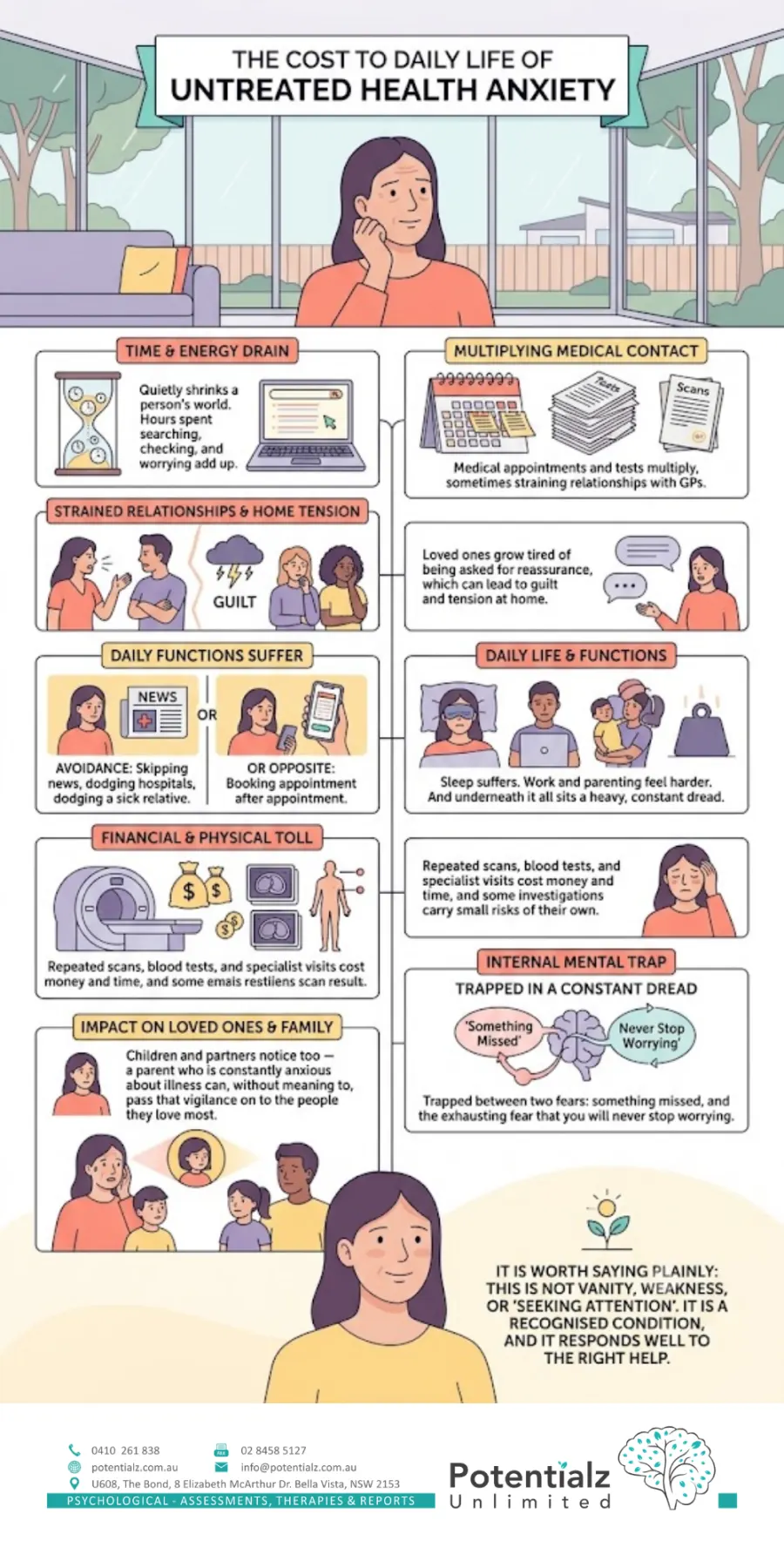
People may avoid the things that scare them — skipping the news, dodging hospitals, or staying away from a sick relative. Others swing the opposite way, booking appointment after appointment. Sleep suffers. Work and parenting feel harder. And underneath it all sits a heavy, constant dread.
There is also a financial and physical toll. Repeated scans, blood tests, and specialist visits cost money and time, and some investigations carry small risks of their own. Many people describe feeling trapped between two fears: the fear that something has been missed, and the exhausting fear that they will never stop worrying. Children and partners notice too — a parent who is constantly anxious about illness can, without meaning to, pass that vigilance on to the people they love most.
It is worth saying plainly: this is not vanity, weakness, or “seeking attention.” It is a recognised condition, and it responds well to the right help.
Evidence-Based Treatment: CBT and ACT
The most strongly supported treatment for health anxiety is cognitive behavioural therapy (CBT). In the CHAMP trial — a large randomised controlled trial published in The Lancet — patients who received CBT adapted for health anxiety improved significantly more than those who received standard care, and the benefits were maintained over follow-up (Tyrer et al., 2014). A systematic review and meta-analysis likewise found CBT to be effective for health anxiety (Cooper et al., 2017).
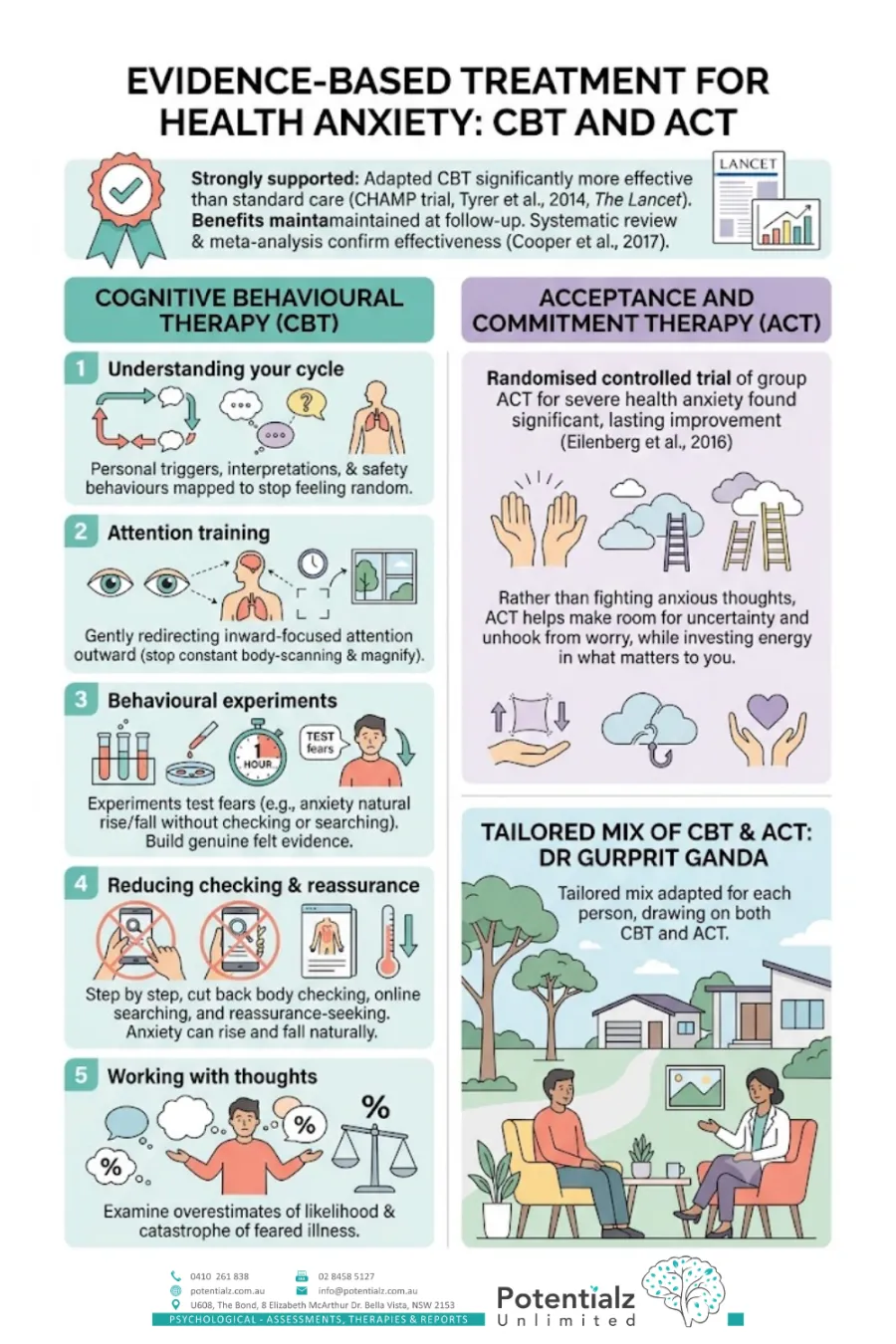
CBT for health anxiety usually includes:
- Understanding your cycle. Together we map your personal triggers, interpretations, and safety behaviours, so the pattern stops feeling random.
- Attention training. Health anxiety pulls attention inward — constant body-scanning makes you notice (and magnify) every sensation. We practise gently redirecting attention outward.
- Behavioural experiments. Instead of arguing about fears, we test them. For example, what actually happens to anxiety over an hour if you do not check or search? These experiments build genuine, felt evidence.
- Reducing checking and reassurance. Step by step, we cut back body checking, online searching, and reassurance-seeking, so anxiety can rise and then fall naturally.
- Working with thoughts. We examine the overestimates — both how likely and how catastrophic the feared illness really is.
A second evidence-based approach is acceptance and commitment therapy (ACT). Rather than fighting anxious thoughts, ACT helps you make room for uncertainty and unhook from worry, while you invest your energy in what matters to you. A randomised controlled trial of group ACT for severe health anxiety found significant, lasting improvement (Eilenberg et al., 2016). Dr Gurprit Ganda draws on both CBT and ACT, tailoring the mix to each person.
Health Anxiety Help in Bella Vista and the Hills District
Potentialz Unlimited is based in Bella Vista, NSW, and supports individuals and families across the Hills District — including Norwest, Castle Hill, Kellyville, Baulkham Hills, Rouse Hill, and Glenhaven.
Dr Gurprit Ganda is a Clinical Psychologist with more than 25 years of experience, trained in CBT, ACT, and EMDR. She offers a warm, practical, judgement-free space where health anxiety is taken seriously and treated with proven methods — not dismissed with “the tests are clear, you’re fine.” If health anxiety has been running your week, structured, evidence-based help is close to home. You can contact the clinic or book directly at live.potentialz.com.au.
When to Seek Help
It may be time to speak with a psychologist if you notice that:
- Worry about your health takes up a large part of your day, most days.
- You check your body, search symptoms online, or seek reassurance again and again.
- Reassurance from doctors or loved ones only helps briefly.
- The worry is affecting your sleep, mood, work, or relationships.
- You either avoid medical care out of fear, or seek it far more than needed.
If your low mood or worry ever brings thoughts of not wanting to be here, please reach out for urgent support now: call Lifeline on 13 11 14, or in an emergency call 000. For ongoing anxiety, our guides on when to seek help for managing anxiety, understanding panic attacks and panic disorder, and effective strategies for managing anxiety and depression are good places to start.
Health anxiety is common, understandable, and very treatable. With the right support, you can stop the cycle, trust your body again, and get back to a life that is bigger than your worries.
References
American Psychiatric Association. (2022). Diagnostic and statistical manual of mental disorders (5th ed., text rev.). https://doi.org/10.1176/appi.books.9780890425787
Cooper, K., Gregory, J. D., Walker, I., Lambe, S., & Salkovskis, P. M. (2017). Cognitive behaviour therapy for health anxiety: A systematic review and meta-analysis. Behavioural and Cognitive Psychotherapy, 45(2), 110–123. https://doi.org/10.1017/S1352465816000527
Eilenberg, T., Fink, P., Jensen, J. S., Rief, W., & Frostholm, L. (2016). Acceptance and commitment group therapy (ACT-G) for health anxiety: A randomized controlled trial. Psychological Medicine, 46(1), 103–115. https://doi.org/10.1017/S0033291715001579
McMullan, R. D., Berle, D., Arnáez, S., & Starcevic, V. (2019). The relationships between health anxiety, online health information seeking, and cyberchondria: Systematic review and meta-analysis. Journal of Affective Disorders, 245, 270–278. https://doi.org/10.1016/j.jad.2018.11.037
Newby, J. M., Hobbs, M. J., Mahoney, A. E. J., Wong, S. K., & Andrews, G. (2017). DSM-5 illness anxiety disorder and somatic symptom disorder: Comorbidity, correlates, and overlap with DSM-IV hypochondriasis. Journal of Psychosomatic Research, 101, 31–37. https://doi.org/10.1016/j.jpsychores.2017.07.010
Salkovskis, P. M., Warwick, H. M. C., & Deale, A. C. (2003). Cognitive-behavioral treatment for severe and persistent health anxiety (hypochondriasis). Brief Treatment and Crisis Intervention, 3(3), 353–367. https://doi.org/10.1093/brief-treatment/mhg026
te Poel, F., Baumgartner, S. E., Hartmann, T., & Tanis, M. (2016). The curious case of cyberchondria: A longitudinal study on the reciprocal relationship between health anxiety and online health information seeking. Journal of Anxiety Disorders, 43, 32–40. https://doi.org/10.1016/j.janxdis.2016.07.009
Tyrer, P., Cooper, S., Salkovskis, P., Tyrer, H., Crawford, M., Byford, S., Dupont, S., Finnis, S., Green, J., McLaren, E., Murphy, D., Reid, S., Smith, G., Wang, D., Warwick, H., Petkova, H., & Barrett, B. (2014). Clinical and cost-effectiveness of cognitive behaviour therapy for health anxiety in medical patients: A multicentre randomised controlled trial. The Lancet, 383(9913), 219–225. https://doi.org/10.1016/S0140-6736(13)61905-4
Knowledge Check Quiz
Test what you have just read. Choose your answer for each question, then submit to reveal the answers and your score.
Need Professional Support?
If you're experiencing mental health concerns, our team is here to help.