“I Promised Myself It Would Be the Last Time”
It is late. The house is quiet. You did not plan for this — but somehow you are standing at the fridge, eating quickly, barely tasting, unable to stop. You feel strangely outside yourself, as if the wanting has taken over. And when it ends, the shame arrives. You promise yourself: never again. Tomorrow you will start fresh. Tomorrow you will be in control.
Then it happens again.
If you recognise this, please know two things. First, you are not weak, greedy, or broken. Second, you are not alone — and what you are experiencing has a name, an explanation, and effective treatment. It is called binge eating disorder (BED), and it is the most common eating disorder in Australia. More than one million Australians are living with an eating disorder, and the majority of these are cases of BED (NEDC, 2024).
This article explains what binge eating disorder is — and is not — the signs to watch for, why it happens, and the evidence-based treatments that genuinely help. If you would prefer to speak with a binge eating disorder psychologist in Bella Vista, you can reach our team at any point.
What Binge Eating Disorder Is — and Is Not
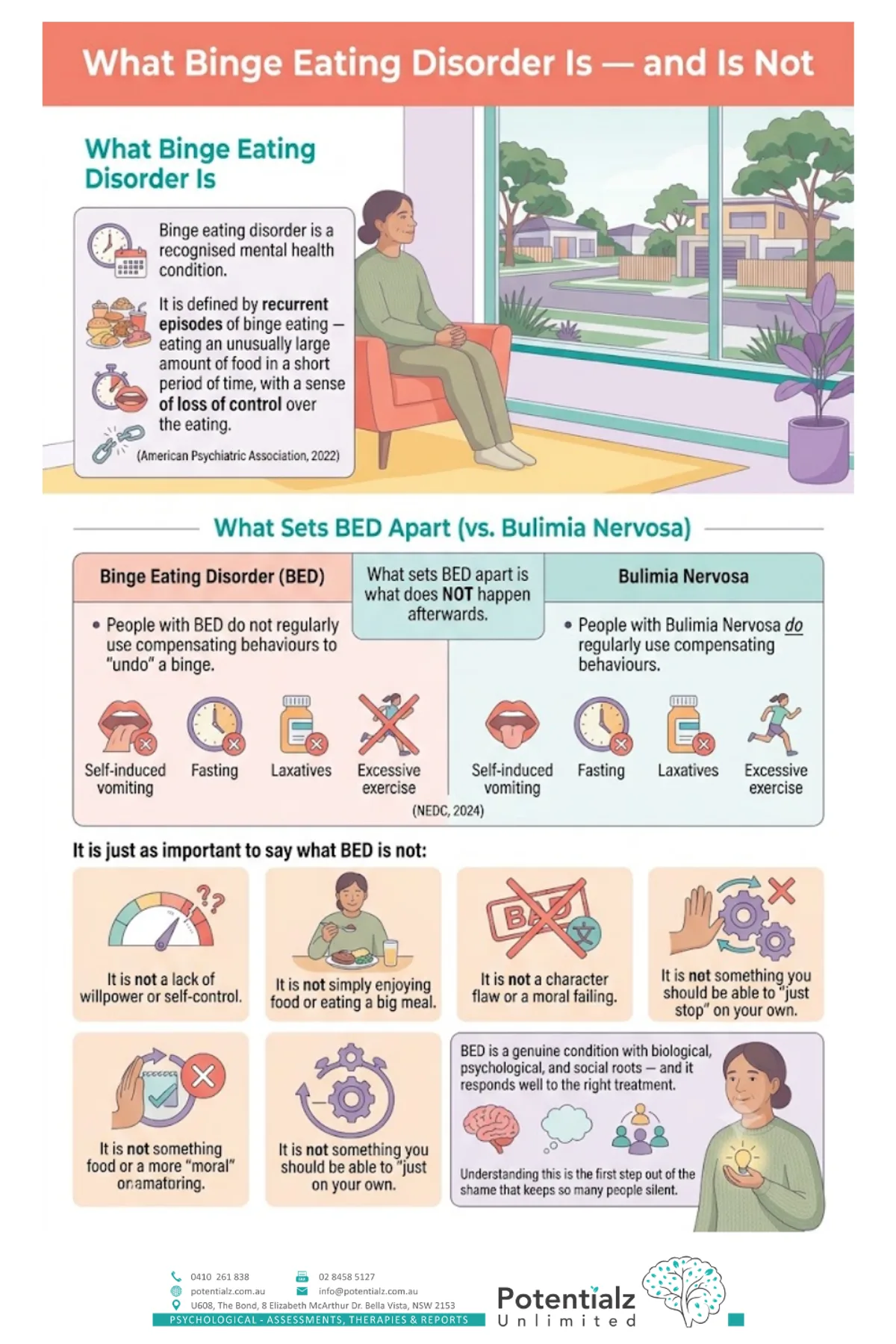
Binge eating disorder is a recognised mental health condition. It is defined by recurrent episodes of binge eating — eating an unusually large amount of food in a short period of time, with a sense of loss of control over the eating (American Psychiatric Association, 2022).
What sets BED apart from bulimia nervosa is what does not happen afterwards. People with BED do not regularly use compensating behaviours such as self-induced vomiting, fasting, laxatives, or excessive exercise to “undo” a binge (NEDC, 2024).
It is just as important to say what BED is not:
- It is not a lack of willpower or self-control.
- It is not simply enjoying food or eating a big meal.
- It is not a character flaw or a moral failing.
- It is not something you should be able to “just stop” on your own.
BED is a genuine condition with biological, psychological, and social roots — and it responds well to the right treatment. Understanding this is the first step out of the shame that keeps so many people silent.
The DSM-5-TR Signs of Binge Eating Disorder
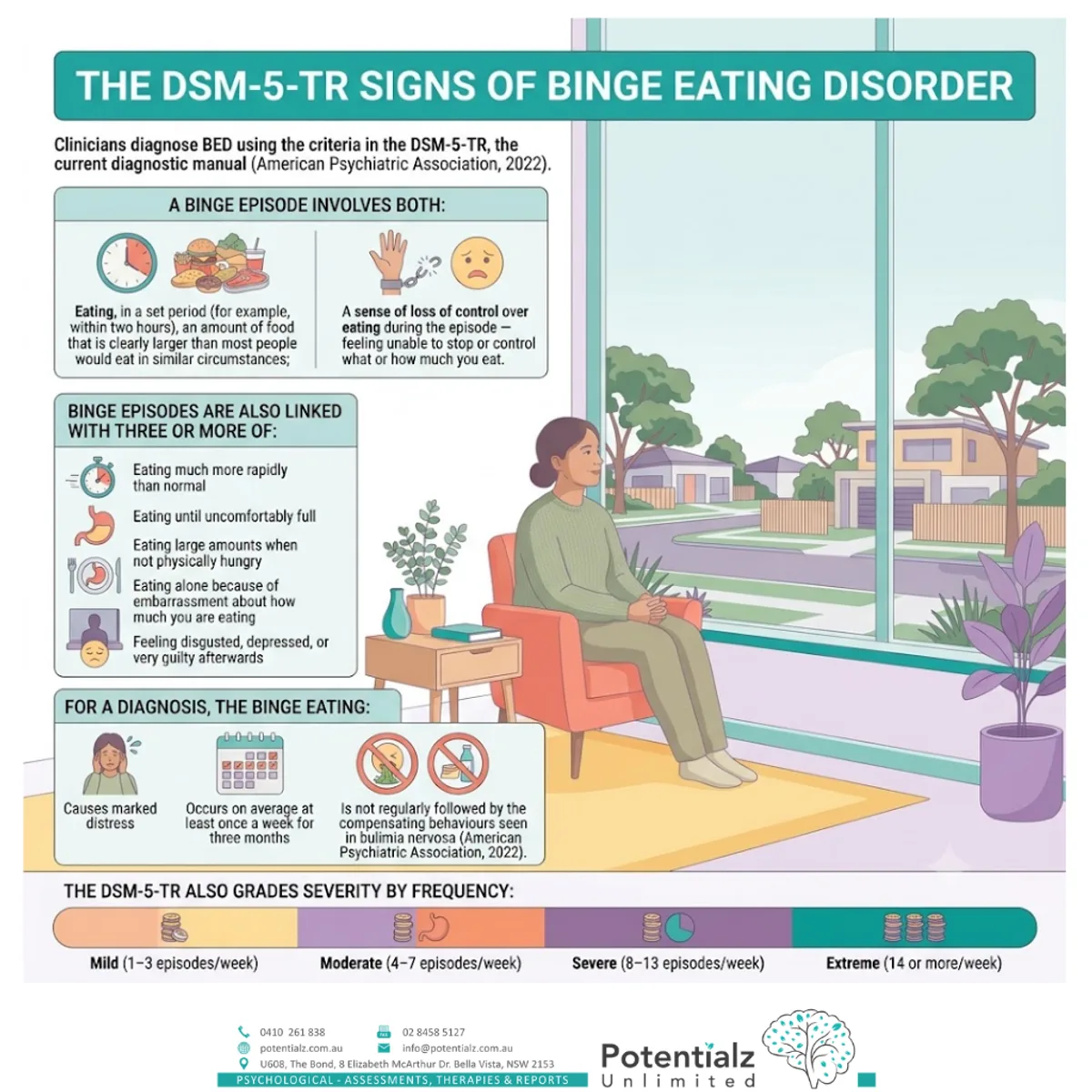
Clinicians diagnose BED using the criteria in the DSM-5-TR, the current diagnostic manual (American Psychiatric Association, 2022). A binge episode involves both:
- Eating, in a set period (for example, within two hours), an amount of food that is clearly larger than most people would eat in similar circumstances; and
- A sense of loss of control over eating during the episode — feeling unable to stop or control what or how much you eat.
Binge episodes are also linked with three or more of the following:
- Eating much more rapidly than normal
- Eating until uncomfortably full
- Eating large amounts when not physically hungry
- Eating alone because of embarrassment about how much you are eating
- Feeling disgusted, depressed, or very guilty afterwards
For a diagnosis, the binge eating causes marked distress, occurs on average at least once a week for three months, and is not regularly followed by the compensating behaviours seen in bulimia nervosa (American Psychiatric Association, 2022). The DSM-5-TR also grades severity by frequency — from mild (1–3 episodes a week) through to extreme (14 or more a week).
You do not need to diagnose yourself. If these signs feel familiar, a clinical psychologist can help you understand what is happening and what to do next.
How BED Differs From “Just Overeating”
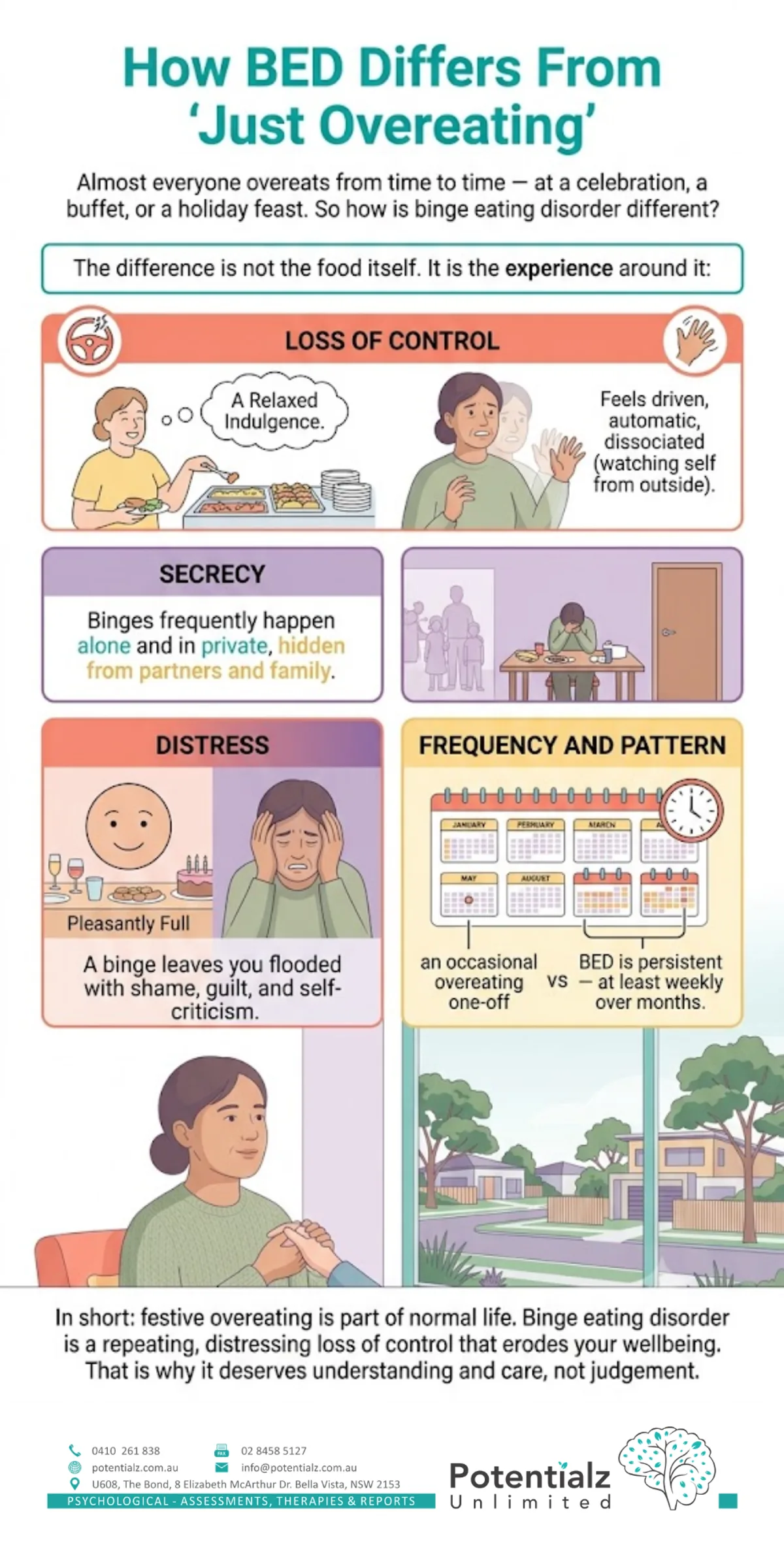
Almost everyone overeats from time to time — at a celebration, a buffet, or a holiday feast. So how is binge eating disorder different?
The difference is not the food itself. It is the experience around it:
- Loss of control. A binge is not a relaxed indulgence. It often feels driven, automatic, even dissociated — as if you are watching yourself from the outside.
- Secrecy. Binges frequently happen alone and in private, hidden from partners and family.
- Distress. Overeating at a party might leave you pleasantly full. A binge leaves you flooded with shame, guilt, and self-criticism.
- Frequency and pattern. BED is recurrent and persistent — at least weekly over months — not an occasional one-off.
In short: festive overeating is part of normal life. Binge eating disorder is a repeating, distressing loss of control that erodes your wellbeing. That is why it deserves understanding and care, not judgement.
Causes and Risk Factors
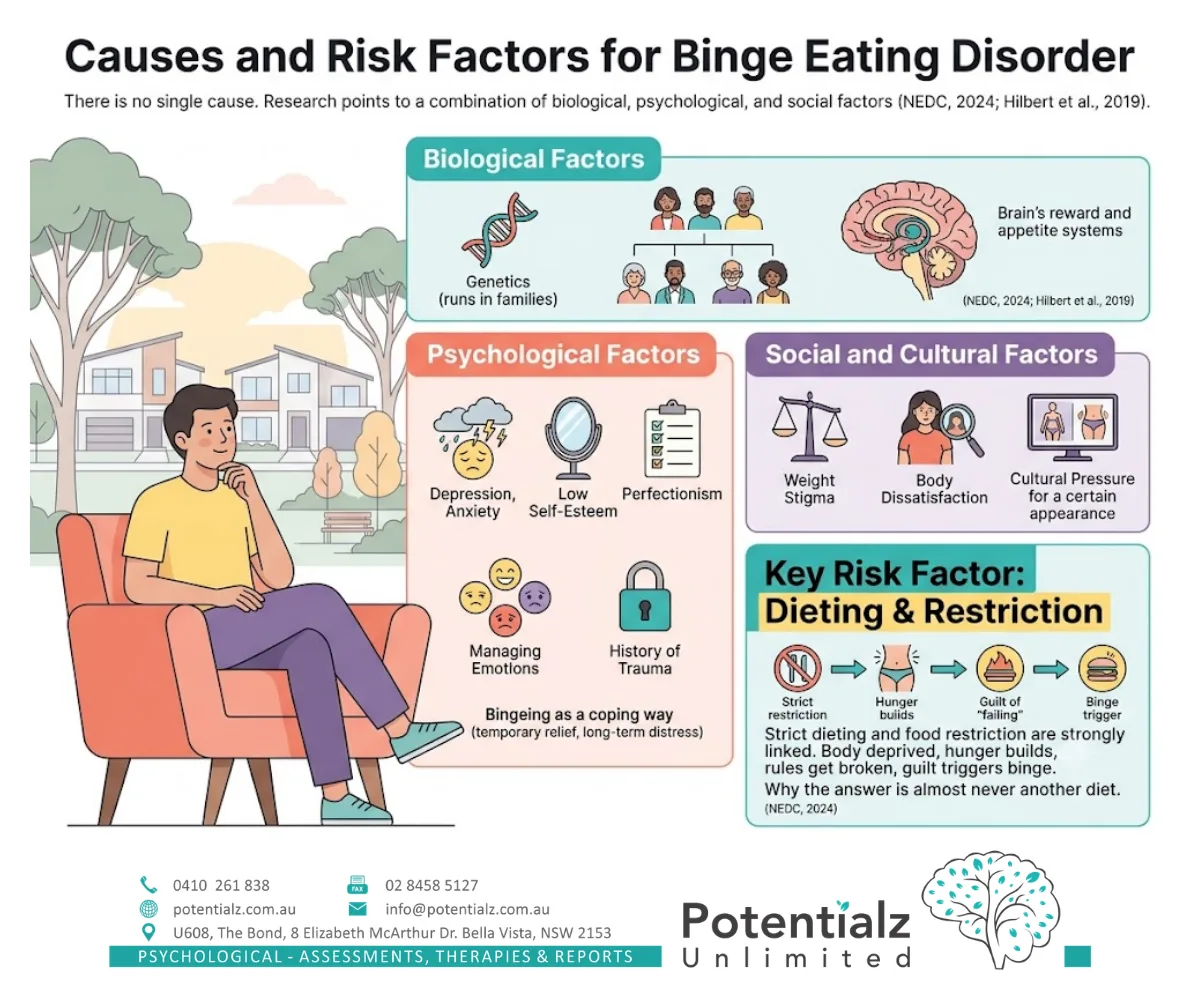
There is no single cause of binge eating disorder. Research points to a combination of biological, psychological, and social factors (NEDC, 2024; Hilbert et al., 2019).
Biological factors include genetics — eating disorders run in families — along with the brain’s reward and appetite systems.
Psychological factors include depression, anxiety, low self-esteem, perfectionism, difficulty managing emotions, and a history of trauma. For many people, bingeing becomes a way of coping with painful feelings — a temporary escape that brings short-term relief but long-term distress.
Social and cultural factors include weight stigma, body dissatisfaction, and the relentless cultural pressure to look a certain way.
One risk factor deserves special mention: dieting. It may feel counter-intuitive, but strict dieting and food restriction are strongly linked to binge eating. When the body is deprived, hunger builds, rules get broken, and the guilt of “failing” a diet can itself trigger a binge (NEDC, 2024). This is why the answer to BED is almost never another diet.
The Shame Cycle
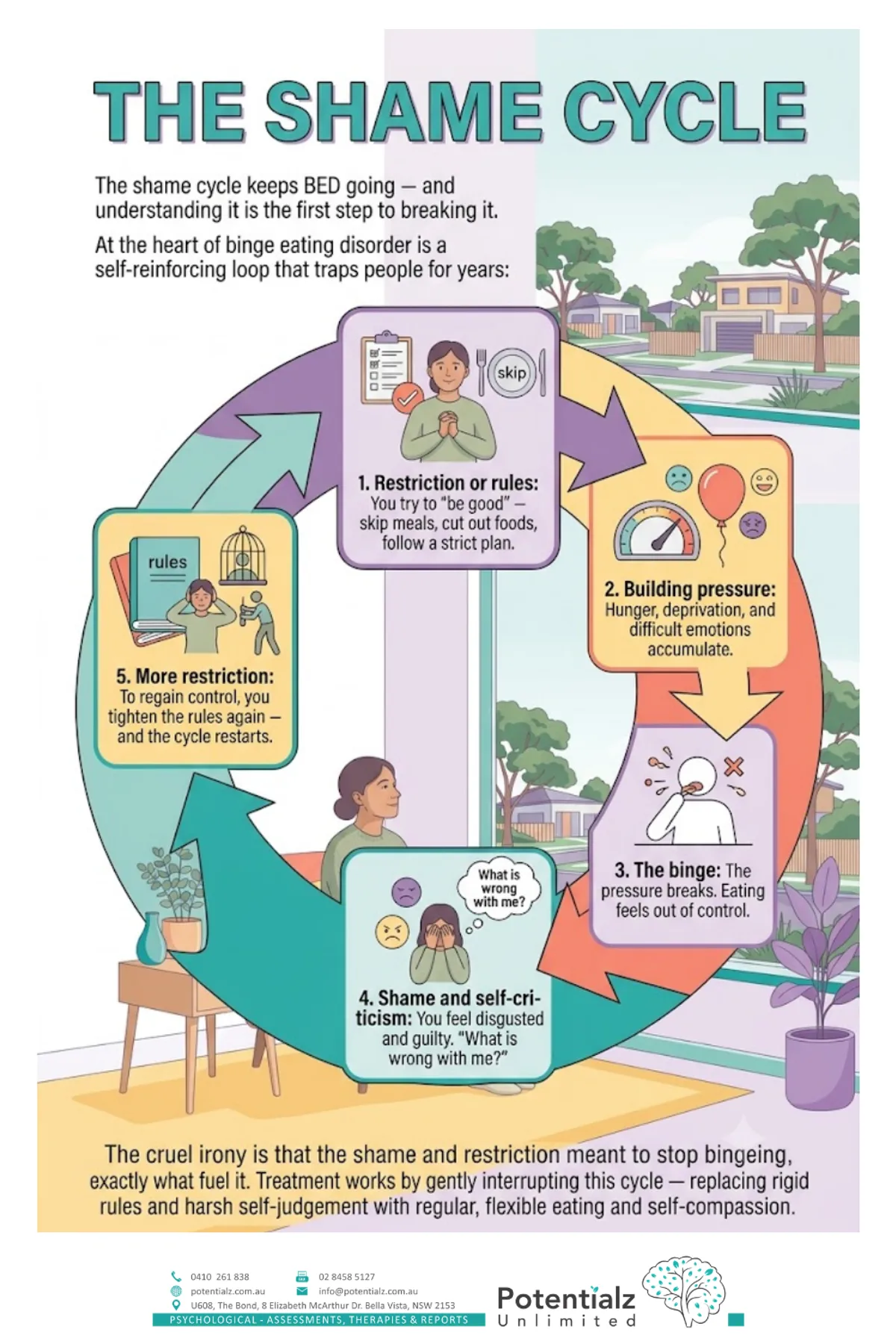
The shame cycle keeps BED going — and understanding it is the first step to breaking it.
At the heart of binge eating disorder is a self-reinforcing loop that traps people for years:
- Restriction or rules. You try to “be good” — skip meals, cut out foods, follow a strict plan.
- Building pressure. Hunger, deprivation, and difficult emotions accumulate.
- The binge. The pressure breaks. Eating feels out of control.
- Shame and self-criticism. You feel disgusted and guilty. “What is wrong with me?”
- More restriction. To regain control, you tighten the rules again — and the cycle restarts.
The cruel irony is that the shame and restriction meant to stop bingeing are exactly what fuel it. Treatment works by gently interrupting this cycle — replacing rigid rules and harsh self-judgement with regular, flexible eating and self-compassion. You can read more in our overview of eating disorders and what they are.
Physical and Mental Health Impact
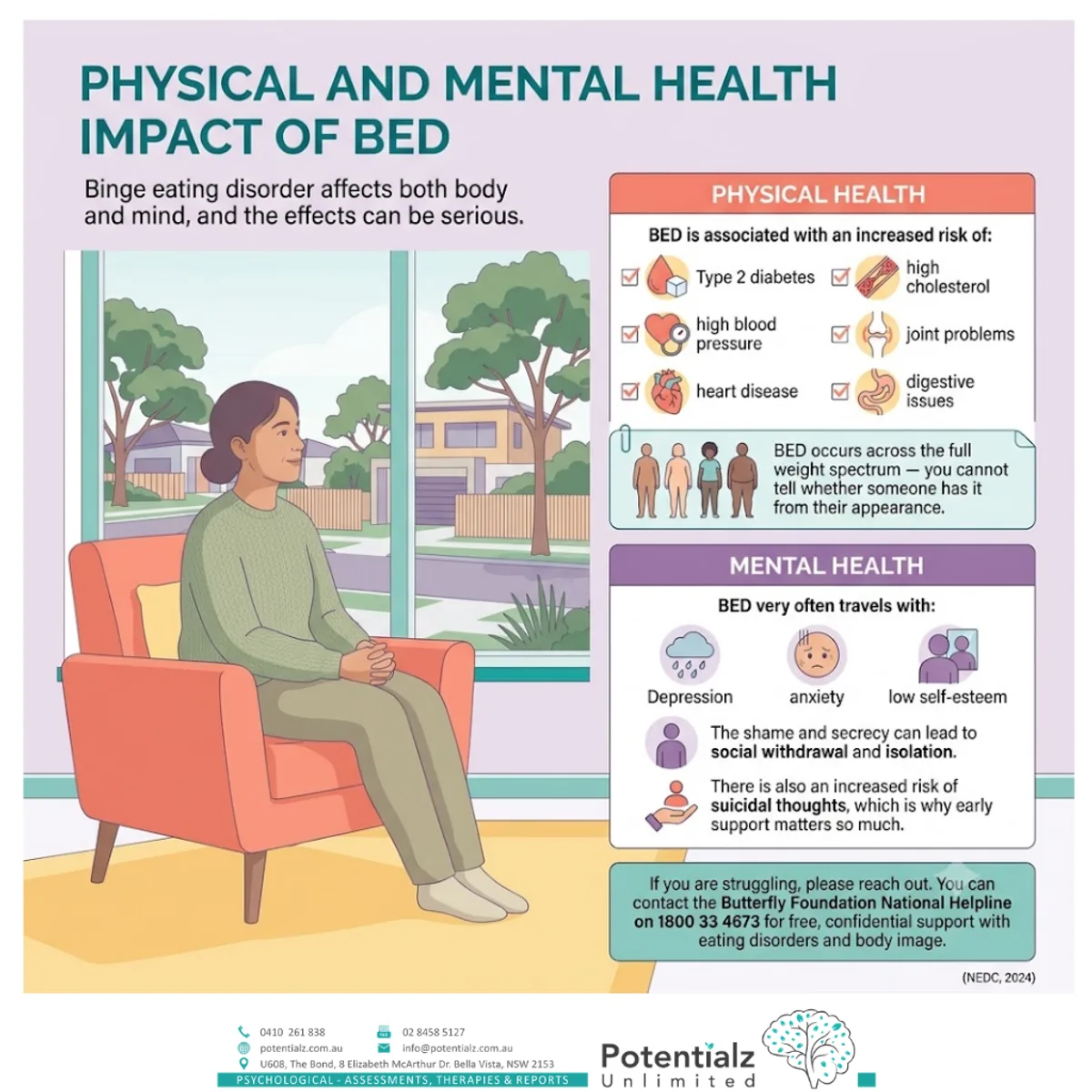
Binge eating disorder affects both body and mind, and the effects can be serious.
Physical health. BED is associated with an increased risk of type 2 diabetes, high blood pressure, heart disease, high cholesterol, joint problems, and digestive issues (NEDC, 2024). Importantly, BED occurs across the full weight spectrum — you cannot tell whether someone has it from their appearance.
Mental health. BED very often travels with depression, anxiety, and low self-esteem. The shame and secrecy can lead to social withdrawal and isolation. There is also an increased risk of suicidal thoughts, which is why early support matters so much.
If you are struggling, please reach out. You can contact the Butterfly Foundation National Helpline on 1800 33 4673 for free, confidential support with eating disorders and body image. In an emergency, call 000.
Evidence-Based Treatment: What Actually Works
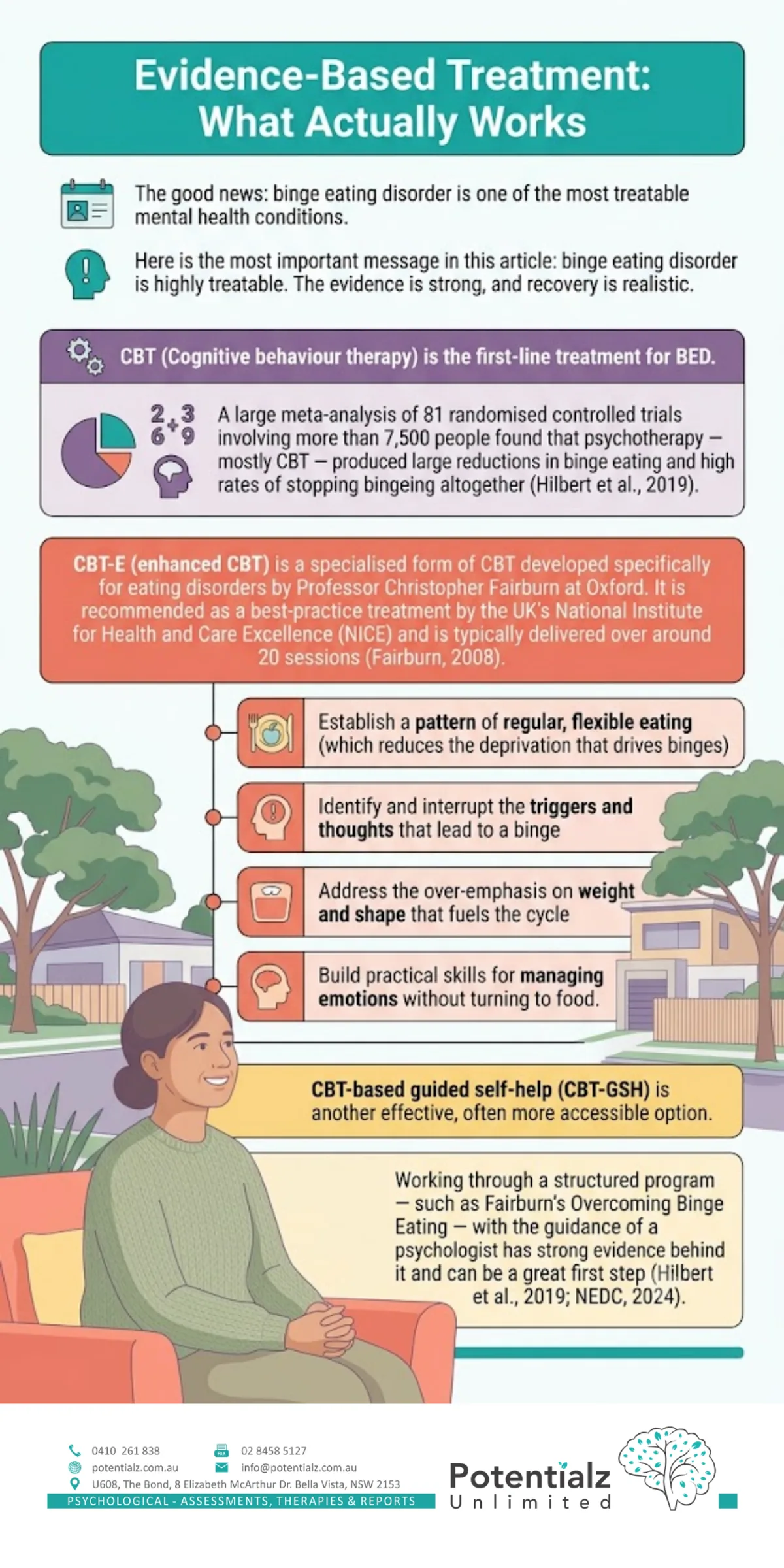
The good news: binge eating disorder is one of the most treatable mental health conditions.
Here is the most important message in this article: binge eating disorder is highly treatable. The evidence is strong, and recovery is realistic.
Cognitive behaviour therapy (CBT) is the first-line treatment for BED. A large meta-analysis of 81 randomised controlled trials involving more than 7,500 people found that psychotherapy — mostly CBT — produced large reductions in binge eating and high rates of stopping bingeing altogether (Hilbert et al., 2019).
CBT-E (enhanced CBT) is a specialised form of CBT developed specifically for eating disorders by Professor Christopher Fairburn at Oxford. It is recommended as a best-practice treatment by the UK’s National Institute for Health and Care Excellence (NICE) and is typically delivered over around 20 sessions (Fairburn, 2008). CBT-E helps you:
- Establish a pattern of regular, flexible eating (which reduces the deprivation that drives binges)
- Identify and interrupt the triggers and thoughts that lead to a binge
- Address the over-emphasis on weight and shape that fuels the cycle
- Build practical skills for managing emotions without turning to food
CBT-based guided self-help (CBT-GSH) is another effective, often more accessible option. Working through a structured program — such as Fairburn’s Overcoming Binge Eating — with the guidance of a psychologist has strong evidence behind it and can be a great first step (Hilbert et al., 2019; NEDC, 2024).
The role of a psychologist is to make all of this possible. A psychologist provides a safe, non-judgemental space, tailors treatment to you, helps you understand your own cycle, and walks alongside you as you build new patterns. You are not expected to do this alone. Our guide to evidence-based therapies for eating disorders recommended by the APS explores these approaches in more detail.
The Medicare Eating Disorder Plan
Cost should not be a barrier to getting help. In Australia, eligible people can access an Eating Disorder Plan (EDP) through their GP. This provides Medicare rebates for up to 40 psychological treatment sessions and up to 20 dietetic sessions within a 12-month period (Services Australia, 2026).
To be eligible, a person generally needs a clinical diagnosis and to meet certain criteria. For BED, this typically includes a score of 3 or more on the Eating Disorder Examination Questionnaire (EDE-Q) together with binge eating (or other relevant behaviours) occurring three or more times a week, among other clinical considerations (Services Australia, 2026).
Your GP assesses your eligibility and prepares the plan. It is well worth asking — this scheme can make a real, practical difference to accessing care.
A Local Word: Support in Bella Vista and the Hills District
Binge eating disorder thrives in silence. In a busy, high-achieving area like the Hills District — Bella Vista, Norwest, Castle Hill, Baulkham Hills, Kellyville, and the surrounding suburbs — the pressure to appear “fine” and in control can make it especially hard to admit you are struggling. Many people carry this privately for years.
At Potentialz Unlimited, we want you to know that reaching out is a sign of strength, not weakness. Working with a binge eating disorder psychologist in Bella Vista means local, confidential, evidence-based care — close to home, with telehealth available across NSW for those who prefer it.
If you are a parent worried about a younger family member, you may also find our article on the warning signs of eating disorders in teens helpful.
When to Reach Out
Consider speaking with a psychologist if you:
- Have recurring episodes of eating that feel out of control
- Eat in secret, or feel deep shame and guilt around food
- Find yourself caught in a cycle of dieting and bingeing
- Use food to cope with stress, sadness, loneliness, or anxiety
- Feel that food and eating are taking up more and more mental space
- Notice your mood, relationships, or health being affected
You do not need to wait until things reach crisis point. In fact, earlier support tends to make recovery faster and smoother. There is no “severe enough” threshold you must reach before you deserve help — if it is troubling you, that is reason enough.
Dr. Gurprit Ganda is a Clinical Psychologist (AHPRA) with over 25 years of experience, and a member of the Australian Psychological Society. She offers compassionate, evidence-based treatment for binge eating disorder, drawing on CBT, CBT-E, ACT, and EMDR, tailored to you.
To take the first step, contact our team, call 0410 261 838, or book online at live.potentialz.com.au. We are located at Unit 608, 8 Elizabeth Macarthur Drive, Bella Vista NSW 2153. Telehealth is available across NSW.
Recovery from binge eating disorder is possible. The cycle can be broken. And you do not have to do it alone.
Dr. Gurprit Ganda is a Clinical Psychologist (AHPRA) and member of the Australian Psychological Society. Potentialz Unlimited, Unit 608, 8 Elizabeth Macarthur Drive, Bella Vista NSW 2153. Phone: 0410 261 838. This article is general educational information and is not a substitute for individual psychological assessment or treatment.
Support and Helpline
If you are struggling with eating, body image, or your mental health, support is available right now.
- Butterfly Foundation National Helpline (eating disorders and body image): 1800 33 4673 (1800 ED HOPE)
- Lifeline (24/7 crisis support): 13 11 14
- Beyond Blue (mental health support): 1300 22 4636
- Emergency: 000
References
American Psychiatric Association. (2022). Diagnostic and statistical manual of mental disorders (5th ed., text rev.). https://doi.org/10.1176/appi.books.9780890425787
Fairburn, C. G. (2008). Cognitive behavior therapy and eating disorders. Guilford Press.
Hilbert, A., Petroff, D., Herpertz, S., Pietrowsky, R., Tuschen-Caffier, B., Vocks, S., & Schmidt, R. (2019). Meta-analysis of the efficacy of psychological and medical treatments for binge-eating disorder. Journal of Consulting and Clinical Psychology, 87(1), 91–105. https://doi.org/10.1037/ccp0000358
National Eating Disorders Collaboration (NEDC). (2024). Binge eating disorder. https://nedc.com.au/eating-disorders/eating-disorders-explained/types/binge-eating-disorder/
Services Australia. (2026). Eating Disorders Plan — Medicare Benefits Schedule. Australian Government.
Knowledge Check Quiz
Test what you have just read. Choose your answer for each question, then submit to reveal the answers and your score.
Need Professional Support?
If you're experiencing mental health concerns, our team is here to help.