Key Takeaways
- Play therapy and talk therapy are both evidence-based for children — the right choice depends on the child’s age, the concern and the setting, not on which is “better”.
- Play therapy generally fits ages 3 to 10, with the sweet spot around 4 to 8. Talk therapy becomes a strong fit from around 10 onwards.
- The core tools of play therapy are sand tray, puppet play, art and drawing, and constructive play. These are not “just playing” — they are developmentally appropriate ways for a child to process what they cannot yet put into words.
- Talk therapy for older children uses age-adapted cognitive and interpersonal tools once verbal self-reflection is developmentally available.
- The parent’s role is to hold a steady routine at home and act as a co-ordinated partner in care — not to deliver therapy or to stay out of the process entirely.
- Many children benefit from a blended approach that shifts gradually from play-based to talk-based as they grow.
If you are a parent in the Hills District wondering whether your child needs play therapy or talk therapy, this post is the decision guide — not another explainer of what play therapy is (we have a full primer on play therapy for that).
The honest answer is that both approaches work, and the question is not “which is better” but “which fits this child, right now, for this concern”. That decision rests on three factors: age, concern and setting.
Play vs talk at a glance
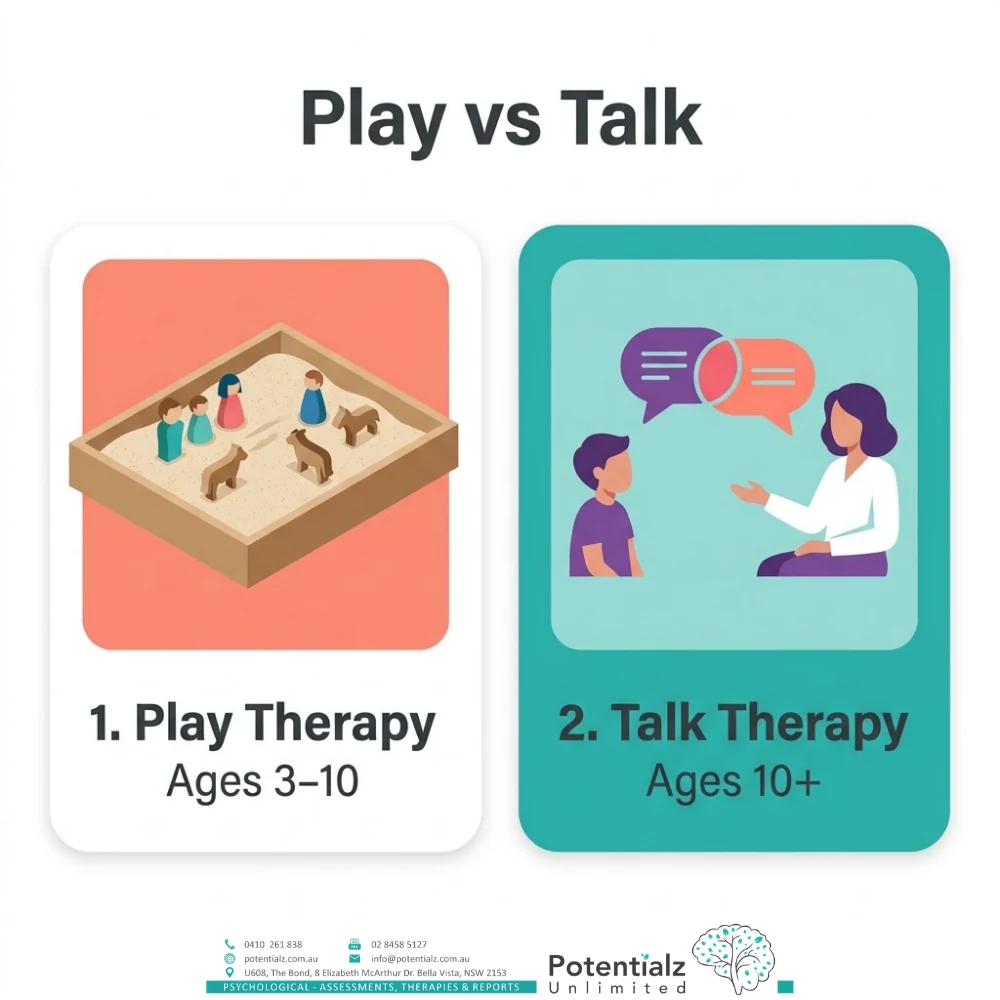
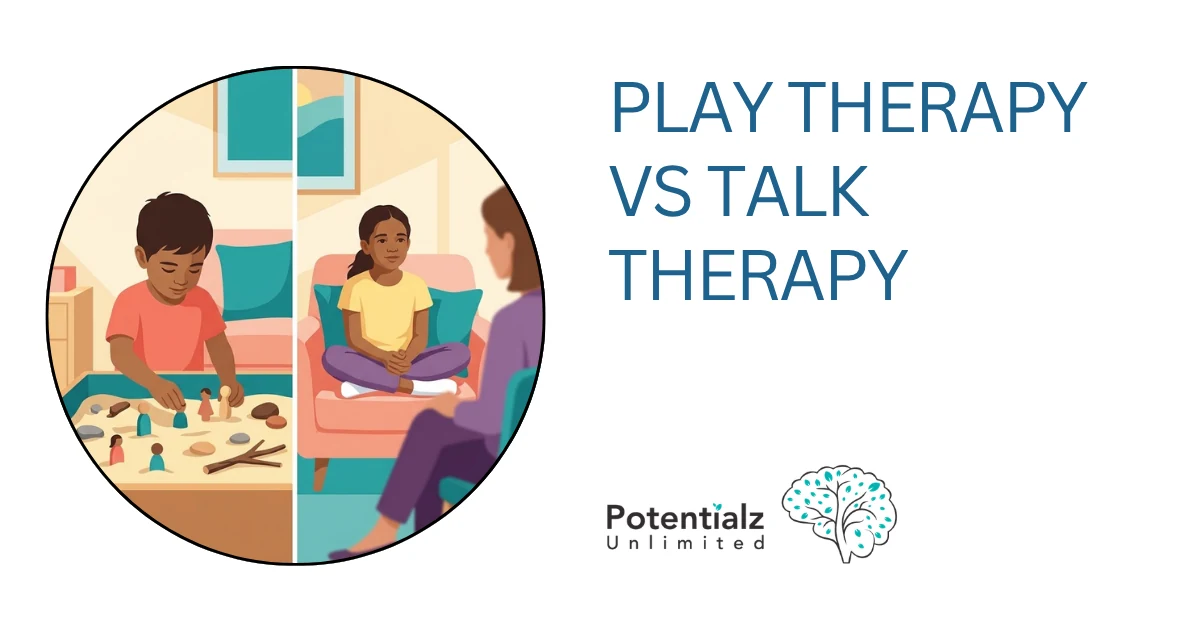
Play therapy uses play as the primary language of the session. A child moves figures in a sand tray, speaks through puppets, draws, or builds — and in doing so, works through what is going on for them. The therapist is engaged, attuned and skilled, but the child does not have to find words to describe their inner world. The developmental sweet spot is roughly ages 4 to 8, with useful work from 3 to around 10.
Talk therapy uses words directly. The child is asked, respectfully and in developmentally appropriate ways, to notice what they are feeling, name it, and work with it. This becomes a strong fit from around age 10 onwards, when the capacity for verbal self-reflection, abstract thinking and considering their own thoughts is developmentally available. Approaches include age-adapted cognitive behavioural therapy, interpersonal therapy for adolescents, and narrative therapy.
The overlap zone — roughly ages 8 to 11 — is where either can be the right call, often blended, and where a skilled clinician reads the child’s own preference and verbal readiness.
The tools of play therapy
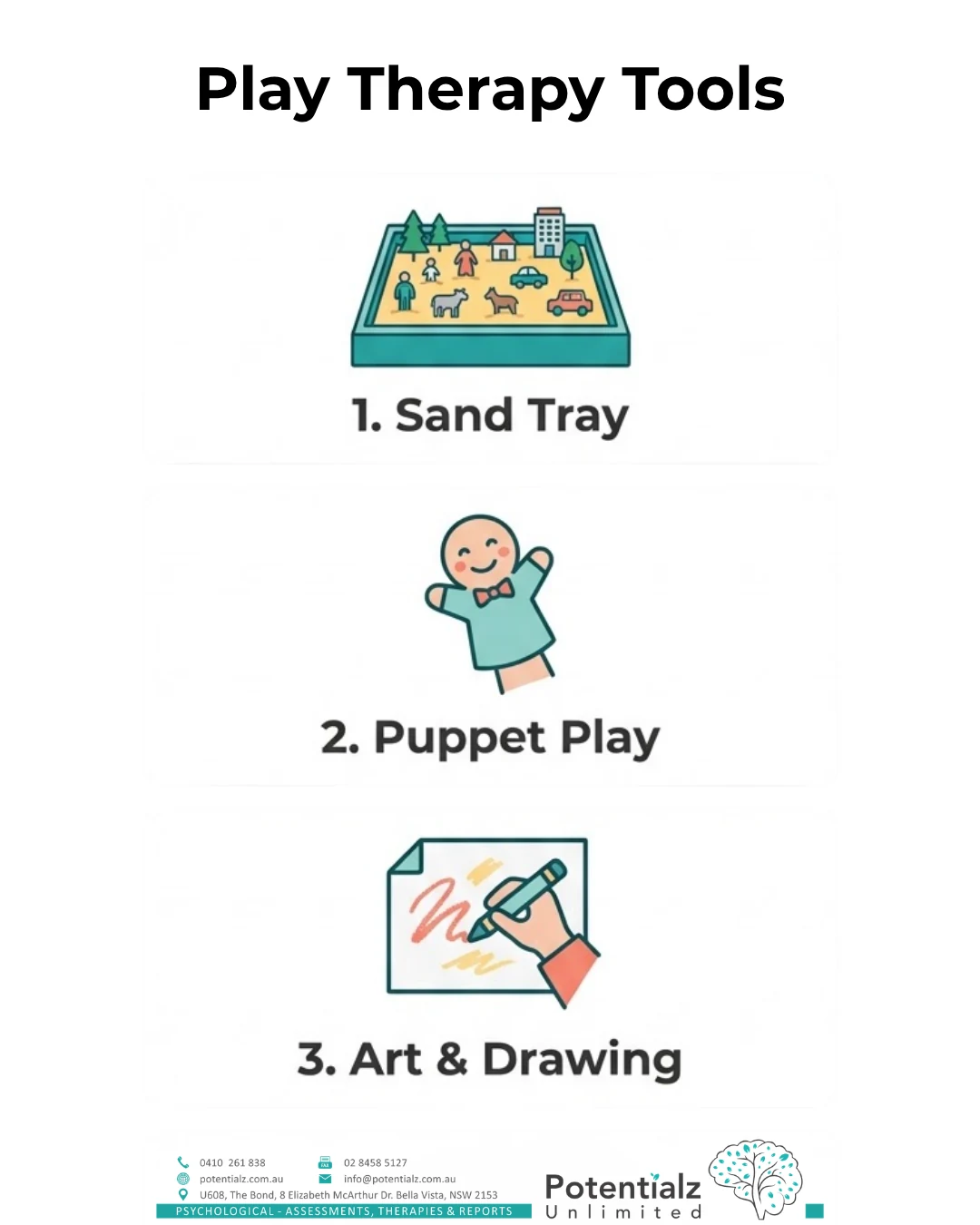
Play therapy is not “just letting a child play”. The modality is a deliberate therapeutic approach with specific tools, each chosen for what it offers developmentally:
- Sand tray. The child selects miniatures and arranges them in a shallow tray of sand. What they build is a projection of their inner world — a conflict, a wish, a relationship, a worry — in a form they can see, touch and change. It is quietly powerful work.
- Puppet play. A child who could never say “I’m scared Dad will shout again” can have a bear puppet say it to a wolf puppet. Puppets externalise what is otherwise too close to speak.
- Art and drawing. Not for aesthetic merit — for the symbol choice, the colour choice, the figure placement, the page use. Children’s drawings often say what they cannot.
- Constructive play. Blocks, Lego, model-making. Building and rebuilding offers a child agency in a world where they often have very little, and it supports regulation and persistence as side effects.
Our deeper pieces on play therapy for anxiety in children and big-emotions play therapy show how these tools work in specific concerns.
When each approach fits best
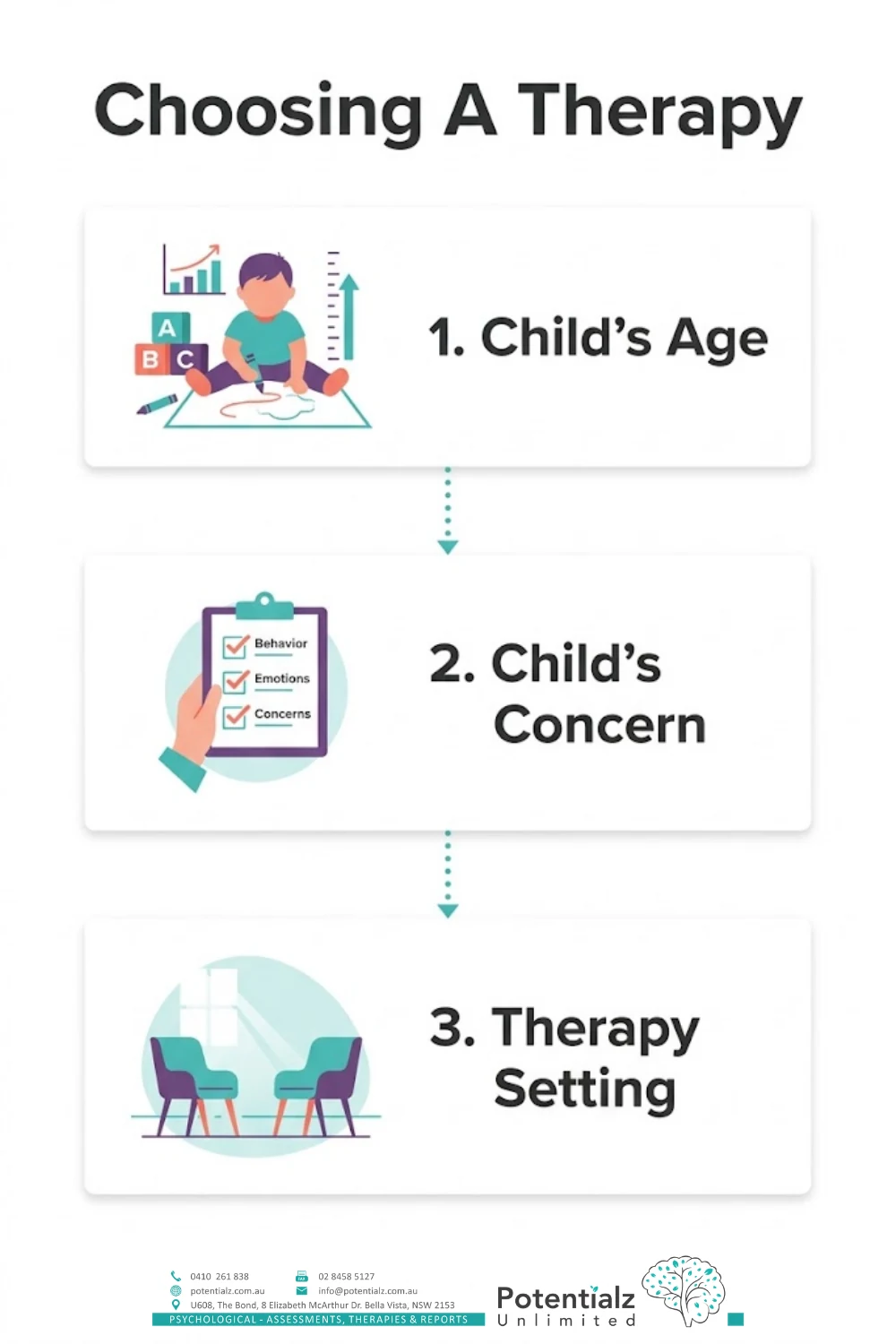
1. Child’s age
The dominant factor. For a six-year-old, play is literally the language in which they think and process; asking them to sit and talk about their feelings for an hour would be developmentally mismatched. For a twelve-year-old, the opposite often holds — they want words, respect for their capacity to reflect, and a sense that therapy is on their side rather than something that treats them as younger than they are.
Rough guide, with a lot of individual variation:
- Ages 3–7: play therapy almost always.
- Ages 8–10: either, often blended; preferences and verbal readiness matter.
- Ages 10–12: talk therapy increasingly, with play elements where appropriate.
- Ages 13+: talk therapy with modality fit (CBT, IPT, narrative therapy, etc.).
2. The concern
Some concerns match specific approaches more cleanly:
- Big feelings, meltdowns, anger, sadness without words. Play therapy, especially sand tray and puppet work.
- Anxiety that the child can name but not shift. Talk therapy with CBT elements from around age 9–10; play-informed CBT below that.
- Trauma, including early adverse experiences. Play therapy for younger children; trauma-focused talk therapy for older children, with a careful readiness check — our note on childhood trauma and play therapy covers this terrain.
- Social and friendship difficulties. Both can work; group-based play (including Lego-based social skills work) is often a strong fit for autistic children.
- Family change — divorce, separation, new siblings, loss. Play therapy for younger children, as in our family-change play therapy post.
3. The setting
Does your child have a space at home where they can decompress after sessions? Will the therapy be in-clinic or telehealth? Will there be formal reviews with you as a parent? Play therapy generally works best in a dedicated play-therapy room (telehealth play therapy exists but is a different modality). Talk therapy for older children transitions to telehealth comfortably.
Signs to watch in your child
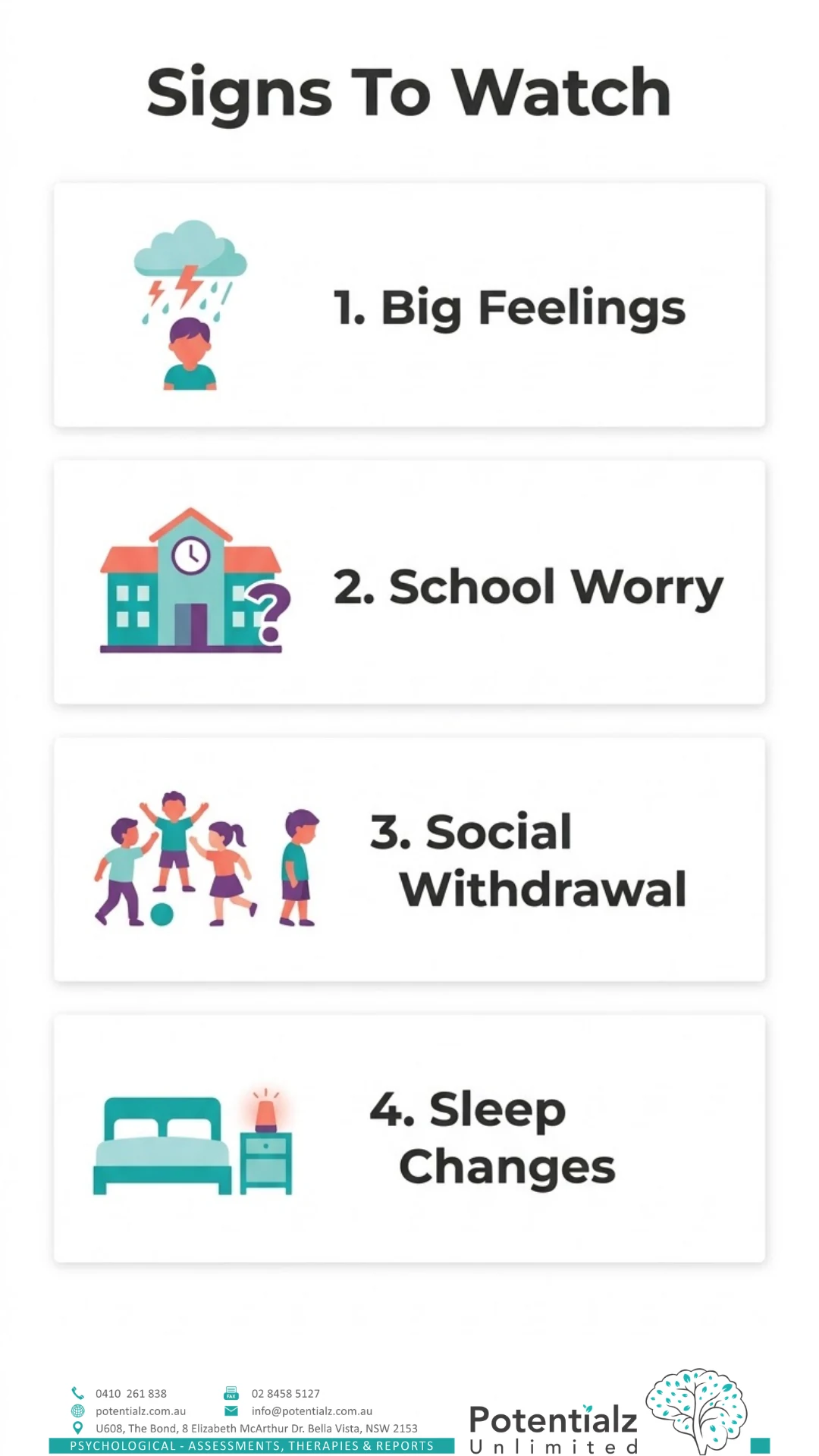
Whether play or talk therapy is the fit, the signs that it is time to consider therapy for a child are usually some combination of:
- Big feelings that persist across weeks and do not shift with your usual repertoire.
- School worry — reluctance to go, somatic complaints on school mornings, a drop in engagement.
- Social withdrawal — a child retreating from friends they used to seek out, or saying they feel like they don’t belong.
- Sleep changes — difficulty settling, early waking, new nightmares, or needing you more at night than their age usually requires.
One of these in a hard month is normal childhood. Three of them, persistently, over a few months, is a worth-looking-into signal.
The parent’s role
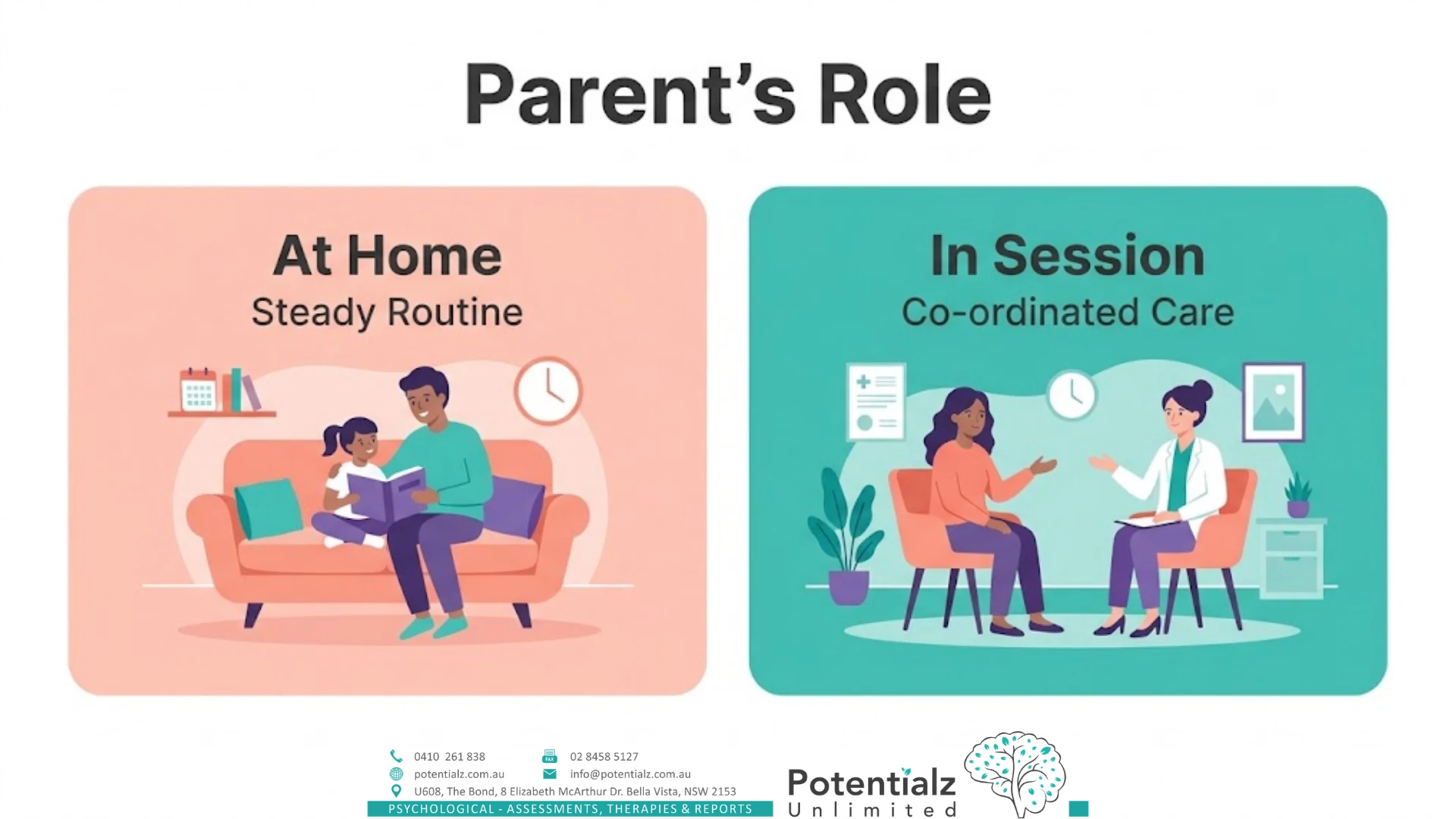
The parent is not a bystander in children’s therapy, and they are not a therapist either. The role is:
- At home: a steady routine. The therapy effect is amplified or dampened by what happens in the twenty-three hours between sessions. Regular sleep, meals, predictable transitions, and un-pressured one-on-one time with you do most of the heavy lifting for a child’s week.
- In session: a co-ordinated partner in care. Our parent consultations primer walks through what this looks like in practice — regular check-ins with the clinician, scaffolding what you observe at home, hearing back what the therapist can share within appropriate confidentiality for the child’s age.
Parent involvement, held in this balanced way, is itself a therapeutic ingredient.
When blended therapy is the right call
Many children — especially those in the 8-to-11 overlap zone — do best with a therapy that uses both languages. A session might start with a few minutes of talking about the week, move into sand tray or art for the harder material, and come back to words at the end. The clinician reads the child moment-to-moment and uses whichever language the child can access right then.
If your child is near this age range, you do not need to make a hard play-vs-talk choice at referral. A good clinician will meet the child first, choose a starting language, and let it evolve.
Three next steps
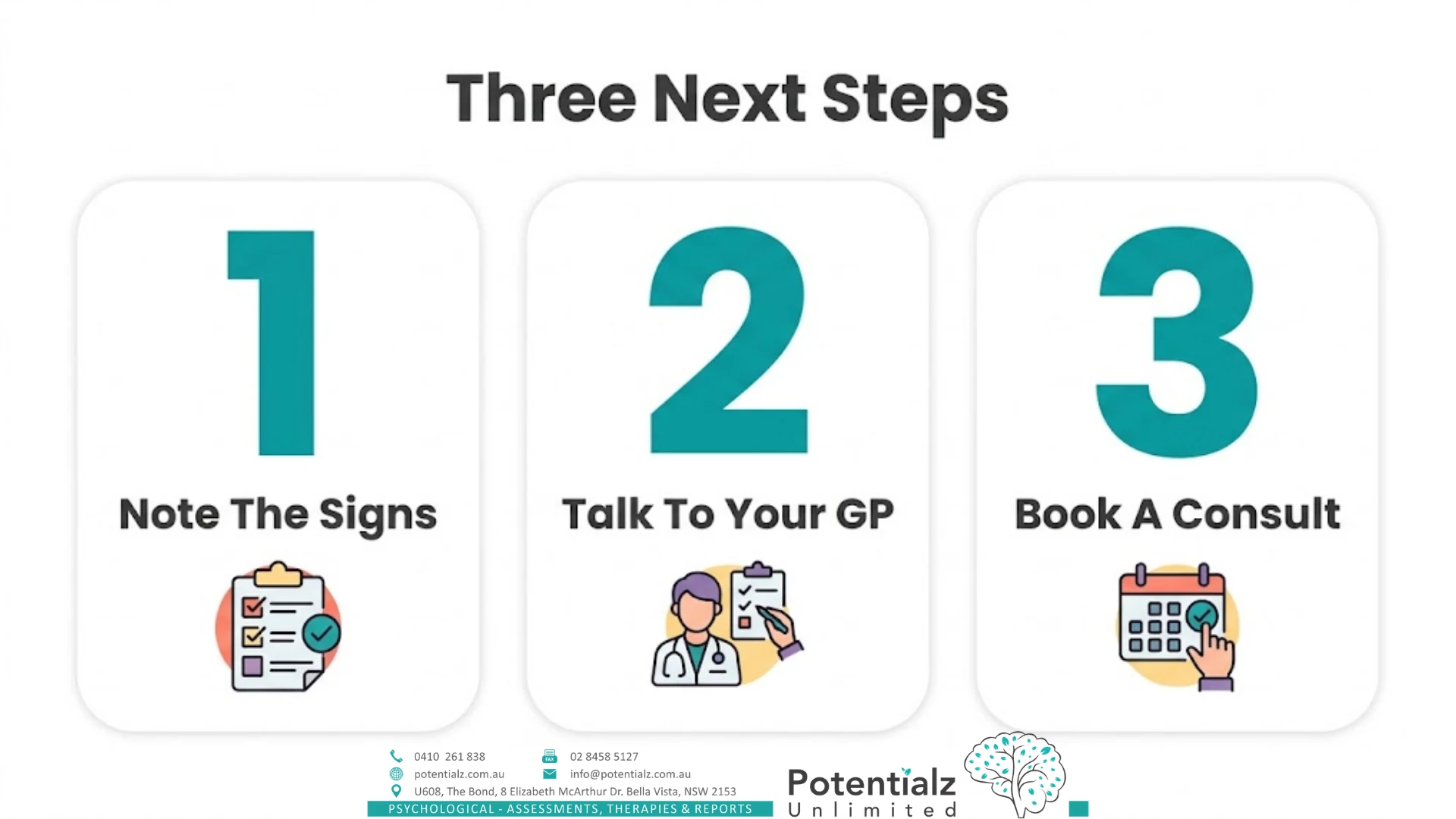
- Note the signs. Write down what you have been noticing over the last four to six weeks — frequency, context, what helps briefly, what doesn’t. This is useful data for both your GP and the clinician.
- Talk to your GP. A Mental Health Treatment Plan under Medicare can fund a block of psychology sessions. For children, a referral conversation with your GP is the usual first step.
- Book a consult. With a referral in hand, book an initial consult with a psychology practice that offers both play and talk approaches, so the clinician can meet your child and recommend the fit.
Frequently asked questions
My child is 9. Play therapy or talk therapy?
The right answer at age 9 is almost always “let the clinician meet them”. Many 9-year-olds thrive in play therapy; many are ready for talk therapy; most benefit from a blended approach that shifts gradually across the following year. Child preference and verbal readiness matter more than a hard age line.
Does play therapy work for autistic children?
Yes, with the right modality fit. Play therapy for autistic children often uses structured play (such as Lego-based social groups) and sensory-informed approaches. See our play therapy for autism social skills post and the sensory and messy play therapy post.
Is talk therapy for teenagers the same as adult therapy?
No. Adolescent-focused talk therapy adapts pace, language, use of autonomy, parent involvement and session structure. The modalities overlap with adult therapy — CBT, IPT, narrative — but the delivery is developmentally specific.
How many sessions does a child usually need?
Most presentations settle in a block of 8 to 20 sessions, often spread over a school term or two. Chronic or trauma-related work can run longer. Reviews with you as a parent at natural intervals (around session 4, session 8, and so on) help calibrate whether the current approach is working.
Can therapy happen while NDIS funding is involved?
Yes. We work with NDIS-funded families in the Hills District — see our NDIS play therapy explainer and the NDIS funding and play therapy guide.
If you are a parent in the Hills District wondering which therapy fits your child, Potentialz Unlimited sees children for both play therapy and age-adapted talk therapy from our Bella Vista rooms. Reaching out for a first conversation is the right move.
Knowledge Check Quiz
Test what you have just read. Choose your answer for each question, then submit to reveal the answers and your score.
Need Professional Support?
If you're experiencing mental health concerns, our team is here to help.