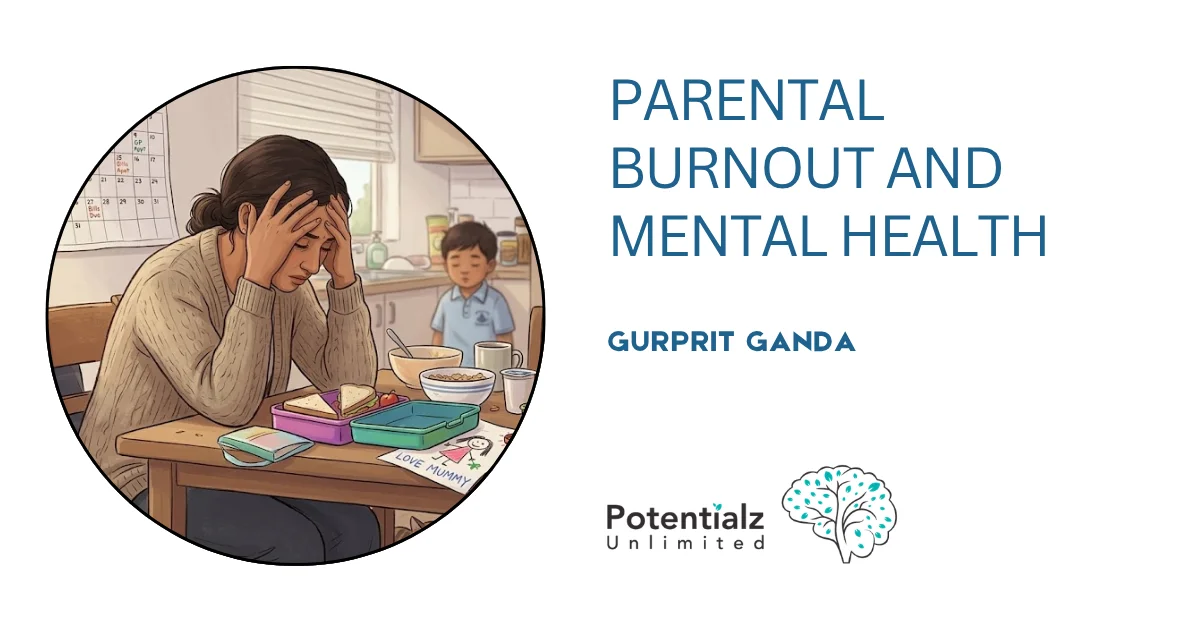
You Are Running on Empty — And Everyone Still Needs You
You love your children. That is not the question. The question is: when did everything start feeling so heavy? When did the school run, the lunches, the homework battles, the bedtime negotiations, the emotional labour of holding an entire family together start feeling like a weight you can barely carry?
If you are a parent who feels chronically exhausted, emotionally drained, and increasingly disconnected from the joy of parenting — you are not failing. You may be experiencing parental burnout.
Parental burnout is a distinct psychological condition identified through rigorous research. A landmark study by Roskam, Raes, and Mikolajczak (2017) defined it as a state of intense exhaustion related specifically to the parenting role. It is different from general burnout or depression. It has its own risk factors, its own consequences, and its own treatment pathways. Research published in Clinical Psychological Science found that parental burnout affects an estimated 5–8% of parents at any given time, with rates increasing significantly during periods of heightened parenting demands.
What Is Parental Burnout? The Four Key Dimensions
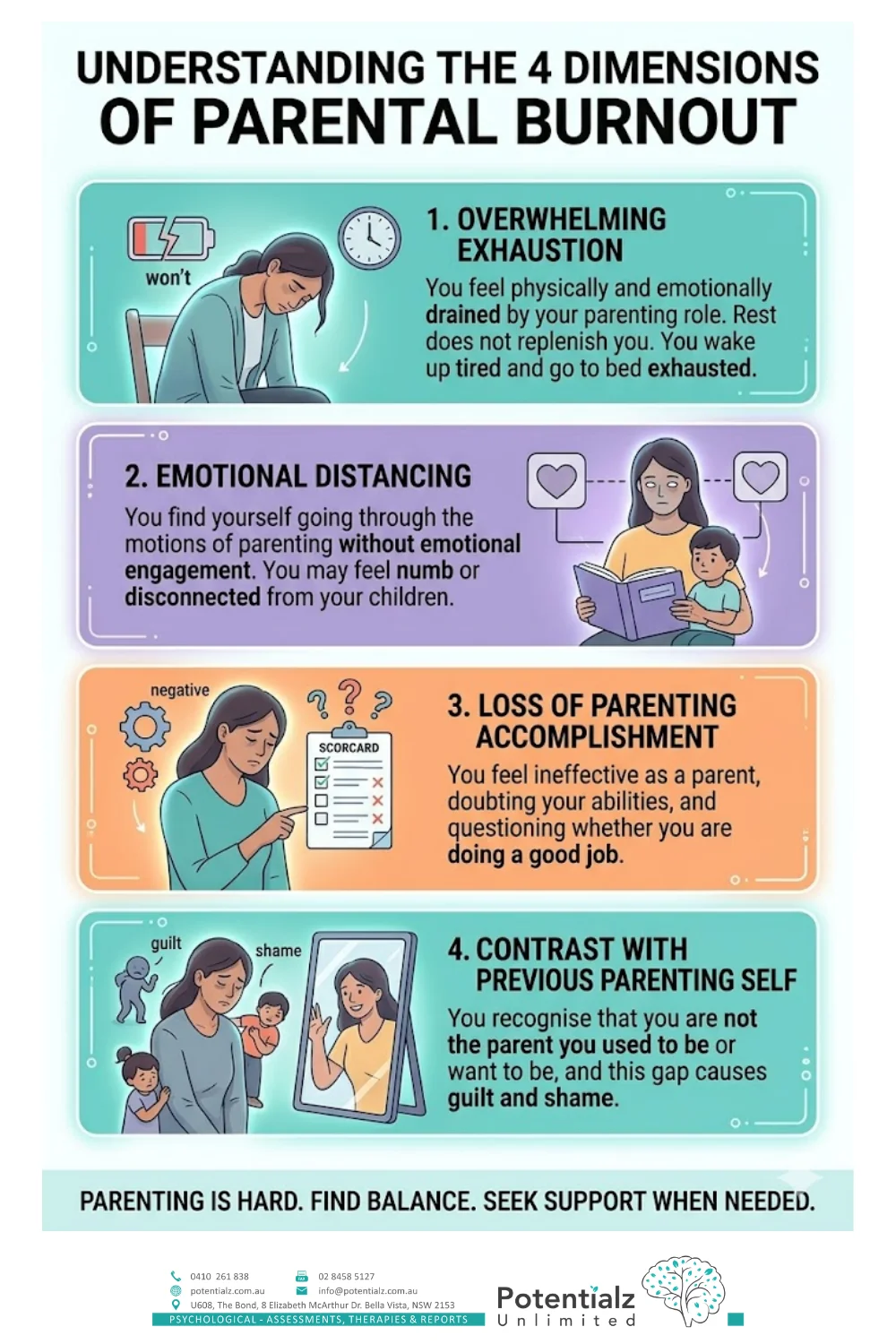
Parental burnout is characterised by four dimensions. First, overwhelming exhaustion — you feel physically and emotionally drained by your parenting role. Rest does not replenish you. You wake up tired and go to bed exhausted. Second, emotional distancing from your children — you find yourself going through the motions of parenting without emotional engagement. You may feel numb or disconnected from your children. Third, loss of parenting accomplishment — you feel ineffective as a parent, doubting your abilities, and questioning whether you are doing a good job. Fourth, contrast with your previous parenting self — you recognise that you are not the parent you used to be or want to be, and this gap causes guilt and shame.
It is critical to understand that parental burnout is not a moral failing. It is a psychological response to chronic stress in the parenting role, particularly when demands consistently exceed resources.
What Causes Parental Burnout?
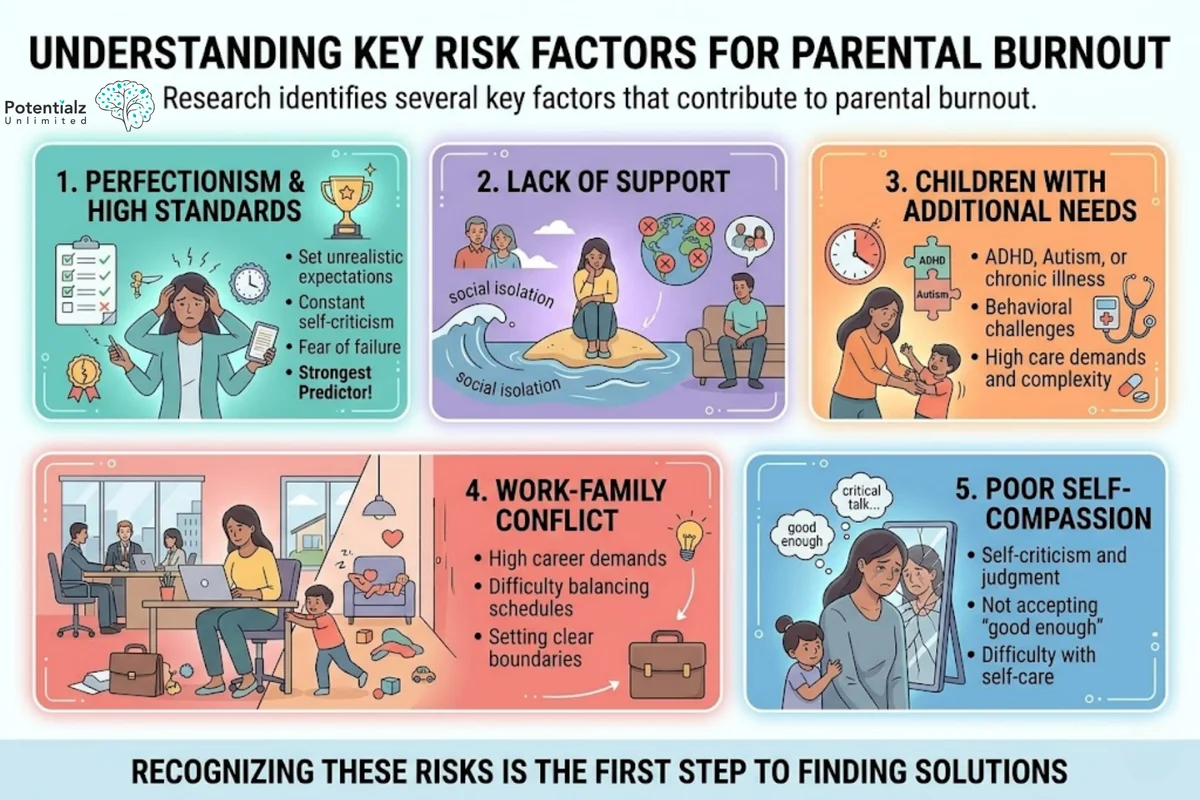
Research identifies several key risk factors. Perfectionism and high parenting standards are the strongest predictors — parents who set unrealistically high expectations for themselves are most vulnerable. Lack of support, including limited co-parenting support, absent extended family networks, or social isolation, is another major factor. Parenting a child with additional needs such as ADHD, autism, chronic illness, or behavioural challenges significantly increases burnout risk. Work-family conflict and the difficulty of balancing career demands with parenting responsibilities contributes substantially. Poor self-compassion is also significant — parents who are harsh with themselves and do not allow themselves to be “good enough” are at greater risk.
In the Hills District, many families face specific pressures including long commutes, high cost of living, reduced access to extended family for migrant families, and the cultural pressure to appear to have everything under control.
The Consequences of Ignoring Parental Burnout
Left untreated, parental burnout has serious consequences for both parents and children. Research shows that burned-out parents are more likely to experience anxiety and depression; to engage in neglectful or harsh parenting behaviours they later regret; to experience relationship breakdown with their partner; and to develop physical health problems including chronic pain, insomnia, and immune dysfunction.
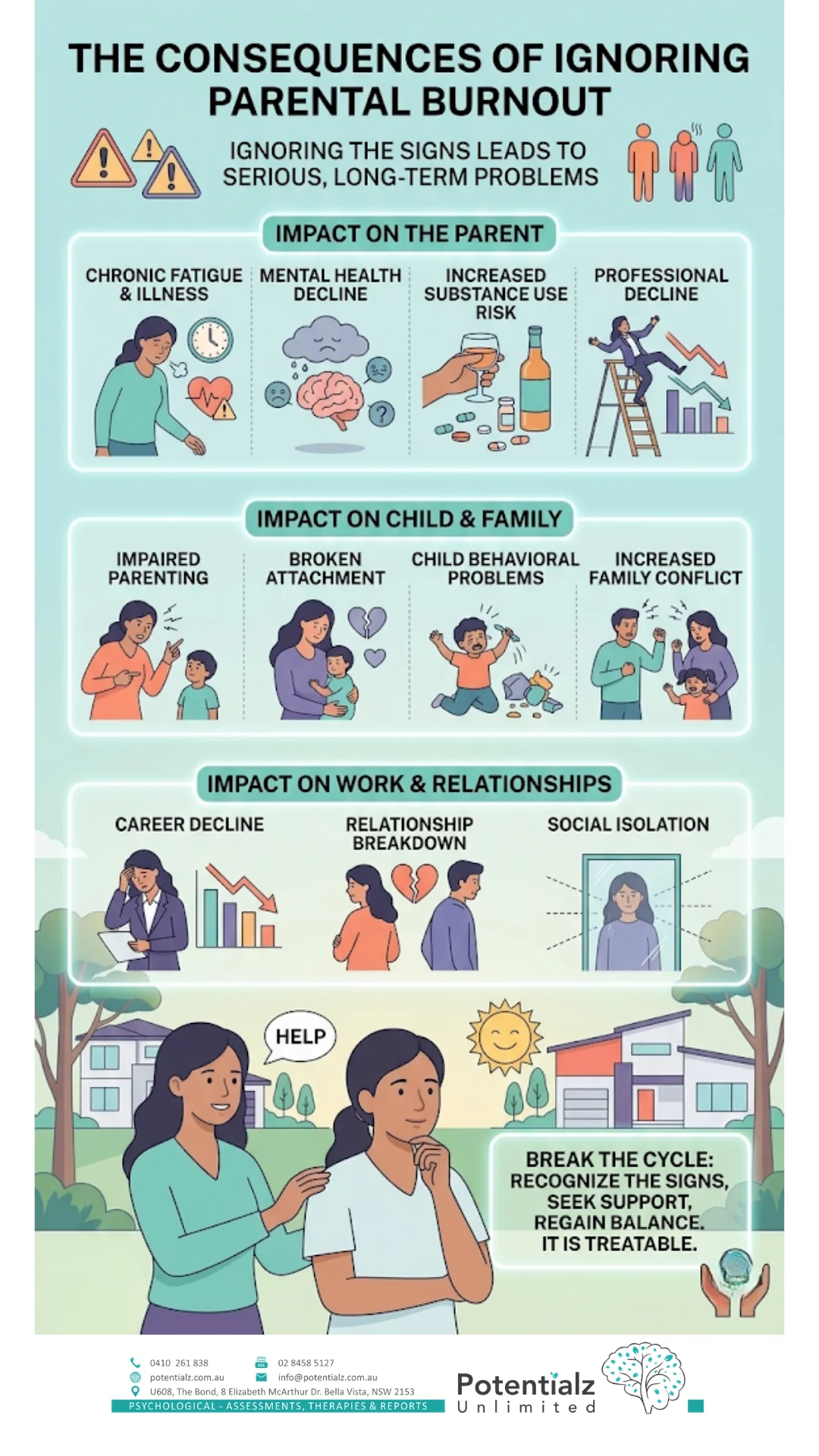
For children, parental burnout can lead to emotional insecurity, behavioural problems, and their own mental health difficulties. This is not said to create guilt — it is said to emphasise why getting help early matters.
Evidence-Based Recovery Strategies for Parental Burnout
Recovery from parental burnout requires both practical changes and psychological support. At Potentialz Unlimited in Bella Vista, Dr Gurprit Ganda offers therapy that addresses parental burnout directly.
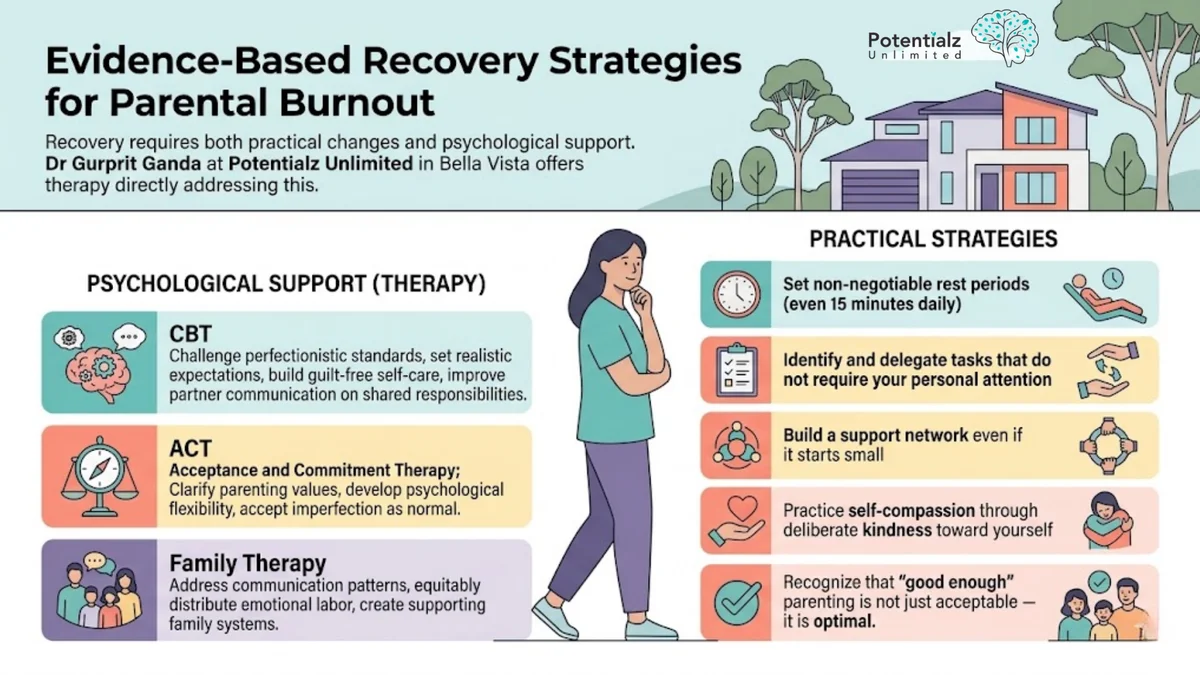
CBT for parental burnout helps you identify and challenge perfectionistic parenting standards, develop realistic expectations, build guilt-free self-care practices, and improve communication with your partner about shared responsibilities.
ACT (Acceptance and Commitment Therapy) helps you clarify your parenting values — what actually matters versus what you think “should” matter — develop psychological flexibility, and accept imperfection as a normal part of parenting.
Family and couples therapy addresses communication patterns, distributes emotional labour more equitably, and creates family systems that support rather than drain each member. (Related: how therapy can strengthen family and partner relationships.)
Practical strategies include: setting non-negotiable rest periods (even 15 minutes daily); identifying and delegating tasks that do not require your personal attention; building a support network even if it starts small; practising self-compassion through deliberate kindness toward yourself; and recognising that “good enough” parenting is not just acceptable — it is optimal.
Knowledge Check Quiz
Q1: What is parental burnout?
a) Being tired after a long day b) A distinct psychological condition with four dimensions c) Another name for postnatal depression d) A trendy term with no research basis
Answer: b) A distinct psychological condition with four dimensions
Q2: What is the strongest predictor of parental burnout?
a) Number of children b) Income level c) Perfectionism and high parenting standards d) Age of children
Answer: c) Perfectionism and high parenting standards
Q3: Which therapy approaches help with parental burnout?
a) CBT, ACT, and family therapy b) Only medication c) Only rest and holidays d) Hypnotherapy
Answer: a) CBT, ACT, and family therapy
Q4: Parental burnout only affects:
a) Mothers b) Single parents c) Any parent regardless of gender or family structure d) Parents of newborns
Answer: c) Any parent regardless of gender or family structure
Q5: What is a healthy approach to parenting standards?
a) Always striving for perfection b) “Good enough” parenting is optimal c) Comparing yourself to other parents on social media d) Doing everything yourself
Answer: b) “Good enough” parenting is optimal
Related Reading
More from our blog:
- Why Accessing Mental Health Services is Crucial
- Perfectionism and Mental Health: When High Standards Become Harmful
- How to Regulate Your Nervous System: Practical Strategies for Calming Anxiety and Stress
- The Importance of a Healthy Diet For Mental Health
Therapy services that may help:
References
- Roskam, I., Raes, M. E., & Mikolajczak, M. (2017). Exhausted parents: Development and preliminary validation of the Parental Burnout Inventory. Frontiers in Psychology, 8, 163. https://doi.org/10.3389/fpsyg.2017.00163
- Mikolajczak, M., Brianda, M. E., Avalosse, H., & Roskam, I. (2018). Consequences of parental burnout: Its specific effect on child neglect and violence. PLoS ONE, 13(4), e0196237. https://doi.org/10.1371/journal.pone.0196237
- Mikolajczak, M., Gross, J. J., & Roskam, I. (2019). Parental burnout: What is it, and why does it matter? Clinical Psychological Science, 7(6), 1319–1329. https://doi.org/10.1177/2167702619858430
- Lebert-Charron, A., Dorard, G., Boujut, E., & Wendland, J. (2018). Maternal burnout syndrome: Contextual and psychological associated factors. Frontiers in Psychology, 9, 885. https://doi.org/10.3389/fpsyg.2018.00885
- Sorkkila, M., & Aunola, K. (2020). Risk factors for parental burnout among Finnish parents. Journal of Family Psychology, 34(7), 913–926. https://doi.org/10.1037/fam0000749
Need Professional Support?
If you're experiencing mental health concerns, our team is here to help.