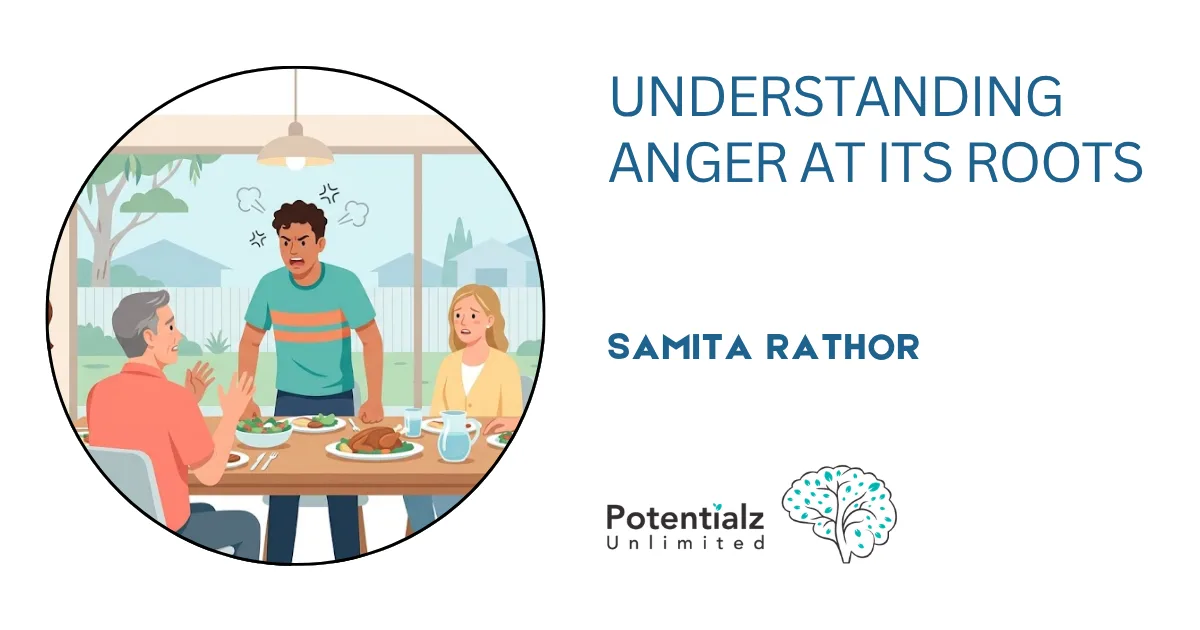
We all get angry. Every single one of us. The question is not whether you feel anger — the question is what you do with it. And what you do with it determines an enormous amount about your relationships, your health, your wellbeing, and the kind of person you become over time.
Anger is one of the most misunderstood emotions. We tend to treat it as either a problem to be stamped out (“you shouldn’t feel that”) or a justification to be unleashed (“I’m just being honest”). Neither of these serves us.
The Buddha said: “Holding on to anger is like grasping a hot coal with the intent of throwing it at someone else. You are the one who gets burned.”
This is not just wisdom. It is physiology. The surge of cortisol and adrenaline that comes with anger is designed for a short-term crisis — a genuine physical threat. When we sustain it, dwell in it, replay it, and nurture it over days, weeks, and years, we are continuously injecting our own body with stress hormones. We are harming ourselves far more than whoever we are angry at.
But here’s the other side of the same truth: suppressing anger, swallowing it, pretending it isn’t there — that burns too. Differently, more slowly, but just as surely.
The path through anger is not suppression and not explosion. It is understanding.
Krodha: The Yogic Understanding of Anger
In Sanskrit, anger is called Krodha — from the root word for anger, wrath, and rage. It is one of the six classical enemies of the mind in yogic philosophy: Kama (desire), Krodha (anger), Lobha (greed), Moha (attachment/delusion), Mada (arrogance), and Matsarya (jealousy).
What is interesting about this framework is not the list itself but what it reveals about how anger is understood. In the yogic worldview, these are not fixed personality traits — they are mental patterns that arise from ignorance (avidya) and attachment (trishna). They are not what you are. They are what happens when the mind is not yet trained.
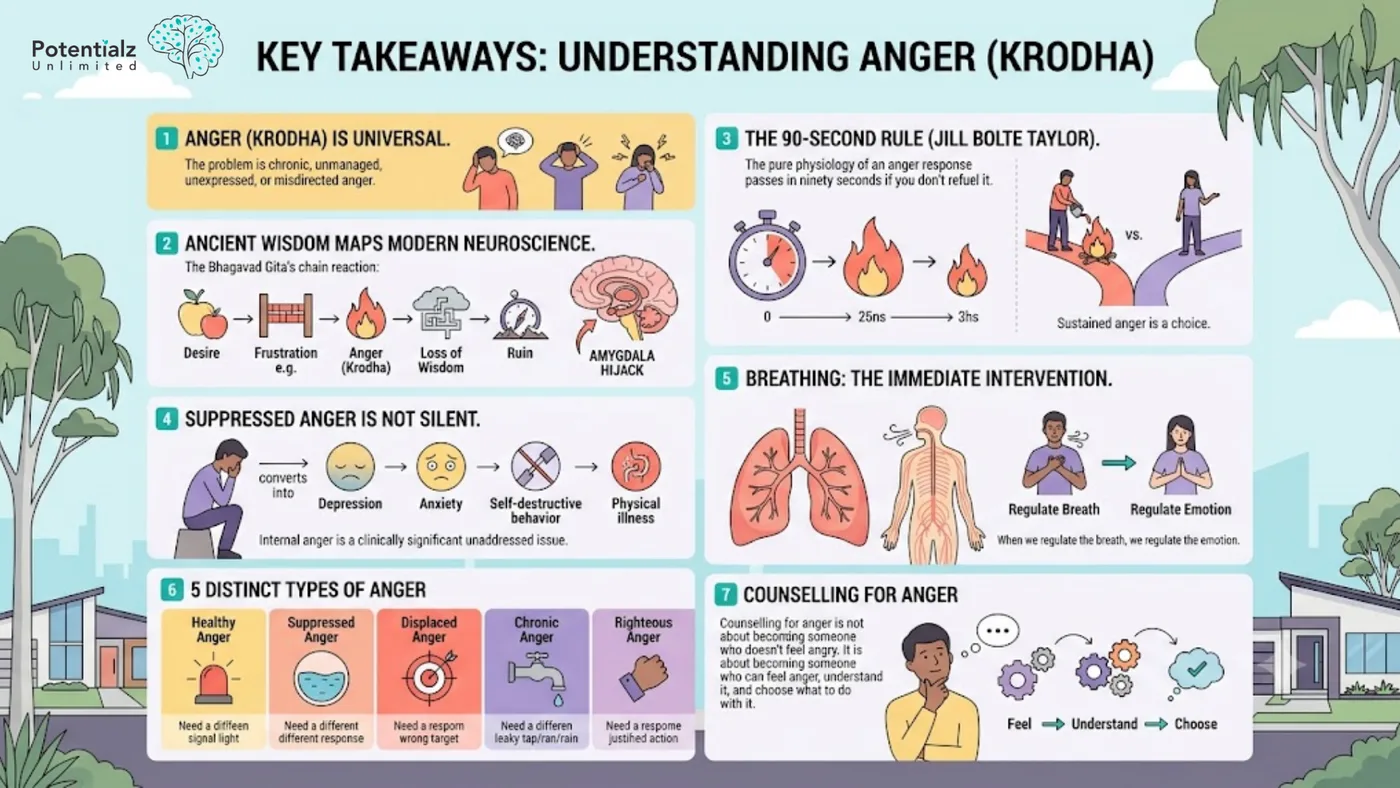
The relationship between Kama and Krodha — desire and anger — is particularly illuminating, and it is precisely what modern psychology also describes. We do not become angry randomly. We become angry when something we want — peace, respect, cooperation, safety, love, fairness — is blocked, threatened, or taken away. Every anger response has a desire at its root. Every frustrated desire has a potential anger response. Find the desire beneath the anger, and you understand the anger in a completely new way.
Krodha in the Bhagavad Gita
The Bhagavad Gita — one of the foundational texts of yogic philosophy — contains perhaps the most precise ancient description of how anger destroys.
In Chapter 2, verses 62–63, Krishna explains the chain reaction: “Thinking about sense objects, attachment to them is formed. From attachment, desire is born. From desire, anger arises. From anger comes confusion. From confusion, loss of memory. From loss of memory, destruction of intelligence. From destruction of intelligence, one is lost.”
Read that chain again slowly. It is a description of a process — not a fixed state. It describes exactly what happens in the brain during what modern neuroscience calls the amygdala hijack. And it traces the chain all the way back to its root: sense objects, attachment, desire.
This is not a counsel of detachment from life. It is a map of cause and effect. When we can see the chain — when we can notice “I am starting to get attached to a particular outcome” before the anger arrives — we have a genuine opportunity to intervene. That is the power of this teaching.
The Neuroscience: What Happens in the Brain
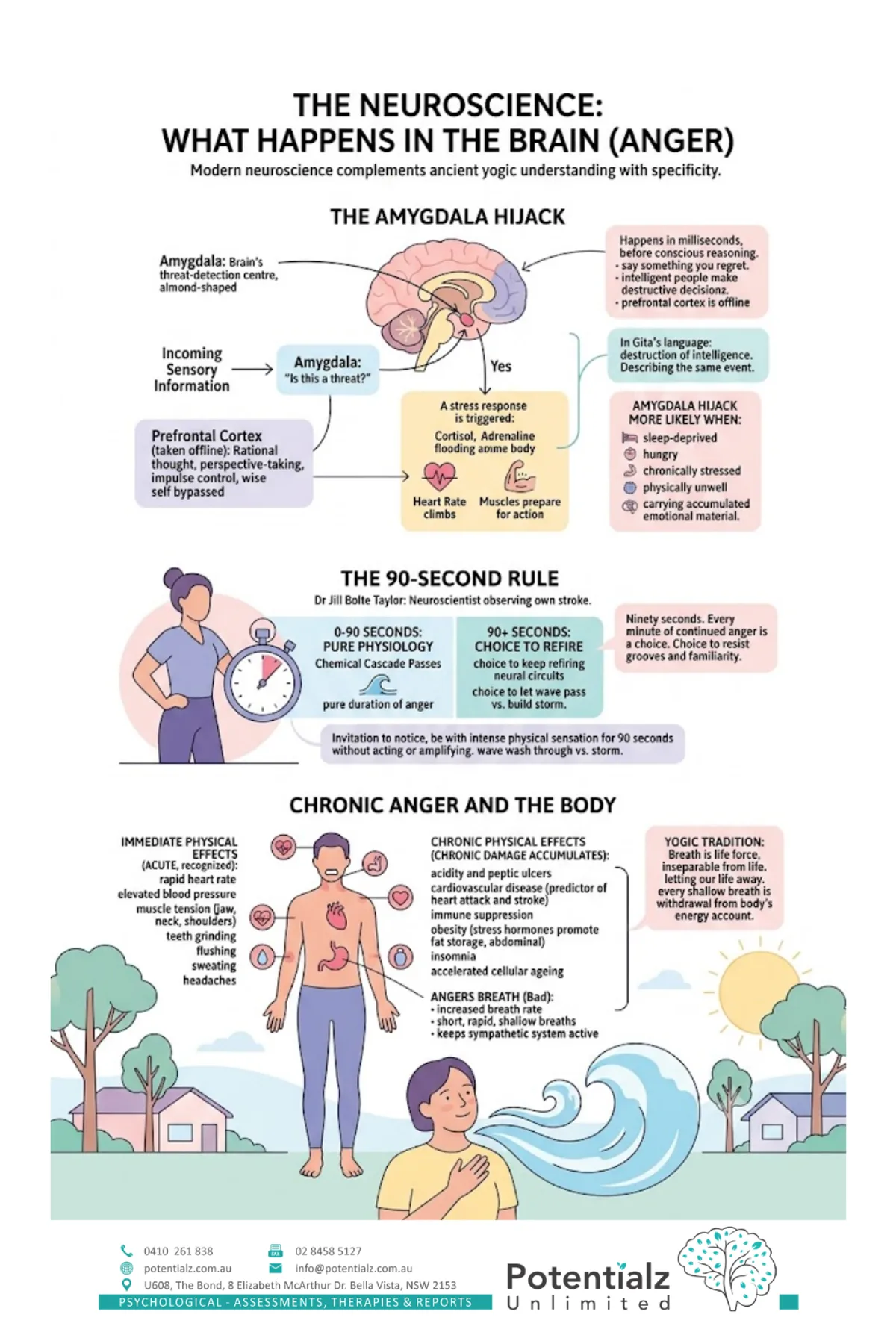
Modern neuroscience describes anger with a specificity that beautifully complements the ancient yogic understanding.
The Amygdala Hijack
The amygdala is the brain’s threat-detection centre — an almond-shaped structure deep in the limbic system that processes incoming sensory information and asks one rapid question: Is this a threat? When the answer is yes, it triggers the stress response: cortisol and adrenaline flood the body, heart rate climbs, muscles prepare for action, and the prefrontal cortex — the part of the brain responsible for rational thought, perspective-taking, and impulse control — is effectively taken offline.
This is the amygdala hijack. It happens in milliseconds, before conscious reasoning has a chance to engage. It is why you can say something in anger that you genuinely cannot believe you said. It is why the most intelligent people can make the most destructive decisions when emotionally activated. The prefrontal cortex — your wise, considered, long-term self — has been bypassed.
In the Gita’s language: destruction of intelligence. The neuroscience and the ancient teaching are describing the same event from different vantage points.
The amygdala hijack is more likely to occur when you are sleep-deprived, hungry, chronically stressed, physically unwell, or carrying accumulated emotional material that hasn’t been processed. This is why the same situation might produce a measured response on a good day and an explosive one when you’re depleted. The threshold shifts.
The 90-Second Rule
Dr Jill Bolte Taylor — a neuroscientist who observed her own stroke in real time and wrote about it in My Stroke of Insight — describes something important about the physiology of emotions. The chemical cascade of an emotion, she found, passes through the body in approximately ninety seconds. After that, if the emotion continues, it is because you are choosing — consciously or unconsciously — to keep refiring it. You are re-stimulating the neural circuits that generated it.
Ninety seconds. That is the pure duration of anger’s physiology. After that, every minute of continued anger is a choice. Not an easy choice to resist — the grooves are well-worn and the body has learned to seek the familiar. But a choice.
This is not a counsel to dismiss anger or shut it down at ninety seconds. It is an invitation to notice. Can I be with this intense physical sensation for ninety seconds without acting on it, without amplifying it? Can I let the wave wash through rather than building it into a storm?
Chronic Anger and the Body
When anger becomes a chronic state — when the nervous system is stuck in a permanent low-grade threat mode — the physical consequences are serious and well-documented.
The immediate physical effects of acute anger include rapid heart rate, elevated blood pressure, muscle tension (particularly in the jaw, neck, and shoulders), teeth grinding, flushing, sweating, and headaches.
The chronic physical effects are where the real damage accumulates: acidity and peptic ulcers (from prolonged cortisol and adrenaline), cardiovascular disease (chronic sympathetic activation is one of the strongest predictors of heart attack and stroke), immune suppression, obesity (stress hormones promote fat storage, particularly abdominal fat), insomnia, and accelerated cellular ageing.
And consider the breath. When we are angry, the breathing rate increases sharply — short, rapid, shallow breaths that keep the sympathetic system activated. In yogic tradition, the breath is inseparable from the life force. Breath is life. When we get angry, we are letting our life away. Every shallow, rapid breath of sustained anger is a withdrawal from the body’s energy account.
Types of Anger: Knowing What You Are Dealing With
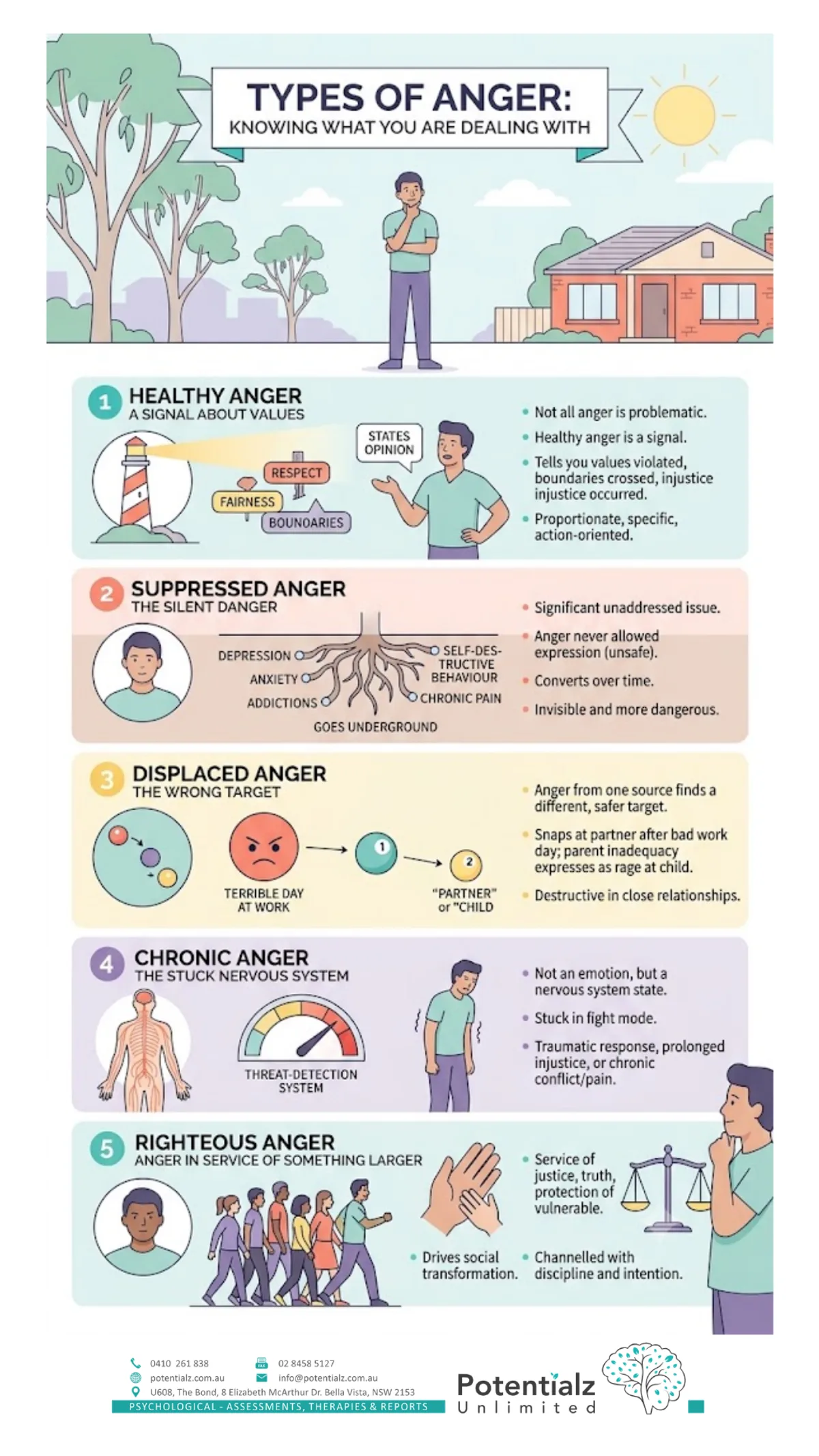
Not all anger is the same. Understanding which type you are experiencing — or carrying — is the first step toward working with it effectively.
Healthy Anger: A Signal About Values
Not all anger is problematic. Healthy anger is a signal — it tells you that something you value has been violated, that a boundary has been crossed, that an injustice has occurred. This kind of anger, when expressed clearly and without aggression, is an important part of self-respect and social functioning.
Anger at cruelty is healthy. Anger at injustice drives social change. Anger at being treated disrespectfully, when it motivates a clear and honest conversation, is healthy. The person who never feels this kind of anger is not in a state of peace — they are often in a state of suppression, having learned that their responses and their values don’t matter.
Healthy anger is proportionate, specific, and action-oriented. It points to something and moves toward resolution.
Suppressed Anger: The Silent Danger
Suppressed anger is one of the most significant unaddressed issues I encounter in my practice. It is the anger that was never allowed to be expressed — often because expressing it felt unsafe (in childhood, in a relationship, in a cultural context where anger expression was forbidden or punished).
Suppressed anger does not disappear. It goes underground. Over time, it converts. It becomes depression (anger turned inward). It becomes anxiety (the constant vigilance of someone who has learned to monitor the environment for threat, because their anger never gave them protection). It becomes addictions and self-destructive behaviour (attempts to discharge the energy of accumulated, unexpressed feeling). It becomes chronic physical tension and pain.
Suppressed anger is not quieter or gentler than expressed anger. It is more dangerous — because it is invisible, and because it affects the person carrying it most of all.
Displaced Anger: The Wrong Target
Displaced anger is familiar to most people, even if the term isn’t. It is when the anger from one source — often a place where direct expression feels too threatening — finds a different, safer, or weaker target.
The person who has a terrible day at work and snaps at their partner over something trivial. The parent who is furious at their own inadequacy and expresses it as rage at their child. The man who cannot express his grief and expresses it as aggression.
Displaced anger is particularly destructive in close relationships, because the people we love and trust most often become our safest targets. Understanding where your anger actually originates is essential therapeutic work.
Chronic Anger: The Stuck Nervous System
Chronic anger is not an emotion so much as a nervous system state. It is when the threat-detection system becomes calibrated to hair-trigger sensitivity — when the world is experienced as consistently hostile, unfair, or threatening, and the default emotional tone is one of irritability, resentment, or barely contained rage.
Chronic anger is often a trauma response. It can also develop through prolonged exposure to injustice, ongoing relational conflict, chronic pain, or certain neurological conditions. It is a nervous system stuck in fight mode — not because of any single event, but because it has learned, over time, that this is the safest setting.
Chronic anger responds well to therapeutic work, particularly when that work addresses both the psychological roots and the physiological regulation. Talking alone is often not sufficient — the body needs to be part of the healing.
Righteous Anger: Anger in Service of Something Larger
Finally — the form of anger that we perhaps dismiss too quickly in therapeutic conversations. Righteous anger: anger in service of justice, truth, or the protection of the vulnerable.
Constructive anger at prejudice, inequality, and moral wrongdoing has driven every significant social transformation in human history. This anger, channelled with discipline and intention, is not a problem to be managed. It is a force to be understood, honoured, and directed.
The challenge is distinguishing righteous anger from anger dressed up as righteousness — and this requires exactly the self-awareness that therapeutic work develops.
The Holistic Anger Management Framework
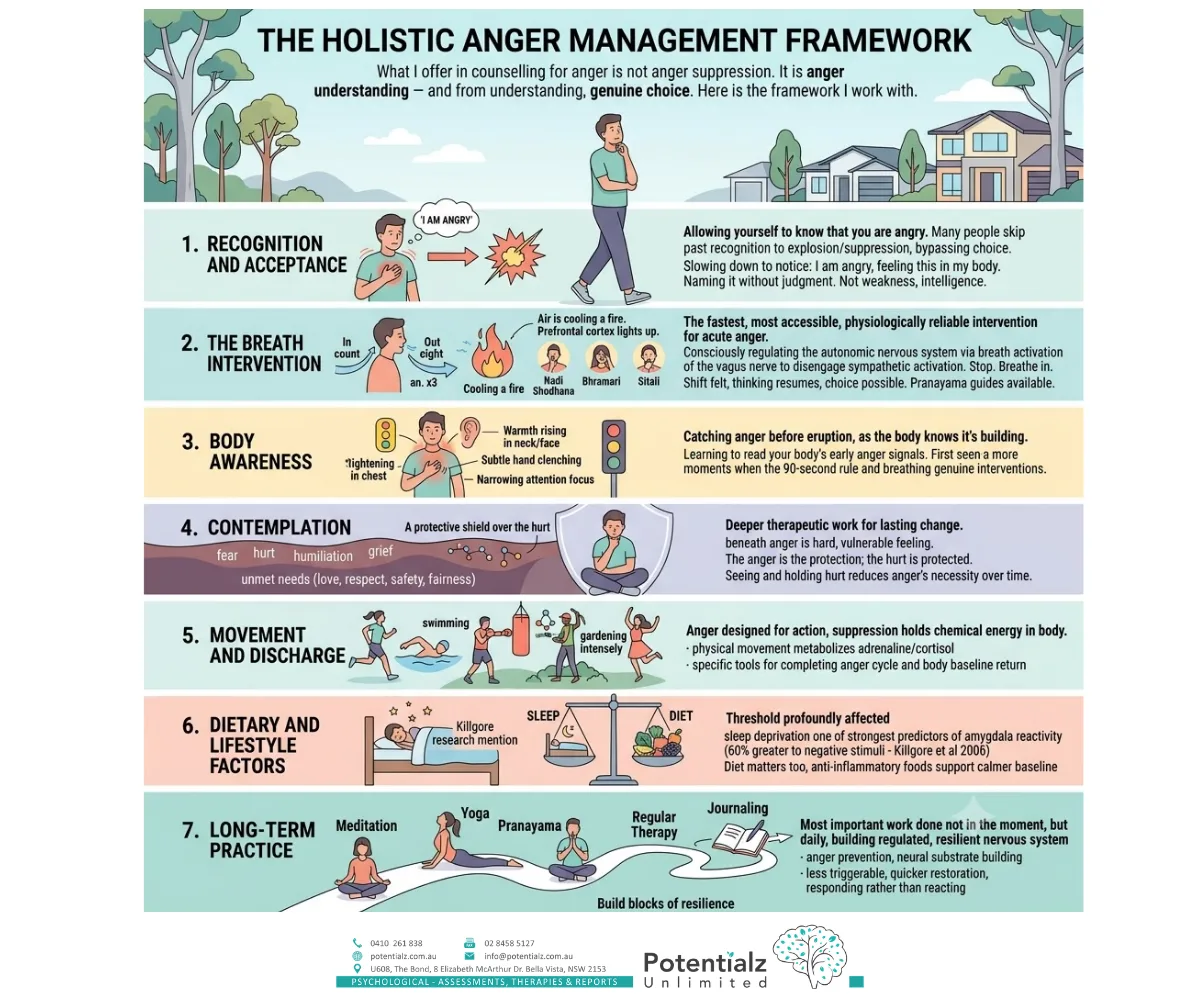
What I offer in counselling for anger is not anger suppression. It is anger understanding — and from understanding, genuine choice. Here is the framework I work with.
1. Recognition and Acceptance
The first step is always the same: allowing yourself to know that you are angry. This sounds obvious but it isn’t. Many people — particularly those from backgrounds where anger expression was dangerous — have learned to not-know their anger until it explodes. They skip past recognition directly to explosion, or directly to suppression, having bypassed the point where a choice was available.
Slowing down enough to notice: I am angry right now. I feel this in my chest. In my jaw. In the tension in my shoulders. Naming it, without judgment. This is not weakness. This is intelligence.
2. The Breath Intervention
The breath is the fastest, most accessible, and most physiologically reliable intervention for acute anger. Here is why it works: the autonomic nervous system is, in one direction, involuntary — the amygdala hijack happens automatically. But in the other direction, it can be consciously regulated through the breath. When you slow your exhalation deliberately, you activate the vagus nerve and begin to disengage the sympathetic activation.
In the moment of anger: stop. Breathe in slowly for four counts. Breathe out for eight counts. Do this three times. You will feel the shift. Not because the anger disappears — but because the prefrontal cortex comes back online. You can think again. You can choose.
Specific pranayama practices for longer-term anger management include nadi shodhana (alternate nostril breathing, which balances the hemispheres and calms the nervous system), bhramari (humming bee breath, which directly stimulates the vagus nerve), and sitali (cooling breath, traditionally used in yogic tradition specifically for reducing the heat of Krodha). Our guide to pranayama and breathwork for mental health explores these practices and the evidence behind them in more depth.
3. Body Awareness: Catching It Before the Eruption
Anger does not arrive without warning. It builds. And the body knows it is building before the conscious mind does. Learning to read your body’s early anger signals is one of the most valuable skills in anger management.
Common physical precursors include slight tightening in the chest, a warmth rising in the neck and face, a subtle clenching of the hands, and a shift in the quality of attention — everything narrowing toward the source of threat. These are the yellow lights. The moments when the 90-second rule becomes most useful. The moment when breathing becomes a genuine intervention rather than an afterthought.
4. Contemplation: Going Beneath the Anger
This is the deeper therapeutic work — and it is where lasting change happens. Every anger response has a deeper layer. Beneath the anger is usually a feeling that is harder and more vulnerable: fear, hurt, humiliation, grief, or an unmet need for love, respect, safety, or fairness.
The anger is the protection. The hurt is what the anger is protecting.
When therapeutic work reaches the layer beneath the anger, something significant often shifts. Not immediately — but over time, the anger begins to feel less necessary. Because the hurt has finally been seen and held, rather than defended against.
5. Movement and Discharge
Anger is designed for action. Adrenaline and cortisol surge to prepare the body for movement. When we suppress anger completely — staying perfectly still while furious — we hold all of that chemical energy in the body with nowhere to go.
Vigorous physical movement helps metabolise adrenaline and cortisol. Running, swimming, hitting a punching bag, gardening with intensity, dancing — these are not just healthy habits. They are specific physiological tools for completing the anger cycle and allowing the body to return to baseline.
6. Dietary and Lifestyle Factors
The threshold for anger is profoundly affected by lifestyle. Sleep deprivation is one of the strongest predictors of increased amygdala reactivity — when we are poorly rested, the threat-detection system becomes hypersensitive. Research by Killgore and colleagues (2008) found that sleep-deprived people showed substantially greater amygdala reactivity to negative stimuli.
Diet matters too. High sugar, caffeine excess, and alcohol all affect the nervous system’s baseline regulation — increasing irritability and reducing the gap between trigger and response. Anti-inflammatory foods (leafy vegetables, omega-3 fatty acids, turmeric, dark berries) support a calmer nervous system baseline.
7. Long-Term Practice: Prevention, Not Just Management
The most important anger work is not done in the moment of anger. It is done daily, in the practices that build a more regulated, more resilient nervous system over time. Meditation, yoga, pranayama, regular therapy, journalling — these are not anger management techniques. They are anger prevention. They build the neural substrate of a person who is less easily triggered, more quickly restored, and more capable of responding rather than reacting.
Anger in Relationships, Family, and Culture
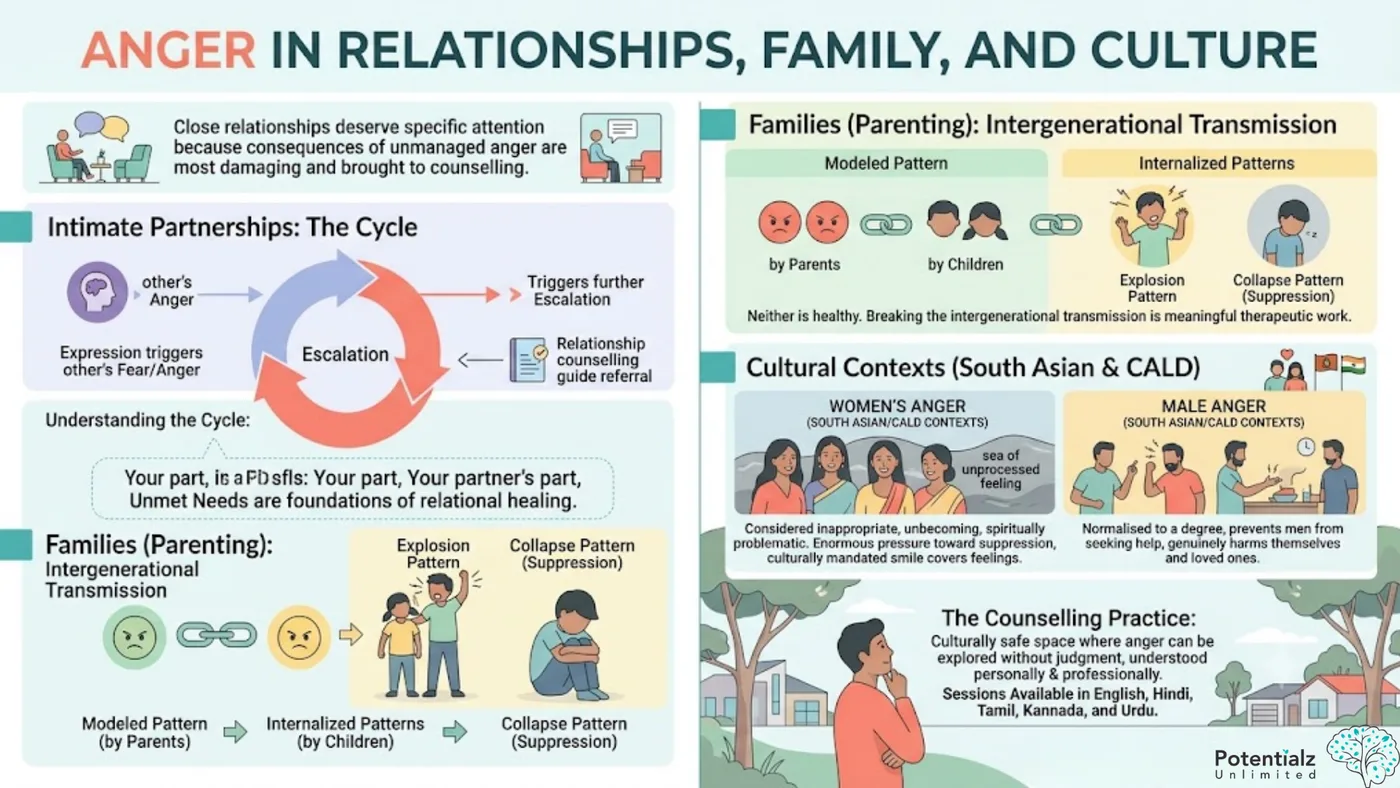
Anger in close relationships deserves specific attention, because it is where the consequences of unmanaged anger are most damaging — and most often brought to the counselling room.
In intimate partnerships, anger often becomes a cycle: one person’s expression triggers the other’s fear or anger, which escalates, which triggers further escalation. Understanding the cycle — your part in it, your partner’s part in it, the unmet needs driving each escalation — is the foundation of relational healing. For a deeper look at navigating difficult relational conversations, see my post on Non-Violent Communication.
In families — particularly in parenting — the pattern of anger we model becomes the pattern our children internalise. Children who grow up with explosive or chronically angry parents often develop one of two responses: an explosion pattern of their own, or a collapse pattern of suppression. Neither is healthy. Breaking the intergenerational transmission of anger patterns is some of the most meaningful therapeutic work I do.
I also want to name something specifically for the South Asian and CALD communities I work with. In many South Asian cultural contexts, anger — particularly women’s anger — is considered inappropriate, unbecoming, or spiritually problematic. This creates enormous pressure toward suppression: the culturally mandated smile that covers a sea of unprocessed feeling. Conversely, in some contexts, male anger is normalised to a degree that prevents men from seeking help for patterns that are genuinely harming them and the people they love.
I understand these cultural dimensions deeply — personally and professionally. My practice offers a space where anger can be explored without cultural judgment, in a language and cultural context that feels genuinely safe. Sessions are available in English, Hindi, Tamil, Kannada, and Urdu.
When Anger Requires Professional Support
Anger that is chronic, that is regularly expressed in ways that damage relationships or frighten the people around you, that is directed toward children, that has a history of violence or coercion — this anger requires professional support. It is not a personal failing. It is a pattern that has roots, and those roots can be explored and worked with in a therapeutic context.
I want to say to anyone who recognises themselves in that description: it takes genuine courage to seek help for anger. It means being willing to look at something you may have spent years managing, defending, or justifying. That courage is the beginning of change. And it is possible. I have seen it many times.
For people where anger exists alongside depression or trauma, the clinical psychology page outlines the broader mental-health support available at Potentialz Unlimited.
How Potentialz Can Help
At Potentialz Unlimited, I work with anger — its roots, its patterns, its physical dimensions, and its relational impacts — in individual counselling, couples counselling, and family sessions.
My approach draws on both Western psychological understanding (the neuroscience of emotional regulation, evidence-based therapeutic modalities) and the yogic tradition of Krodha — which holds that anger, understood and transformed, can be a source of tremendous energy and motivation for positive change.
Sessions at Unit 608/8 Elizabeth Macarthur Drive, Bella Vista NSW 2153. Monday to Friday 10am–7pm, Saturday and after-hours available. Telehealth via phone or Zoom across Australia. Available in English, Hindi, Tamil, Kannada, and Urdu.
- Book online: live.potentialz.com.au
- Call: 0410 261 838
- Visit: potentialz.com.au
No referral required.
This article is general information and is not a substitute for personalised advice from a qualified health professional. If you are in crisis or need urgent help, contact Lifeline on 13 11 14 (24/7) or call 000 in an emergency.
References
Bhagavad Gita, Chapter 2, verses 62–63. (Trans. S. Radhakrishnan, 1948). The Bhagavadgita. George Allen and Unwin.
Killgore, W. D. S., Kahn-Greene, E. T., Lipizzi, E. L., Newman, R. A., Kamimori, G. H., & Balkin, T. J. (2008). Sleep deprivation reduces perceived emotional intelligence and constructive thinking skills. Sleep Medicine, 9(5), 517–526. https://doi.org/10.1016/j.sleep.2007.07.003
Linehan, M. M. (1993). Cognitive-behavioral treatment of borderline personality disorder. Guilford Press.
Saraswati, S. S. (2002). Yoga nidra (4th ed.). Yoga Publications Trust.
Taylor, J. B. (2008). My stroke of insight: A brain scientist’s personal journey. Viking.
About the author: Samita Rathor is an accredited counsellor and psychotherapist at Potentialz Unlimited in Bella Vista, NSW. She holds an integrative, holistic approach that combines Western psychotherapeutic frameworks with yogic and Indian philosophical traditions. She is not AHPRA-registered as a psychologist; her practice is counselling and psychotherapy. Sessions in English, Hindi, Tamil, Kannada, and Urdu.
Related Reading
Knowledge Check Quiz
Test what you have just read. Choose your answer for each question, then submit to reveal the answers and your score.
Need Professional Support?
If you're experiencing mental health concerns, our team is here to help.