Key Takeaways
- CBT is built on the thought–feeling–behaviour triangle: change how you think and you change how you feel and act.
- Multiple meta-analyses confirm CBT as the gold-standard psychological treatment for anxiety disorders, with response rates of 60–80%.
- Core CBT techniques for anxiety include cognitive restructuring, graded exposure, and behavioural experiments — each targeting a different part of the anxiety cycle.
- A standard course of CBT for anxiety typically runs 12–20 sessions; many people show significant improvement within 8–12.
- Homework between sessions is not optional — it is where the change actually happens.
- CBT addresses anxiety across its presentations: generalised anxiety, social anxiety, panic disorder, health anxiety, and OCD.
- Medicare rebates of up to 10 sessions per calendar year are available via a GP Mental Health Care Plan.
Anxiety Is the Most Common Reason People Come to See Me — and CBT Is Where I Start
Anxiety disorders are the most prevalent mental health conditions in Australia, affecting approximately one in four people at some point in their lives. In my practice at Potentialz Unlimited in Bella Vista, anxiety — in its many forms — is the presentation I see most frequently. And Cognitive Behavioural Therapy, CBT, is consistently where I begin.
That is not a matter of habit or personal preference. It is a matter of evidence. CBT for anxiety has been studied more rigorously than almost any other psychological intervention, and the results are clear: it works, and it works across the full range of anxiety disorders, from generalised anxiety and panic to social phobia, health anxiety, and OCD.
In my 20 years of working with clients, I have used CBT with people from an enormous range of backgrounds — perinatal women, refugees and migrants, people managing workplace trauma, individuals with long histories of untreated anxiety, and people experiencing their first episode in mid-life. What I have learnt is that CBT is not a rigid protocol you apply identically to every person. It is a framework — a set of principles and techniques — that a skilled clinician adapts to the specific person in the room. This post explains that framework clearly and honestly, so you can decide whether it is the right approach for you.
The Thought–Feeling–Behaviour Triangle: What CBT Is Actually About
The foundation of CBT is deceptively simple: it is not events that cause our emotional distress — it is the meaning we make of those events.
Think about this scenario. Two people are both waiting for test results from their doctor. One person thinks: “Whatever the result, I will deal with it. Most test results are nothing serious.” They feel mildly concerned but carry on with their day. The other person thinks: “Something is seriously wrong — I know it. This is the worst-case scenario.” They feel intense dread, cannot concentrate, cancel their plans, and spend hours searching their symptoms online. The test results, when they arrive, are completely normal for both people.
Same situation. Radically different thoughts, emotions, and behaviours. This is the CBT model in practice.
CBT maps the relationships between:
- Situations — external events and triggers
- Automatic thoughts — the rapid, often unconscious interpretations we make
- Emotions — the feelings generated by those thoughts (anxiety, dread, shame)
- Physical sensations — racing heart, tight chest, shallow breathing, nausea
- Behaviours — what we do in response, particularly avoidance
In anxiety disorders, this system becomes locked in a self-reinforcing loop. The thought generates anxiety, the anxiety drives avoidance, and the avoidance prevents the person from ever learning that the feared outcome would not have occurred — which maintains the belief that the threat was real. CBT interrupts this cycle at multiple points simultaneously.
The Evidence Base: Why CBT Is the Gold Standard for Anxiety
When I tell clients that CBT is evidence-based, I want them to understand what that actually means — not just a professional endorsement, but decades of rigorous testing.
CBT for anxiety disorders has been studied in hundreds of randomised controlled trials and synthesised in multiple meta-analyses. A landmark review by Cuijpers and colleagues (2019) found that CBT produced significant reductions in anxiety symptoms across generalised anxiety disorder, social phobia, panic disorder, and OCD, with response rates consistently between 60 and 80 percent. A large-scale meta-analysis by Hofmann and Smits (2008) found that CBT produced effect sizes for anxiety disorders that significantly exceeded control conditions, with benefits maintained at follow-up.
The Australian Psychological Society, the UK’s National Institute for Health and Care Excellence, and the American Psychological Association all designate CBT as a first-line treatment for the full range of anxiety disorders. In Australia, when a GP refers you for a Mental Health Care Plan, psychological treatment using CBT is what the clinical guidelines point to. If you would like a broader introduction, our overview of the benefits of cognitive behavioural therapy is a good starting point.
This does not mean CBT is the only approach I use. In my practice I also use ACT (Acceptance and Commitment Therapy) and Mindfulness-Based approaches. But for anxiety disorders specifically, CBT is where the evidence is most concentrated and most consistent.
The Three Core CBT Techniques for Anxiety
Cognitive Restructuring
Cognitive restructuring is the process of identifying automatic thoughts that are fuelling anxiety, examining the evidence for and against them, and constructing a more balanced alternative. In anxiety, the automatic thoughts are typically threat-focused: overestimating the probability of a bad outcome, overestimating how terrible that outcome would be, and underestimating your ability to cope.
This is not positive thinking. I want to be clear about that. We are not replacing “something terrible will happen” with “everything will be wonderful.” We are asking: Is this thought accurate? What is the actual probability of this outcome? What is the evidence? What would I say to a close friend who was having this thought?
Common anxiety-driven distortions I work with include catastrophising (assuming the worst is the most likely), overestimating danger, mind-reading (being certain others are judging you), and fortune-telling (predicting negative outcomes without evidence). Once you can name and examine these patterns, they lose a significant amount of their automatic power.
Graded Exposure
Graded exposure is the most powerful technique for anxiety, and the most misunderstood. Anxiety is maintained by avoidance. When you avoid something you fear — a social situation, a physical sensation, a particular thought — you teach your brain that the only way to feel safe is to keep avoiding. The short-term relief of avoidance is real; the long-term cost is that the anxiety grows.
Graded exposure involves building a hierarchy of feared situations, from least to most anxiety-provoking, and systematically approaching them in a planned, supported way. The anxiety rises initially — that is expected — and then, with prolonged contact with the feared situation without the catastrophe occurring, it habituates. The brain learns: I can handle this. The threat is not as severe as I believed.
I have used graded exposure with clients managing social phobia, health anxiety, agoraphobia, contamination fears, and panic disorder. It requires genuine courage. I always acknowledge that. But it is the most effective tool I have for durable anxiety reduction, and I have seen it produce changes that clients genuinely did not believe were possible.
Behavioural Experiments
Behavioural experiments are a step beyond exposure. Rather than simply tolerating a feared situation, a behavioural experiment tests a specific prediction. For example: “If I don’t check the door three times before I leave, something bad will happen.” We construct an experiment to test that prediction directly. The results become evidence that we feed back into the cognitive work.
Behavioural experiments are particularly effective for health anxiety (where the person repeatedly seeks reassurance or checks symptoms) and OCD (where rituals and compulsions are the primary maintenance behaviour). They move the work from intellectual debate about thoughts to direct experiential testing — which tends to be far more convincing.
How CBT Is Adapted for Different Anxiety Presentations
Not all anxiety disorders are alike, and CBT is not applied identically across them. Here is how the approach adapts.
Generalised anxiety disorder (GAD) is characterised by persistent, uncontrollable worry across multiple life domains. CBT for GAD focuses on examining the beliefs that maintain worry — such as “worrying keeps me prepared” or “if I worry enough, I can prevent bad things” — and using behavioural experiments to test them. Worry postponement and intolerance of uncertainty techniques are central.
Social anxiety disorder involves intense fear of social situations and negative evaluation by others. The cognitive model for social anxiety (developed by Clark and Wells) identifies a specific maintaining cycle: self-focused attention (monitoring how you are coming across) and safety behaviours (strategies you use to reduce the perceived risk of humiliation) that actually increase self-consciousness and prevent disconfirmation of the feared beliefs. CBT for social anxiety directly targets these patterns with cognitive restructuring, attention training, and graded social exposure.
Panic disorder involves recurrent unexpected panic attacks and persistent worry about their recurrence. CBT for panic uses psychoeducation about the physiology of panic (the harmless adrenaline cascade), interoceptive exposure (deliberately inducing physical sensations to demonstrate they are not dangerous), and cognitive restructuring of catastrophic misinterpretations of bodily sensations.
Health anxiety involves excessive preoccupation with having or developing a serious illness. CBT addresses the reassurance-seeking and checking behaviours that maintain health anxiety, and restructures the overestimation of danger and illness probability.
In my practice, I assess each client’s specific anxiety presentation carefully before deciding which CBT components to emphasise. The underlying model is consistent; the application is individual.
What to Expect in a Course of CBT With Me
A typical course of CBT for anxiety at my practice runs 12 to 20 sessions, each 50 minutes. Many clients experience meaningful improvement within 8 to 12 sessions, particularly for single-disorder presentations. More complex or longstanding anxiety — especially where there is significant avoidance history or comorbid depression — may require the full course.
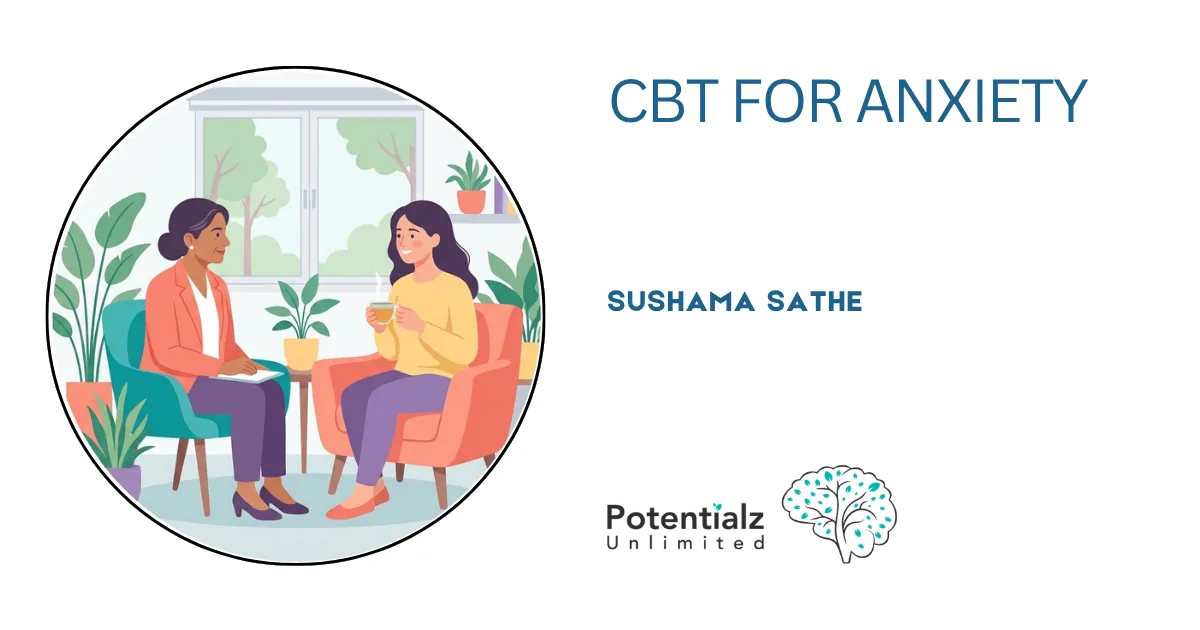
The first two sessions are assessment. I gather a thorough understanding of your anxiety — when it started, what triggers it, how you have been managing it, what has helped, what has made things worse. I build a CBT formulation: a map of how your specific thought patterns, behaviours, and anxiety responses relate to and maintain each other. This formulation is something we construct together and that guides the rest of the work.
Working sessions follow a consistent structure. We review the previous week’s homework, identify any difficulties, address a specific skill or technique, practise it together in the session, and set a homework task for the coming week. The session ends with a brief summary. This structure is intentional — consistency creates the conditions in which skills are properly learned and generalised.
Between sessions, you will complete thought records, exposure tasks, or behavioural experiments — depending on the stage of treatment. This is not busywork. It is the mechanism through which change occurs. The hour with me sets the direction; the practice in your real life is where the anxiety actually shifts.
CBT Homework: Why It Matters and How It Works
In 20 years of practice, if I had to name the single factor that most consistently predicts good outcomes in CBT, it would be engagement with homework between sessions. Research supports this unequivocally — meta-analytic reviews consistently find that homework completion is one of the strongest predictors of treatment outcome across anxiety presentations (Kazantzis et al., 2016).
The reason is straightforward. Skills are not learned in a weekly 50-minute appointment. They are learned through repeated practice in the varied, unpredictable conditions of actual life. A thought record completed in session, with my guidance, is a useful demonstration. A thought record completed at 11pm when you are catastrophising about a meeting the next morning — that is where the change happens.
I take a practical approach to homework. I calibrate the tasks to what is genuinely manageable for someone’s current level of functioning and anxiety. Someone who is severely avoidant and barely leaving the house does not receive the same homework as someone who is managing well but wants to push their exposure further. A small amount of consistent practice matters far more than ambitious plans that do not get implemented.
When CBT May Be Combined With Medication
Some clients come to me already taking medication for anxiety — typically SSRIs or SNRIs prescribed by their GP or psychiatrist. Others ask whether medication would help them and wonder whether they need it.
My position on this is collaborative and evidence-based. For mild to moderate anxiety, CBT alone is typically sufficient, and the outcomes are more durable — because the person has developed their own skills rather than relying on an external agent. For more severe anxiety, or where someone is too symptomatic to engage effectively with the cognitive and exposure work, medication can be a useful scaffold while the CBT skills are being built.
Combining CBT with medication is more effective than either alone for severe anxiety (Bandelow et al., 2015). I work collaboratively with GPs and psychiatrists, and I am always transparent about my observations. The decision about medication is always made by the client in partnership with their prescribing doctor — my role is to provide a clear clinical picture and to ensure the therapy and the pharmacological treatment are working in the same direction.
Your GP can refer you for a Mental Health Care Plan, which provides Medicare rebates for up to 10 psychology sessions per calendar year. I accept WorkCover, NDIS, and EAP referrals as well.
How I Can Help
If anxiety is affecting your daily life — your work, your relationships, your ability to do the things that matter to you — I would genuinely welcome the opportunity to work with you. CBT is at the centre of my practice, and in 20 years I have had the privilege of watching people make changes they did not believe were possible when they first walked through my door. You can read more about our approach to CBT for anxiety and depression, or meet the Potentialz Unlimited team.
I see clients at Potentialz Unlimited in Bella Vista, Unit 608, 8 Elizabeth Macarthur Drive. I offer face-to-face appointments Monday to Friday with after-hours and Saturday availability, and telehealth via phone or Zoom for clients across NSW.
Medicare rebates are available via a GP Mental Health Care Plan — up to 10 sessions per calendar year. I also accept WorkCover, NDIS, and EAP/EPP referrals, as well as private fee arrangements.
I speak English, Hindi, Marathi, and Punjabi. If you are more comfortable receiving therapy in Hindi, Marathi, or Punjabi, I can provide sessions in those languages — something I know is meaningful for many clients from South Asian and migrant backgrounds in Western Sydney.
To book, contact the clinic, visit live.potentialz.com.au, or call 0410 261 838. The first step is the hardest. I am here when you are ready.
References
Cuijpers, P., Cristea, I. A., Karyotaki, E., Reijnders, M., & Huibers, M. J. H. (2019). How effective are cognitive behavior therapies for major depression and anxiety disorders? A meta-analytic update of the evidence. World Psychiatry, 15(3), 245–258. https://doi.org/10.1002/wps.20346
Hofmann, S. G., & Smits, J. A. J. (2008). Cognitive-behavioral therapy for adult anxiety disorders: A meta-analysis of randomized placebo-controlled trials. Journal of Clinical Psychiatry, 69(4), 621–632. https://doi.org/10.4088/jcp.v69n0415
Kazantzis, N., Whittington, C., Zelencich, L., Kyrios, M., Norton, P. J., & Hofmann, S. G. (2016). Quantity and quality of homework compliance: A meta-analysis of relations with outcome in cognitive behavior therapy. Behavior Therapy, 47(5), 755–772. https://doi.org/10.1016/j.beth.2016.05.002
Bandelow, B., Reitt, M., Röver, C., Michaelis, S., Görlich, Y., & Wedekind, D. (2015). Efficacy of treatments for anxiety disorders: A meta-analysis. International Clinical Psychopharmacology, 30(4), 183–192. https://doi.org/10.1097/YIC.0000000000000078
Australian Psychological Society. (2018). Evidence-based psychological interventions in the treatment of mental disorders: A literature review (4th ed.). APS. https://www.psychology.org.au
Crisis Resources
If you need immediate support:
- Lifeline: 13 11 14 (24/7)
- Beyond Blue: 1300 22 4636
- Kids Helpline: 1800 55 1800
- Emergency: 000
Knowledge Check Quiz
Test what you have just read. Choose your answer for each question, then submit to reveal the answers and your score.
Need Professional Support?
If you're experiencing mental health concerns, our team is here to help.