When Going to School Feels Impossible
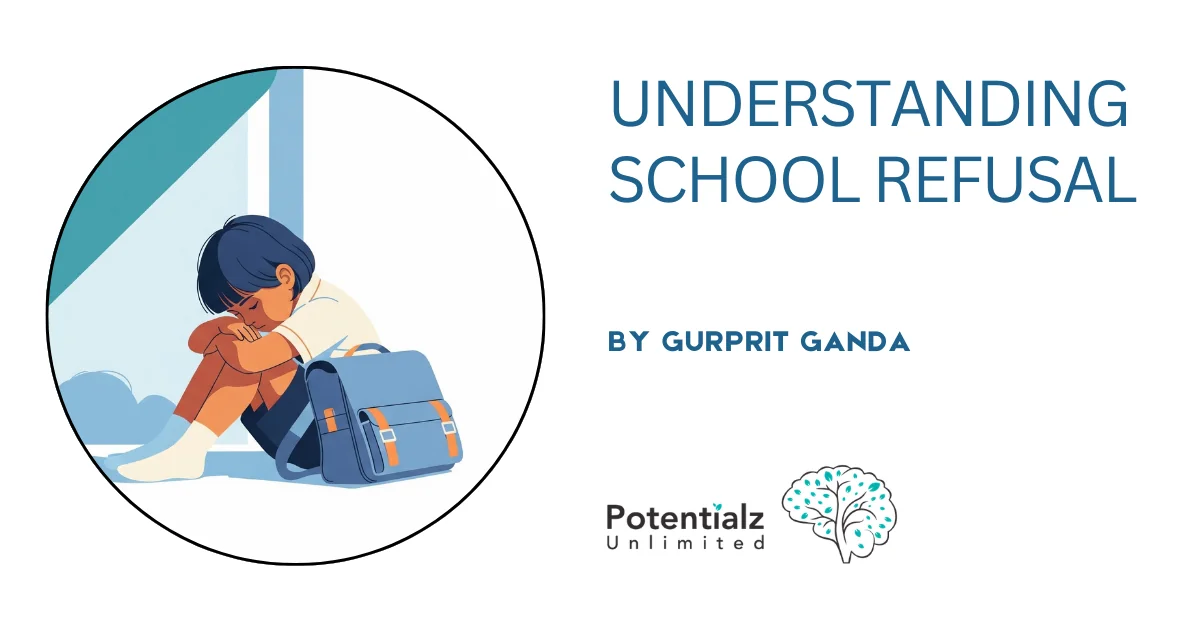
Every morning, thousands of Australian families face the same struggle. A child who cries, hides, complains of stomach aches, or simply refuses to leave the house for school. This is not a phase. It is not laziness. And it is not bad behaviour. It is school refusal — a real and distressing condition that affects up to 9% of Australian school-age children (Kearney, 2008).
School refusal (also known as “school can’t”) happens when a child experiences intense emotional distress about attending school. Unlike truancy, where a child skips school without a parent’s knowledge, school refusal happens with the parent’s awareness. The child wants to do well but feels overwhelmed by anxiety, fear, or sadness that makes school feel impossible.
A 2023 State of the Nation report found that 27.4% of Australian primary school students and 35.9% of secondary school students report high levels of anxiety, depression, or both (Resilient Youth Australia, 2023). The number of young people experiencing mental illness has increased by 50% over the past fifteen years. For many of these children, school becomes the place where their distress is most visible.
What Is School Refusal and How Is It Different from Truancy?
School refusal is when a child has significant difficulty attending school because of emotional distress. It is driven by anxiety, depression, social fears, or other mental health challenges. The child typically stays home with their parents’ knowledge. They are not trying to be defiant — they genuinely feel unable to cope with school. If you are seeking a Child psychologist in Bella Vista who understands this issue, early intervention is key.
Truancy, on the other hand, involves a child who skips school without parental knowledge, often without emotional distress about the school itself. The motivation behind truancy is usually about seeking something enjoyable outside school, while school refusal is about escaping something distressing inside school.
Researchers are now moving toward using the term “school can’t” rather than “school refusal” to better reflect that these children are not choosing to refuse — they are experiencing a diminished capacity to attend (Connolly et al., 2023). A 2025 study published in the British Journal of Sociology of Education proposed a new conceptual framework based on a socio-ecological model that shifts the focus from individual pathology to recognising the complex interplay of individual and environmental factors (Rogers & Westphal, 2025).
Signs That Your Child May Be Experiencing School Refusal
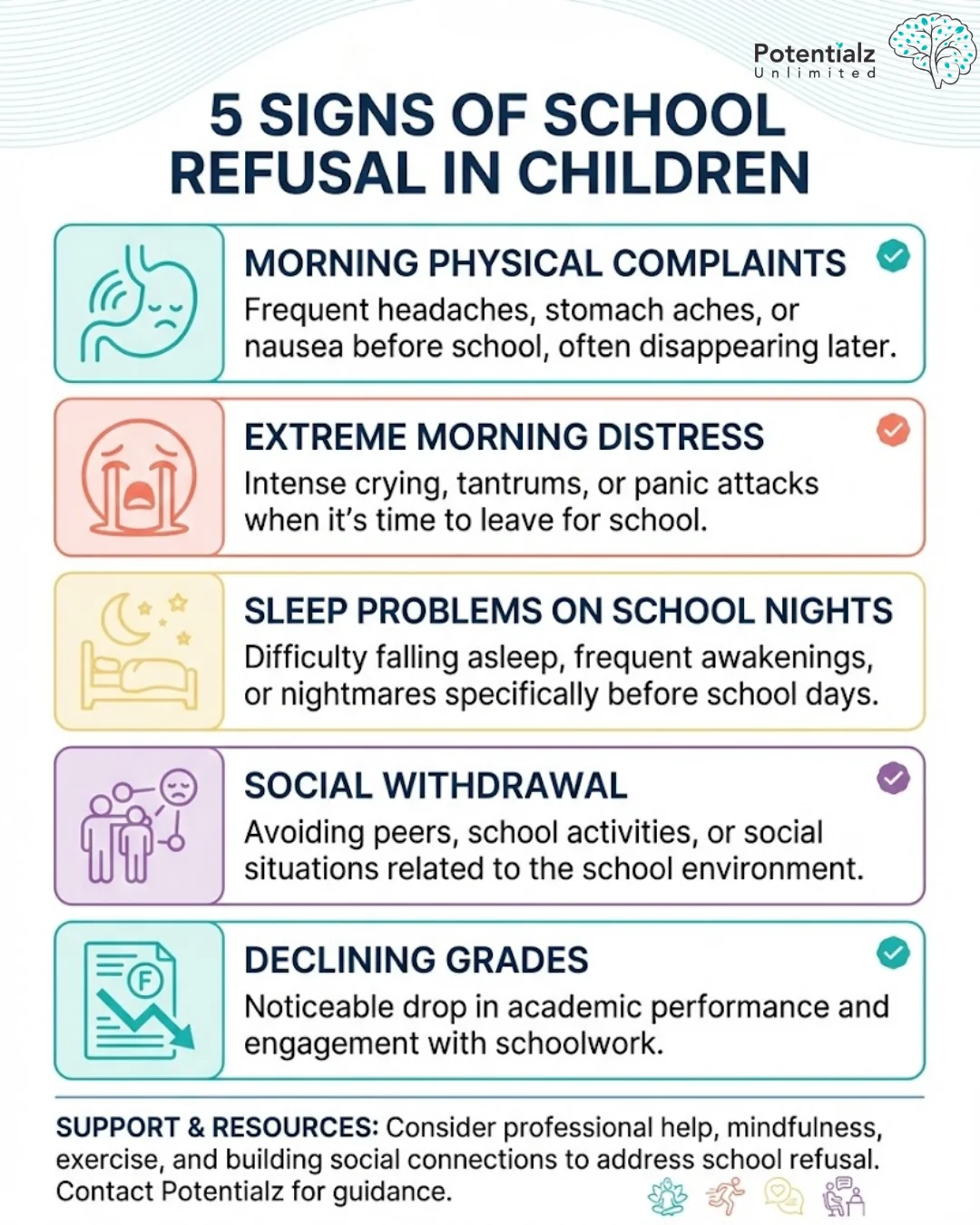
School refusal can look different for every child. Some children express their distress clearly, while others show it through physical symptoms or behaviour changes. Here are the common signs that parents in Bella Vista and the Hills District should watch for:
- Physical complaints that appear on school days but improve on weekends or holidays — such as headaches, stomach aches, nausea, or dizziness.
- Morning distress including crying, tantrums, clinging, or begging to stay home.
- Difficulty sleeping on school nights or nightmares about school.
- Asking to visit the school nurse or office frequently during the day.
- Gradual withdrawal from friends or activities they previously enjoyed.
- Declining school performance or incomplete homework.
- Expressing excessive worry about school events such as tests, presentations, or social situations.
In their 2022 study of 947 parents of children experiencing school distress, Connolly, Constable, and Mullally found that 94.3% of children exhibited emotional distress and 92.5% demonstrated clinically significant anxiety.
What Causes School Refusal in Children and Teenagers?
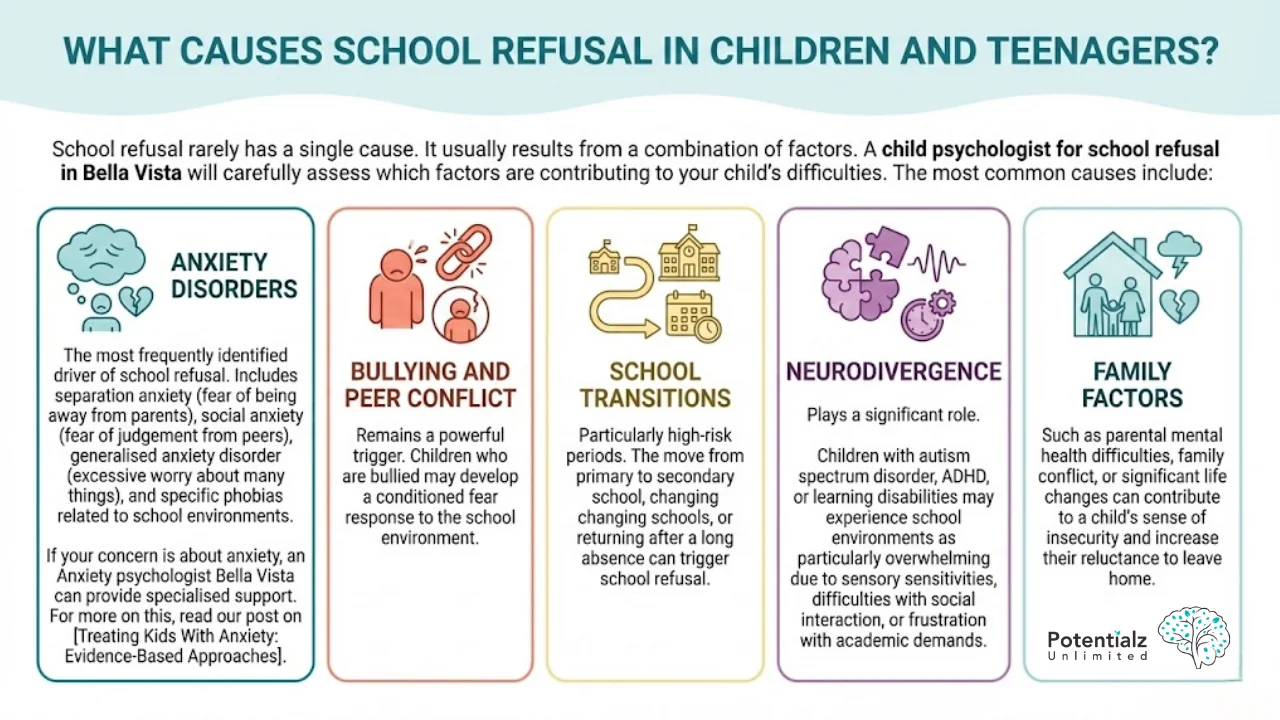
School refusal rarely has a single cause. It usually results from a combination of factors. A child psychologist for school refusal in Bella Vista will carefully assess which factors are contributing to your child’s difficulties. The most common causes include:
- Anxiety disorders are the most frequently identified driver of school refusal. This includes separation anxiety (fear of being away from parents), social anxiety (fear of judgement from peers), generalised anxiety disorder (excessive worry about many things), and specific phobias related to school environments. If your concern is about anxiety, an Anxiety psychologist Bella Vista can provide specialised support. For more on this, read our post on Treating Kids With Anxiety: Evidence-Based Approaches.
- Bullying and peer conflict remain powerful triggers. Children who are bullied may develop a conditioned fear response to the school environment.
- School transitions are particularly high-risk periods. The move from primary to secondary school, changing schools, or returning after a long absence can trigger school refusal.
- Neurodivergence plays a significant role. Children with autism spectrum disorder, ADHD, or learning disabilities may experience school environments as particularly overwhelming due to sensory sensitivities, difficulties with social interaction, or frustration with academic demands.
- Family factors such as parental mental health difficulties, family conflict, or significant life changes can contribute to a child’s sense of insecurity and increase their reluctance to leave home.
The Impact of School Refusal on Children and Families
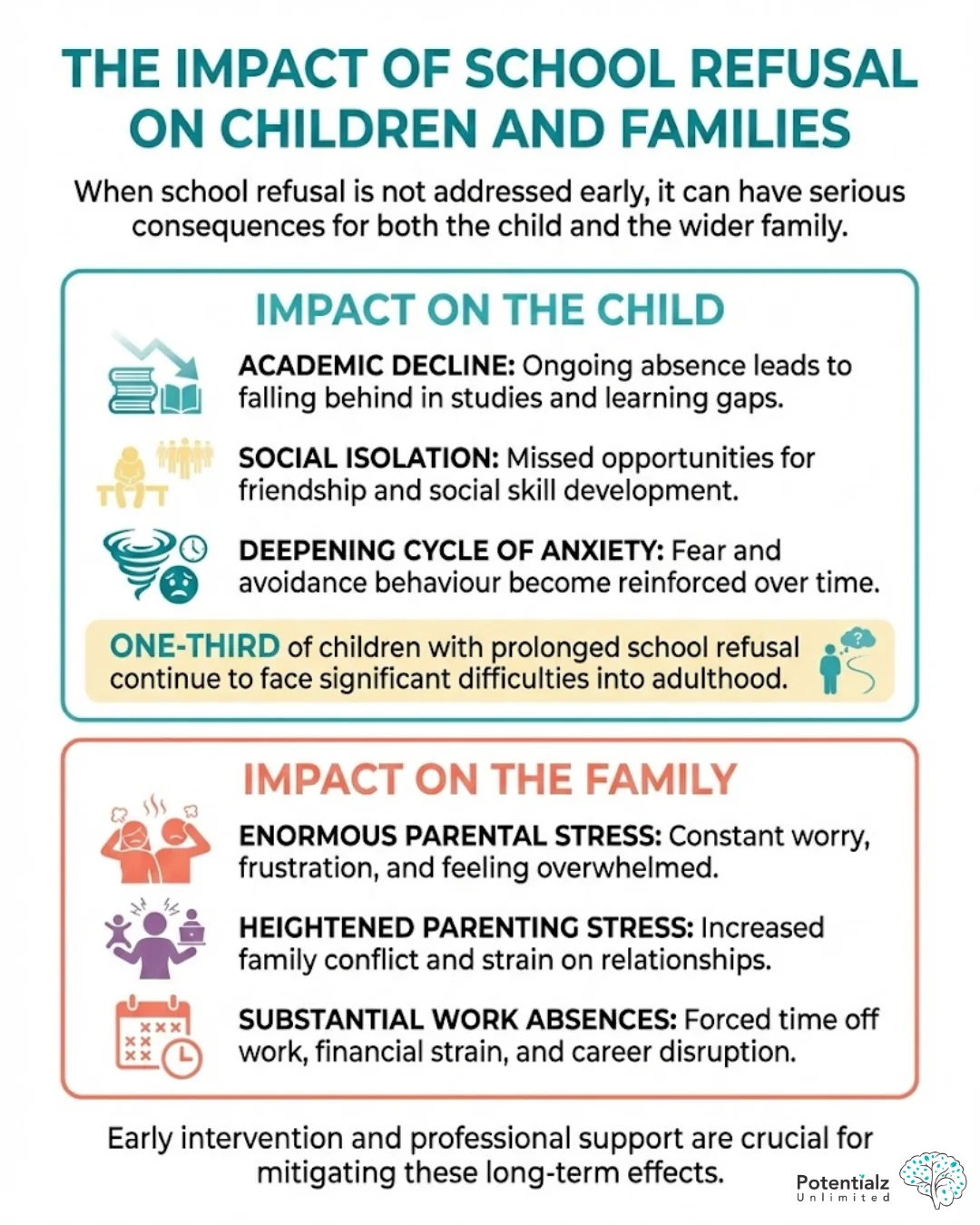
When school refusal is not addressed early, it can have serious consequences for both the child and the wider family.
- For the child, ongoing school absence leads to academic decline, social isolation, and a deepening cycle of anxiety. Research shows that approximately one-third of children with prolonged school refusal continue to face significant difficulties into adulthood.
- For parents, school refusal creates enormous stress. Many parents whose children struggle to attend school experience heightened parenting stress and are forced into substantial absences from work.
Evidence-Based Treatments for School Refusal
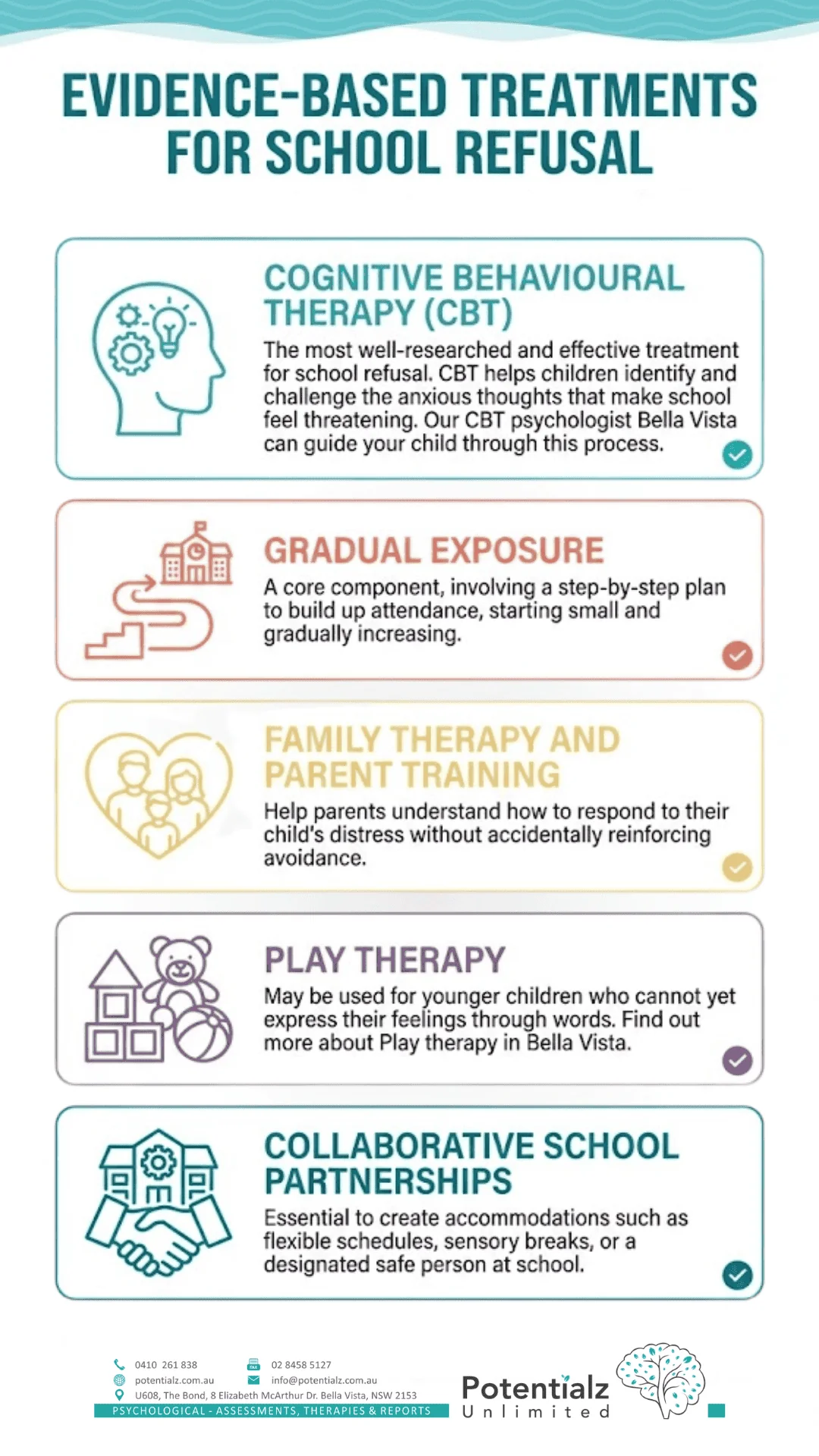
The good news is that school refusal responds well to evidence-based treatment. We list a few recommended therapies below:
- Cognitive Behavioural Therapy (CBT) is the most well-researched and effective treatment for school refusal. CBT helps children identify and challenge the anxious thoughts that make school feel threatening. Our CBT psychologist Bella Vista can guide your child through this process.
- Gradual exposure is a core component, involving a step-by-step plan to build up attendance, starting small and gradually increasing.
- Family therapy and parent training help parents understand how to respond to their child’s distress without accidentally reinforcing avoidance.
- Play therapy may be used for younger children who cannot yet express their feelings through words. Find out more about Play therapy in Bella Vista.
- Collaborative school partnerships are essential to create accommodations such as flexible schedules, sensory breaks, or a designated safe person at school.
When to See a Child Psychologist for School Refusal in the Hills District
Parents often wonder how long to wait before seeking professional help. The evidence is clear: early intervention produces the best outcomes. You should consider seeing a child psychologist for school refusal if:
- Your child has been avoiding school for more than two weeks.
- Physical complaints consistently appear on school mornings but disappear on weekends.
- Your child’s distress about school is escalating rather than improving.
- You’ve tried strategies at home without success.
- School refusal is affecting your family’s daily functioning.
For more guidance on this topic, see our post When Should Your Child See a Psychologist?.
At Potentialz Unlimited in Bella Vista, we serve families across the Hills District including Norwest, Castle Hill, Kellyville, Baulkham Hills, and Rouse Hill. Our practice is conveniently located at Unit 608, 8 Elizabeth Macarthur Drive, Bella Vista, NSW 2153. You can Book a psychology appointment by calling 0410 261 838 or visiting live.potentialz.com.au.
What to Expect When You Visit Potentialz Unlimited
Your first appointment will involve a comprehensive assessment. Dr Gurprit Ganda will meet with you and your child to understand the full picture — including your child’s emotional state, school history, social relationships, family dynamics, and any other contributing factors.
Following the assessment, you will receive a personalised treatment plan that outlines specific goals, recommended therapy approaches, and a timeline for progress. Most children begin to show improvement within 8–12 sessions, though the timeline depends on the severity and duration of the school refusal.
How Parents Can Support a Child with School Refusal at Home
While professional help is important, there are things you can do at home to support your child:
- Keep morning routines calm and predictable.
- Avoid lengthy discussions about school in the morning — save those conversations for quieter times.
- Validate your child’s feelings without agreeing that school is dangerous. You might say, “I can see you’re really worried about school today. That sounds hard. Let’s work through this together.”
- Avoid offering rewards for attendance or punishments for non-attendance. Focus instead on small, achievable steps and celebrate each bit of progress.
- Stay connected with the school. Let teachers and the wellbeing team know what is happening so they can provide support during the school day.
Related Blog Posts
- How to Help a Child With Separation Anxiety at School
- Addressing Behavioral Issues in Children: Effective Strategies
- Treating Kids With Anxiety: Evidence-Based Approaches
- When Should Your Child See a Psychologist?
- The Power of Mindful Parenting: A Guide to Nurturing Harmonious Relationships
- Building Emotional Resilience in Children: How to Foster Frustration Tolerance
Related Reading
More from our blog:
- Is Your Teen Using AI for Mental Health Advice?
- How Therapy Can Strengthen Family and Partner Relationships
- How Family Therapy Can Strengthen Relationships
Therapy services that may help:
References
- Dix, K. L., Slee, P. T., Lawson, M. J., & Keeves, J. P. (2012). Implementation quality of whole-school mental health promotion and students’ academic performance. Child and adolescent mental health, 17(1), 45–51. https://doi.org/10.1111/j.1475-3588.2011.00608.x
- Connolly, S. E., Constable, H. L., & Mullally, S. L. (2023). School distress and the school attendance crisis: a story dominated by neurodivergence and unmet need. Frontiers in Psychiatry, 14, 1237052. https://doi.org/10.3389/fpsyt.2023.1237052
- Kearney C. A. (2008). School absenteeism and school refusal behavior in youth: a contemporary review. Clinical Psychology Review, 28(3), 451–471. https://doi.org/10.1016/j.cpr.2007.07.012
- Resilient Youth Australia. (2023). State of the nation report 2023: Mental health and wellbeing of Australian youth. Resilient Youth Australia. https://theresilienceproject.com.au/wp-content/uploads/2024/04/Resilient-Youth-Report-2023.pdf
- Rogers, C., & Westphal, A. (2025). School can’t: A conceptual framework for reframing school refusal and recognising school-related stress/distress. British Journal of Sociology of Education, 46(6), 1052–1070. https://doi.org/10.1080/01425692.2025.2552132
- Rowe, N., & Whelan, M. (2025). The association between parent-reported school refusal and social anxiety traits in Australian adolescents since the COVID-19 pandemic. Educational and Developmental Psychologist, 42(2), 169–178. https://doi.org/10.1080/20590776.2024.2445298
- Australian Government Department of Health. (2023). National children’s mental health and wellbeing strategy. Commonwealth of Australia. https://www.mentalhealthcommission.gov.au/projects/childrens-strategy
Need Professional Support?
If you're experiencing mental health concerns, our team is here to help.