Key Takeaways
- Holistic counselling treats the whole person — mind, body, and spirit — rather than focusing on symptoms or a single diagnosis in isolation.
- It brings together evidence-informed therapies like CBT, person-centred work, and psychodynamic approaches with complementary disciplines including yoga therapy, breathwork, meditation, and somatic awareness.
- Research supports integrative approaches for anxiety, depression, trauma, stress, and complex presentations. This is not fringe — it is increasingly where the evidence is pointing.
- Holistic counselling is not the same as alternative therapy. It is grounded in professional training, ethical practice, and clinical evidence.
- In my practice at Potentialz Unlimited, I have been working this way for over 20 years — with individuals, couples, families, and CALD communities across Australia.
Have you ever finished a therapy session feeling like you’d only touched the surface? Like the real thing — the thing underneath — hadn’t quite been reached?
That feeling is more common than people realise. And it is often what brings someone to holistic counselling.
I want to be clear about something straight away: holistic counselling is not incense and vague wellness advice. It is a professionally trained, ethically grounded, and evidence-informed approach to mental health and personal wellbeing. What makes it different from a more traditional approach is simply this: instead of treating a single symptom or diagnosis in isolation, I work with the whole person. Their emotional life, their physical body, their relationships, their cultural background, and their sense of meaning and purpose.
In recent years, the evidence base for integrative and holistic approaches has grown substantially. This is no longer a fringe alternative — it is where the research is increasingly pointing. And for many clients, especially those who have tried structured therapy and found it incomplete, holistic counselling offers something genuinely different.
This post explains what holistic counselling is, how it differs from more traditional approaches, who tends to benefit most, and how I bring it into practice at Potentialz Unlimited in Bella Vista.
What Does “Holistic” Actually Mean in Counselling?
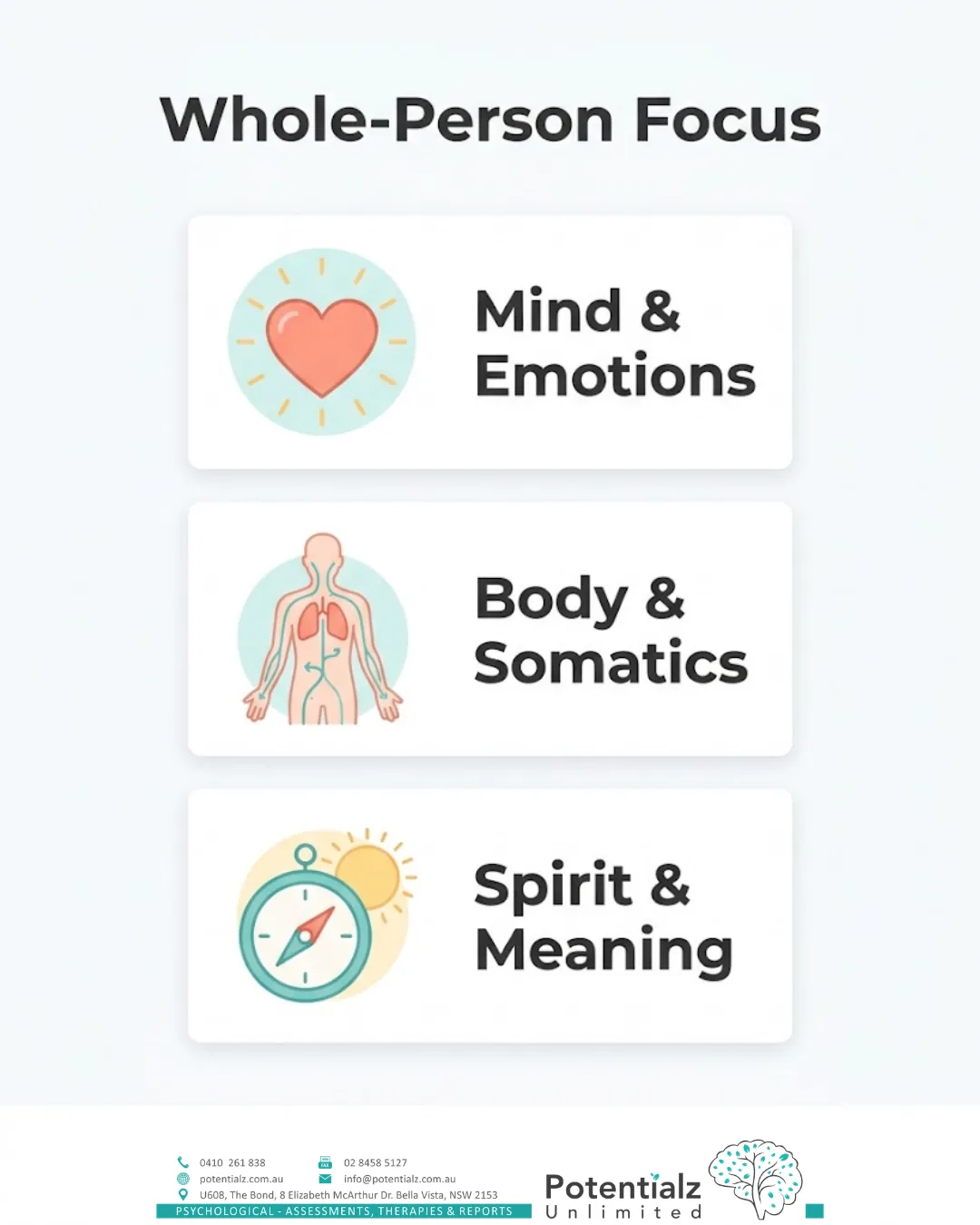
The word comes from the Greek holos — meaning “whole.” In counselling, holistic means attending to all dimensions of a person’s experience.
Not just their thoughts and behaviours. Not just their diagnosis. But also:
- Their body — how stress, trauma, and emotion live in physical sensations, tension, breath, and posture
- Their mind — thought patterns, beliefs, self-talk, and the stories they carry about themselves
- Their emotions — the full range of feeling, including what is hard to name
- Their relationships — how they relate to others and to themselves
- Their sense of meaning — values, purpose, spiritual or cultural identity, connection to something larger
- Their environment — family systems, cultural context, community, life circumstances
A holistic counsellor does not see anxiety as a thought problem to be corrected, or depression as a behaviour pattern to be modified. They see each person as a complex, interconnected whole. And they work with that complexity rather than reducing it. If this way of seeing resonates, you may also appreciate our reflection on the holistic mind approach that pairs ancient wisdom with modern psychology.
How Holistic Counselling Differs from Traditional Therapy
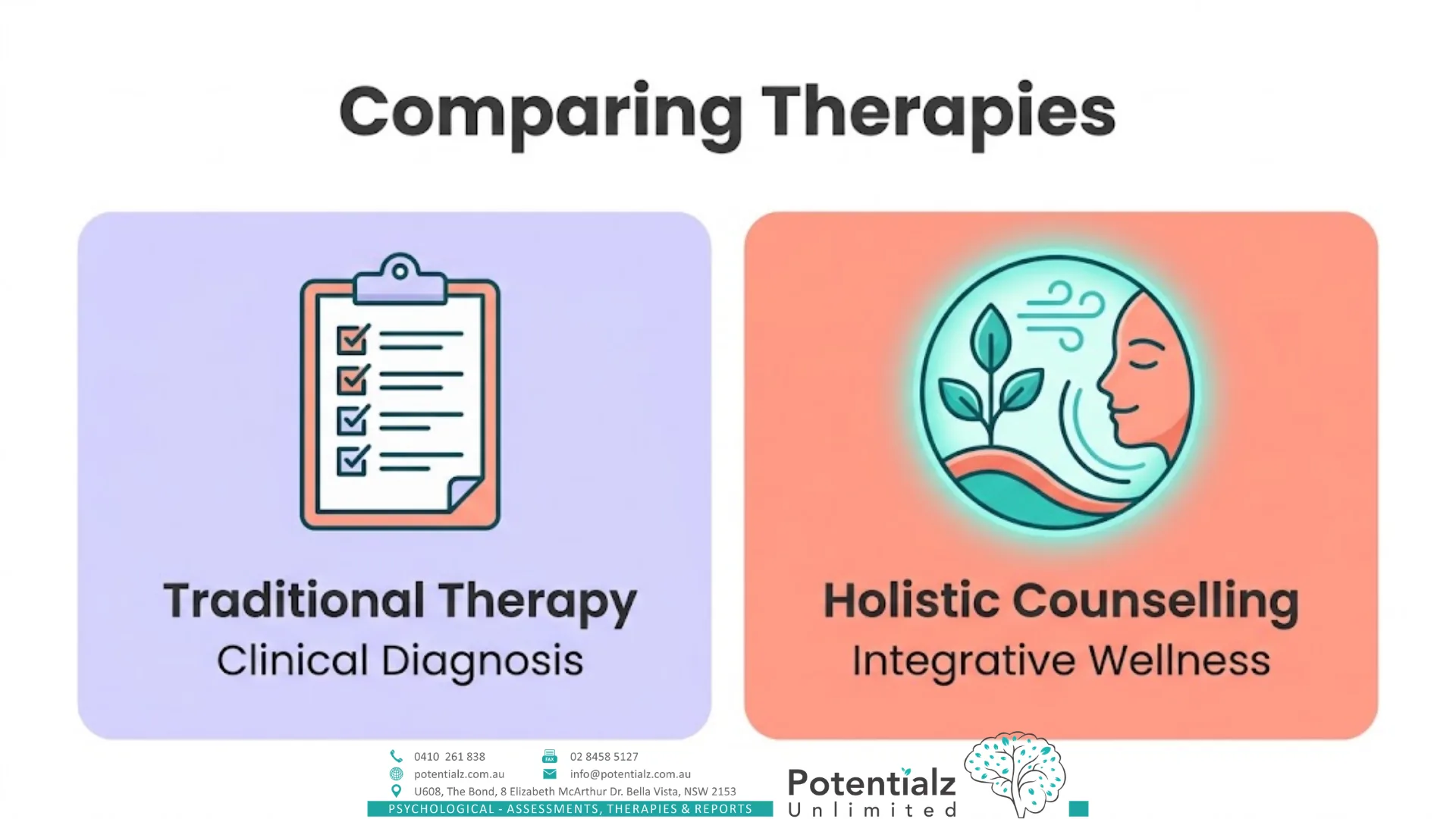
Traditional or structured therapy often follows a set protocol. Cognitive Behavioural Therapy — CBT — is a good example. It is highly effective and very well-researched. It focuses on the relationship between thoughts, feelings, and behaviours, and uses structured techniques to interrupt unhelpful patterns.
I use CBT. It is one of the tools in my kit. But CBT alone does not address what the body holds. It does not explore early relational patterns or how attachment history shapes present-day responses. It does not consider cultural identity, spiritual meaning, or somatic experience. For many clients — particularly those with complex trauma, grief, cultural dislocation, or a strong sense that something in their body is connected to what is happening emotionally — a single-approach model can feel like it’s only getting part of the picture.
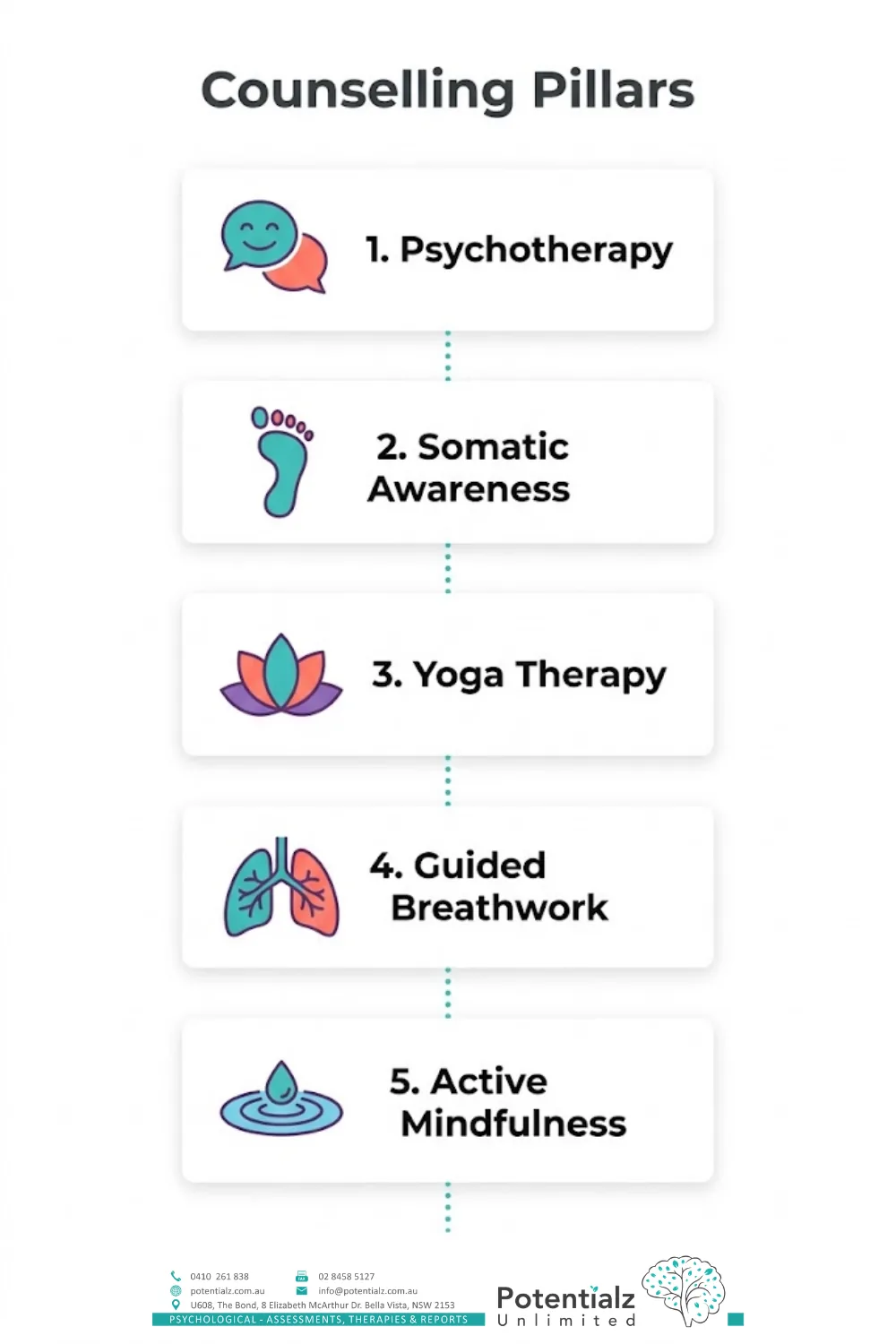
Holistic counselling expands what is possible. It integrates:
- Person-centred therapy — deep listening, unconditional positive regard, trusting the client’s own wisdom
- Psychodynamic and relational approaches — understanding how early experiences and unconscious patterns shape the present
- CBT and mindfulness-based cognitive therapy (MBCT) — working with thought patterns and developing present-moment awareness
- Somatic and body-centred approaches — attending to physical sensations, breath, and the body’s role in emotional regulation
- Yoga therapy — using movement, breath (pranayama), and yoga nidra as clinical tools within the therapeutic process
- Breathwork — guided breathing practices that activate the parasympathetic nervous system and support emotional release
- Meditation and mindfulness — cultivating present-moment awareness and reducing the grip of rumination
- Narrative therapy — helping clients rewrite the stories they hold about who they are
The key difference from traditional therapy is not that holistic counselling is less rigorous. It is that it is more responsive. It draws on a wider range of evidence-informed approaches and selects the combination that genuinely fits this person, at this moment, with this particular need.
You can read more about structured CBT-based work in our guide to the benefits of Cognitive Behavioural Therapy, or explore how these methods sit together across the therapies we offer at Potentialz.
The Evidence Base for Integrative Approaches
Research increasingly supports the effectiveness of integrative and holistic therapeutic approaches.
A landmark meta-analysis by Wampold and Imel (2015) found that the therapeutic relationship — the quality of collaboration, empathy, and responsiveness between counsellor and client — is one of the strongest predictors of positive outcomes. Often more predictive than the specific technique used. This finding directly supports the holistic counsellor’s emphasis on the relationship over adherence to any single protocol.
A systematic review by Lim et al. (2022) found that mindfulness-based interventions integrated into counselling practice produced significant reductions in anxiety and depression symptoms across diverse populations. And research on somatic approaches — body-centred therapies — has shown promising results for trauma recovery, particularly when combined with talking therapy (van der Kolk, 2014).
The integration of yoga therapy into counselling is supported by a growing body of research. A randomised controlled trial published in JAMA Internal Medicine found that yoga significantly reduced symptoms of generalised anxiety, with effects comparable to pharmacological intervention for mild-to-moderate presentations (Cramer et al., 2018).
This is not just philosophically appealing. It is clinically supported. For a deeper look at how the research and the practice meet, see our piece on the science behind integrative counselling, and our overview of the benefits of mindfulness for mental health.
Who Benefits Most from Holistic Counselling?
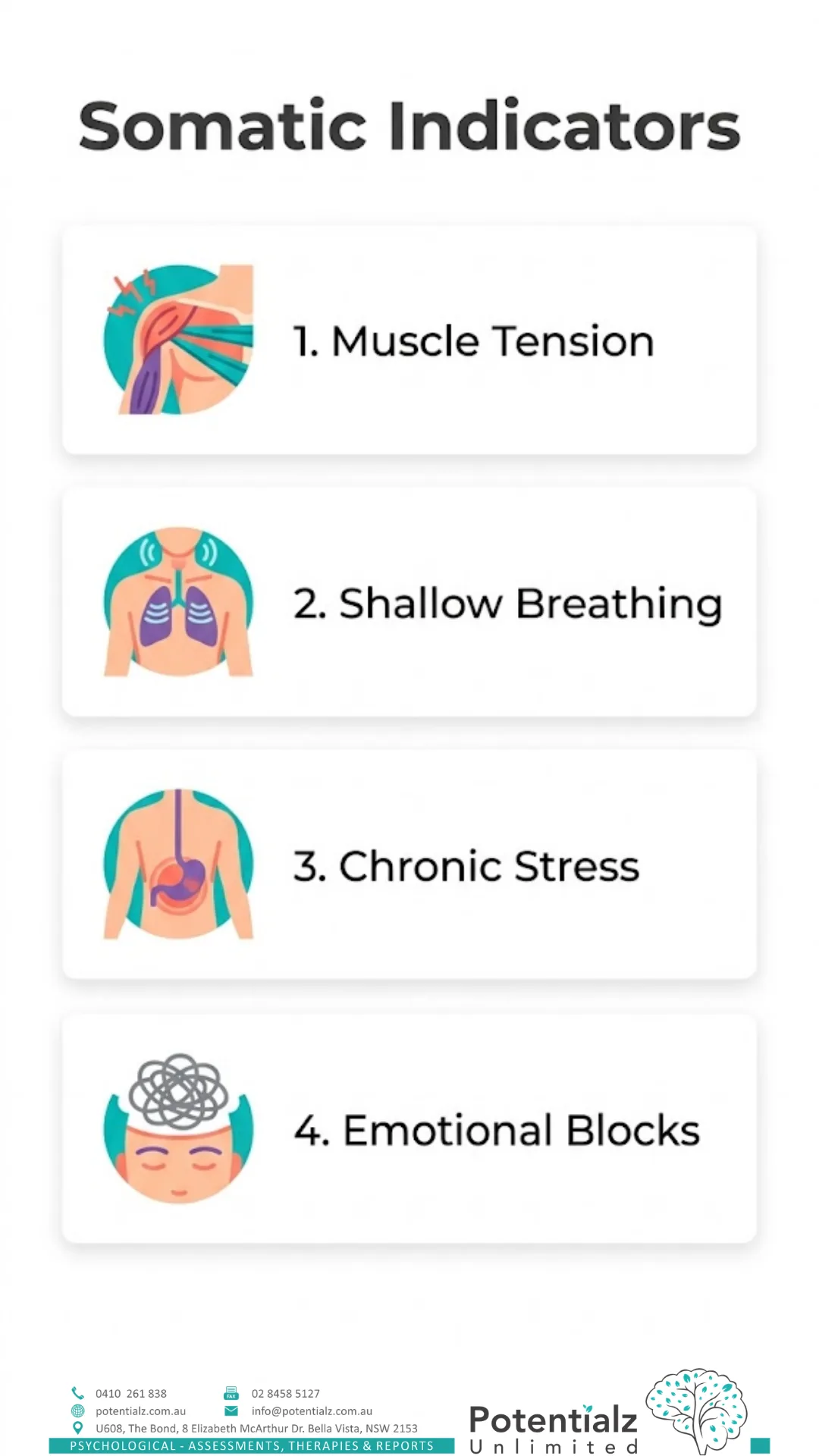
Holistic counselling tends to be a particularly good fit for people who:
- Feel like something is “off” but cannot quite name what — they sense it in their body, their energy, or their relationships
- Have tried structured therapy before and found it helpful but incomplete
- Are navigating grief, loss, or a significant life transition
- Are dealing with burnout, chronic stress, or physical symptoms that seem connected to emotional states
- Are processing trauma — particularly complex or developmental trauma
- Want to integrate cultural, spiritual, or philosophical dimensions into their healing
- Come from CALD communities and want a counsellor who understands their cultural context from the inside, not just in theory
- Are interested in the mind-body connection and want to explore breathwork, movement, or meditation as part of their work
- Are seeking personal growth and self-understanding — not just symptom relief
If you are working through bereavement, you may find our companion piece on grief through a holistic lens a gentle place to start.
What to Expect in a Holistic Counselling Session
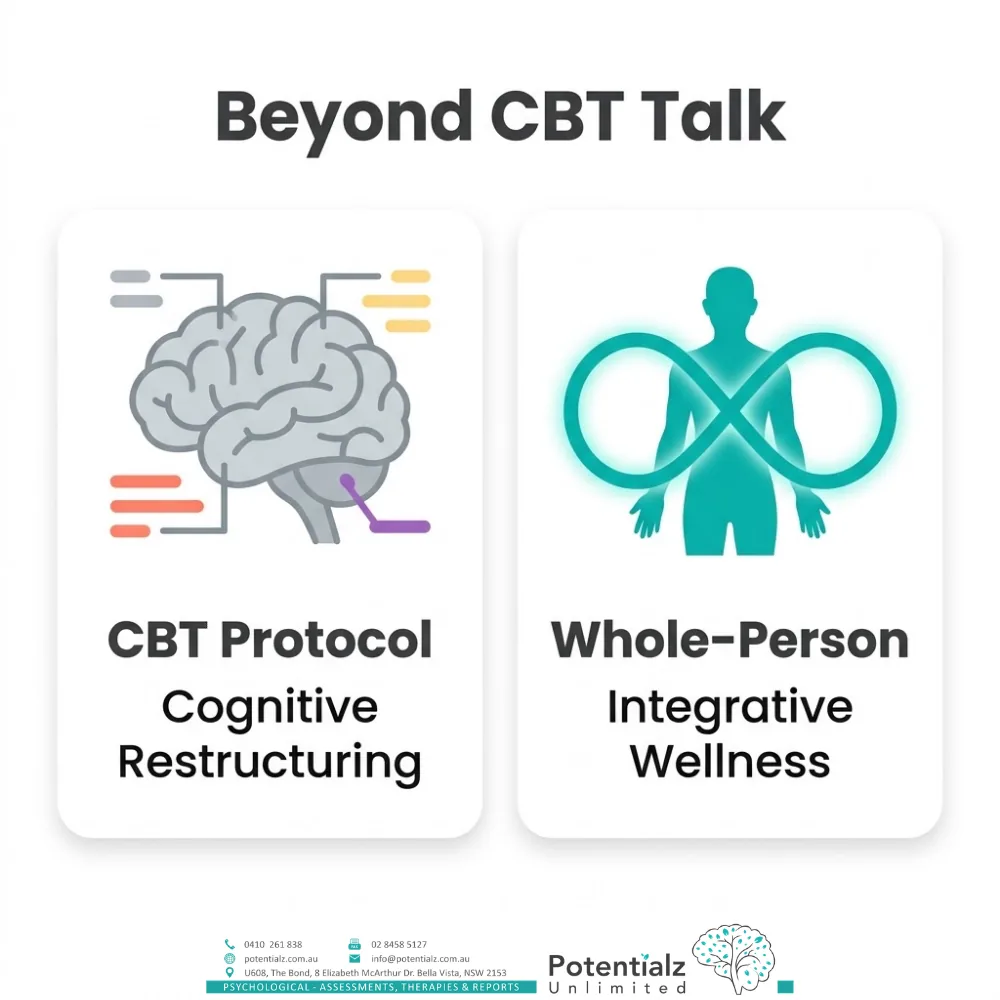
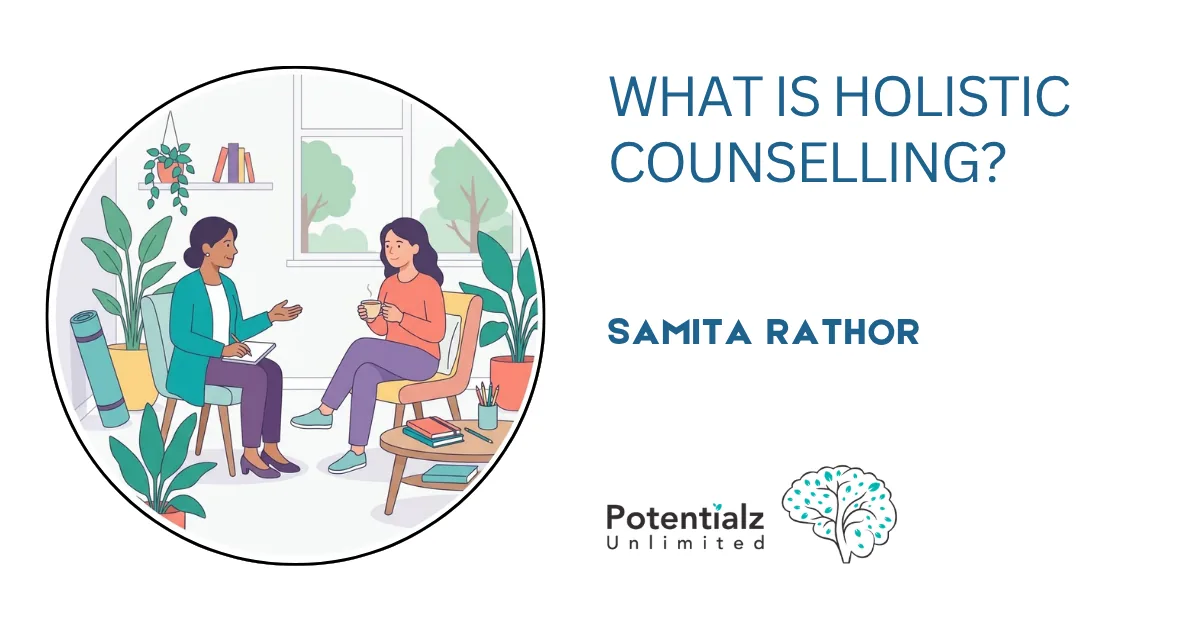
A holistic session with me at Potentialz might look quite different from a structured CBT appointment. Here is an honest picture of what a session might involve.
1. Check-in and grounding. We begin with a brief check-in — not just how are you in your mind, but how are you in your body today? This sets the tone from the start: we are paying attention to all of you, not just the verbal report.
2. Open exploration. There is space to speak freely, to follow whatever feels most pressing right now. I listen deeply and reflect back without rushing toward a solution. The pace is yours.
3. Body and breath awareness. At various points, I might draw attention to what is happening physically — “Where do you feel that in your body?” — or invite a brief breath practice to settle the nervous system before we go deeper.
4. Therapeutic techniques. Depending on what emerges, the session might draw on CBT to explore thought patterns, narrative therapy to reframe a story you’ve been carrying, or psychodynamic exploration to trace current patterns back toward their roots.
5. Integration. Toward the end, we consolidate what has come up and identify something simple to carry forward — a breathing practice, a journaling prompt, a mindful movement exercise, or simply a new way of seeing something.
My Integrative Practice at Potentialz
I have been working this way for over twenty years. My training spans traditional counselling and psychotherapy alongside advanced studies in yoga therapy, meditation, and the Science of Living — a framework that takes seriously the integration of physical, emotional, mental, and spiritual dimensions of wellbeing.
I also bring something to this work that no training could give me alone: the lived experience of working with my own body through significant challenge. I overcame a childhood disability to become an athlete. That experience — of learning to work with the body rather than against it, of understanding how deeply mind and body are connected — is woven into every session I offer.
I pay attention to how a client sits, breathes, and holds tension. That information matters as much to me as what they say.
I work with individuals, couples, and families, including leaders and professionals seeking leadership mentoring and executive wellbeing support. Sessions are available in English, Hindi, Tamil, Kannada, and Urdu, making holistic counselling genuinely accessible to South Indian and broader CALD communities across Western Sydney.
You can meet the wider practice on our team page, where each practitioner’s focus and approach is set out in full.
Holistic Counselling Is Not Anti-Medical
I want to say this clearly: holistic counselling does not reject medical care, psychiatric treatment, or medication.
I work collaboratively with GPs, psychiatrists, and other health professionals when this supports a client’s wellbeing. For some people, medication is an essential part of managing their mental health — and counselling works alongside that, not instead of it.
Holistic simply means this: you are more than your diagnosis. Your healing involves more than a single intervention. And the therapeutic space should honour all of who you are.
How Potentialz Can Help
If you’ve been in therapy before and felt like something was missing — or if you’re new to counselling and you want an approach that meets you as a complete person, not just a set of symptoms — holistic counselling at Potentialz Unlimited might be exactly what you are looking for.
I’m Samita Rathor, a Clinical Counsellor & Psychotherapist at Potentialz Unlimited in Bella Vista. I offer integrative counselling and psychotherapy at Unit 608, 8 Elizabeth Macarthur Drive, Bella Vista NSW 2153. Sessions are available Monday to Friday 10am–7pm, with Saturday and after-hours appointments also available. Telehealth sessions via phone or Zoom are offered for those outside the Hills District or who prefer to connect from home.
To take the next step:
- Book online: live.potentialz.com.au
- Get in touch: contact our team to ask a question or arrange your first appointment
- Call: 0410 261 838
No referral is required.
Related reading
Crisis Resources
- Lifeline: 13 11 14 (24/7)
- Beyond Blue: 1300 22 4636
- Kids Helpline: 1800 55 1800
- MensLine Australia: 1300 78 99 78
- Emergency: 000
References
Wampold, B. E., & Imel, Z. E. (2015). The great psychotherapy debate: The evidence for what makes psychotherapy work (2nd ed.). Routledge.
Lim, D., Condon, P., & DeSteno, D. (2022). Mindfulness and compassion: An examination of mechanism and scalability. PLOS ONE, 10(2), e0118221. https://doi.org/10.1371/journal.pone.0118221
van der Kolk, B. (2014). The body keeps the score: Brain, mind, and body in the healing of trauma. Viking.
Cramer, H., Lauche, R., Anheyer, D., Pilkington, K., de Manincor, M., Dobos, G., & Ward, L. (2018). Yoga for anxiety: A systematic review and meta-analysis of randomized controlled trials. Depression and Anxiety, 35(9), 830–843. https://doi.org/10.1002/da.22762
Norcross, J. C., & Goldfried, M. R. (Eds.). (2019). Handbook of psychotherapy integration (3rd ed.). Oxford University Press.
Knowledge Check Quiz
Test what you have just read. Choose your answer for each question, then submit to reveal the answers and your score.
Need Professional Support?
If you're experiencing mental health concerns, our team is here to help.