દરેક માતા-પિતા ત્યાં રહ્યા છે. તમારું બાળક નાની લાગતી વાત પર ભડકી ઊઠે, ખોટા રંગનો કપ, ખૂંચતો મોજો, ખૂબ વહેલી પૂરી થઈ ગઈ રમત. પણ તમે જે જોઈ રહ્યા છો તે નાની પ્રતિક્રિયા નથી. તે આખા શરીરનું તોફાન છે. ચીસો, મારામારી, ફેંકવું, અથવા ઊલટું, સંપૂર્ણ ઉપાડ, મૌન, ખાલી ટકટકી.
તમે જે જાણો છો તે બધું અજમાવો છો. શાંત અવાજ. મક્કમ અવાજ. ધ્યાન ફેરવવું. Time-out. સમજૂતી. કશું કામ નથી આવતું. તોફાન પોતાની ગતિ પ્રમાણે જ ઓસરવાનું છે.
પછી, બધા થાકી ગયા. તમારા બાળકને ઘણી વાર શરમ ઘેરી વળે. તમે ખૂટી ગયા. અને વિચારવા લાગ્યા: આ સ્વાભાવિક છે? કંઈ ખોટું છે? અને હું શું કરી શકું?
આ post તમારા માટે છે.
”મોટી લાગણીઓ” ખરેખર કેવી દેખાય છે
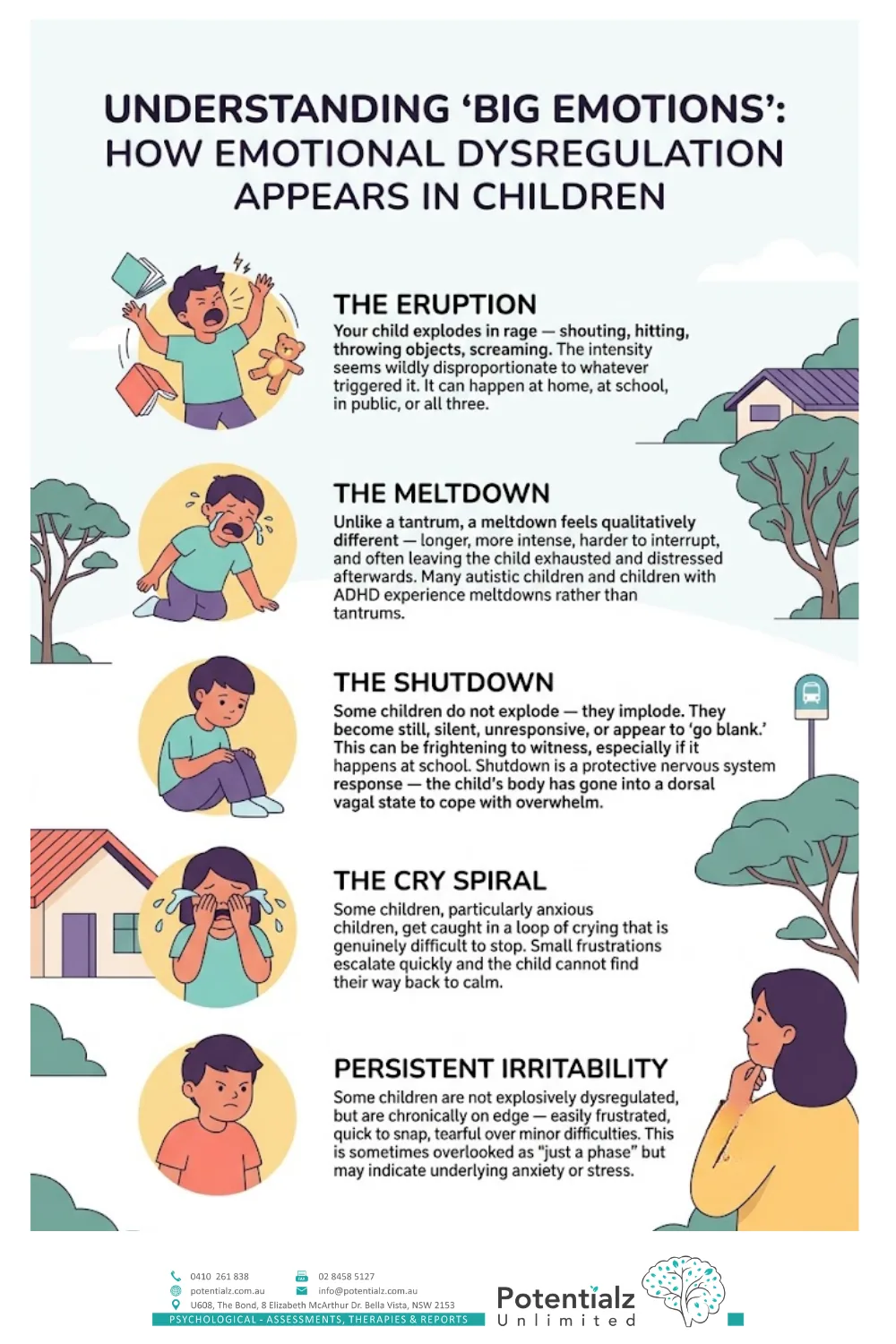
બાળકોમાં ભાવનાત્મક અનિયમિતતા બાળકની ઉંમર, સ્વભાવ અને ઇતિહાસ પ્રમાણે અલગ-અલગ રીતે પ્રગટ થાય છે. કેટલાક સામાન્ય પ્રકારો:
વિસ્ફોટ. તમારું બાળક ક્રોધ સાથે ફૂટી નીકળે, ચીસો, મારામારી, વસ્તુઓ ફેંકવી. ઉગ્રતા ઉત્તેજનાના કારણ સામે અતિ-પ્રમાણ જેવી લાગે. ઘરે, શાળામાં, જાહેરમાં, અથવા ત્રણેય.
મેલ્ટડાઉન. ગુસ્સાથી ગુણાત્મક રીતે અલગ, લાંબો, વધુ તીવ્ર, અટકાવવો મુશ્કેલ, અને ઘણી વાર બાળક પછીથી ખૂબ થાક અને ગભરામણ. ઓટિઝ્મ ધરાવતા ઘણા બાળકો અને ADHD ધરાવતા બાળકો ગુસ્સાને બદલે મેલ્ટડાઉન અનુભવે છે.
શટડાઉન. કેટલાક બાળકો ફૂટી નીકળતા નથી, અંદર ઓગળી જાય છે. સ્થિર, મૌન, બેધ્યાન, અથવા ખાલી ટકટકી. ખાસ કરીને શાળામાં બની હોય ત્યારે ભયભીત કરી શકે. શટડાઉન protective nervous system પ્રતિક્રિયા છે: ભારથી ઘેરાઈ ગઈ nervous system dorsal vagal અવસ્થામાં ઉતરી ગઈ છે.
રડવાનું ચક્ર. કેટલાક બાળકો, ખાસ કરીને ચિંતાગ્રસ્ત, એવા રડવાના ચક્રમાં ફસાઈ જાય છે જે ખરેખર બંધ કરવું મુશ્કેલ. નાની નિષ્ફળતા ઝડપથી વધે અને બાળક શાંત ભણી પાછો ફરી ન શકે.
સ્થાયી ચિડ. કેટલાક બાળકો ઉગ્ર રીતે અનિયમિત નથી, પણ ક્રોનિક ધોરણે ધાર પર, ઝટ ચીડ, ઝઘડાળુ, નાની મુશ્કેલીઓ પર આંસુ. ક્યારેક “ફક્ત એક તબક્કો” ગણી અવગણવામાં આવે, પણ બાળકોમાં ચિંતા અથવા સંચિત તણાવ સૂચવી શકે.
સ્વાભાવિક ગુસ્સો વિ. ભાવનાત્મક અનિયમિતતા: ફરક ઓળખવો
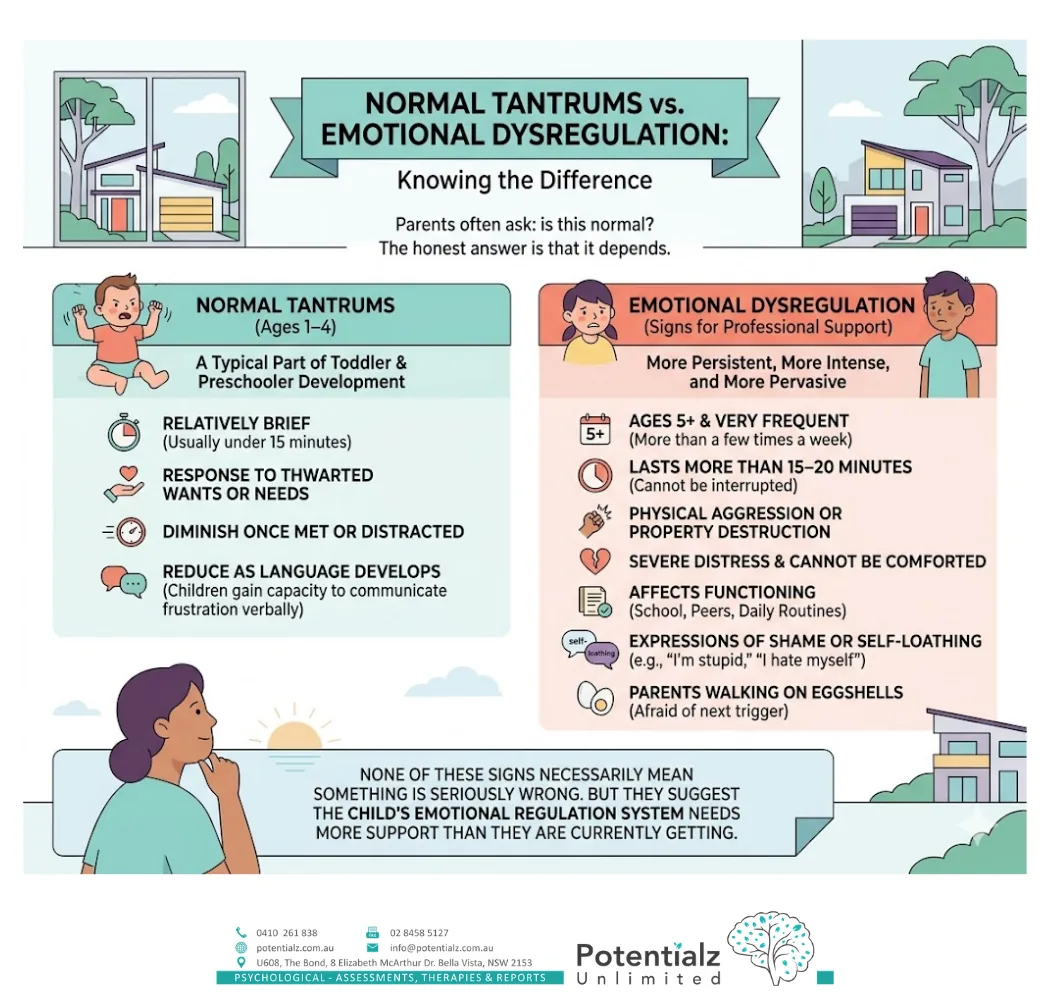
માતા-પિતા ઘણી વાર પૂછે: આ સ્વાભાવિક છે? ખરો જવાબ: આધાર રાખે.
સ્વાભાવિક ગુસ્સો ટોડ્લર અને નાના preschool, 1 થી 4 વર્ષ, ના વિકાસનો સ્વાભાવિક ભાગ છે. સામાન્ય રીતે ટૂંકો, સામાન્ય રીતે પંદર મિનિટ સુધી, ઇચ્છા કે જરૂર ન સ્વીકારાઈ ત્યારે, અને ઇચ્છા પૂરી થઈ કે ધ્યાન ફર્યા પછી ઓછો. ભાષા વધે ત્યારે ઘણો ઘટે.
ભાવનાત્મક અનિયમિતતા વધુ સ્થાયી, વધુ તીવ્ર, વધુ ઘેરી. વ્યાવસાયિક ટેકો ઉપયોગી સૂચવે તેવા ચિહ્નો:
- 5 વર્ષ કે તેથી વધુ ઉંમરના બાળકમાં ઘણી વાર, અઠવાડિયામાં ઘણી, ગુસ્સો અથવા મેલ્ટડાઉન.
- 15 થી 20 મિનિટ ઉપરાંત ચાલતા, ન અટકાવી શકાય તેવા વિસ્ફોટ.
- લોકો પ્રત્યે શારીરિક આક્રમકતા અથવા મિલ્કતનો નોંધપાત્ર નાશ.
- બાળક ખૂબ ઘાયલ, ફક્ત ચિડ નહીં, અને સ્વસ્થ ન થઈ શકે.
- અનિયમિતતા શાળા, સાથીઓ, અથવા રોજ-બ-રોજ ની ક્રિયાઓ પર અસર પાડે.
- ઘટના પછી શરમ, આત્મ-ઘૃણા, અથવા નિરાશા, “હું મૂર્ખ છું”, “હું હંમેશા બધું બગાડ્યું”, “હું મારી જાતને ધિક્કારું છું” જેવા ઉદ્ગારો.
- તમે માતા-પિતા તરીકે ઈંડા પર ચાલતા હોય તેવું અનુભવો, આગળ શું ભડકાવે તેનો ડર.
આ ચિહ્નો જ઼રૂરી નથી કે કંઈ ગંભીર ખોટું છે. પણ આ ચોક્કસ સૂચવે છે કે બાળકની ભાવનાત્મક નિયમન પ્રણાલીને હાલ મળે છે તેના કરતા વધુ સહાયની જ઼રૂર છે.
જો તમને તમારા બાળકની ભાવનાત્મક સ્વસ્થ્યની ચિંતા હોય, તો Bella Vista ના child psychologist ની સલાહ લેવી એ ડહાપણભર્યો પ્રારંભ છે. કટોકટી સુધી રાહ જ઼ોવી જ઼રૂરી નથી.
વિકસતા મગજની neuroscience
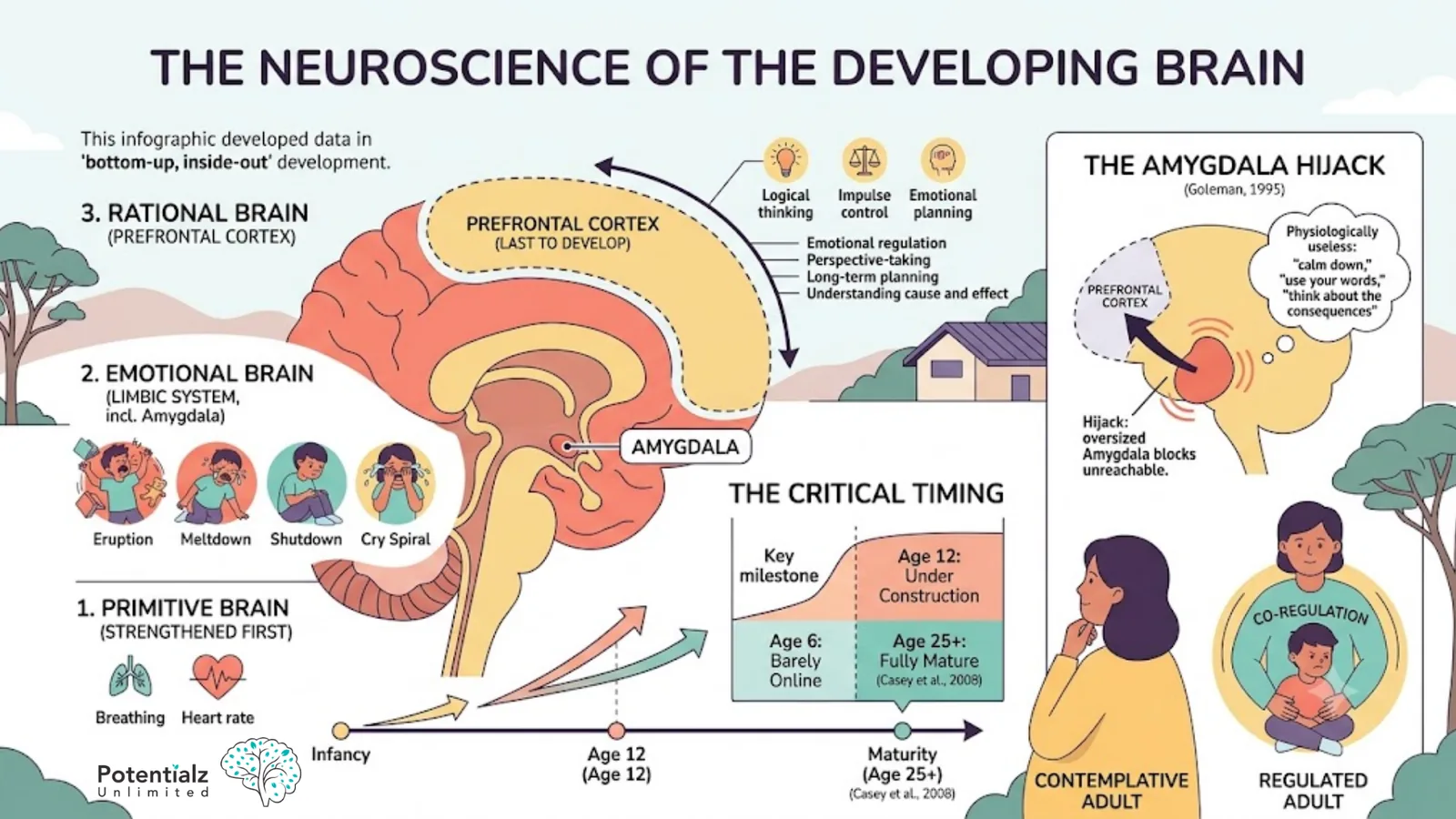
બાળકો મોટી લાગણીઓ સાથે કેમ ઝઝૂમે છે તે સમજવા માટે મગજના વિકાસ વિશે ટૂંકી ચર્ચા જ઼રૂરી છે. આ ભાગ ખરેખર સહાય કરે છે.
માનવ મગજ નીચેથી ઉપર અને અંદરથી બહારની તરફ વિકસે છે. સૌથી આદ્ય મગજ વિભાગો, જ઼ે શ્વાસ અને હ્રદયના ધબકારા જ઼ેવા મૂળ અસ્તિત્વ કાર્યો નિયંત્રિત કરે છે, પ્રથમ વિકસે છે. ભાવનાત્મક કેન્દ્રો (limbic system, amygdala સહિત) આગળ વિકસે છે. Rational, thinking brain, prefrontal cortex, સૌ છેલ્લો વિકસે છે.
Prefrontal cortex મગજનો તે ભાગ છે જ઼ે આ માટે જ઼વાબદાર છે:
- તાર્કિક વિચારણા અને સમસ્યા-ઉકેલ
- આવેગ નિયંત્રણ
- ભાવનાત્મક નિયમન
- દ્રષ્ટિ-ગ્રહણ
- લાંબા ગાળાનું આયોજન
- કારણ અને અસર સમજ઼વી
અહીં મહત્ત્વનો મુદ્દો: prefrontal cortex આશરે 25 વર્ષની વયે સંપૂર્ણ પ્રૌઢ થાય છે (Casey et al., 2008). છ-વર્ષના બાળકમાં તે ભાગ્યે જ સક્રિય છે. બાર-વર્ષના બાળકમાં તે હજ઼ુ ઘડાઈ રહ્યો છે.
આ અર્થ એ થાય છે કે જ઼્યારે નાનું બાળક લાગણીઓથી ઘેરાઈ જ઼ાય, ત્યારે ન્યૂરોલોજ઼િકલ રીતે તે તેમાંથી વિચારીને નીકળવાની સ્થિતિમાં નથી. Prefrontal cortex ભાવનાત્મક મગજ દ્વારા “hijack” થઈ ગઈ છે. આને ક્યારેક amygdala hijack કહેવાય છે, મનોવૈજ્ઞાનિક Daniel Goleman (1995) દ્વારા બનાવેલ શબ્દ.
આ સ્થિતિમાં, બાળકને “calm down”, “use your words”, અથવા “think about the consequences” કહેવું physiologically નકામું છે. મગજના તે ભાગો સુલભ નથી. પ્રથમ શું જ઼ોઈએ તે regulated અવસ્થામાં પાછા આવવું, અને નાના બાળકો આ એકલા કરી શકતા નથી. તેમને regulated પુખ્ત વ્યક્તિ જ઼ોઈએ.
Co-regulation શું છે?
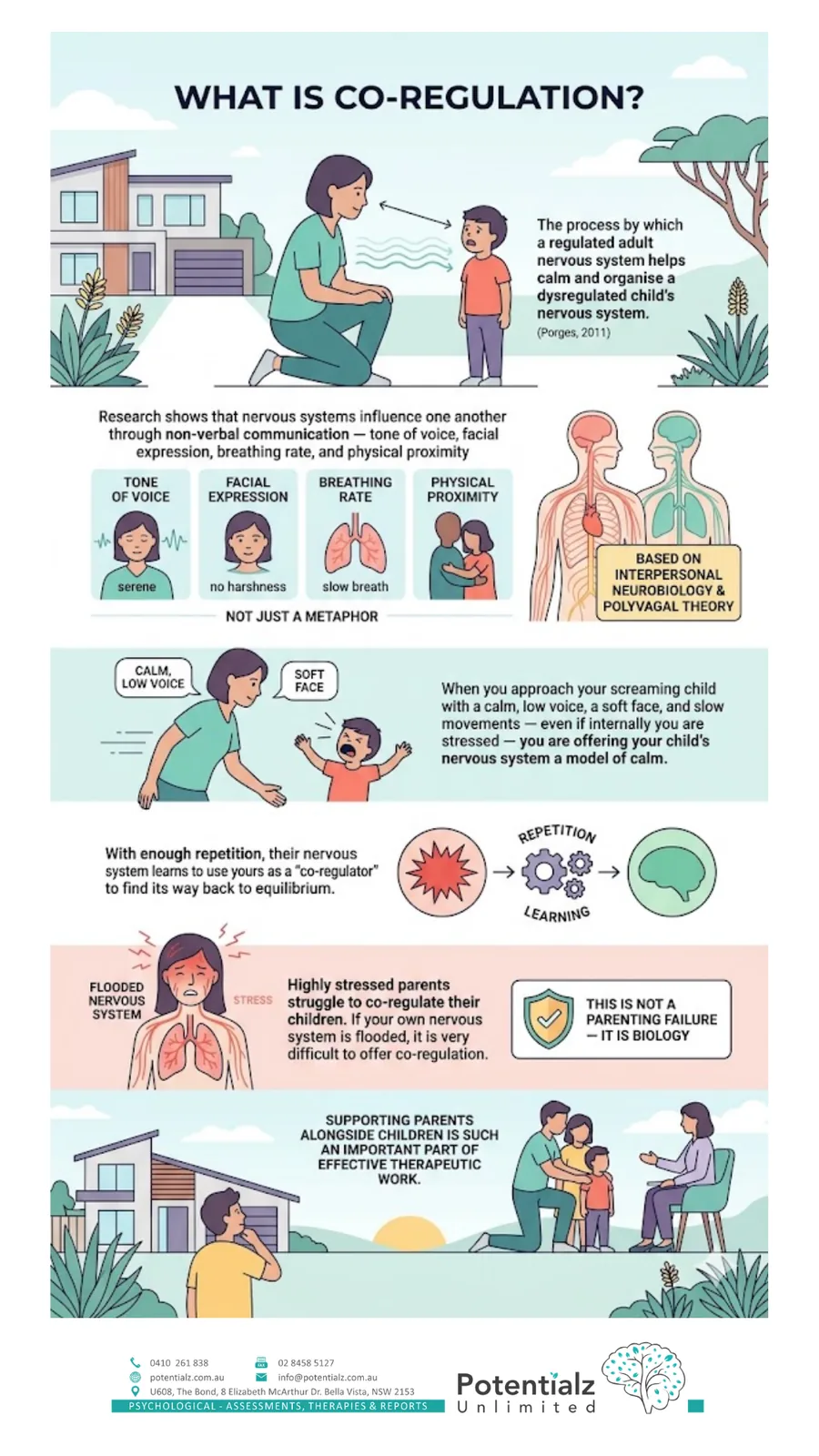
Co-regulation એ પ્રક્રિયા છે જ઼્યાં regulated પુખ્ત nervous system અનિયમિત બાળ nervous system ને શાંત કરવામાં અને ગોઠવવામાં મદદ કરે છે. આ ફક્ત રૂપક નથી. Interpersonal neurobiology અને polyvagal theory ના સંશોધન દર્શાવે છે કે nervous systems ખરેખર બિન-મૌખિક સંચાર દ્વારા એકબીજ઼ાને પ્રભાવિત કરે છે, અવાજ઼નો સ્વર, ચહેરાની અભિવ્યક્તિ, શ્વાસ-ઝ઼ડ, અને શારીરિક નિકટતા (Porges, 2011).
જ઼્યારે તમે ચીસ ઉઠ્યા બાળક પાસે શાંત, ધીમા અવાજ઼ સાથે, નરમ ચહેરો અને ધીમી ગતિ સાથે, ભલે અંદરથી stressed હો, ત્યારે તમે બાળ nervous system ને શાંતિનો નમૂનો આપો છો. પૂરતી વાર પુનરાવર્તન સાથે, nervous system તમારી nervous system ને co-regulator તરીકે ઉપયોગ કરીને equilibrium ભણી પાછી ફરવાનું શીખે છે.
આ જ઼ કારણ છે કે ખૂબ stressed પુખ્ત વ્યક્તિઓ પોતાના બાળકોને co-regulate કરવા સંઘર્ષ કરે છે. જ઼ો તમારી પોતાની nervous system flooded હોય, તો co-regulation ઓફર કરવી ખૂબ મુશ્કેલ છે. આ parenting failure નથી, biology છે. આ જ઼ કારણ છે કે children ની સાથે parents ને ટેકો આપવો effective therapeutic work નો મહત્ત્વનો ભાગ છે, અને અમારી પ્લે થેરાપિસ્ટ play therapy process ના ભાગ રૂપે parent consultations ઓફર કરે છે.
Play Therapy ભાવનાત્મક નિયમન કેવી રીતે શીખવે છે
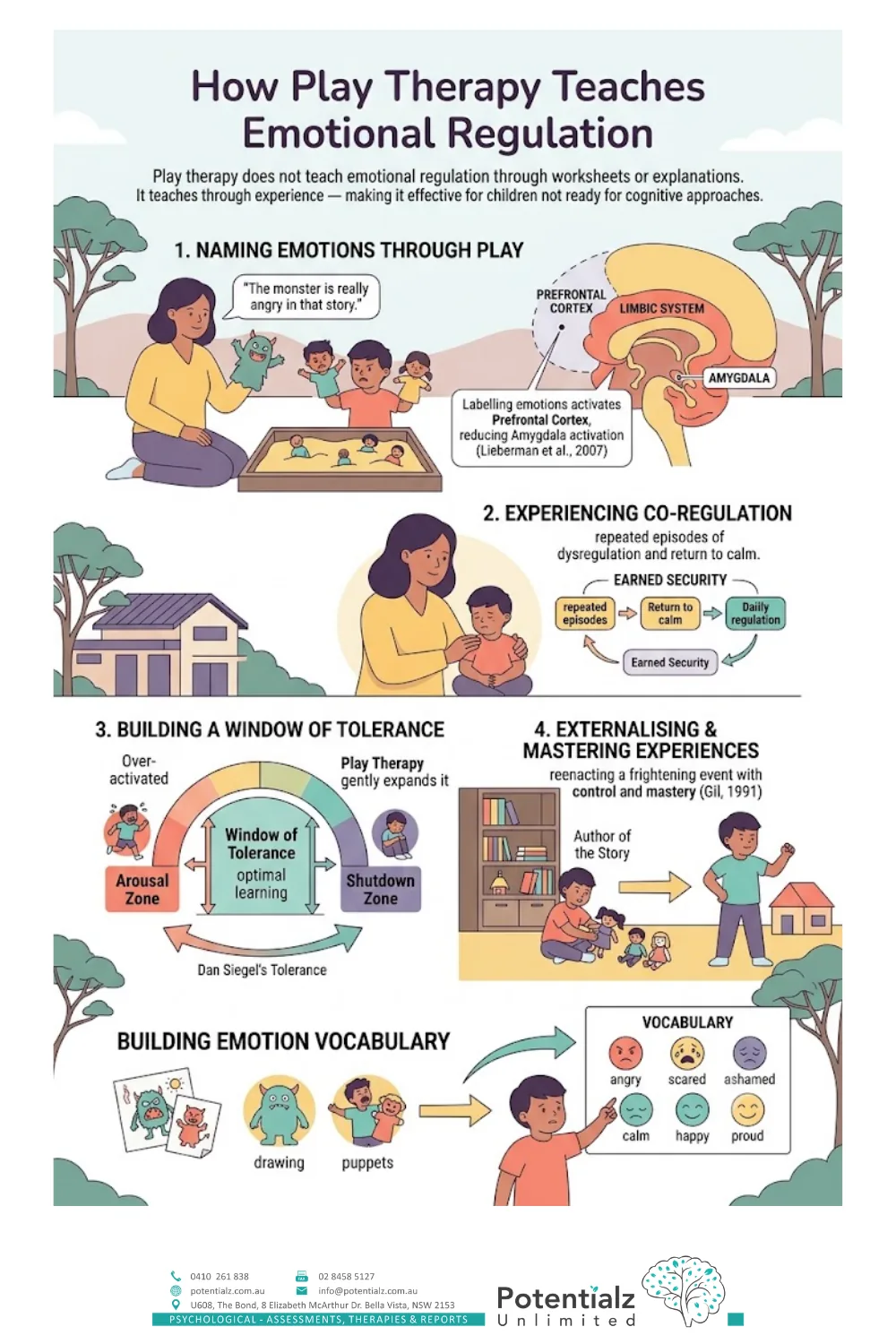
Play therapy ભાવનાત્મક નિયમન worksheets, videos, અથવા સ્પષ્ટીકરણ દ્વારા નથી શીખવતી. તે અનુભવ દ્વારા શીખવે છે, અને આ જ઼ કારણ છે કે જ઼ે બાળકોના મગજ હજ઼ુ cognitive approaches માટે તૈયાર નથી, તેમના માટે આ ખૂબ effective છે.
Therapeutic play environment માં ઘણી મહત્ત્વની ઘટનાઓ ઘટે છે:
Play દ્વારા લાગણીઓ ઓળખવી. બાળકો ઘણી વાર “I feel terrified” અથવા “I feel ashamed” કહી શકતા નથી. પણ play દ્વારા, puppets સાથે scene ભજ઼વવા, sand tray માં figures દફનાવવા અને ખોદવા, monsters અથવા storms દોરવા, તેઓ આ લાગણીઓ symbolic રીતે રજ઼ૂ કરી શકે છે. Therapist ધ્યાનથી જ઼ે જ઼ુએ છે તે ઓળખાવે છે: “The monster is really angry in that story.” લાગણીઓ ઓળખવાની આ પ્રક્રિયા, ભલે metaphor દ્વારા, prefrontal cortex ને સક્રિય કરે છે અને ભાવનાત્મક પ્રતિક્રિયાની તીવ્રતા ઘટાડે છે. Lieberman et al. (2007) ના સંશોધનમાં જ઼ાણ્યું કે ફક્ત એક લાગણી ઓળખવાથી amygdala activation નોંધપાત્ર રીતે ઘટે છે.
Therapist સાથે co-regulation અનુભવ. Therapeutic relationship ની સલામતીમાં, બાળકો dysregulation ના અને calm ભણી પાછા ફરવાના વારંવારના episodes અનુભવે છે, therapist co-regulator તરીકે કામ કરે છે. સમય સાથે, આ earned security ઊભી કરે છે: બાળ nervous system સૂઘ થવાના અનુભવને internally store કરે છે અને વધારે self-soothe કરવાનું શીખે છે. આ Synergetic Play Therapy નો core mechanism છે.
Window of tolerance વધારવી. Psychologist Dan Siegel એ “window of tolerance” શબ્દ arousal ના optimal zone ઓળખવા બનાવ્યો, ખૂબ activated નહીં, ખૂબ shut down નહીં, જ઼્યાં learning અને connection શક્ય છે. મોટી લાગણીઓ ધરાવતા બાળકોની window of tolerance સાંકડી હોય. Play therapy activating material ભણી અને તેનાથી દૂર ખસવાના વારંવારના, સલામત experiences દ્વારા ધીરે ધીરે વધારે છે.
Experiences externalize અને master કરવી. જ઼્યારે બાળકો play માં ભયભીત, ગૂંચવાયેલ, અથવા તકલીફ-ભર્યા experiences ફરી ભજ઼વે, ત્યારે તેઓ control મેળવે છે. તેઓ ફક્ત overwhelming feelings ના passive recipient નથી. તેઓ story ના author છે. Passivity થી mastery ભણી આ shift play therapy માં healing નો core mechanism છે (Gil, 1991).
Emotion vocabulary બનાવવી. Therapy ના ક્રમ દરમ્યાન, બાળકો naturally તેમના ભાવનાત્મક experiences માટે સમૃદ્ધ vocabulary વિકસાવે છે. Feelings ઓળખવાની અને નામ આપવાની આ વધેલી ક્ષમતા consistently improved emotional regulation સાથે જ઼ોડાયેલ છે (Brackett et al., 2012). મોટા બાળકો માટે, LEGO Based Therapy જ઼ેવા structured approaches collaborative play દ્વારા આ જ઼ skills બનાવે છે.
Bella Vista ખાતે play therapy Potentialz Unlimited ખાતે કેવી રીતે deliver થાય છે તે વિશે અમારા dedicated service page પર વધારે વાંચી શકો.
ચિંતા, ADHD અને ભાવનાત્મક અનિયમિતતા
ચિંતા અને ભાવનાત્મક અનિયમિતતા ઘણી વાર સાથે આવે છે. ચિંતાગ્રસ્ત બાળકો chronic low-grade nervous system activation ની સ્થિતિમાં જ઼ીવે છે. તેમનો amygdala essentially હંમેશા ધમકી માટે scanning કરી રહ્યો છે. જ઼્યારે આ પહેલેથી elevated baseline ઉપર fear response trigger થાય, ત્યારે explosion અથવા shutdown disproportionate લાગે, કારણ કે બહારથી આપણે ફક્ત છેલ્લો ઘટ જ઼ોઈ રહ્યા છીએ, accumulated stress load નહીં.
જ઼ો તમારા બાળકની ભાવનાત્મક પ્રતિક્રિયાઓ ખાસ transitions, routine ફેરફાર, social situations, નવા environment, અથવા perceived failure સાથે જ઼ોડાયેલ હોય, તો ચિંતા એ મહત્ત્વનો contributing factor હોઈ શકે. બાળકો માટે anxiety support page માં Potentialz Unlimited કેવી રીતે મદદ કરી શકે તે વધારે જ઼ાણો.
ADHD ધરાવતા બાળકો માટે, ભાવનાત્મક અનિયમિતતા condition ની સૌથી challenging અને ઘણી વાર underemphasised features માંની એક છે. ADHD ફક્ત attention અને impulse control ને જ઼ નહીં, ભાવનાત્મક impulsivity ને પણ અસર કરે છે, લાગણીઓ અનુભવાય અને express થાય તેની ઝ઼ડ અને તીવ્રતા. ADHD psychologist Bella Vista page માં વધારે વાંચો.
Sessions વચ્ચે માતા-પિતા શું કરી શકે
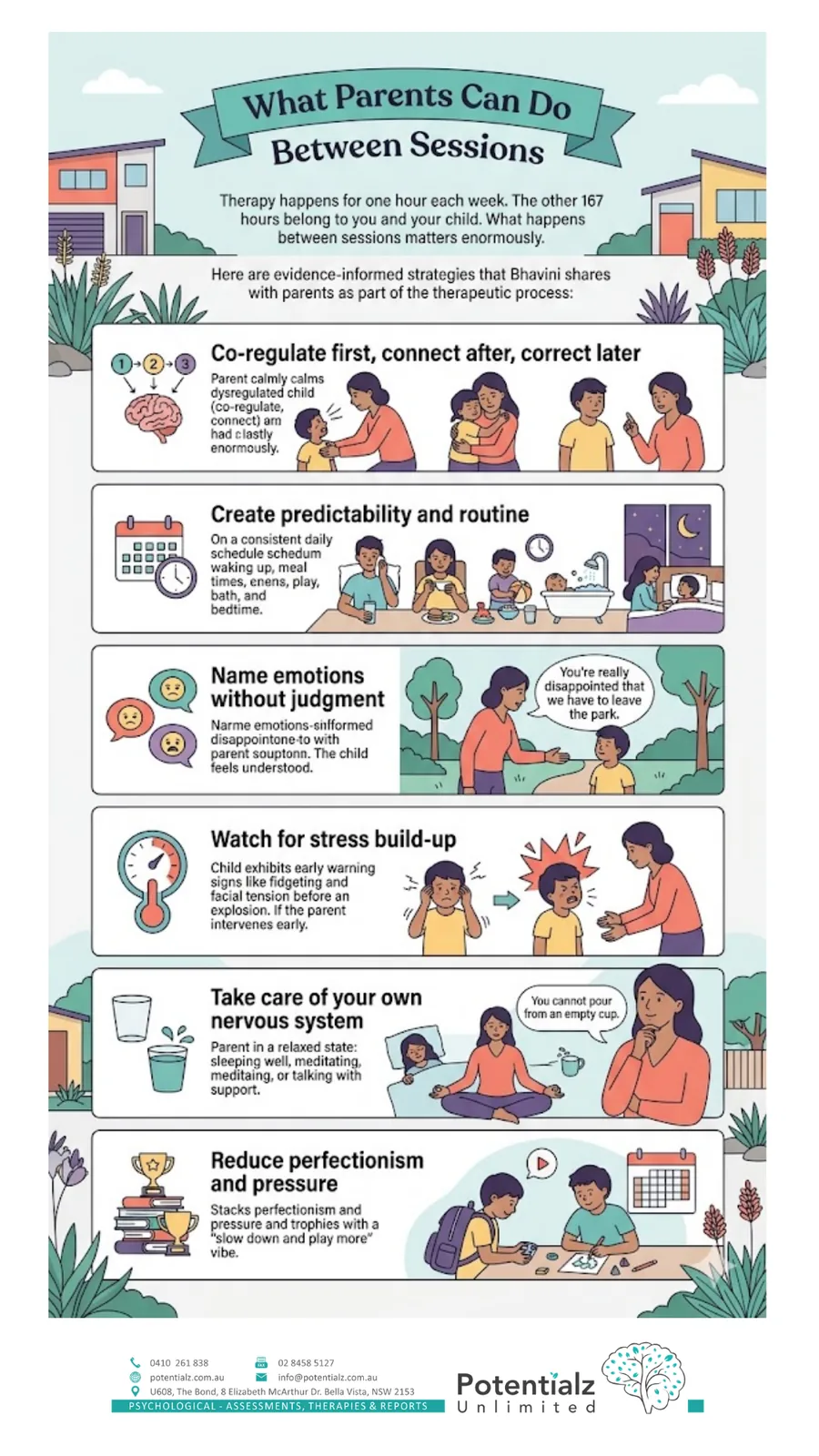
Therapy દર અઠવાડિયે એક કલાક ચાલે છે. બાકીના 167 કલાક તમારા અને તમારા બાળક સાથે. Sessions વચ્ચે શું ઘટે છે તે ખૂબ મહત્ત્વ ધરાવે છે.
અમારી પ્લે થેરાપિસ્ટ therapeutic process ના ભાગ રૂપે માતા-પિતા સાથે share કરે તેવી evidence-informed strategies:
Co-regulate પ્રથમ, connect પછી, correct પછીથી. જ઼્યારે તમારું બાળક dysregulated હોય, ત્યારે lessons, consequences, અથવા problem-solving ની ઘડી નથી. પ્રથમ, regulated state ભણી પાછા ફરવામાં મદદ કરો. પછી, calm થઈ ગયા ત્યારે, warmth અને empathy સાથે reconnect કરો. ત્યાર પછી જ઼, અને ટૂંકમાં, જ઼ો જ઼રૂર હોય તો behaviour address કરો. આ sequence developing brain ની neuroscience ને અનુસરે છે.
Predictability અને routine ઊભી કરો. Dysregulation challenges ધરાવતા બાળકો ત્યારે safe feel કરે જ઼્યારે શું expect કરવું તે જ઼ાણે. ઊઠવા, ભોજ઼ન, transitions, અને bedtime આસપાસ consistent routines ambient anxiety ઘટાડે છે જ઼ે emotions manage કરવી મુશ્કેલ બનાવે.
Judgment વિના emotions ઓળખાવો. “You’re really disappointed that we have to leave the park.” “That felt really scary.” ફક્ત જ઼ે જ઼ુઓ છો તે ઓળખાવવાથી તમારા બાળકની emotional vocabulary બને છે અને felt understood feel કરાવે છે, ભલે કંઈ બદલી ન શકાય.
Stress build-up નોંધો. ઘણા બાળકો સૂક્ષ્મ સંકેત આપે, explosion પહેલા stress બનવાના. તમારા બાળકના early warning signs શીખવાથી point of no return પહેલા co-regulation સાથે intervene કરી શકો.
પોતાની nervous system સંભાળો. ખાલી cup માંથી ઠાલવી ન શકો. તમારા બાળકની regulate કરવાની ક્ષમતા ઘણી હદ સુધી તમારી (comparatively) regulated રહેવાની ક્ષમતા પર નિર્ભર છે. ઊંઘ, સહાય, જ઼રૂર હોય ત્યારે પોતાની therapy, આ luxury નથી. આ તમારા બાળકની treatment plan નો ભાગ છે.
Perfectionism અને pressure ઘટાડો. ઘણા બાળકો માટે, academic pressure, extra-curricular overload, અથવા ઊંચી parental expectations ભાવનાત્મક અનિયમિતતામાં નોંધપાત્ર ફાળો આપે છે. ક્યારેક એક પરિવાર માટે સૌથી therapeutic કામ ધીમા પડવું અને વધારે રમવું છે.
વ્યાવસાયિક સહાય માટે ક્યારે સંપર્ક કરવો
ચીજ઼ો desperate ન થઈ ત્યાં સુધી રાહ જ઼ોવી જ઼રૂરી નથી. સંશોધન સતત દર્શાવે છે કે વહેલી intervention delayed support કરતા સારા results આપે છે. જ઼ો તમે પૂછી રહ્યા હો કે શું તમારા બાળકને professional help ફાયદો કરી શકે, તો આ feeling ને સાંભળવી ઉચિત છે.
Appointment લેવાનો સમય આવ્યો છે તે સૂચવતા ચોક્કસ સંકેત:
- ભાવનાત્મક episodes સમય સાથે વધારે વારંવાર અથવા તીવ્ર થઈ રહ્યા છે.
- તમારું બાળક suicidal thoughts, self-harm, અથવા hopelessness વ્યક્ત કરી રહ્યું છે, આ case હોય તો Kids Helpline ને 1800 55 1800 પર અથવા Lifeline ને 13 11 14 પર તરત જ઼ સંપર્ક કરો.
- Dysregulation તમારા બાળકની school attendance, friendships, અથવા family relationships ને નોંધપાત્ર રીતે અસર કરી રહ્યો છે.
- તમારું બાળક પહેલા enjoy કરતા activities ટાળી રહ્યું છે.
- તમે માતા-પિતા તરીકે cope ન કરી શકો, તમારા બાળકની reactions થી ડરી ગયા, અથવા આખા પરિવારને બાળકની ભાવનાત્મક state ની ફરતે manage કરવા લાગ્યા.
- તમારું બાળક શારીરિક pain (headaches, stomach aches) માં છે કોઈ medical explanation વિના, આ ઘણી વાર emotional stress સાથે સ્પષ્ટ રીતે જ઼ોડાયેલ છે.
Potentialz Unlimited ખાતે અમારી પ્લે થેરાપિસ્ટ સાથે initial consultation તમારી ચિંતાઓ discuss કરવાનો અને તમારા બાળકને શું જ઼ોઈએ તેના પર professional perspective મેળવવાનો low-pressure રસ્તો છે. જ઼ો તમારા બાળક પાસે NDIS plan હોય તો NDIS psychologist page પણ જ઼ુઓ.
ભાવનાત્મક નિયમન માટે Play Therapy માં શું expect કરવું
Potentialz Unlimited ખાતે play therapy સાથે આગળ વધવાનો નિર્ણય કરો, તો journey ની general picture:
Assessment phase. અમારી પ્લે થેરાપિસ્ટ thorough intake session conduct કરે છે, તમારા બાળકનો ઇતિહાસ, current functioning, પહેલા શું try કર્યું, અને તમારા family ના goals review કરે. તે તમારા બાળકના developmental history, temperament, family structure, અને કોઈ diagnoses વિશે questions પૂછી શકે.
Therapeutic relationship બનાવવી. પ્રથમ થોડા sessions safety અને trust establish કરવા પર focused. બાળકને કંઈ પણ કરવા pressure નથી. Playroom explore કરવા અને lead કરવા freedom. આ wasted time નથી, આ આગળ ઘટનાર દરેક ઘટનાનો foundation છે.
Therapeutic work. Trust વધે ત્યારે, બાળકો play ને process અને communicate કરવા use કરવા માંડે. અમારી પ્લે થેરાપિસ્ટ themes track કરે, બાળ nervous system state track કરે, અને co-regulation અને attunement provide કરે જ઼ે healing ને possible બનાવે.
Parent sessions. અમારી પ્લે થેરાપિસ્ટ regularly parents સાથે check in કરે, observations share કરે (બાળ confidentiality breach કર્યા વિના), regulation strategies coach કરે, અને ensure કરે કે sessions માં ઘટ્ vu work ઘરે supported છે. ઘણા families અમારી પ્લે થેરાપિસ્ટ ના parent consultations ને work નો સૌથી ઉપયોગી ભાગ ગણે છે.
Progress અને review. Agreed intervals પર, અમારી પ્લે થેરાપિસ્ટ progress review કરે અને parents સાથે next steps discuss કરે. Therapy open-ended નથી, specific goals ભણી move કરે અને regularly review થાય.
Potentialz કેવી રીતે મદદ કરી શકે
જ઼ો તમારું બાળક મોટી લાગણીઓ સાથે struggle કરી રહ્યું છે અને તમે એવો support ઇચ્છો જ઼ે ખરેખર brain develop ના way સાથે, opposite નહીં, અમારી પ્લે થેરાપિસ્ટ at Potentialz Unlimited ready to help.
તમે એકલા નથી. તમારું બાળક broken નથી. અને reach out કરવા ક્યારેય ખૂબ વહેલું નથી.
Fees:
- Initial parent consultation: $250
- Play therapy sessions: $190 per session
- Parent review sessions: $190 (approximately every six weeks)
- Package discounts available for upfront payment
- NDIS self-managed plans accepted
Online session book કરો: live.potentialz.com.au અમને call કરો: 0410 261 838 અમારી visit કરો: Unit 608/8 Elizabeth Macarthur Drive, Bella Vista NSW 2153 Hours: Monday to Friday, 10am-7pm | Saturday and after-hours available | Telehealth via phone or Zoom
NDIS-funded support options explore કરો, our team ને meet કરો, અથવા કોઈ questions સાથે get in touch કરો.
મુખ્ય સારાંશ
- બાળકોમાં મોટી લાગણીઓ, explosive meltdowns, intense crying, shutdown, અને rage, સામાન્ય રીતે underdeveloped emotional regulation system ના સંકેત છે, ખરાબ behaviour નહીં.
- Developing brain, ખાસ કરીને prefrontal cortex, adult support વિના intense emotions manage કરવા હજ઼ુ equipped નથી, અને 25 વર્ષ આસપાસ સુધી fully mature ન થઈ.
- Emotional dysregulation normal tantrums કરતા અલગ છે અને professional support ની જ઼રૂર ઓળખ્ vu ati specific red flags ધરાવે.
- Play therapy emotional regulation experiential learning અને co-regulation દ્વારા શીખવે છે, lectures અથવા worksheets દ્વારા નહીં.
- Sessions વચ્ચે parents vital role ભજ઼વે, અને અમારી પ્લે થેરાપિસ્ટ caregivers ને practical, evidence-informed strategies coach કરે.
- Bratton et al. (2005) ના landmark meta-analysis એ 93 controlled studies across play therapy large overall treatment effect found કર્યો, ખાસ 3-12 વર્ષ ઉંમરના બાળકોમાં emotional and behavioural difficulties માટે.
References
Bratton, S. C., Ray, D., Rhine, T., & Jones, L. (2005). The efficacy of play therapy with children: A meta-analytic review of treatment outcomes. Professional Psychology: Research and Practice, 36(4), 376-390. https://doi.org/10.1037/0735-7028.36.4.376
Brackett, M. A., Rivers, S. E., Reyes, M. R., & Salovey, P. (2012). Enhancing academic performance and social and emotional competence with the RULER feeling words curriculum. Learning and Individual Differences, 22(2), 218-224. https://doi.org/10.1016/j.lindif.2010.10.002
Casey, B. J., Getz, S., & Galvan, A. (2008). The adolescent brain. Developmental Review, 28(1), 62-77. https://doi.org/10.1016/j.dr.2007.08.003
Gil, E. (1991). The healing power of play: Working with abused children. Guilford Press.
Goleman, D. (1995). Emotional intelligence: Why it can matter more than IQ. Bantam Books.
Lieberman, M. D., Eisenberger, N. I., Crockett, M. J., Tom, S. M., Pfeifer, J. H., & Way, B. M. (2007). Putting feelings into words: Affect labeling disrupts amygdala activity in response to affective stimuli. Psychological Science, 18(5), 421-428. https://doi.org/10.1111/j.1467-9280.2007.01916.x
Porges, S. W. (2011). The polyvagal theory: Neurophysiological foundations of emotions, attachment, communication, and self-regulation. W. W. Norton.
Siegel, D. J. (2012). The developing mind: How relationships and the brain interact to shape who we are (2nd ed.). Guilford Press.
અસ્વીકરણ: આ લેખ Potentialz Unlimited નો સંપાદકીય છે, જે અમારી ક્લિનિકલ ટીમના અનુભવ પર આધારિત છે. તે ફક્ત સામાન્ય શિક્ષણ અને માહિતી માટે છે, તમારા ખાસ બાળક માટે ક્લિનિકલ સલાહ નથી. Potentialz Unlimited Bella Vista NSW માં સ્થિત મનોવિજ્ઞાન પ્રેક્ટિસ છે; અમારી ક્લિનિકલ ટીમમાં AHPRA-નોંધાયેલ Registered અને Clinical Psychologists તથા માન્યતાપ્રાપ્ત Play Therapist સામેલ છે. કૃપા કરી તમારી વ્યક્તિગત પરિસ્થિતિ માટે લાયક આરોગ્ય પ્રોફેશનલની સલાહ લો. જો તમારું બાળક માનસિક આરોગ્ય કટોકટીમાં હોય, તો તમારા GP નો સંપર્ક કરો, Kids Helpline ને 1800 55 1800 પર કૉલ કરો, અથવા નજીકના ઈમરજન્સી વિભાગમાં જાવ.
Crisis Resources: જ઼ો તમને અથવા તમે જ઼ાણો છો તેને હમણાં support ની જ઼રૂર હોય, Lifeline ને 13 11 14 પર, Beyond Blue ને 1300 22 4636 પર, અથવા Kids Helpline ને 1800 55 1800 પર contact કરો. Emergency માટે 000 call કરો.
સંબંધિત વાચન
Knowledge Check Quiz
Test what you have just read. Choose your answer for each question, then submit to reveal the answers and your score.
Need Professional Support?
If you're experiencing mental health concerns, our team is here to help.