You have been told your child is bright. You can see it yourself — the questions they ask, the ideas they come up with, the way they light up when something captures their interest. And yet school is a struggle. At home, the meltdowns are exhausting. Small frustrations escalate quickly. Waiting their turn — in a game, in a conversation, in a queue — feels nearly impossible for them. And you are not sure whether to feel worried, guilty, or just plain worn out.
If this sounds familiar, you are not alone. Attention Deficit Hyperactivity Disorder (ADHD) is one of the most common neurodevelopmental differences in childhood, affecting approximately 5–7% of children worldwide. But “common” does not mean easy. Parenting a child with ADHD is genuinely demanding — and many children with ADHD spend years being misread as lazy, defiant, or badly behaved, when what they actually need is a different kind of support.
This post is for you, the parent who is watching, wondering, and trying to figure out what will actually help.
What ADHD Actually Looks Like at Home and School
ADHD is not a single thing. It presents differently in different children, and it looks different at different ages. The formal diagnosis covers three presentations: predominantly inattentive, predominantly hyperactive-impulsive, and combined.
But in daily life, what parents typically see is a collection of patterns that are exhausting to navigate. At home, this might look like:
- A child who cannot get through the morning routine without derailing into something else
- Emotional explosions that seem wildly out of proportion to what happened
- Difficulty moving from one activity to another — especially from something they enjoy to something they don’t
- Losing belongings constantly, forgetting instructions the moment they have been given
- A child who is genuinely trying, but cannot seem to hold it together
At school, teachers may report that the child is disruptive, impulsive, or not working to their potential. They may blurt out answers, struggle to wait their turn, find it hard to sit still during instruction, or drift off during activities that don’t engage them.
What is critical for parents to understand is that none of this is intentional. A child with ADHD is not choosing to be difficult. Their brain is genuinely wired differently — and the demands of a classroom or a structured home routine can place enormous strain on a nervous system that is already working very hard to keep up (Barkley, 2015).
Why Children with ADHD Cannot Just “Try Harder”
One of the most damaging myths about ADHD is that children would behave better if they simply tried harder, cared more, or wanted to. Parents hear this from teachers. Children hear it from everyone. And it causes real damage — to a child’s self-esteem, to the parent-child relationship, and to the child’s willingness to keep trying.
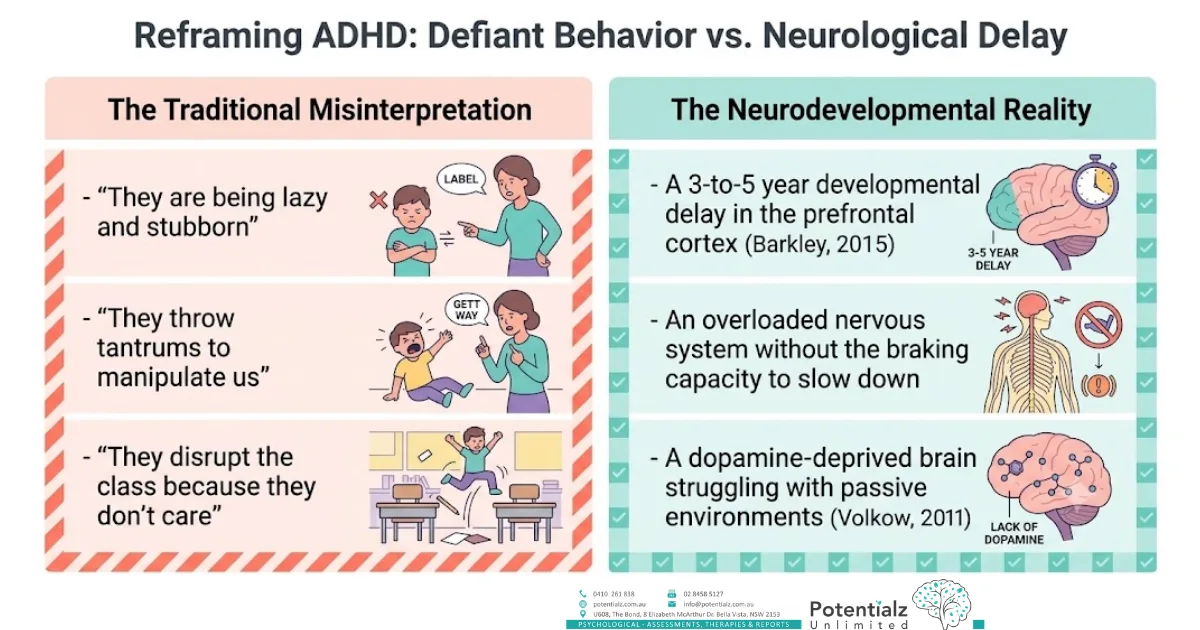
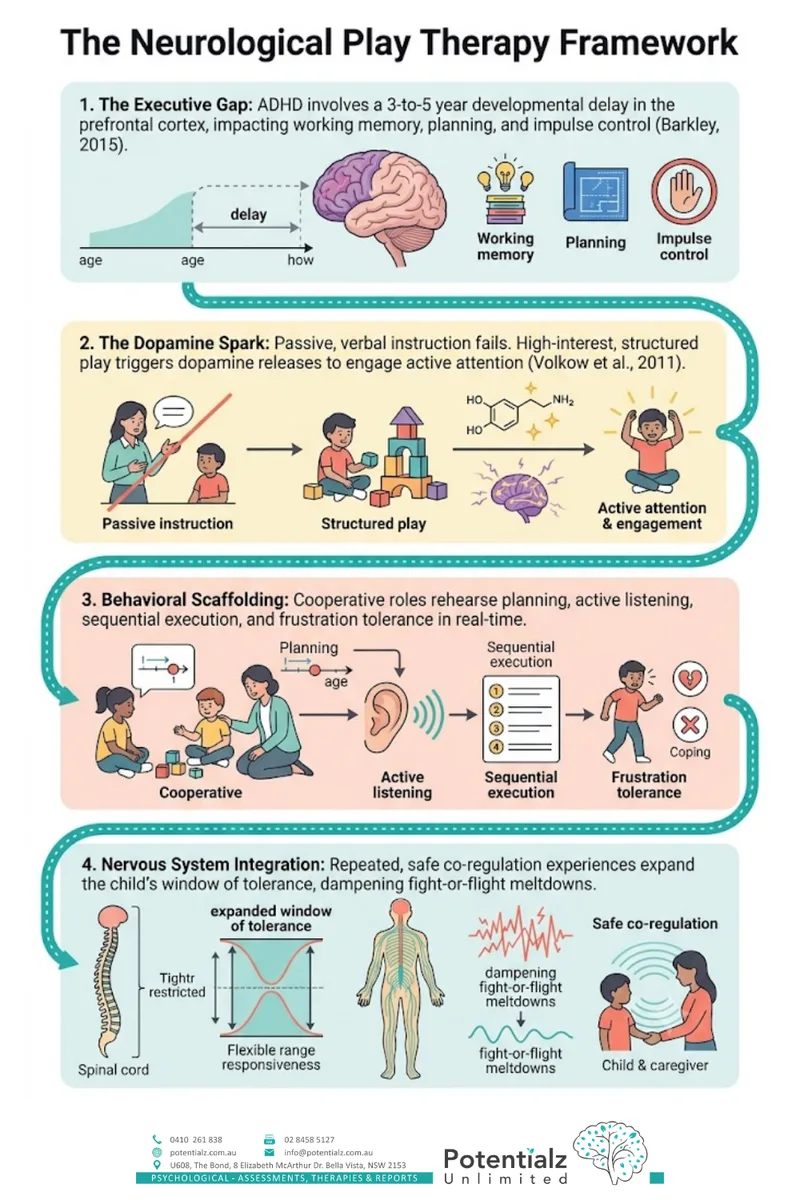
The reality is neurological. ADHD involves differences in the way the prefrontal cortex develops and functions. The prefrontal cortex is the part of the brain responsible for executive functions — planning, organising, impulse control, shifting attention, regulating emotions, and working towards future goals. In children with ADHD, these functions are developmentally delayed — typically by around 30% of their age — often three to five years (Barkley, 2015; Shaw et al., 2007).
This means a ten-year-old with ADHD may have the executive function capacity of a seven-year-old. Expecting them to plan, wait, regulate, and organise the way their peers do is genuinely unrealistic — not because they are less capable in an absolute sense, but because those brain capacities are not yet mature.
It also means that emotional regulation is particularly difficult. ADHD affects not just attention and impulse control, but the ability to manage emotional reactions. When something goes wrong — a game is lost, a sibling takes something, a plan changes — the emotional reaction can be fast, intense, and hard to pull back from. This is not a tantrum or manipulation. It is a nervous system that moves quickly from zero to a hundred, and lacks the braking system to slow down efficiently.
Understanding this changes everything. It shifts us from asking “Why won’t they just behave?” to asking “What does this child’s brain actually need, and how can we build those skills?”
Why Play Is the Right Medium for Children with ADHD
Here is the paradox of ADHD: the very skills that are hardest for children with ADHD to develop — planning, waiting, impulse control, attention regulation — are the skills most needed in formal, verbal, adult-directed environments like classrooms and therapy offices.
Ask a child with ADHD to sit still and talk about their feelings, and you have already created a situation in which success is unlikely. Their body needs to move. Their brain needs stimulation. Abstract verbal discussion is not where their capacity for engagement lives.
Play changes this entirely. When a child is engaged in play — especially structured, purposeful play — they are often able to sustain attention, follow rules, and work cooperatively far beyond what adults expect. The secret is engagement. When the brain is genuinely interested, the prefrontal cortex gets a boost. Dopamine — the neurotransmitter that is under-produced in ADHD brains — rises when children are engaged in activities that are stimulating, challenging, and rewarding (Volkow et al., 2009).
This is not a trick. It is neuroscience. And it is the foundation of why therapeutic play is such a powerful medium for children with ADHD.
In play therapy, the child is active, engaged, and working on real skills — but in a context that meets them where they are. The play itself carries the therapeutic work. Children do not need to know they are building self-regulation. They just need to play.
LEGO® Based Therapy: Structure, Planning, and the Power of Turns
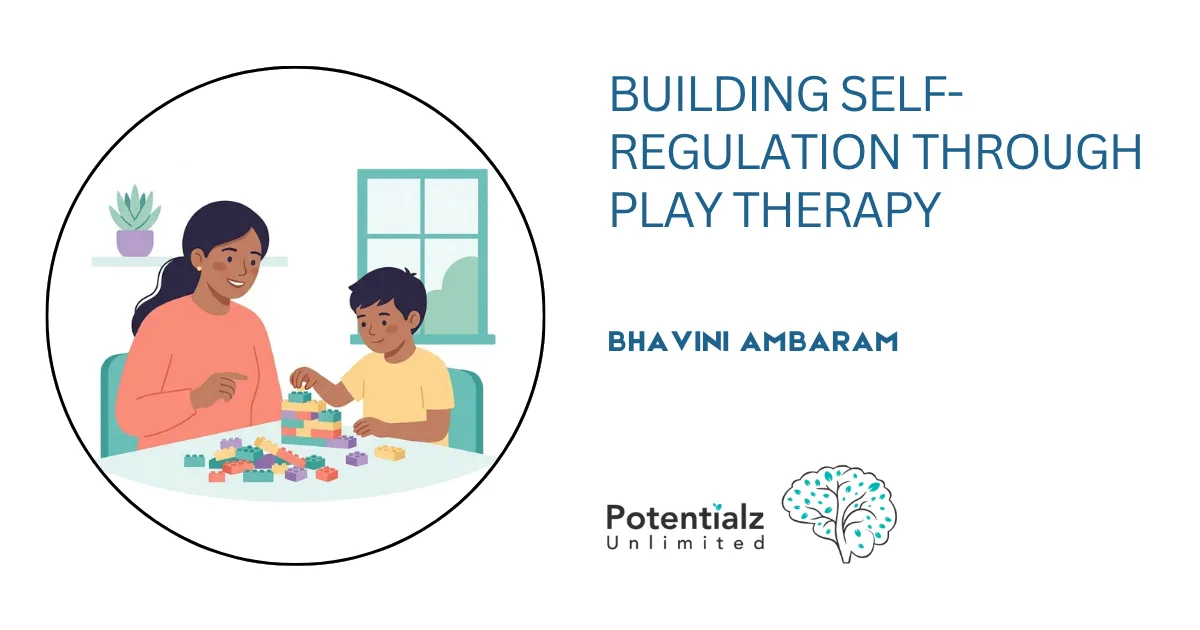
LEGO® Based Therapy is one of the most specifically suited therapeutic approaches for children with ADHD. Originally developed by Dr Daniel LeGoff and expanded upon by researchers including Dr Gina Gomez de la Cuesta and Dr Gary Howlin, LEGO® Based Therapy uses collaborative LEGO building to develop a range of key skills (LeGoff et al., 2014).
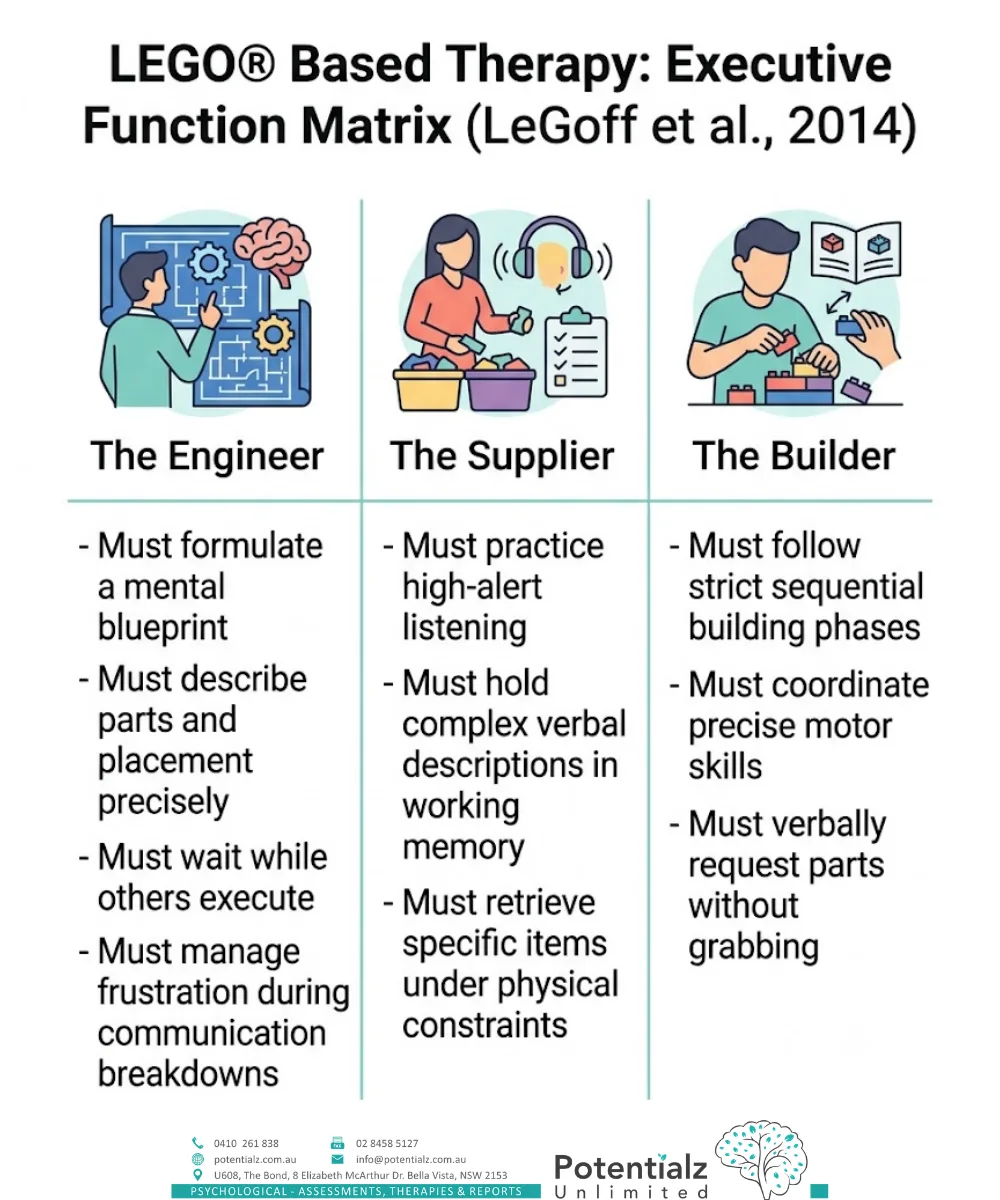
The structure of LEGO® Based Therapy is important. Children work in roles — Engineer, Supplier, and Builder — each with a defined task and clear rules for communication. The Engineer describes what to build but cannot touch the bricks. The Supplier finds the right pieces and hands them to the Builder, who constructs the model. Roles are rotated during the session.
For children with ADHD, this structure is genuinely therapeutic. Each role requires a different kind of executive function:
- The Engineer must plan, describe precisely, wait while others act, and manage frustration when communication breaks down
- The Supplier must listen carefully, hold a specific piece of information in working memory, and complete a focused task before moving on
- The Builder must follow sequential steps, handle physical materials with care, and ask for what they need without grabbing
And all three roles require taking turns, following shared rules, and tolerating the pace of another person.
The magic of LEGO® is that children want to do it. They are motivated to stay in the task, to communicate clearly, to wait — because the reward (the finished model, the shared achievement) is genuinely meaningful to them. Over weeks and sessions, these practised skills begin to transfer. Waiting becomes less unbearable. Planning becomes more instinctive. Frustration becomes more manageable.
Potentialz Unlimited offers LEGO® Based Therapy in both individual and group formats. Group LEGO® sessions are particularly valuable because they add the social dimension — learning to work with peers, manage conflict, and share success.
Synergetic Play Therapy: Regulating the Nervous System from the Inside
While LEGO® Based Therapy builds specific executive function skills, Synergetic Play Therapy (SPT) works at a different level entirely — the level of the nervous system.
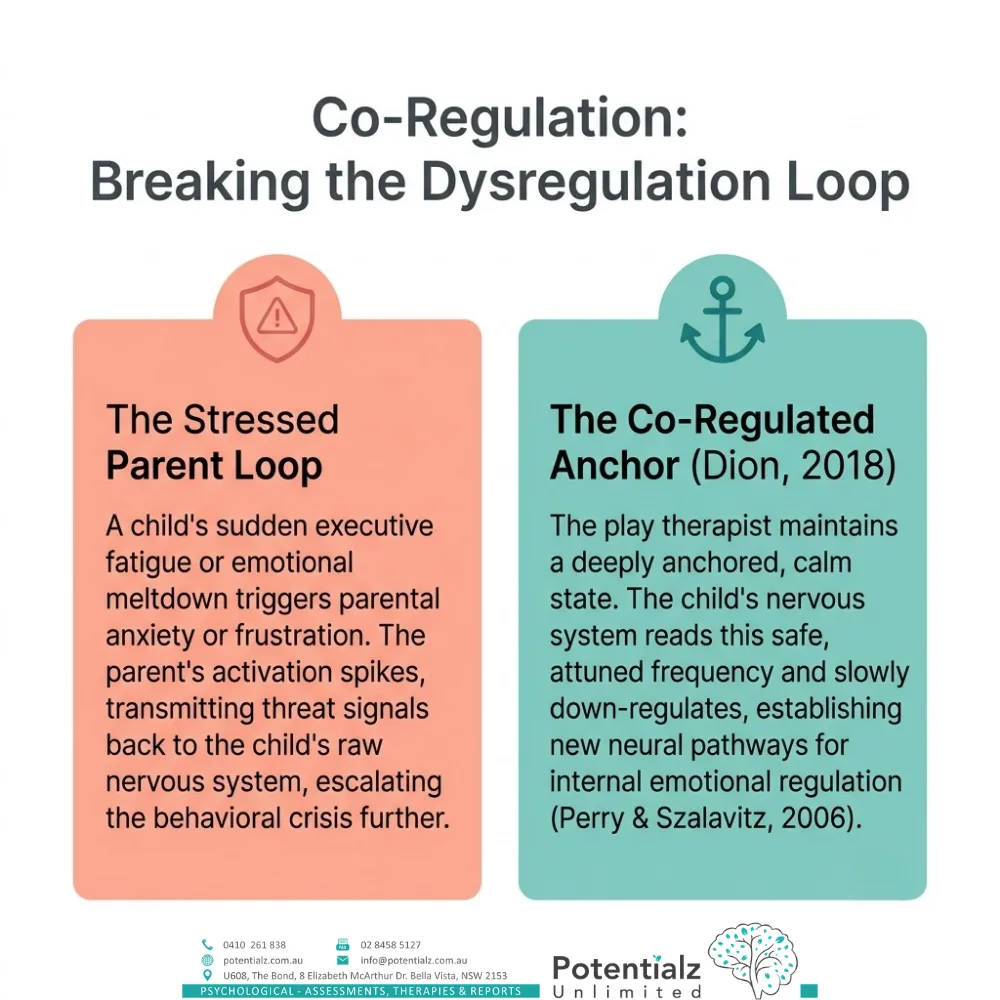
Developed by Lisa Dion, Synergetic Play Therapy is a trauma-informed, nervous-system-focused approach that uses the therapeutic relationship itself as the primary healing tool. In SPT, the therapist does not try to manage, redirect, or control the child’s emotional activation. Instead, the therapist maintains their own regulated state and uses that regulation as an anchor — what we call co-regulation (Dion, 2018).
For children with ADHD, this matters because the core challenge is not just behavioural — it is regulatory. These children’s nervous systems move rapidly into activation and struggle to return to calm without help. In the early years of life, the capacity for self-regulation is built through thousands of co-regulation experiences with a calm, attuned caregiver — the experience of being soothed, met, and brought back to safety repeatedly.
Many children with ADHD have not had enough of these experiences — not because their parents have failed, but because co-regulating a high-energy, highly reactive child is genuinely hard, and because the mismatch between a dysregulated child and an overwhelmed parent can create a cycle where both are activated and neither can anchor the other.
In SPT sessions, the therapist offers that anchoring experience deliberately and consistently. Over time, the child’s nervous system begins to build new capacity. The window of tolerance — the range of activation within which the child can think, relate, and function — expands. The explosions become less intense and less frequent, because the child’s brain has begun to build actual regulatory pathways (Perry & Szalavitz, 2006).
This is slow, real, lasting work. It is not a quick fix. But for children whose ADHD includes significant emotional dysregulation, it is often the most important piece of the picture.
The Parent’s Role: Why Consultations Matter
Therapeutic play sessions with your child are only part of the picture. The other part — and it is equally important — is you.
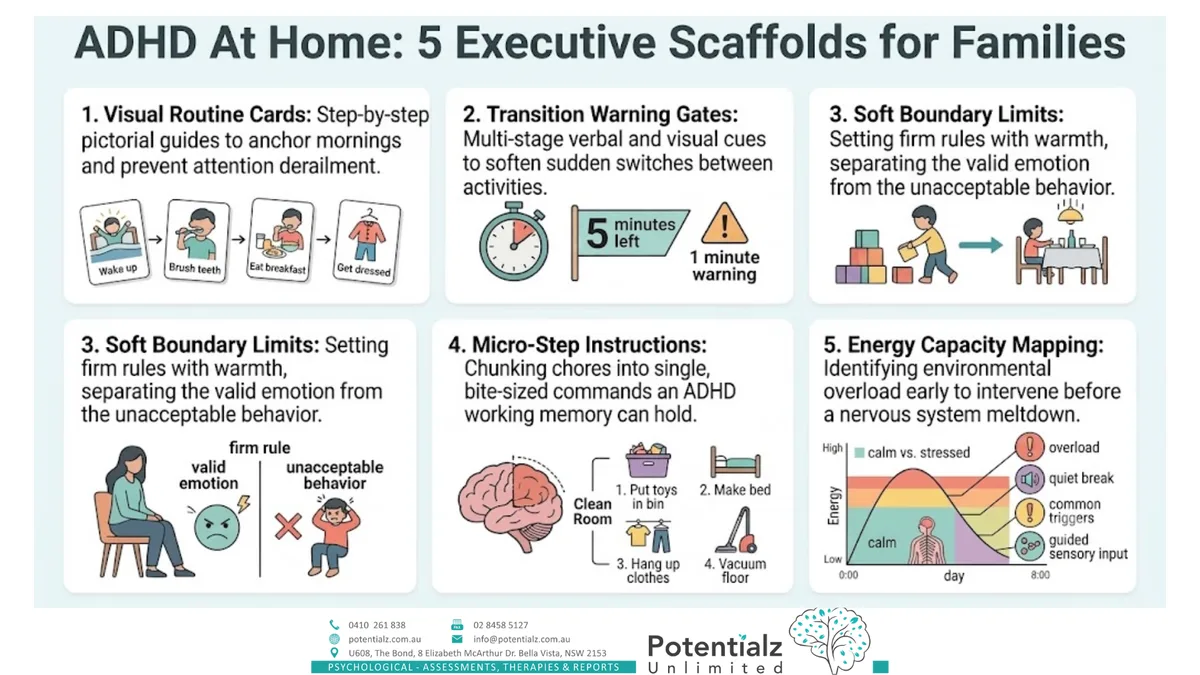
Parents are the most powerful co-regulatory resource a child has. How you respond to your child’s dysregulation either increases their nervous system activation or reduces it. This is not a judgment — it is simply how human nervous systems work. When you are activated and overwhelmed by your child’s behaviour, your child’s nervous system reads that and escalates further. When you can stay grounded — even partially — your child’s nervous system gets the signal that it is safe to start calming down.
This is incredibly hard to do in the heat of the moment. It is a skill that most parents need support to build.
That is why the practice includes regular parent consultations as a core part of the therapeutic process. In these sessions, we talk about what is happening at home — what is working, what is not, what the patterns are, and what strategies might help. Our play therapist offers practical guidance for navigating the specific challenges of parenting a child with ADHD, including:
- How to structure the morning routine to reduce friction
- How to use transition warnings so changes feel less abrupt
- How to respond to emotional explosions without escalating further
- How to set clear expectations in ways an ADHD brain can hold
- How to recognise when your child is approaching their regulation limit — and what to do before the explosion happens
Parent reviews happen approximately every six weeks. The goal is for you to feel supported and informed, not just your child.
What to Expect from the Therapeutic Process
Children with ADHD typically benefit from a minimum of 12 play therapy sessions, with many children finding real, lasting change occurring over 25–40 sessions. This timeline can feel long. But it reflects the reality of how nervous system development and executive function skill-building actually works — slowly, through repetition, over time.
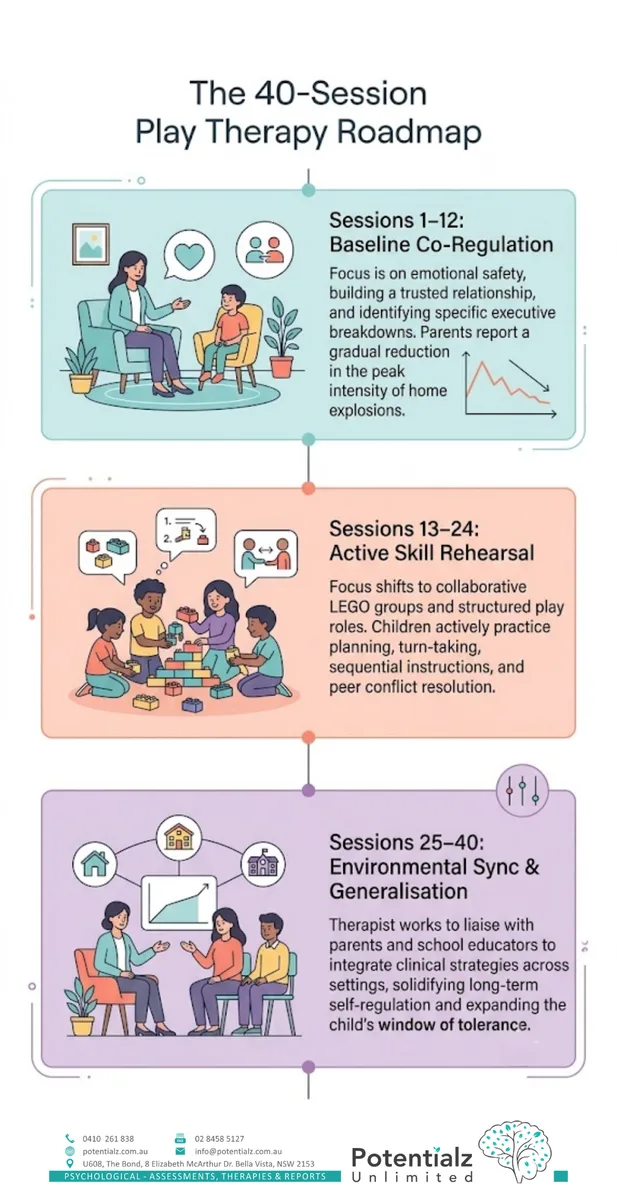
Sessions are 50 minutes, held weekly or fortnightly. Most children begin to show change within the first 12 sessions — typically in reduced intensity of emotional explosions and improved ability to re-engage after dysregulation. Broader changes in planning, attention, and impulse control tend to emerge over a longer period.
Where appropriate, our play therapist can also liaise with your child’s school — with your consent — to share strategies and ensure a consistent approach across settings.
Key Takeaways
- ADHD involves real neurological differences in executive function and emotional regulation — not laziness or wilful defiance
- The prefrontal cortex develops three to five years more slowly in children with ADHD, which explains why self-regulation is so hard
- Play is a particularly effective therapeutic medium for children with ADHD because engagement and stimulation raise dopamine and support the very capacities ADHD makes difficult
- LEGO® Based Therapy directly builds planning, turn-taking, impulse control, and communication skills within a structured, rewarding play context
- Synergetic Play Therapy works at the nervous system level — building the child’s capacity for emotional regulation through repeated co-regulation with an attuned practitioner
- Parent consultations are an essential part of the process — parents are a child’s most powerful co-regulator, and learning practical strategies at home multiplies the impact of in-session work
How Potentialz Can Help
At Potentialz Unlimited in Bella Vista, our play therapist works with children aged 3–12 who present with ADHD, emotional dysregulation, impulsivity, and related challenges. The practice uses LEGO® Based Therapy, Synergetic Play Therapy, and child-centred therapeutic play to help children build real, lasting self-regulation skills.
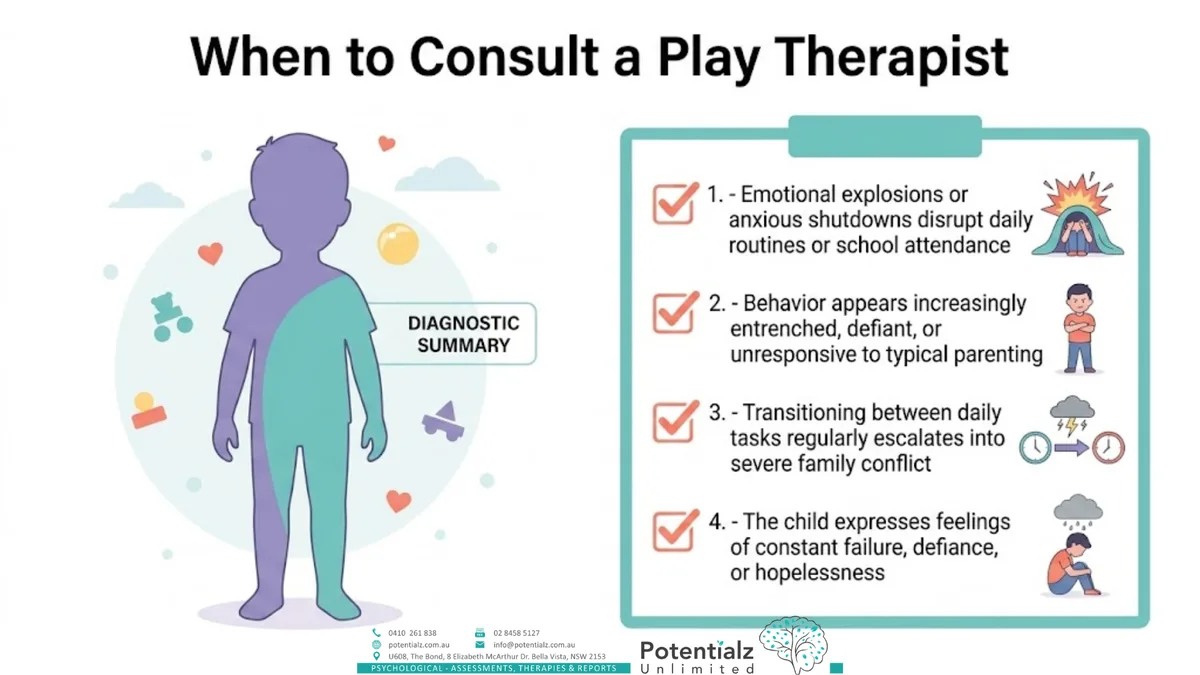
The practice offers individual child sessions, group LEGO® therapy sessions, and regular parent consultations. If you are unsure whether your child needs a play therapist or a psychologist, our guide comparing a play therapist and a child psychologist can help you decide.
- Initial consultation: $250
- Play therapy sessions: $190 per session
- Package discounts available for upfront payment
- NDIS self-managed plans accepted
If you are wondering whether therapeutic play might be the right fit for your child, please reach out. Our team is happy to have a conversation about what you are seeing and what support might help.
Book a session online: live.potentialz.com.au Call us: 0410 261 838 Visit us: Unit 608, 8 Elizabeth Macarthur Drive, Bella Vista NSW 2153 Hours: Monday to Friday, 10am–7pm | Saturday and after-hours available | Telehealth via phone or Zoom
References
Shaw, P., Eckstrand, K., Sharp, W., Blumenthal, J., Lerch, J. P., Greenstein, D., Clasen, L., Evans, A., Giedd, J., & Rapoport, J. L. (2007). Attention-deficit/hyperactivity disorder is characterized by a delay in cortical maturation. Proceedings of the National Academy of Sciences, 104(49), 19649–19654. https://doi.org/10.1073/pnas.0707741104
Barkley, R. A. (2015). Attention-deficit hyperactivity disorder: A handbook for diagnosis and treatment (4th ed.). Guilford Press.
Dion, L. (2018). Aggression in play therapy: A neurobiological approach for integrating intensity. W. W. Norton & Company.
LeGoff, D. B., Gómez de la Cuesta, G., Krauss, G. W., & Baron-Cohen, S. (2014). LEGO®-based therapy: How to build social competence through LEGO®-based clubs for children with autism and related conditions. Jessica Kingsley Publishers.
Perry, B. D., & Szalavitz, M. (2006). The boy who was raised as a dog: And other stories from a child psychiatrist’s notebook. Basic Books.
Siegel, D. J., & Bryson, T. P. (2012). The whole-brain child: 12 revolutionary strategies to nurture your child’s developing mind. Delacorte Press.
Volkow, N. D., Wang, G.-J., Kollins, S. H., Wigal, T. L., Newcorn, J. H., Telang, F., Fowler, J. S., Zhu, W., Logan, J., Ma, Y., Pradhan, K., Wong, C., & Swanson, J. M. (2011). Evaluating dopamine reward pathway in ADHD. JAMA, 302(10), 1084–1091. https://doi.org/10.1001/jama.2009.1238
Disclaimer: This article is a Potentialz Unlimited editorial piece drawing on our clinical team’s experience. It is for general education and information only, not clinical advice for your particular child. Potentialz Unlimited is a psychology practice based in Bella Vista NSW; our clinical team includes Registered and Clinical Psychologists (registered with AHPRA) and an accredited Play Therapist. Please consult a qualified health professional for your individual circumstances. If your child is experiencing a mental health crisis, contact your GP, call Kids Helpline on 1800 55 1800, or go to your nearest emergency department.
Crisis Resources: If you or someone you know needs support, please contact Lifeline on 13 11 14, Beyond Blue on 1300 22 4636, or Kids Helpline on 1800 55 1800.
Related Reading
- Book: Play Therapy at Potentialz Bella Vista → — play therapist near me for children ages 3–12 in the Hills District
- Grief and Loss in Children: How Play Therapy Helps
- 15 Peculiar Habits of Adults with ADHD That Might Surprise You
- Adult ADHD Assessment: What to Expect and What the Results Actually Mean
Knowledge Check Quiz
Test what you have just read. Choose your answer for each question, then submit to reveal the answers and your score.
Need Professional Support?
If you're experiencing mental health concerns, our team is here to help.