Making a friend can look simple from the outside. A child walks up to another child, says hello, and starts to play. But for many children, that small moment is one of the hardest things they do all day. And the numbers show it matters. According to the Australian Early Development Census, about 1 in 10 (9.6%) Australian children start school developmentally vulnerable in the social competence domain — the set of skills that helps them play, share, and get along with others (AEDC, 2022).
Friendships are not a “nice extra” of childhood. They are where children learn to belong, to cooperate, and to manage the ups and downs of being with other people. When making friends is hard, the effect can spread to a child’s confidence, mood, and behaviour at school and at home.
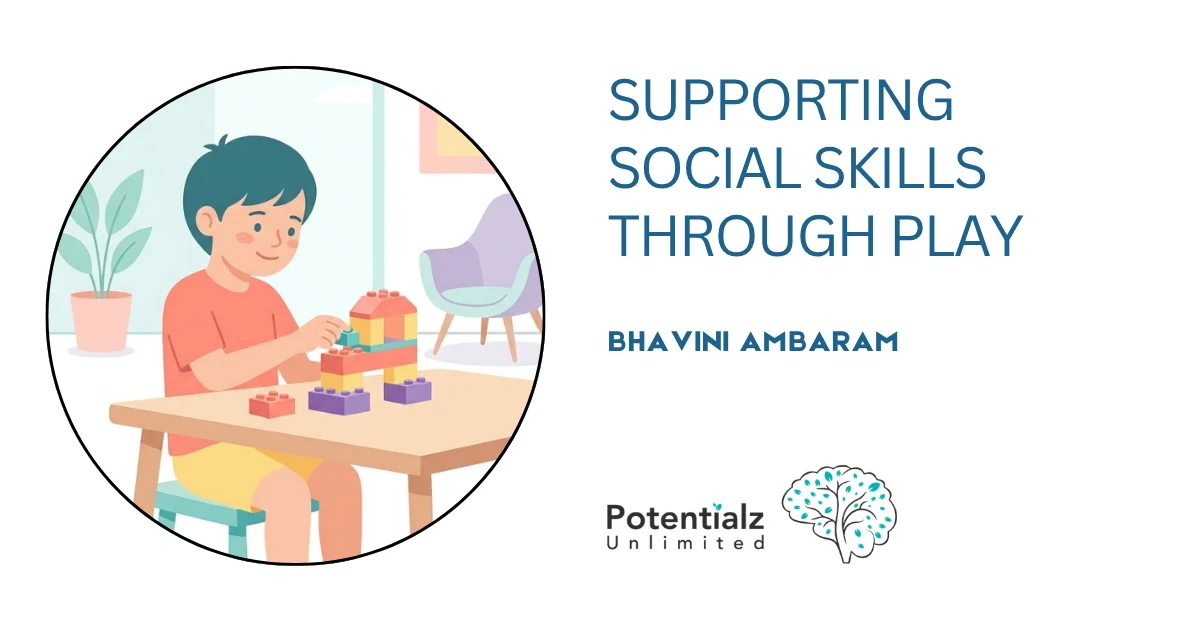
The good news is that social skills are learnable. And the most natural way children learn them is the same way they learn almost everything: through play. This post explains how play — including play therapy and LEGO®-Based Therapy — supports children’s friendships, turn-taking, cooperation, and emotional regulation in social settings.
Why Friendships Matter So Much
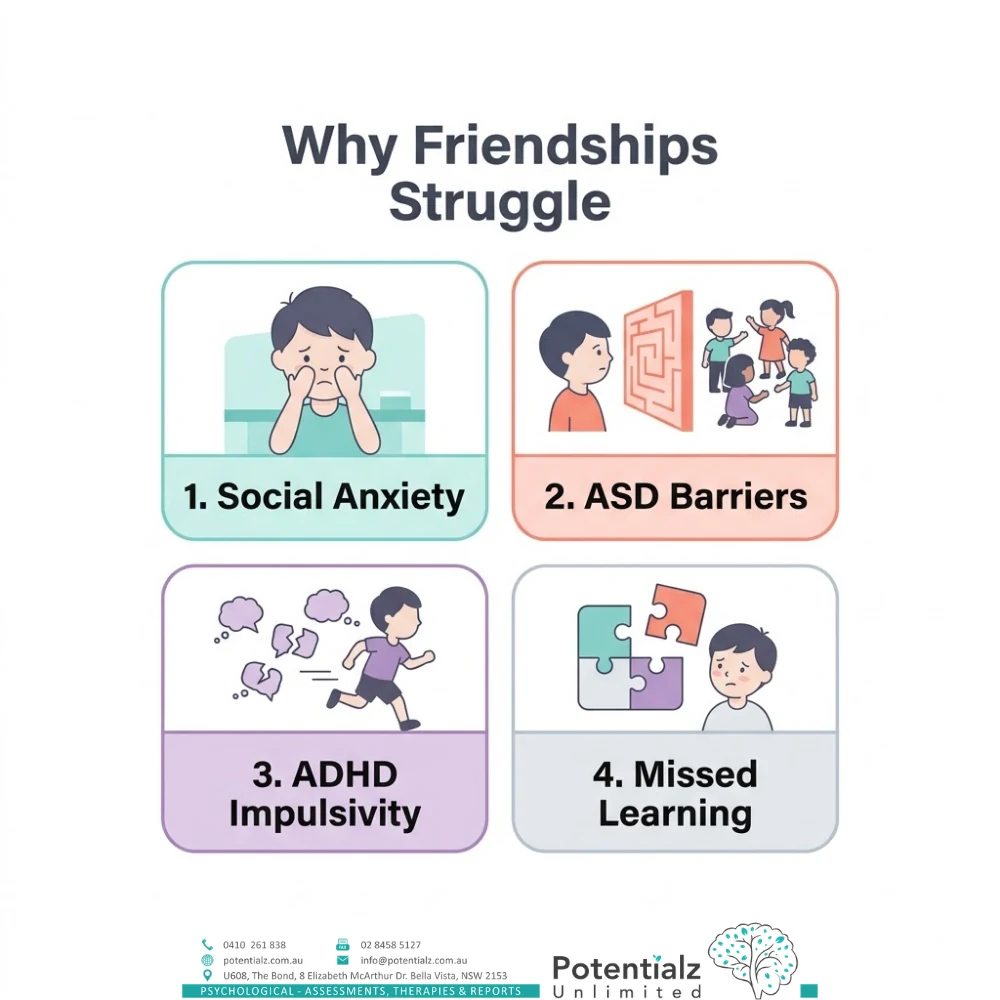
Friendships give children something they cannot get anywhere else: practice at being a person among other people. In a friendship, a child learns to share, to compromise, to stand up for themselves, and to say sorry. These are not small lessons. They are the building blocks of every relationship the child will have for the rest of their life.
Decades of research suggest that children’s peer relationships are closely tied to their wellbeing. In a landmark review, Parker and Asher (1987) examined the long-term picture and found that children who struggle with peer acceptance can be at higher risk of later adjustment difficulties. This does not mean a child who finds friendships hard is destined for problems. It means that supporting social skills early is worthwhile — a reason to help, not a prediction of failure.
Friendships also protect children. A child with even one steady friend has someone to sit with, someone to play with, and someone who makes the school day feel safer. Belonging is a powerful buffer against loneliness and stress.
Social Skills Are Learned Through Play
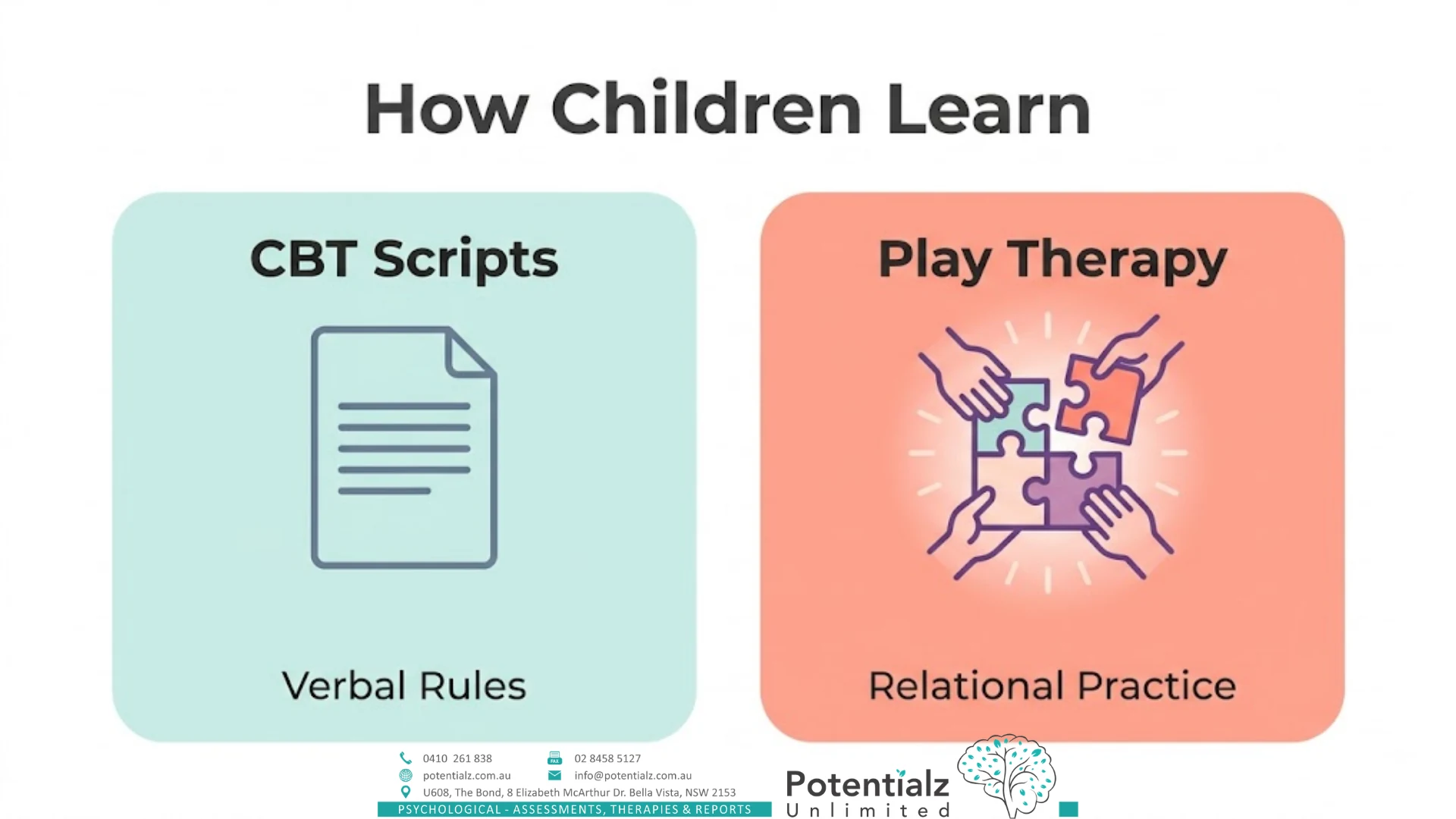
Children do not learn social skills by being told the rules. They learn them by doing — and the doing happens in play.
Play is the natural work of childhood. A major review by paediatrician Kenneth Ginsburg (2007) concluded that play contributes to children’s cognitive, physical, social, and emotional wellbeing. In other words, play is not a break from learning. It is learning.
Why is play such a good teacher of social skills? Because it is safe and low-stakes. In play, a child can try out a social move — joining a game, asking for a turn, disagreeing about a rule — without the real-world cost of getting it wrong. If the game breaks down, they can start again. This freedom to experiment is exactly what a growing social brain needs.
Play also happens at the child’s own level. A shy child can watch before joining. An energetic child can move and build while they connect. A child who finds words hard can share a task rather than a conversation, and hands-on sensory and messy play can make connecting feel safer still. Play meets each child where they are.
The Social Skills Children Practise When They Play
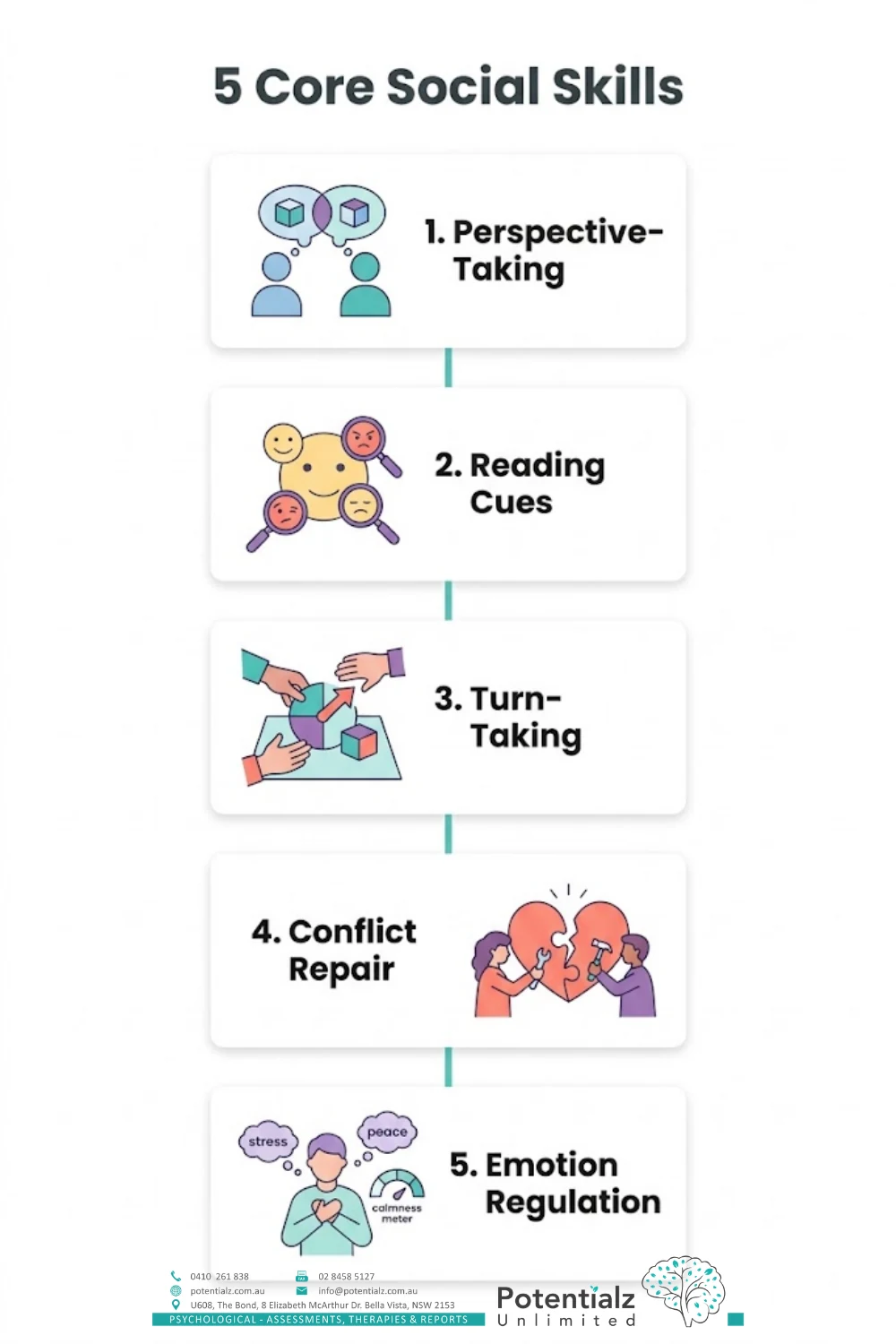
When children play together, they are quietly practising a whole set of skills at once. Naming these skills helps parents see just how much learning is happening.
Turn-taking. Waiting for your turn, and coming back to the game when it is your turn again, is one of the earliest social skills. It sounds simple, but for many children — especially those with impulsivity — it takes real practice.
Cooperation. Working toward a shared goal, like building a tower or finishing a pretend adventure, teaches children that “we” can be more fun than “me.” Cooperation means listening, adjusting, and letting others contribute.
Reading social cues. Friendships depend on noticing how another person feels — a bored face, an excited voice, a step backward that means “give me space.” Play gives children endless chances to notice and respond to these signals.
Emotional regulation in social contexts. This is the ability to manage feelings like frustration, disappointment, or the sting of losing well enough to stay in the game and keep the friendship. A child who can lose a round of a game without melting down is using a powerful social skill. You can read more about how children build this capacity in our post on self-regulation and play.
Repair. Conflict is part of every friendship. The skill that matters is not avoiding conflict but repairing it — saying sorry, finding a fair solution, and reconnecting afterwards. Play is where children first rehearse this.
How Play Therapy Supports Friendships
Play therapy is a form of therapy that uses play, rather than talking, as the main way of helping a child. In therapeutic play, a trained practitioner creates a safe space and follows the child’s lead, using the play itself to support emotional and social growth.
A meta-analysis by Bratton and colleagues (2005), which reviewed dozens of controlled studies, reported an overall positive treatment effect for play therapy across a range of children’s difficulties. As with any therapy, individual outcomes vary, and play therapy is not a guaranteed fix. But the research base suggests it can be a helpful, evidence-informed way to support children.
In friendship-focused work, our play therapist uses play to help a child practise the skills that peer relationships need. The therapist might reflect what is happening — “that character really wanted the first turn” — so the child feels understood and builds words for social moments, model calm problem-solving when play gets tricky, and gently support turn-taking, sharing, and repair as they come up naturally in the play.
The aim is never to drill social rules. It is to give the child real, felt experiences of cooperating and connecting, so those experiences can carry over to the playground. Children who are working on especially big feelings alongside their social skills often benefit from this gentle, whole-child approach.
How LEGO®-Based Therapy Builds Friendship Skills
For some children, an open, unstructured play space feels overwhelming. They may find social interaction confusing and prefer a clear task to focus on. For these children, LEGO®-Based Therapy can be a wonderful fit.
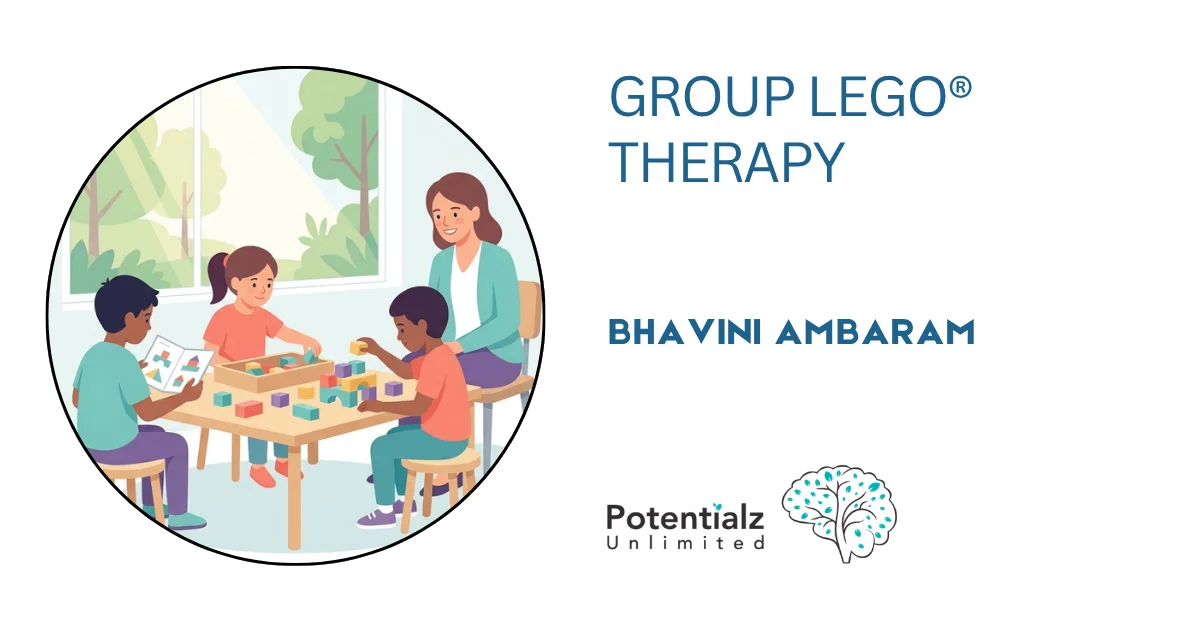
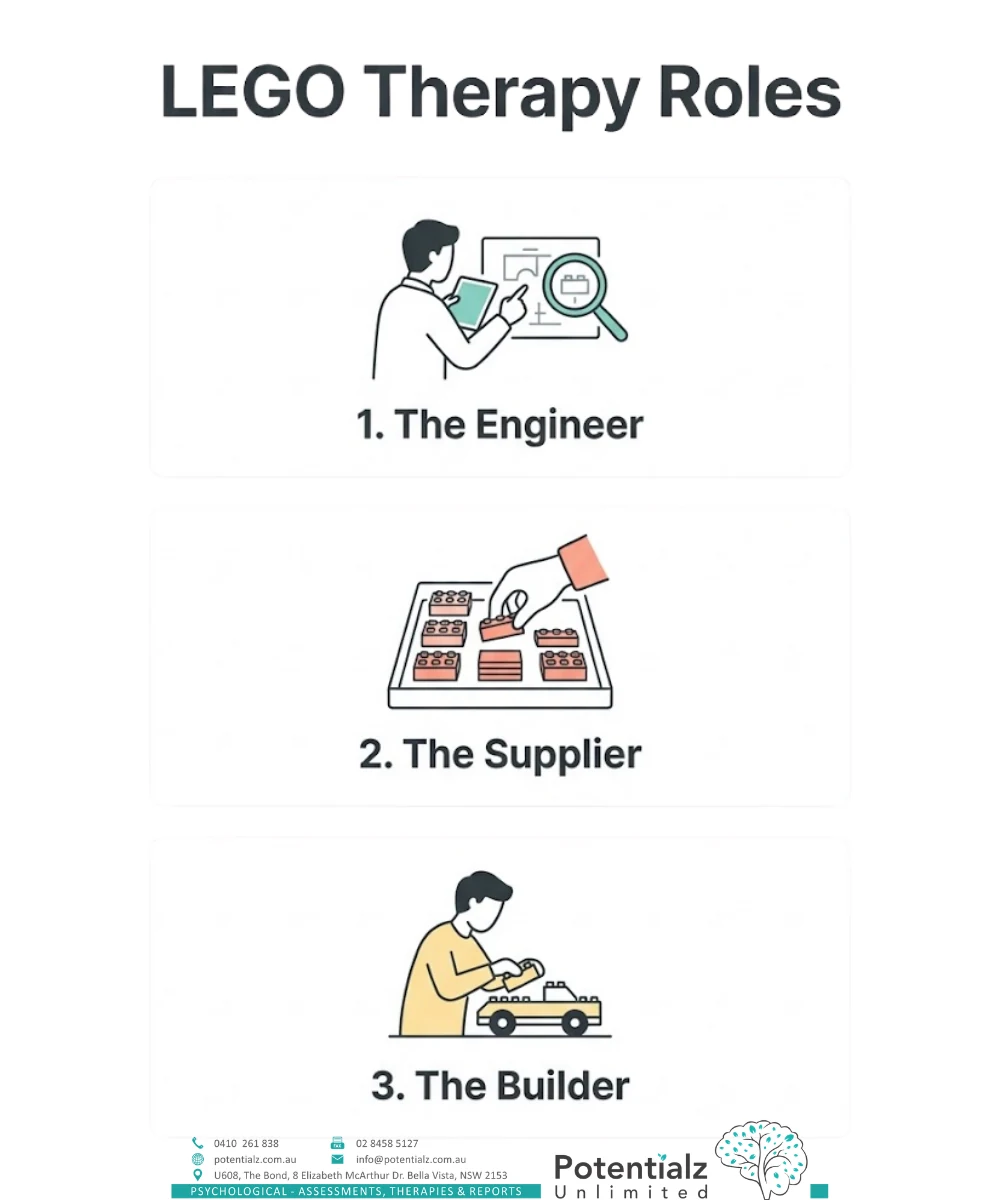
LEGO®-Based Therapy uses collaborative brick-building to make cooperation essential. Children take on three roles — Engineer (who describes the build), Supplier (who finds the pieces), and Builder (who assembles the model). The roles rotate, and no child can finish the model alone. This structure turns turn-taking, listening, and cooperation from things a child is told to do into things the task requires.
The evidence here is encouraging. LeGoff and Sherman (2006) followed children who took part in interactive LEGO® play and found they made greater social gains than a comparison group, with improvements maintained at a three-year follow-up. Research continues to grow, and outcomes differ from child to child, but many children find this structured, shared task a comfortable bridge to connecting with peers.
Because the focus is on the build, the social learning happens almost as a by-product. Children practise reading each other, negotiating, and celebrating a shared success — the very heart of friendship.
What Parents Can Do at Home
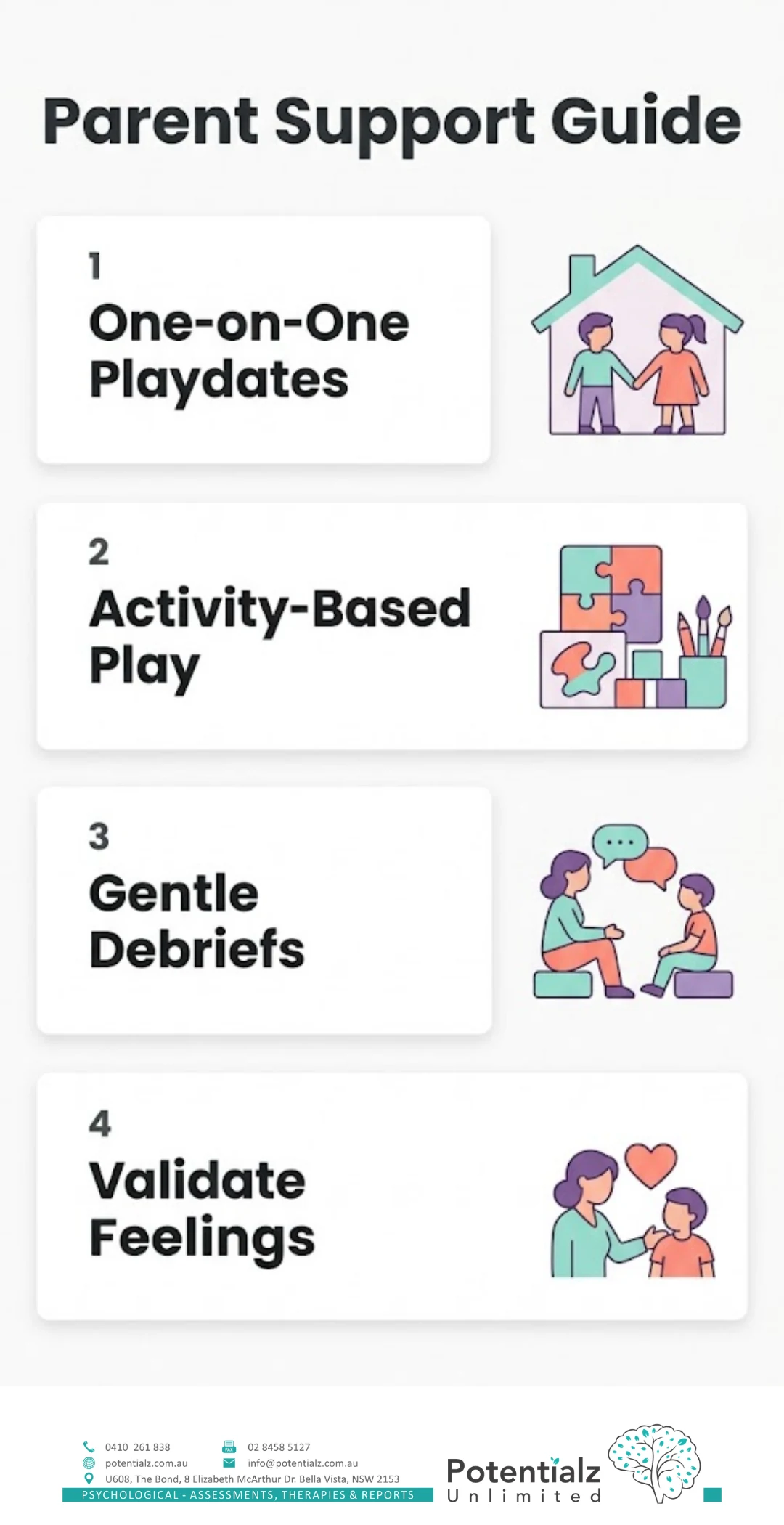
You do not need special training to support your child’s social skills. Everyday moments are full of chances to help.
Play with your child, and let them lead. Following your child’s play — rather than directing it — builds connection and lets you gently model turn-taking and sharing.
Name social feelings. “It looks like you felt left out when they started without you.” Naming the feeling helps a child understand it and talk about it next time.
Set up small, low-pressure playdates. One friend, a clear activity (baking, a board game, building), and a short, successful visit often works better than a big, open-ended gathering.
Coach, don’t rescue. When a squabble happens, resist fixing it instantly. Ask, “What could you both try?” This builds the child’s own repair skills.
Notice effort, not just success. “You waited for your turn even though it was hard” teaches a child that the skill itself matters, whatever the outcome of the game.
If your child continues to struggle despite this support, that is not a failure — it is useful information, and a good reason to seek a little extra help.
Key Takeaways
- Friendships are central to children’s wellbeing, and about 1 in 10 Australian children start school developmentally vulnerable in social competence (AEDC, 2022).
- Social skills are learnable, and play is the natural, low-stakes way children practise them (Ginsburg, 2007).
- In play, children rehearse turn-taking, cooperation, reading social cues, emotional regulation, and the all-important skill of repairing conflict.
- Play therapy uses play rather than talk to support social and emotional growth, and research suggests it can be helpful, though outcomes vary (Bratton et al., 2005).
- LEGO®-Based Therapy uses a structured three-role build to make cooperation essential, with research suggesting gains can be maintained over time (LeGoff & Sherman, 2006).
- Parents can support social skills at home by playing, naming feelings, coaching through conflict, and celebrating effort.
How Potentialz Can Help
At Potentialz Unlimited in Bella Vista, our play therapist works with children aged 3–12 to build the social skills that friendships need — turn-taking, cooperation, reading cues, and managing feelings when things get hard. The practice draws on child-centred play therapy and LEGO®-Based Therapy, recommending a format only after getting to know your child and what they need.
Every child’s program includes parent consultations, so the progress made in sessions can be supported at home and at school. When a family also needs psychological assessment or Medicare-rebated treatment, our AHPRA-registered child psychologists in Bella Vista can step in for that part of care.
If your child finds friendships hard, or you would simply like to talk it through, our team warmly invites you to reach out.
Book at live.potentialz.com.au or call 0410 261 838.
Potentialz Unlimited | Unit 608, 8 Elizabeth Macarthur Drive, Bella Vista NSW 2153 Hours: Monday to Friday, 10am–7pm | Saturday and after-hours available
This article is a Potentialz Unlimited editorial piece drawing on our clinical team’s experience. It is for general education and information only, not clinical advice for your particular child. Potentialz Unlimited is a psychology practice based in Bella Vista NSW; our clinical team includes Registered and Clinical Psychologists (registered with AHPRA) and an accredited Play Therapist. Play therapy sessions are not Medicare-rebatable; NDIS self-managed plans are accepted. Please consult a qualified health professional for your individual circumstances. If your child is experiencing a mental health crisis, contact your GP, call Kids Helpline on 1800 55 1800, or go to your nearest emergency department.
If your child’s distress ever feels acute — persistent thoughts of self-harm, or danger to themselves or others — please contact Kids Helpline on 1800 55 1800, Lifeline on 13 11 14, or in an emergency call 000.
References
Australian Early Development Census. (2022). Australian Early Development Census national report 2021. Australian Government Department of Education. https://www.aedc.gov.au/resources/detail/2021-aedc-national-report
Bratton, S. C., Ray, D., Rhine, T., & Jones, L. (2005). The efficacy of play therapy with children: A meta-analytic review of treatment outcomes. Professional Psychology: Research and Practice, 36(4), 376–390. https://doi.org/10.1037/0735-7028.36.4.376
Ginsburg, K. R. (2007). The importance of play in promoting healthy child development and maintaining strong parent-child bonds. Pediatrics, 119(1), 182–191. https://doi.org/10.1542/peds.2006-2697
LeGoff, D. B., & Sherman, M. (2006). Long-term outcome of social skills intervention based on interactive LEGO® play. Autism, 10(4), 317–329. https://doi.org/10.1177/1362361306064403
Parker, J. G., & Asher, S. R. (1987). Peer relations and later personal adjustment: Are low-accepted children at risk? Psychological Bulletin, 102(3), 357–389. https://doi.org/10.1037/0033-2909.102.3.357
Knowledge Check Quiz
Test what you have just read. Choose your answer for each question, then submit to reveal the answers and your score.
Need Professional Support?
If you're experiencing mental health concerns, our team is here to help.