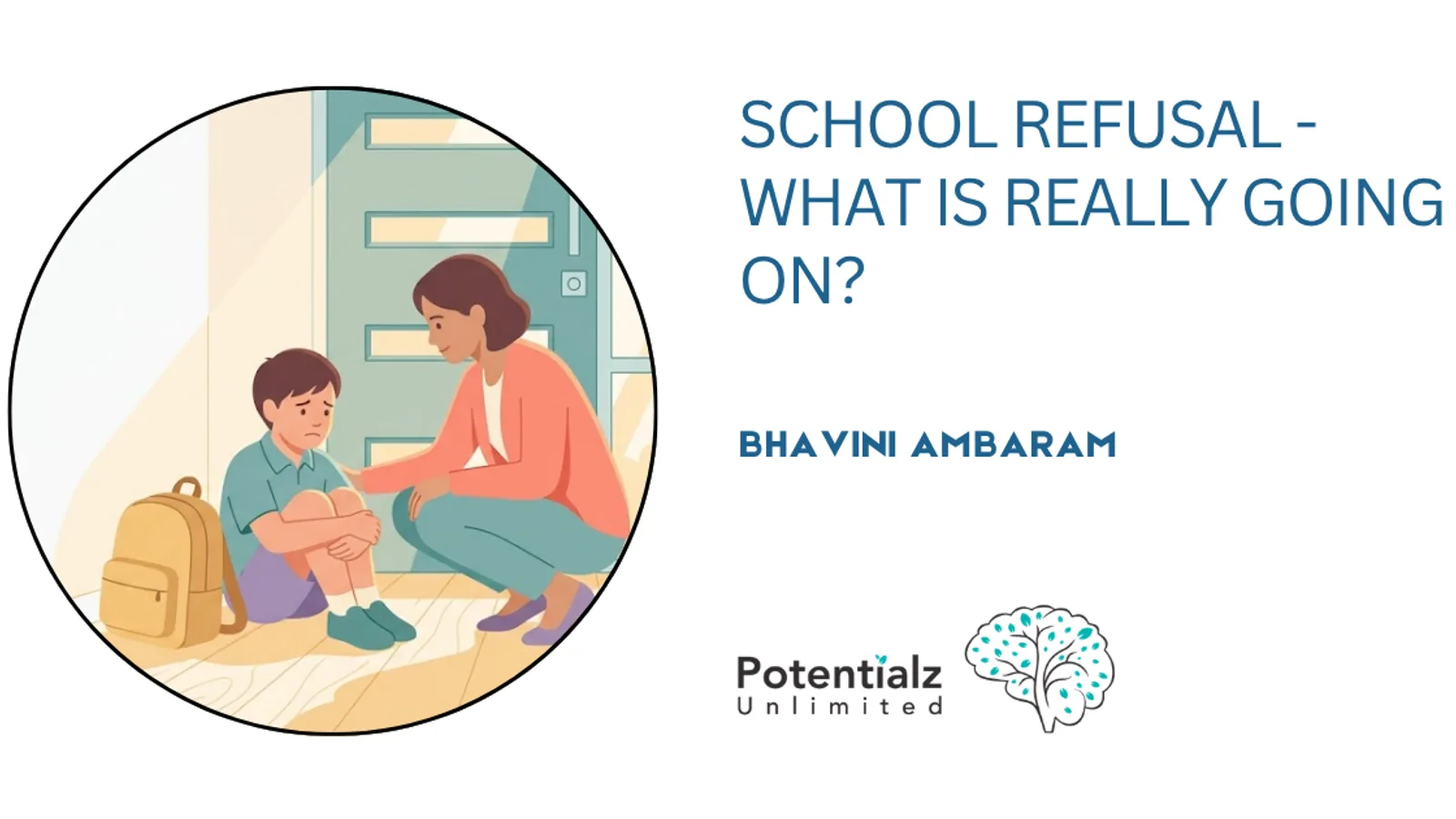
Monday morning. Your child is dressed and ready to go, and then something shifts. The tears start. The stomach ache appears from nowhere. The pleading begins: “Please don’t make me go.” You have been through this before — many times. Some mornings end with your child at school, distressed and clinging. Other mornings end with them back in bed while you sit with a sick feeling in your own stomach, wondering what to do.
School refusal is one of the most distressing experiences a family can go through. And it is far more common than many parents realise.
If this sounds like your family, this post is for you. At Potentialz Unlimited in Bella Vista, our clinical team works with children who refuse school and with the families who are exhausted by trying to help them. This piece explains what school refusal actually is — and what it is not — and why child-centred, play-based approaches are often more effective than the strategies many families have already tried.
What Is School Refusal?
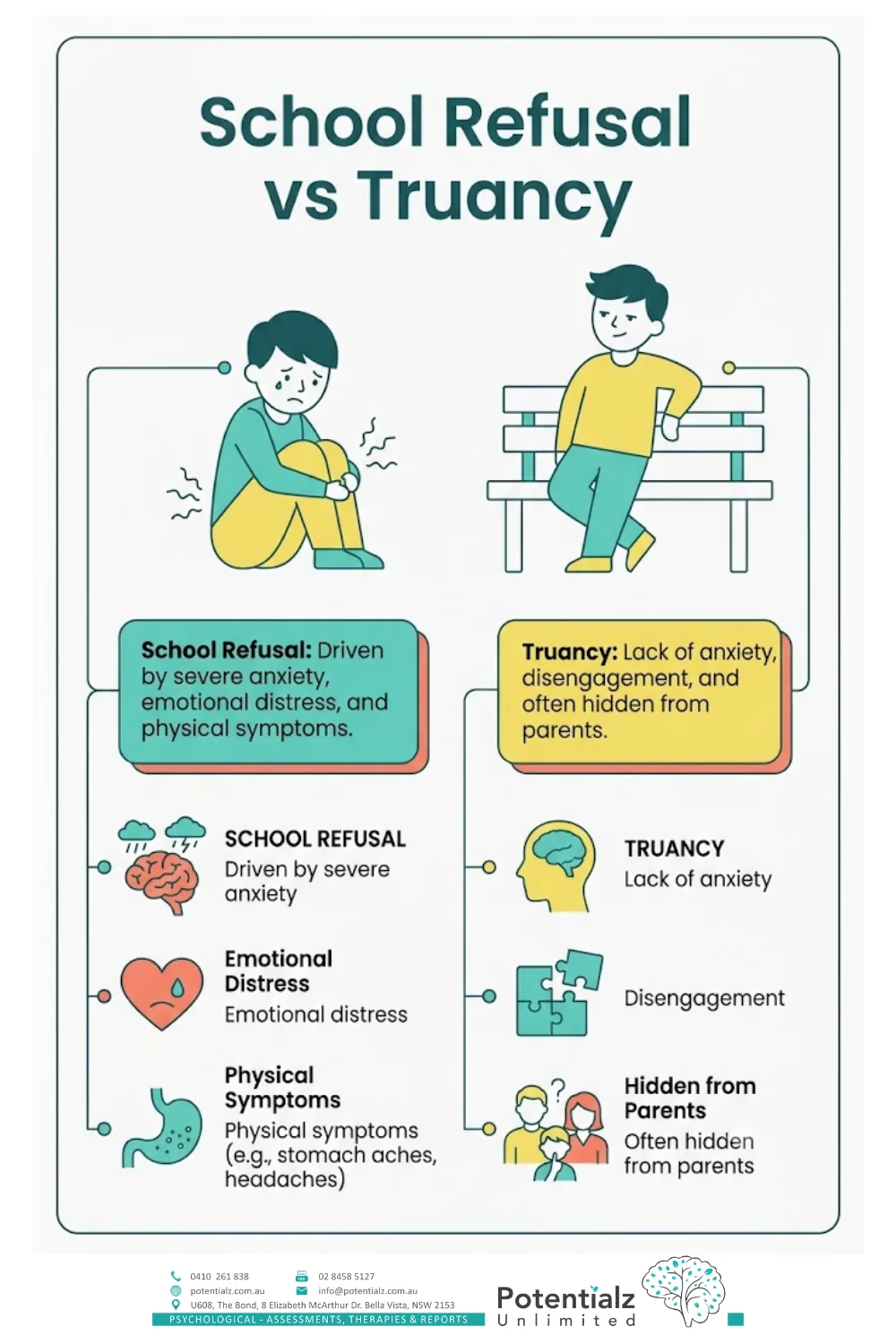
School refusal is not truancy. That distinction matters enormously, and it is one of the first things our team explains to every family that comes through the practice’s door.
Truancy typically involves a child who is not distressed about missing school. They may be avoiding school to spend time with peers, to avoid academic demands they do not care about, or because they are disengaged from education. The absence may be hidden from parents. There is generally not significant emotional distress.
School refusal is something entirely different. It involves significant emotional distress at the prospect of attending school — or a complete inability to attend. The child is not secretly happy about staying home. They are often miserable at home too. They may have physical symptoms — headaches, stomach aches, nausea, vomiting — that are real, even though they have no detectable medical cause. And crucially, school refusal is driven by anxiety.
School refusal is sometimes also called Emotionally Based School Non-Attendance (EBSNA) — a term that emphasises the emotional, anxiety-driven nature of the difficulty. This language is increasingly preferred because it removes the moral connotation of “refusal” and makes clear that this is a mental health issue, not a behavioural one.
How Common Is School Refusal?
School refusal affects approximately 1–5% of school-aged children in Australia at any given time. Studies indicate that it can occur at any age, but there are peak periods — around the transition to school (ages 5–6), in the middle primary years (ages 8–9), and at the transition to high school (ages 11–12) (Kearney, 2008).
The COVID-19 pandemic appears to have significantly increased rates of school refusal in Australia and internationally, as periods of lockdown and remote learning disrupted children’s school connection and amplified anxiety around social situations, health fears, and uncertainty.
Without support, school refusal tends to worsen over time. The longer a child is out of school, the more school becomes associated with threat in their nervous system, and the harder it becomes to return. Early intervention gives children the best chance of a positive outcome.
What Causes School Refusal?
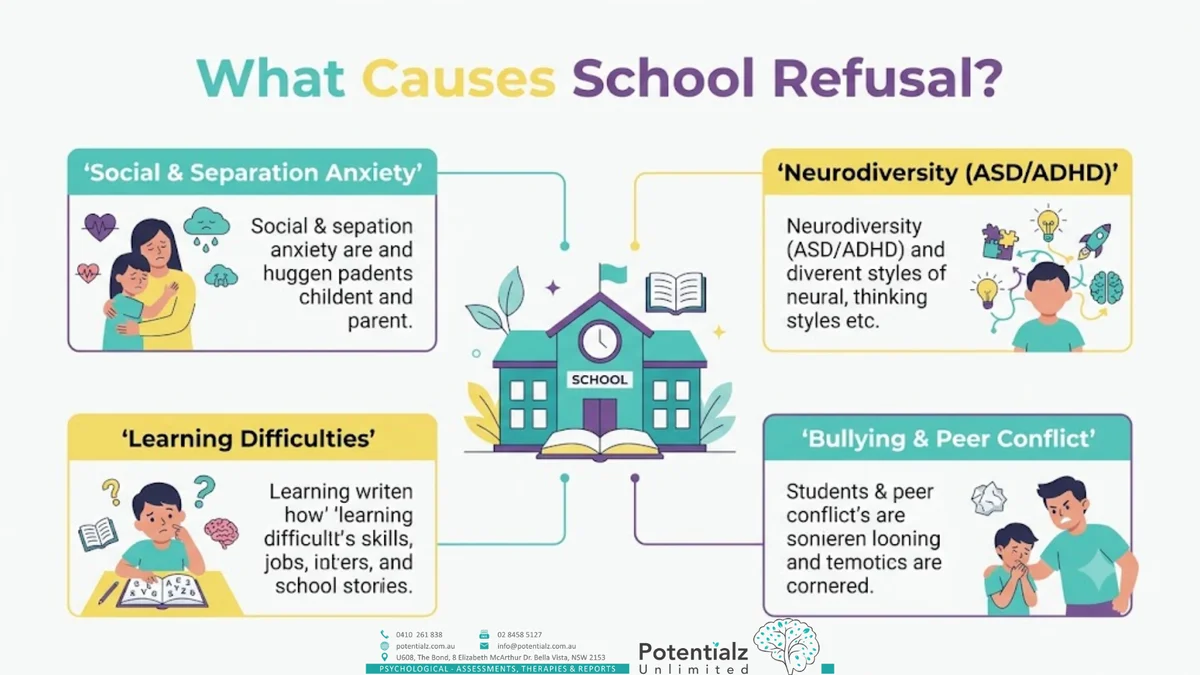
School refusal is not a single problem with a single cause. It is better understood as a symptom — a response to something that is making school feel unbearable for that particular child. Common contributing factors include:
Social anxiety. Fear of judgment, humiliation, or negative evaluation from peers or teachers can make the social environment of school deeply threatening. For children with social anxiety, the classroom, the playground, and even the bus to school can all feel like danger zones.
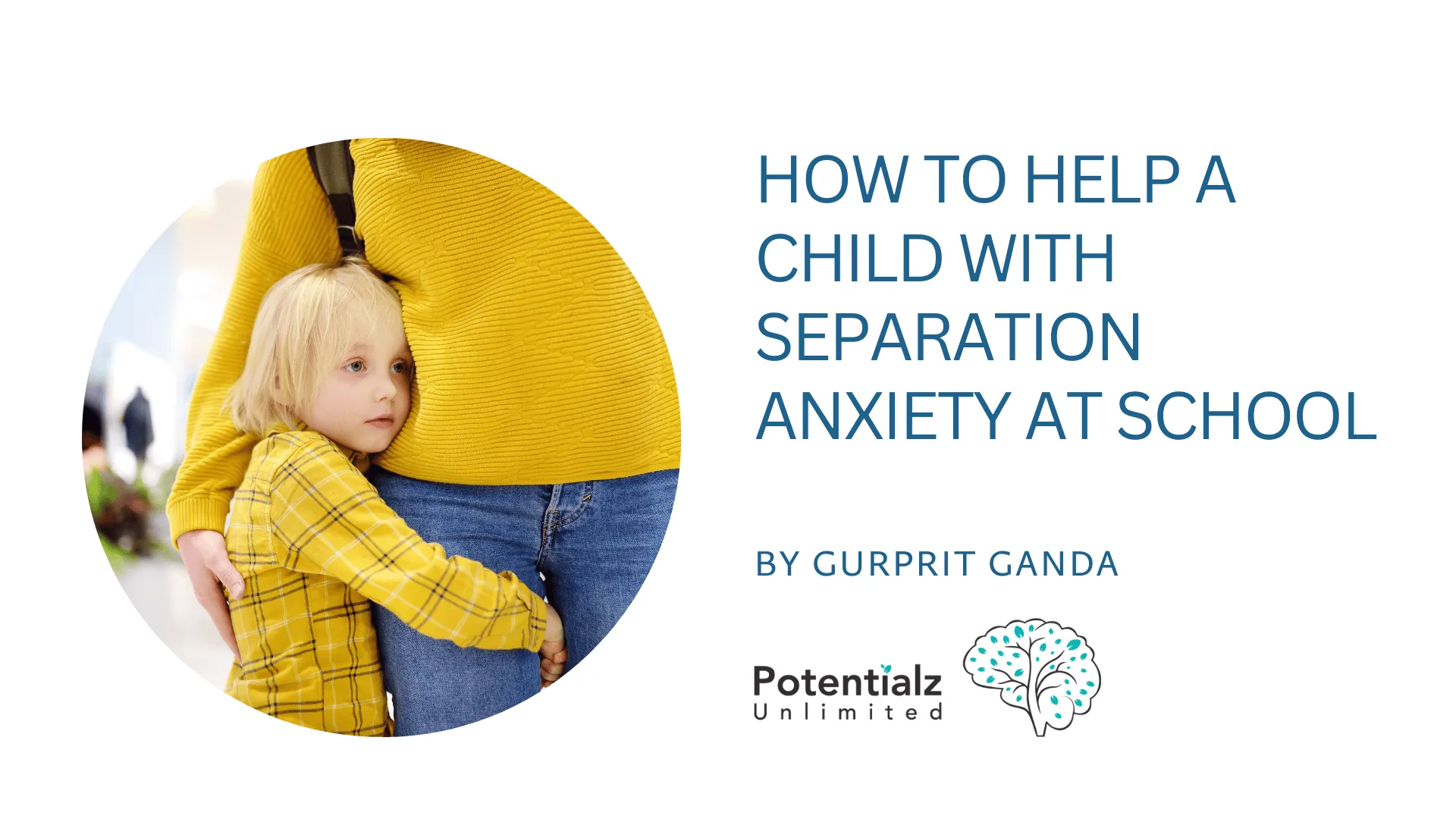
Separation anxiety. Particularly in younger children, the fear of being separated from a parent or caregiver can be overwhelming. The child may have a genuine terror that something bad will happen to their parent while they are at school, or that they will be unable to cope without them.
Generalised anxiety. Some children experience pervasive worry about many different things — tests, performance, friendships, safety, the future. School concentrates many of their anxiety triggers into one place, for hours each day.
Bullying. Children who are being bullied — whether physically, verbally, or through social exclusion — are experiencing a genuine threat. Their nervous system is rightly alarmed. School refusal in these children is a protective response. Our anxiety psychology services address the anxiety and trauma that often accompany bullying experiences.
Learning difficulties. Children who struggle academically may experience school as a place of repeated failure and humiliation. This is especially common in undiagnosed learning difficulties such as dyslexia, dyscalculia, and processing difficulties, where the child may be working harder than their peers but producing less.
Autism. For autistic children, school can be an environment of constant sensory overwhelm, social confusion, and unspoken social rules they cannot decode. School refusal in autistic children is often a response to genuine exhaustion and distress, not avoidance of reasonable expectations. Our child psychology services include neurodiversity-affirming assessment and support.
ADHD. Children with ADHD may struggle with the demands of sitting still, attending, and following instructions for hours at a time. When this leads to repeated negative feedback from teachers, peer conflict, or a sense of failure, school can begin to feel threatening.
Previous negative experiences. A single significant negative event at school — a humiliating moment, a conflict with a teacher, a panic attack, a peer incident — can create a learned association between school and threat that is difficult to extinguish without support.
Family factors. Parental anxiety, family instability, grief, or changes at home can all contribute to a child’s school refusal. This is not about blame — it is about understanding the full picture of a child’s life.
How School Refusal Presents
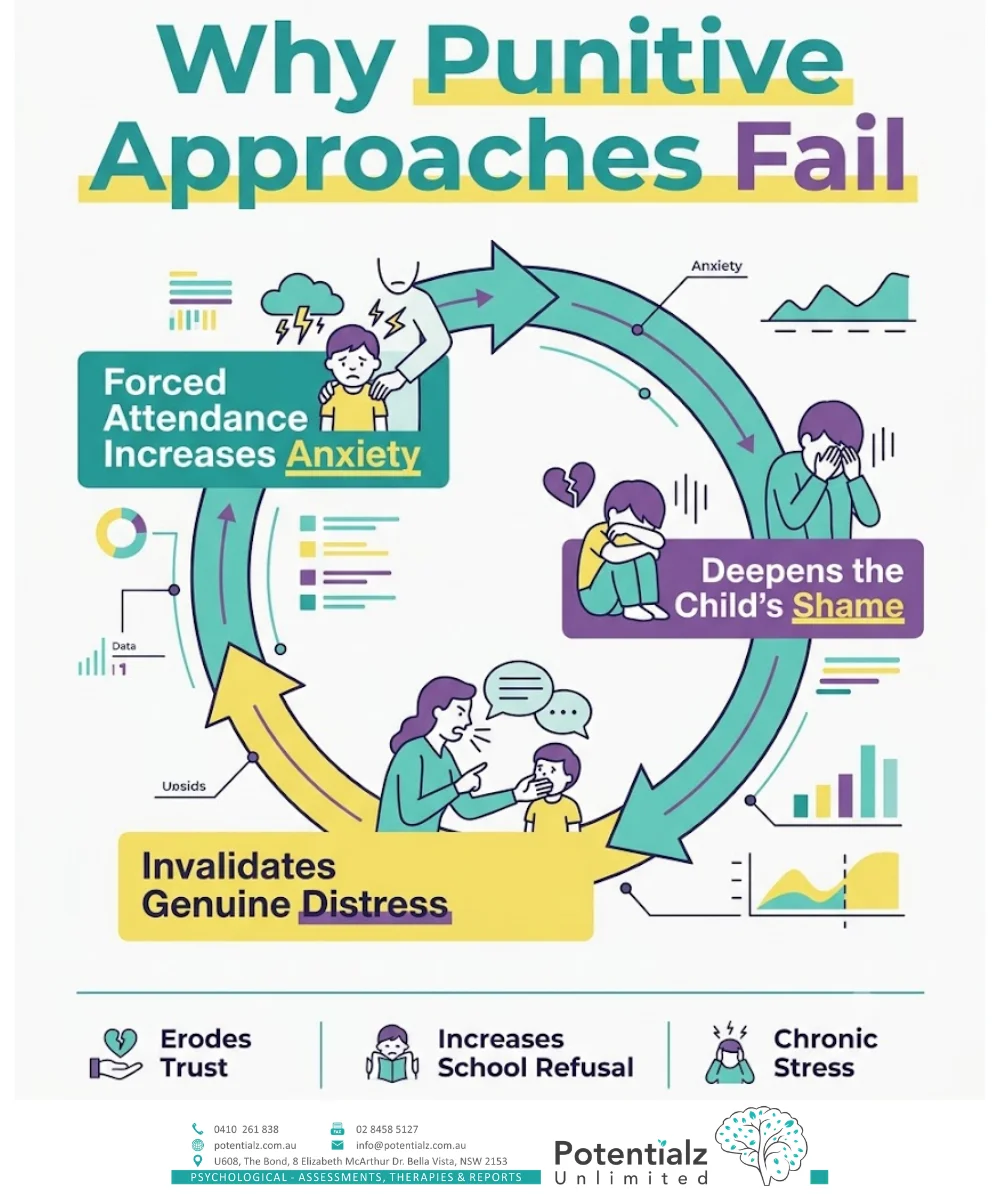
School refusal can present differently in different children, and in different ways at different times. Common presentations include:
- Complaints of physical illness (stomach aches, headaches, nausea) on school mornings that resolve or improve when school is not an option
- Significant distress or meltdowns on Sunday evenings and school mornings
- Difficulty sleeping the night before school
- Crying, clinging, or pleading to stay home
- Running away from school, hiding in the toilets, or leaving school grounds without permission
- Extreme emotional shutdown or dissociation in the school environment
- A pattern of partial attendance — coming in late, leaving early, missing certain classes or certain days
It is worth noting that school refusal can be chronic or episodic. Some children manage to attend most of the time but have periodic crises. Others are effectively not attending at all. Both patterns warrant attention and support.
Why Punitive Approaches Often Fail
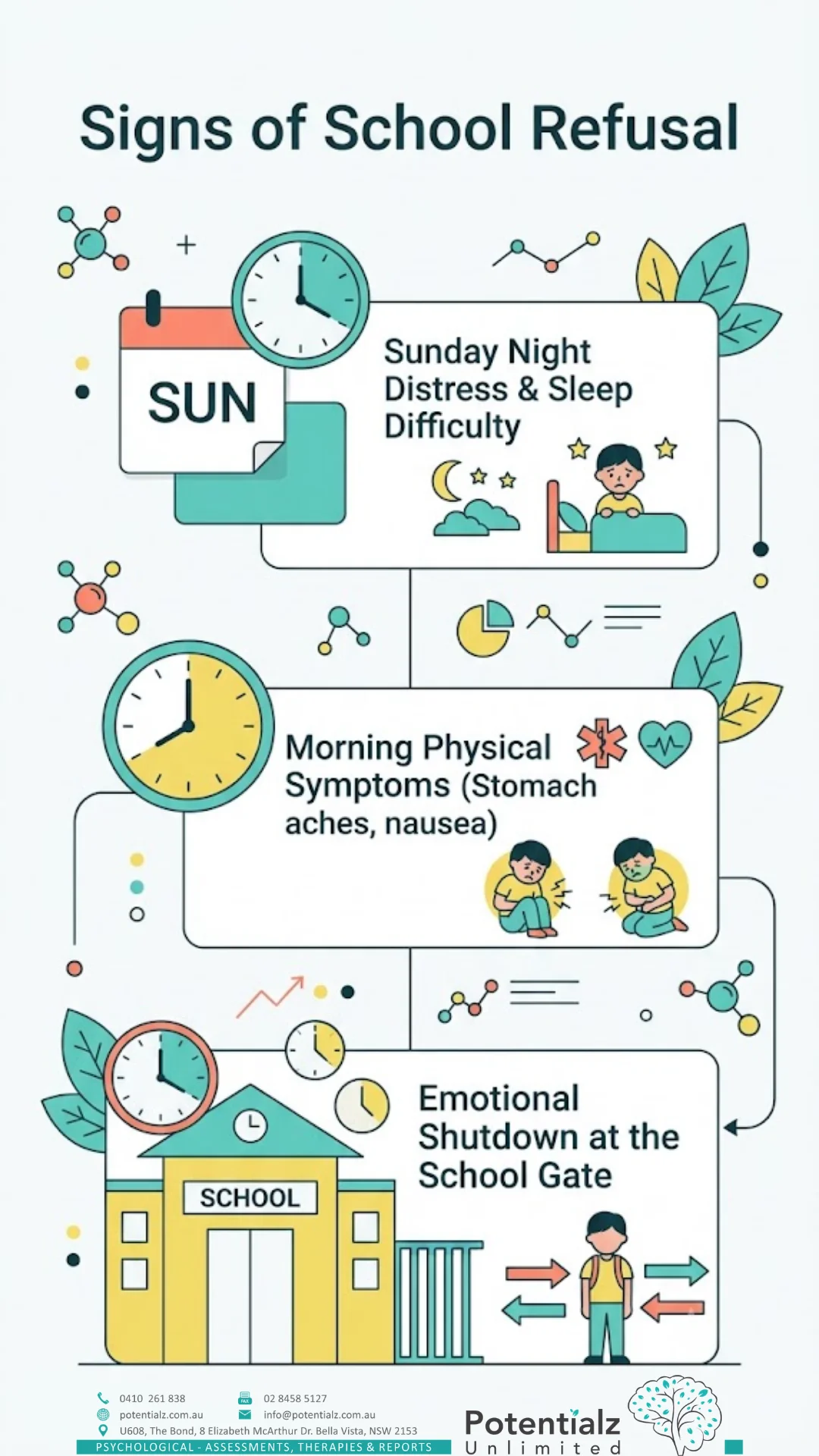
A common response to school refusal — from schools, from family members, and sometimes from professionals — is to insist on attendance through increasing pressure and consequences. This approach rests on the assumption that the child is choosing not to attend and will choose differently if the consequences are significant enough.
This assumption is fundamentally incorrect for children with school refusal. Research consistently shows that anxiety-based school refusal is not a choice — it is a response to a perceived threat that the child’s nervous system evaluates as dangerous. Forcing attendance without addressing the underlying anxiety may produce short-term compliance, but it often increases the child’s anxiety and their sense of unsafety (Kearney, 2008).
More importantly, punitive approaches communicate to the child: “Your distress is not real.” “You are making this up.” “There is something wrong with you for feeling this way.” These messages deepen the child’s shame and distress — and make it harder, not easier, for them to ask for help.
Effective support for school refusal acknowledges the child’s distress as real, works to understand its source, and builds the child’s capacity to tolerate and manage anxiety gradually — rather than demanding they tolerate a level of anxiety that is beyond their current capacity.
How Play Therapy Helps With School Refusal
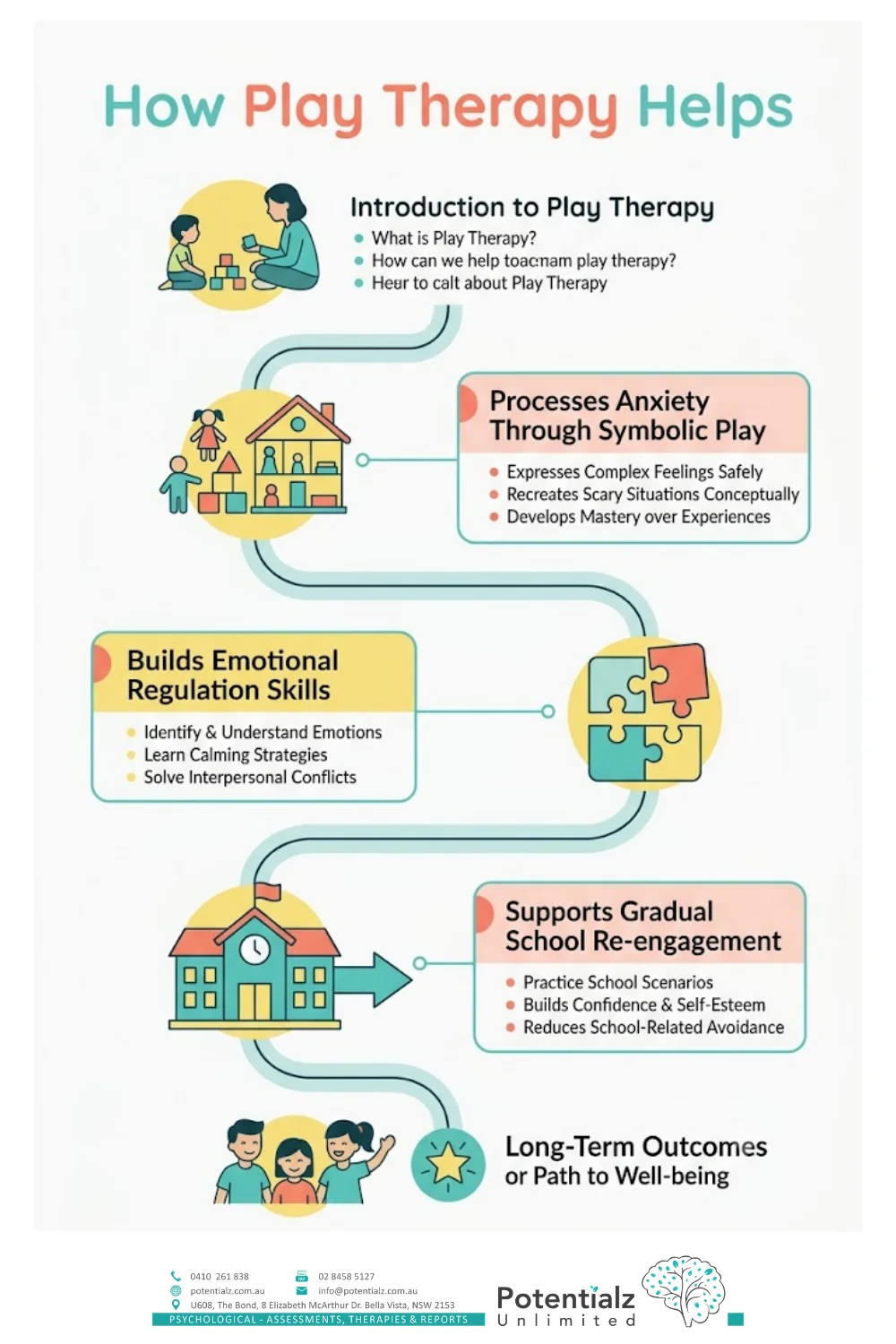
Play therapy is a highly effective approach for school refusal because it addresses the anxiety that drives it — not just the attendance behaviour. Children with school refusal are often not able to talk about their anxiety in a traditional therapy setting. They may not have the words, or the self-awareness, or the safety that talking requires. Play gives them another way.
Processing anxiety through symbolic play. Children can use puppets, dolls, figurines, and storytelling in play therapy to express and process experiences that they cannot yet articulate. A child who is terrified of social humiliation might play this out through characters, at a safe distance from the raw experience. Through this, they begin to process the anxiety.
Building emotional regulation skills. Many children with school refusal have nervous systems that are highly sensitive and easily overwhelmed. Play therapy builds the child’s capacity to identify their feelings, tolerate discomfort, and use strategies to return to a regulated state. These skills directly support school re-engagement.
Addressing underlying contributors. Where school refusal is linked to trauma, bullying, learning difficulties, or autism, play therapy provides a space to work through the underlying experience — not just manage the symptom.
Building the therapeutic relationship. For children with anxiety, the experience of being in a safe, predictable, non-judgmental relationship — week after week — is itself therapeutic. The therapeutic relationship provides a model of safety that the child can begin to generalise to other relationships, including those at school.
Supporting gradual re-engagement. Play therapists often work closely with schools and families to develop a gradual re-entry plan. This might involve starting with one hour a day, or joining school for a preferred activity, and slowly building up. The therapy sessions provide a space to process each step — what felt hard, what worked, and what to try next.
Parent Strategies for Supporting a Child With School Refusal
While professional support is essential for persistent school refusal, there are things parents can do to support their child through this.
Take the anxiety seriously. This is the single most important thing. Your child is not making this up. Their distress is real. Responding with empathy rather than frustration — even when you are exhausted and frustrated — communicates to your child that they are not alone.
Maintain connection with the school. Work with the school rather than against them. Most schools want to support anxious children and will welcome the opportunity to develop a plan together. Ask for a meeting with the class teacher and school counsellor.
Avoid allowing school avoidance to become the long-term solution. While it is important to respond with compassion, prolonged non-attendance can entrench school refusal. The goal is gradual, supported re-engagement — not indefinite absence.
Monitor your own anxiety. Parental anxiety about a child’s school refusal is completely understandable. But children are finely tuned to their parents’ emotional states. If you are visibly distressed or anxious on school mornings, this amplifies your child’s signal that school is dangerous. Working on your own regulation — through support, therapy, or self-care — directly supports your child.
Maintain as much routine as possible. Even when your child cannot attend school, maintaining daily routines — getting dressed at school time, having structured activities during school hours — helps keep the nervous system familiar with the structure of a school day and reduces the risk of entrenched avoidance.
Get professional support early. Research consistently shows that earlier intervention produces better outcomes for school refusal. If your child has been struggling with school attendance for more than a few weeks, please seek professional support.
When to Seek Help
Please consider speaking with a play therapist or psychologist if:
- Your child has been refusing school for two weeks or more
- Physical symptoms (stomach aches, headaches) are regularly present on school mornings
- Your child is experiencing significant distress, not just reluctance
- The situation is putting significant strain on your family
- You suspect underlying anxiety, autism, ADHD, bullying, or trauma
- Previous attempts to support attendance have not been effective
At Potentialz Unlimited, we offer initial consultations where our team can talk through what is happening for your child and develop a plan for support.
Key Takeaways
- School refusal is not truancy — it is an anxiety-driven difficulty that causes genuine distress and is not a deliberate choice.
- It affects approximately 1–5% of school-aged children and is increasing in prevalence since COVID-19.
- Common causes include social anxiety, separation anxiety, autism, ADHD, bullying, and learning difficulties.
- Punitive approaches that focus on forcing attendance without addressing anxiety typically make the situation worse.
- Play therapy addresses the underlying anxiety, builds emotional regulation skills, and supports gradual re-engagement with school.
- Early intervention gives children the best chance of a positive outcome.
How Potentialz Can Help
At Potentialz Unlimited in Bella Vista, our clinical team works with children aged 3–12 who are experiencing school refusal, anxiety, and the difficulties that often underpin them. Our approach is child-centred, trauma-informed, and tailored to each child’s individual needs and profile.
We work collaboratively with families and — where appropriate — with schools and other professionals to develop a comprehensive plan that supports your child’s return to learning and wellbeing.
If your child is struggling with school refusal, please do not wait and hope it resolves on its own. The earlier we can intervene, the better the outcomes for your child and your family.
Book at live.potentialz.com.au or call 0410 261 838.
Potentialz Unlimited | Unit 608, 8 Elizabeth Macarthur Drive, Bella Vista NSW 2153 Hours: Monday–Friday, 10am–7pm
Please note: Play therapy at Potentialz Unlimited is delivered by our accredited Practitioner in Therapeutic Play (not an AHPRA-registered psychologist). Play therapy sessions are not Medicare-rebatable; NDIS self-managed plans are accepted. For assessment of anxiety, ADHD, autism, or learning difficulties, our psychology colleagues at Potentialz can help.
If your child’s distress ever feels acute — persistent thoughts of self-harm, danger to themselves or others — please contact Kids Helpline on 1800 55 1800, Lifeline on 13 11 14, or in an emergency call 000.
Disclaimer: This article is a Potentialz Unlimited editorial piece drawing on our clinical team’s experience. It is for general education and information only, not clinical advice for your particular child. Potentialz Unlimited is a psychology practice based in Bella Vista NSW; our clinical team includes Registered Psychologists and a Clinical Psychologist (registered with AHPRA) and an accredited Play Therapist. Please consult a qualified health professional for your individual circumstances. If your child is experiencing a mental health crisis, contact your GP, call Kids Helpline on 1800 55 1800, or go to your nearest emergency department.
References
Kearney, C. A. (2008). School absenteeism and school refusal behavior in youth: A contemporary review. Clinical Psychology Review, 28(3), 451–471. https://doi.org/10.1016/j.cpr.2007.07.012
Heyne, D., Gren-Landell, M., Melvin, G., & Gentle-Genitty, C. (2019). Differentiation between school attendance problems: Why and how? Cognitive and Behavioral Practice, 26(1), 8–34. https://doi.org/10.1016/j.cbpra.2018.03.006
Ingul, J. M., Havik, T., & Heyne, D. (2019). Emerging school refusal: A school-based framework for identifying early signs and risk factors. Cognitive and Behavioral Practice, 26(1), 46–62. https://doi.org/10.1016/j.cbpra.2018.03.005
Landreth, G. L. (2023). Play therapy: The art of the relationship (4th ed.). Routledge.
Wimmer, M. (2013). School refusal: A practical guide for school personnel (2nd ed.). National Association of School Psychologists.
Related Reading
Knowledge Check Quiz
Test what you have just read. Choose your answer for each question, then submit to reveal the answers and your score.
Need Professional Support?
If you're experiencing mental health concerns, our team is here to help.