Key Takeaways
- 1 in 4 young Australians aged 16–24 experience a mental health condition — and rates of anxiety and depression have worsened significantly over the past decade.
- Irritability and anger are often the primary expressions of depression in teenagers, not sadness — this is frequently missed by parents and even clinicians.
- Teens spending 7 or more hours daily on screens have double the risk of anxiety and depression compared to those with lower screen time.
- For young people from culturally and linguistically diverse backgrounds, navigating two cultural worlds creates an additional layer of psychological burden.
- CBT and ACT, adapted for adolescents, are the most evidence-supported psychological approaches for teen anxiety and depression.
- A consistent, trusting relationship with at least one adult is one of the strongest protective factors for adolescent mental health.
- Early intervention matters profoundly — mental health conditions beginning in adolescence and left untreated often worsen into adulthood.
Introduction: A Generation Under Pressure
Something has shifted in the mental health of young Australians. The data is unambiguous, and the scale of what our psychologists observe in clinical practice confirms it.
According to the Australian Institute of Health and Welfare, approximately 1 in 4 young people aged 16–24 experience a mental health condition in any given year (AIHW, 2022). Anxiety disorders are the most common, followed by depression and substance use conditions. And these figures have been trending in the wrong direction. Since 2017, and accelerating sharply since 2020, the proportion of young people — particularly adolescent girls — reporting clinically significant mental health difficulties has risen dramatically.
At Potentialz Unlimited in Bella Vista, our psychologists have watched this shift unfold in the consulting room. Teenagers are arriving with more severe presentations than they were ten years ago. They are arriving later — after years of struggling alone. And they are carrying something that previous generations of teenagers were not: the weight of a digital social world that never switches off, combined with academic and economic pressures that feel enormous, at an age when the brain’s capacity for emotional regulation is still years from complete.
This post is for parents, teachers, and young people themselves. It explains what is actually happening — the research, the clinical picture, and what genuinely helps.
The Scope of the Crisis: What the Data Shows
Here are some specific numbers.
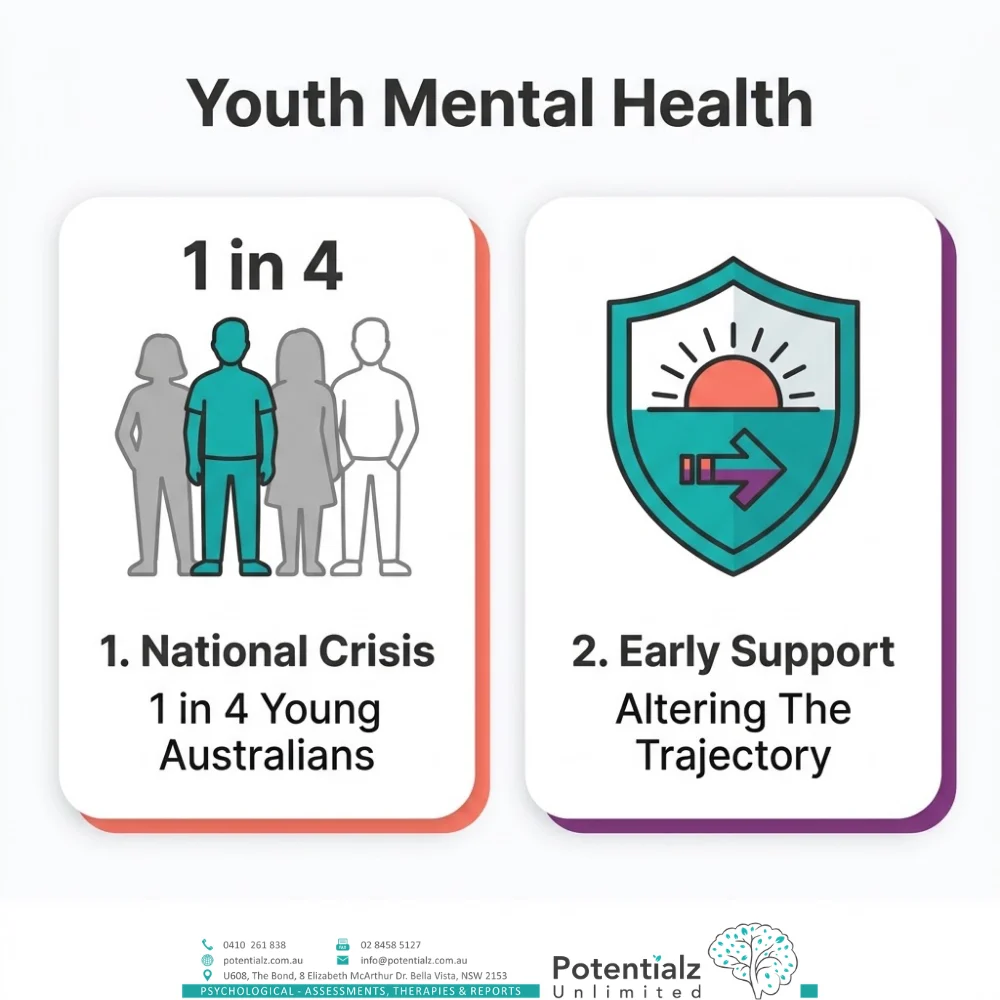
Research from the United States — which closely tracks Australian patterns — found that 57% of adolescent girls and 29% of adolescent boys reported persistent feelings of sadness and hopelessness lasting more than two weeks: the core diagnostic indicator for major depression (CDC, 2023). These are not subclinical levels of distress. These are clinically significant symptoms in more than half the girls and nearly a third of the boys in the study sample.
In Australia, the 2022 National Study of Mental Health and Wellbeing found that mental health conditions in young people aged 16–24 were present at a rate of 26.4% — and that anxiety disorders alone affected 16.8% of this age group (ABS, 2022). The most common conditions were generalised anxiety disorder, social anxiety disorder, and major depressive disorder.
What is driving this? The research points to several converging factors: social media and screen time, academic pressure, the ongoing disruption of the COVID years, economic uncertainty about the future, and — for many young people in the Hills District communities Potentialz Unlimited serves — the specific challenges of navigating multiple cultural expectations simultaneously.
Social Media and Screen Time: The Evidence
The relationship between social media use and adolescent mental health is one of the most actively researched areas in psychology right now — and the findings are consistent.
Teenagers who spend seven or more hours daily on screens are approximately twice as likely to be diagnosed with anxiety or depression compared to those spending less time (Twenge et al., 2018). The association is strongest for passive consumption — scrolling, comparing, and observing — rather than active communication. The platforms that are most associated with negative mental health outcomes are those built around image, performance, and social comparison.
Why? Social comparison is a universal human process — we have always measured ourselves against others. But social media has transformed the scale and intensity of this comparison. A teenager who, in a previous era, would have been comparing themselves to a manageable social circle of perhaps 30–50 peers is now comparing themselves — continuously, across every domain of life, in real time — to hundreds or thousands of curated, filtered performances.
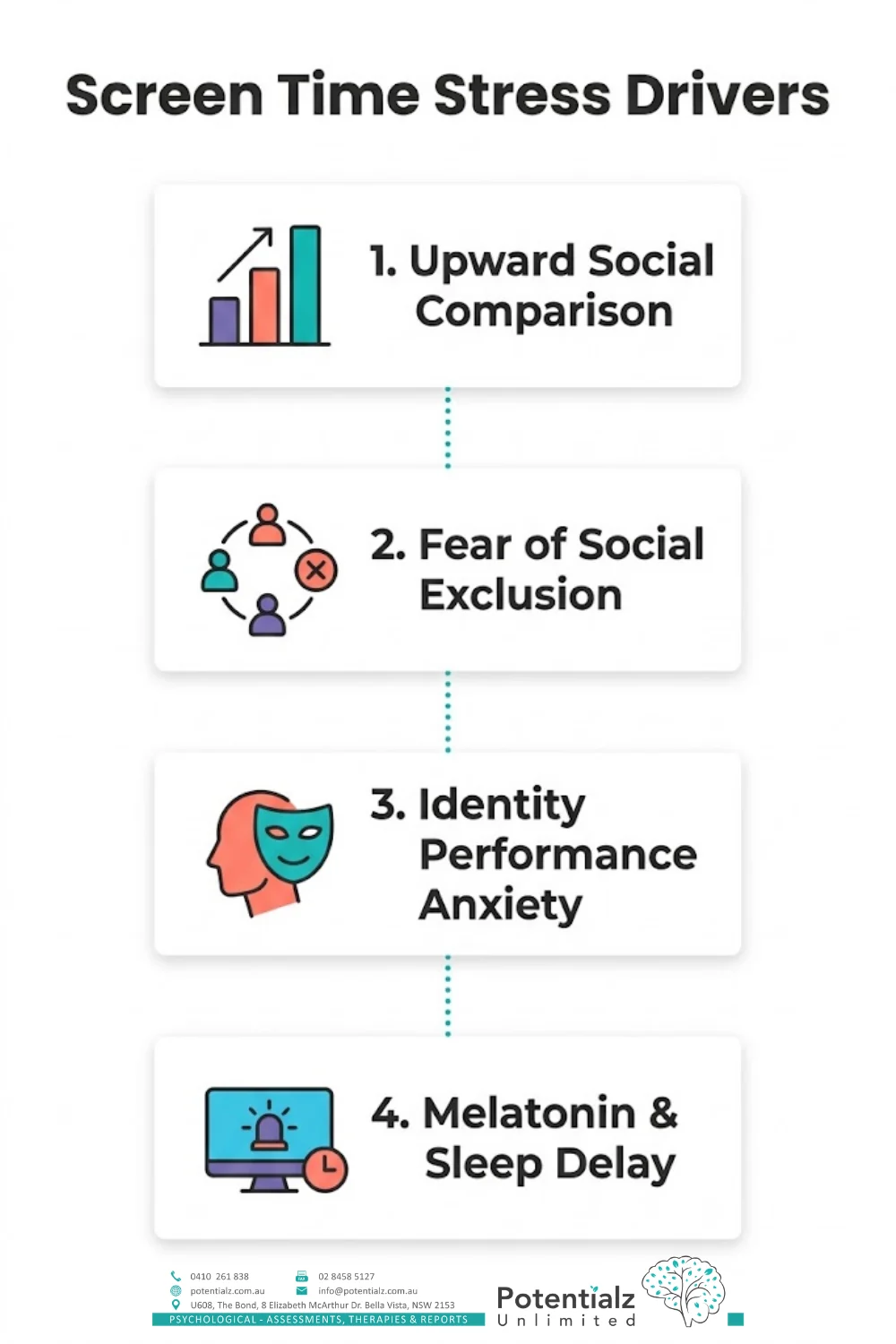
The psychological mechanisms are well understood:
- Upward social comparison: constantly comparing yourself to those who appear more attractive, more popular, more successful, and more liked
- Social exclusion: the pain of seeing evidence of social events you were not invited to
- Performance anxiety: the pressure of maintaining a curated online identity that does not match your private experience
- Sleep disruption: evening screen use that delays melatonin onset and degrades sleep quality — and poor sleep is one of the strongest risk factors for depression
It is important to be clear that social media is not simply “the problem” that needs to be removed. For many teenagers — particularly those who are socially anxious, LGBTQ+, or from minority cultural backgrounds — online connection is genuinely meaningful. The clinical concern is excessive, passive, comparison-focused use, particularly late at night.
Academic Pressure and Fear of Failure
The pressure Australian teenagers face around academic performance has intensified significantly in the past decade. The HSC — already a high-stakes examination — has become layered with additional pressures: university entry cut-offs, the perception that career pathways are narrowing, and the expectation from some families that tertiary education is the only acceptable outcome.
In clinical practice, our psychologists see a specific pattern: a teenager who is academically capable but who has developed such an intense fear of failure that performance has paradoxically declined. The anxiety about not doing well enough becomes so consuming that it interferes with studying, concentrating, sleeping, and ultimately with the performance itself.
The cognitive patterns that show up are consistently similar:
- “If I don’t get into [specific degree], I will have failed.”
- “My worth depends on my results.”
- “If I try and fail, that is worse than not trying at all.”
- “I can’t let my parents down.”
These beliefs are not irrational — they are learned in a context where high academic achievement has been explicitly or implicitly tied to family honour, parental sacrifice, and future security. For many teenagers from Indian and South Asian families, the weight of these expectations is significant and real. Acknowledging that reality — rather than dismissing it — is where clinical work begins.
Identity Development: The Normal but Challenging Work of Adolescence
Beneath the specific pressures of social media and academic stress, adolescence carries a developmental challenge that is not new: the question of identity. Who am I? Where do I belong? What do I believe? What do I want my life to be?
Erik Erikson described adolescence as the stage of identity versus role confusion — and the work is genuinely demanding. Teenagers are simultaneously separating from parents, building peer relationships, exploring values and beliefs, and beginning to construct an adult identity. These are not optional developmental tasks. They are what adolescence is for.
The difficulty is that this work is being done inside a nervous system that is still developing. The prefrontal cortex — responsible for planning, impulse regulation, perspective-taking, and emotional management — does not reach full maturity until the mid-twenties. This means teenagers are navigating enormous developmental complexity with a brain that is genuinely not yet fully equipped for it.
This is not a flaw. It is neurobiology. Understanding it helps parents maintain perspective, and it helps teenagers extend themselves a degree of self-compassion that many find difficult.
For CALD Teenagers: Navigating Two Worlds
For teenagers from culturally and linguistically diverse families — particularly those from Indian, South Asian, East Asian, and other non-Western backgrounds — the developmental work of adolescence is compounded by a specific additional burden.
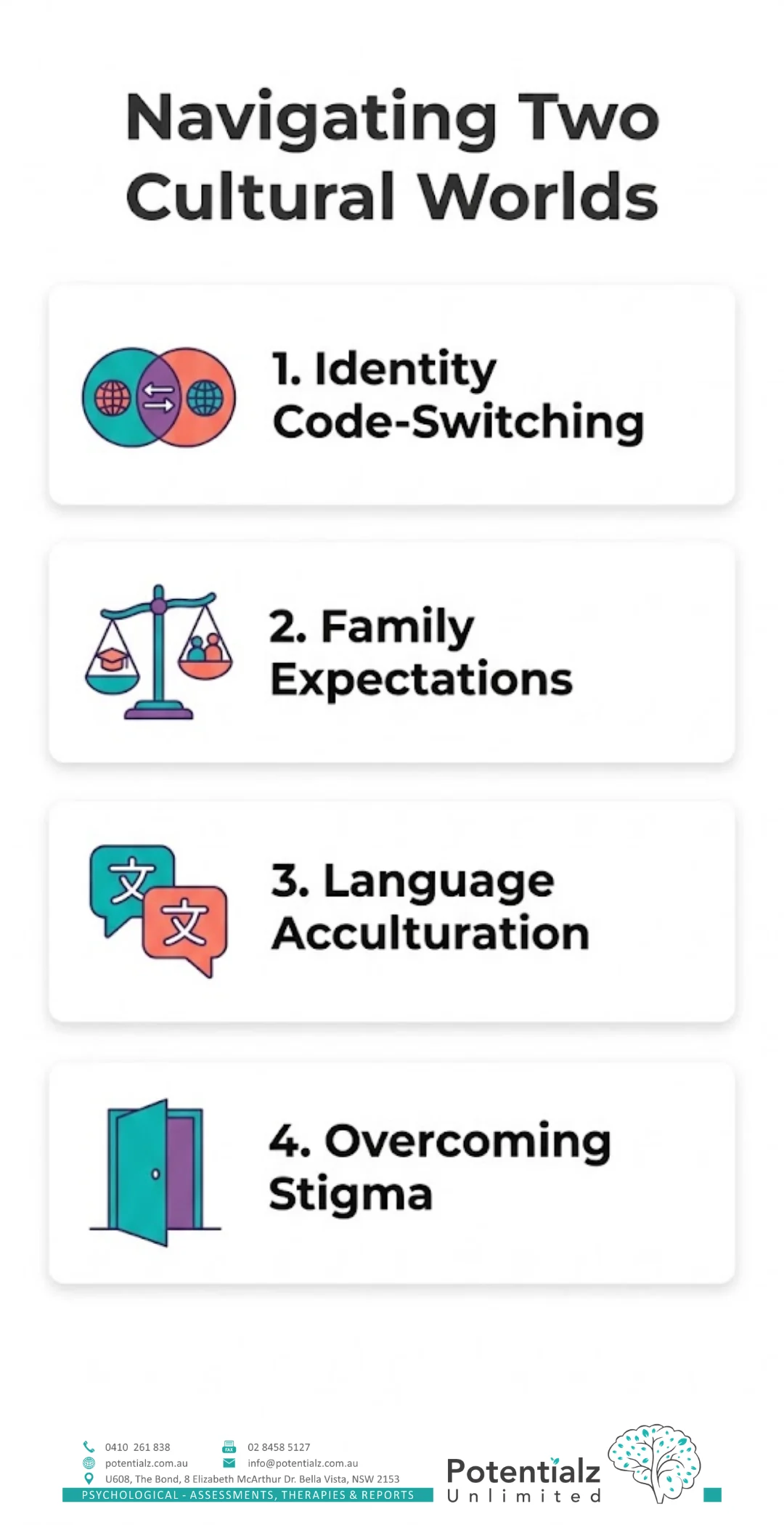
These young people are navigating two cultural worlds simultaneously:
- At home: family values, parental expectations, cultural norms around gender roles, respect for authority, collectivist family identity, and — often — the weight of parental sacrifice and migration
- At school and with peers: Australian peer culture, different norms around independence, individual identity, and social behaviour
The tension between these two worlds is a genuine psychological burden. Our psychologists have worked with many teenagers who describe feeling like they are a different person at home versus at school — code-switching between identities, managing the fear that being “too Australian” will be read by parents as rejecting their culture, while feeling “too different” among peers. The cognitive and emotional load of this is significant.
Additional specific pressures that show up in this population:
- Language burden: managing family responsibilities including interpreting for parents who do not speak English fluently
- Acculturative stress: the ongoing adjustment to a new cultural context when one’s family has migrated during the teenager’s childhood
- Mental health stigma: many families from CALD backgrounds carry significant stigma about mental health conditions, which means teenagers may not have parental support for help-seeking even when they need it
- Gender expectations: particularly for young women, whose freedom to socialise, explore identity, and make independent choices may be significantly more constrained than their Australian-born peers
To be direct: these pressures are real, and they require a clinician who understands them — not simply someone applying a generic anxiety protocol. Cultural competence is not a nice-to-have in this work. It is clinically essential.
Warning Signs Parents Often Miss
Depression in teenagers frequently does not look the way parents expect. The tearful, withdrawn, obviously sad presentation is one version. But in adolescence, depression often presents as:
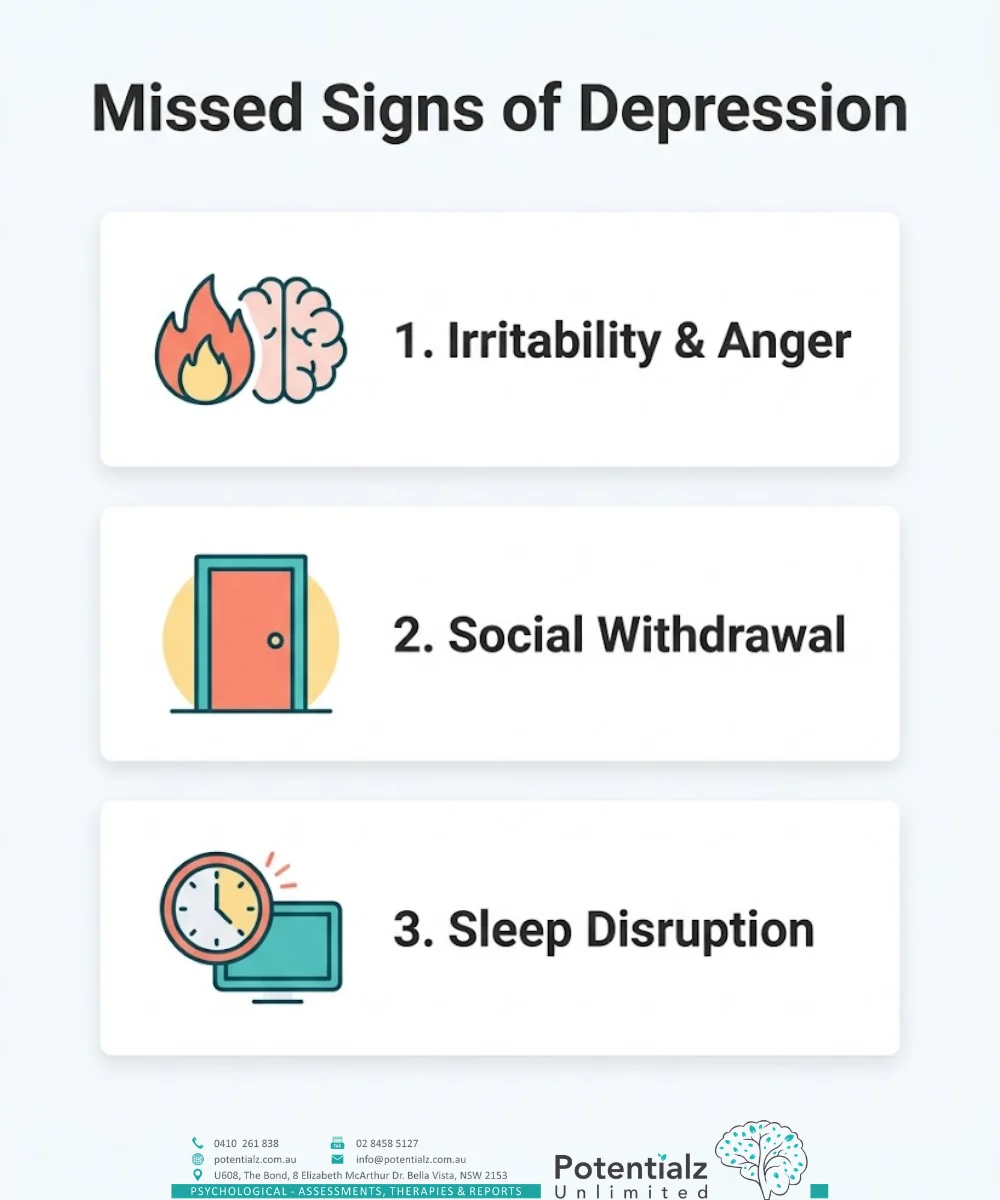
- Irritability and anger: a teenager who seems constantly short-tempered, hostile, or reactive may be depressed — not simply “difficult”
- Withdrawal: pulling away from family, friends, and activities they previously enjoyed
- Changes in sleep: sleeping far more than usual, or experiencing significant insomnia
- Changes in appetite and weight: in either direction
- Declining school performance: grades dropping, refusing to attend, school refusal
- Risk-taking behaviour: particularly in adolescent boys, increased risk-taking (reckless driving, substance use, physical fights) can be a sign of depression
- Vague physical complaints: persistent headaches, stomach pain, or fatigue with no clear medical cause
What we emphasise to parents: irritability is often the primary sign of depression in teenagers, not sadness. If your teenager seems relentlessly angry, hostile, and difficult to reach, it is worth considering whether depression is the underlying presentation.
What Actually Helps: Evidence-Based Approaches
The Importance of One Trusted Adult
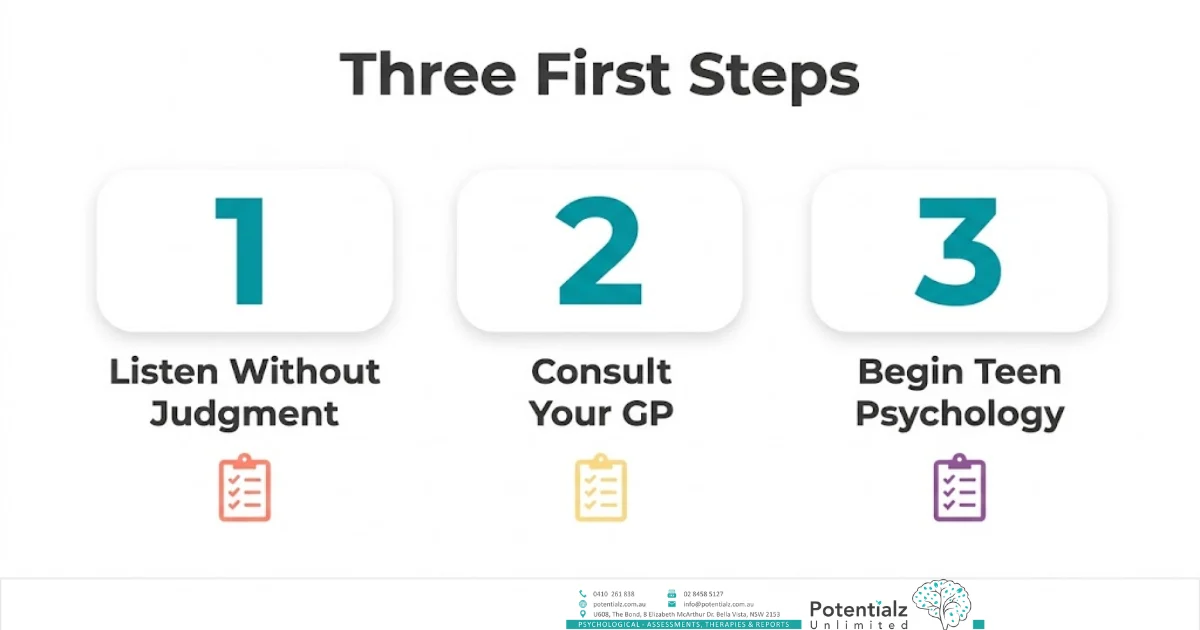
Before any therapy, the research is consistent: the strongest protective factor for adolescent mental health is a consistent, trusting relationship with at least one adult who sees and accepts the young person (Masten, 2014). This does not have to be a parent. It can be a teacher, a school counsellor, a grandparent, a coach, or a therapist. What matters is that the young person feels genuinely seen and not judged.
This has direct implications for how our psychologists work with teenagers. Building a genuinely therapeutic alliance — earning the teenager’s trust rather than assuming it — is the first and most important phase of treatment. Where a young person needs structured, evidence-based support, our child and adolescent psychologists in Bella Vista work with both the teenager and their family.
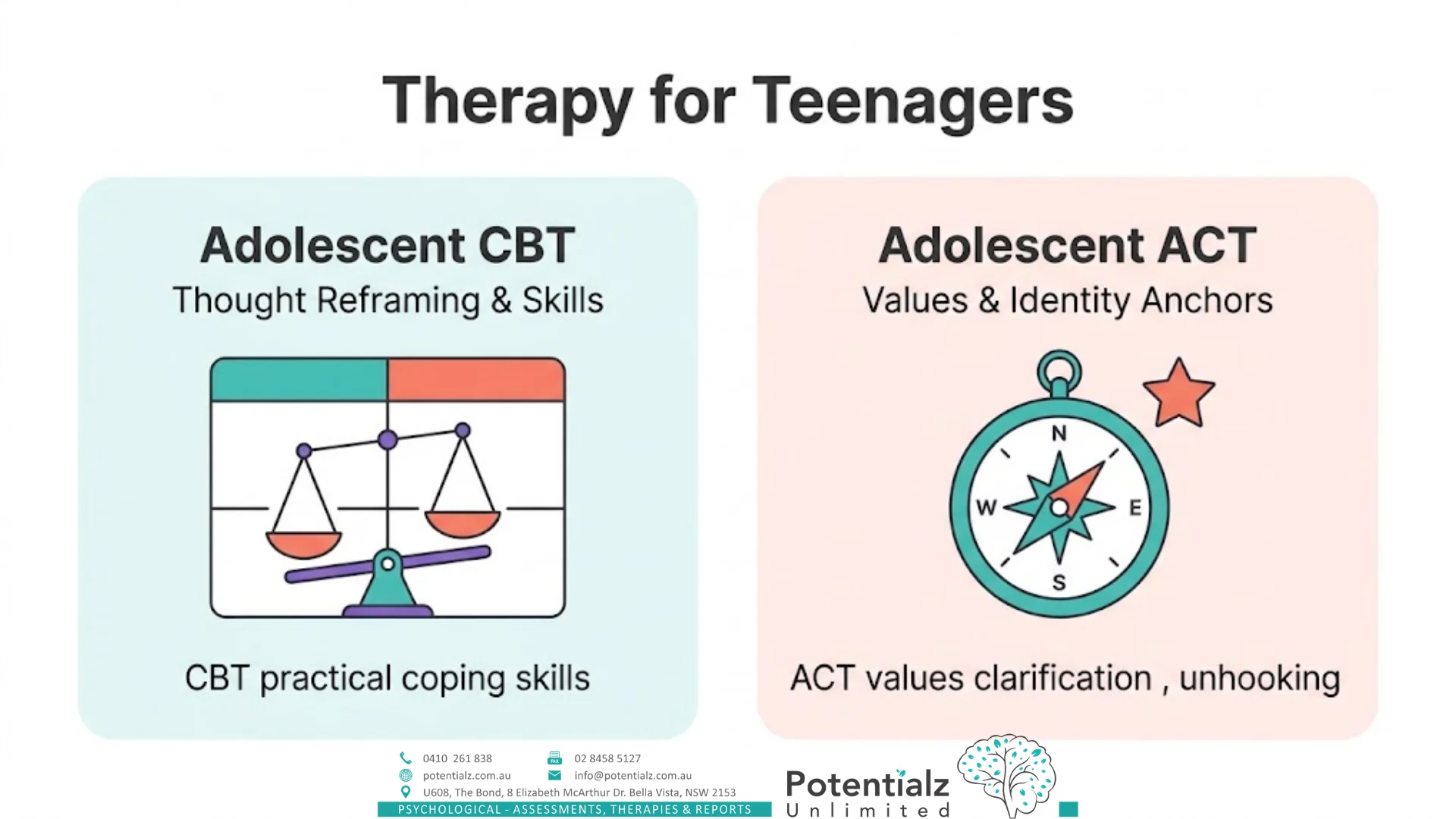
CBT for Adolescents
Cognitive Behavioural Therapy, adapted for adolescents, is one of the most thoroughly researched psychological approaches for teen anxiety and depression. Programs like Cool Kids (for anxiety) and BRAVE (also for anxiety — available online) have strong evidence bases in Australian settings.
CBT for teenagers is skills-based, practical, and present-focused. Our psychologists work with teenagers to:
- Identify the thought patterns maintaining their anxiety or depression
- Challenge cognitive distortions (catastrophising, mind-reading, all-or-nothing thinking)
- Build behavioural activation — the gradual re-engagement with activities that provide a sense of competence, connection, and pleasure
- Develop graded exposure hierarchies for anxiety — systematically facing feared situations in a structured, supported way
- Build practical coping skills for managing difficult moments
For teenagers, our psychologists adapt the standard CBT approach to be more collaborative and less didactic — using real examples from their lives, avoiding worksheets that feel like homework, and meeting them in their language and their context. If you would like a plain-language overview of the approach, see our guide to how CBT works and what to expect in sessions.
ACT for Teenagers: Who Do I Want to Be?
Acceptance and Commitment Therapy offers something particularly valuable for adolescents: a values clarification process that speaks directly to the identity work of this developmental stage.
In ACT work with teenagers, our psychologists help them articulate — often for the first time — what genuinely matters to them. Not what their parents want for them, not what their school expects, but what kind of person they actually want to be and what they want their life to stand for. This is the beginning of values-based living, and it gives teenagers an anchor that is more durable than any mood state.
ACT also teaches psychological flexibility — the capacity to hold difficult thoughts and feelings without either suppressing them or being controlled by them. For teenagers who are fused with catastrophic thoughts (“I will never fit in,” “There is something fundamentally wrong with me”), defusion skills give them breathing room. The thought is noticed as a thought. It does not have to be believed or acted upon.
The Role of Parents
Parents play a significant role in teen mental health — both as a risk factor and as a protective factor. In clinical work with teenagers, our psychologists often include parents in the treatment in a specifically targeted way: helping them understand how to support without rescuing, how to stay connected without interrogating, and how to hold the balance between concern and confidence in their teenager’s capacity.
The most helpful thing most parents can do is:
- Listen more than they direct
- Validate feelings before problem-solving
- Stay connected even when the teenager is pulling away
- Avoid catastrophising about the teenager’s difficulties in front of them
- Seek their own support if their own anxiety about the teenager is becoming overwhelming
Supporting a struggling teenager can be draining, and parents who are also caring for others can reach the point of depletion themselves.
School-Based vs. Clinic-Based Support
Teenagers can access mental health support through different pathways:
- School counsellors and wellbeing staff: immediate, accessible, low-stigma — the right first contact for most teenagers. School counsellors can support ongoing emotional needs and can facilitate referrals when clinical treatment is needed
- Headspace centres: accessible, youth-focused, low cost — a valuable first step for many young people
- GP referral to psychology: for teenagers requiring structured evidence-based treatment (CBT, ACT), a GP can refer under a Medicare Mental Health Care Plan providing subsidised sessions with a registered psychologist
- NDIS: for teenagers with a disability — including autism, anxiety disorder, or other conditions where NDIS criteria are met — psychology may be part of their plan
Our psychologists work with teenagers presenting with anxiety, depression, school avoidance, social difficulties, and the specific pressures of multicultural family dynamics. They also work with parents separately, which is often as important as the work with the young person themselves. For anxiety specifically, our anxiety psychologists in Bella Vista provide targeted, evidence-based support.
The Importance of Early Intervention
Mental health conditions that begin in adolescence and go untreated have a well-documented tendency to worsen (McGorry et al., 2007). The adolescent years are a critical period during which the brain is still developing. Persistent anxiety or depression during this window does not simply resolve when the teenager gets older. It often consolidates into entrenched patterns of thinking and behaving that are significantly more difficult to address in adulthood.
Any parent who has concerns about their teenager’s mental health is encouraged to seek professional assessment sooner rather than later. Early intervention is not overreacting. It is sound clinical practice — and the evidence strongly supports it.
How Potentialz Unlimited Can Help
At Potentialz Unlimited in Bella Vista, our psychologists work with teenagers and their families across the Hills District and Western Sydney. The clinical approach for adolescents combines CBT and ACT, adapted for the developmental needs and individual circumstances of each young person.
Our psychologists have particular experience working with:
- Teenagers from multicultural backgrounds navigating the pressures of two cultural worlds
- School-related anxiety, social anxiety, and exam stress
- Depression in adolescents, including presentations that have initially been framed as “behavioural problems”
- Families supporting a teenager through a mental health crisis and not knowing where to start
Online sports betting and gaming are an emerging risk for young people, particularly adolescent boys.
Potentialz Unlimited accepts referrals via:
- Medicare Mental Health Care Plan (GP referral required — up to 10 subsidised sessions per calendar year)
- NDIS (for teenagers with a relevant disability)
- EAP / Employee Assistance Program (for families where a parent’s employer offers EAP benefits that extend to dependants)
- Private (self-funded appointments available)
Services are available in English, Hindi, Marathi, and Punjabi, which is particularly significant for families where parents and teenagers may be most comfortable discussing sensitive matters in a language other than English.
Adolescent work at Potentialz Unlimited is delivered by our AHPRA-registered psychologists. Unit 608, 8 Elizabeth Macarthur Drive, Bella Vista NSW 2153. Book at live.potentialz.com.au or call 0410 261 838. Monday–Friday 10am–7pm | Saturday and after-hours available | Telehealth available.
Crisis and Support Resources
If you or a young person you know needs support:
- Lifeline: 13 11 14 (24/7 crisis support)
- Beyond Blue: 1300 22 4636 (mental health support)
- Kids Helpline: 1800 55 1800 (24/7 support for children and young people up to age 25)
- Headspace: 1800 650 890 | headspace.org.au
- Emergency: 000
References
Australian Bureau of Statistics. (2022). National Study of Mental Health and Wellbeing 2020–21. ABS. https://www.abs.gov.au/statistics/health/mental-health/national-study-mental-health-and-wellbeing/latest-release
Australian Institute of Health and Welfare. (2022). Mental health of children and young people in Australia. AIHW. https://www.aihw.gov.au/mental-health/population-groups/children-and-young-people
Centers for Disease Control and Prevention. (2023). Youth Risk Behavior Survey data summary and trends report 2011–2021. CDC. https://www.cdc.gov/healthyyouth/data/yrbs/pdf/YRBS_Data-Summary-Trends_Report2023_508.pdf
McGorry, P. D., Purcell, R., Hickie, I. B., & Jorm, A. F. (2007). Investing in youth mental health is a best buy. Medical Journal of Australia, 187(S7), S5–S7. https://doi.org/10.5694/j.1326-5377.2007.tb01326.x
Twenge, J. M., Joiner, T. E., Rogers, M. L., & Martin, G. N. (2018). Increases in depressive symptoms, suicide-related outcomes, and suicide rates among US adolescents after 2010 and links to increased new media screen time. Clinical Psychological Science, 6(1), 3–17. https://doi.org/10.1177/2167702617723376
Disclaimer
This article is general information, not psychological advice, and does not create a practitioner-client relationship. If you are worried about a young person, please seek an individual assessment from a qualified health professional. Potentialz Unlimited is not a registered NDIS provider; we work with self-managed and plan-managed NDIS participants.
Knowledge Check Quiz
Test what you have just read. Choose your answer for each question, then submit to reveal the answers and your score.
Need Professional Support?
If you're experiencing mental health concerns, our team is here to help.