The Sunday Night That Kept Getting Bigger
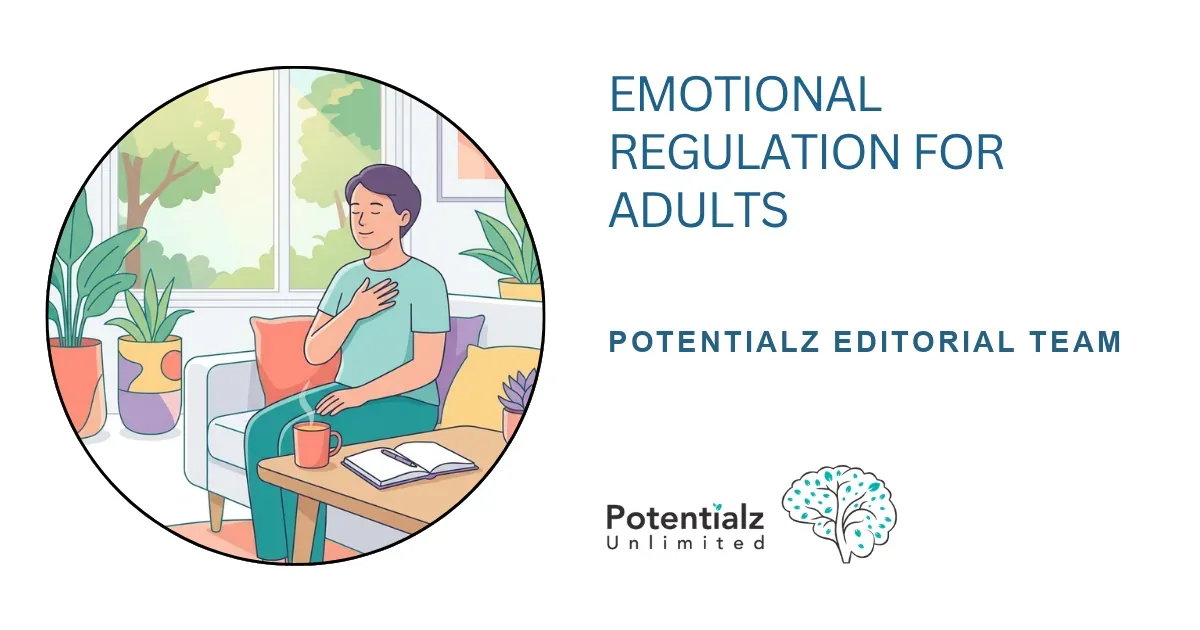
It is 9:14pm on a Sunday night, and you are sitting on the couch. Ten minutes ago, your phone buzzed. It was just an email preview about tomorrow’s meeting at work. The email was not even a hard one. But it landed like a small stone dropped into still water, and the ripples have not stopped. Your chest feels tight, and your jaw is clenched. Your mind keeps stacking worry on worry, and you feel tired out before Monday has even started.
You have tried many things over the years. You have tried to think your way out of it, and you have tried arguing with the worry. You have tried pushing through it, and you have tried ignoring it. You have tried a glass of wine, and you have tried scrolling on your phone until you are too tired to think. Each of these has helped a little, but only for a short while. None of them has changed the real pattern: a small feeling turns into a huge one, and the huge feeling takes over your whole evening.
If this sounds familiar, keep reading. Managing your emotions is a skill, not something you are simply born with or without. Getting overwhelmed by feelings is usually a learned pattern, often from a long time ago. A learned pattern can be unlearned, and it can be relearned in a new way, with the right practice. This article is a practical guide to what actually helps.
What Emotional Regulation Actually Is
Researchers use the term emotional regulation. It means how we shape which emotions we feel. It means when we feel them. It also means how strongly we show them (Gross, 2015). It does not mean feeling nothing. It does not always mean feeling less. Sometimes it means letting yourself feel more of an emotion, like sadness at a funeral. Sometimes it means sitting with a hard feeling, like staying calm in a difficult chat. And sometimes it means calming a feeling down, like cooling off before you send an angry text.
A well-known model by psychologist James Gross sorts these strategies. It sorts them by when they happen, from earliest to latest.
- Situation selection. Choosing which situations you walk into, or avoid.
- Situation modification. Changing something about the situation you are already in.
- Attentional deployment. Choosing where to focus your attention.
- Cognitive change (reappraisal). Changing how you think about what a situation means.
- Response modulation. Changing how you show or feel the emotion after it has already started. For example, bottling it up.
The first four strategies step in early. They step in before the feeling is at full strength. Research shows these early strategies tend to work better over time. They work better than the last one on the list: bottling feelings up. Bottling up feelings has real costs. It can affect your body. It can affect your thinking. It can affect your relationships too (Gross, 2015).
This matters a lot. When people are told to “regulate your emotions,” most reach straight for bottling up. Real regulation is different. It starts earlier. It starts before the feeling has already taken over.
How Regulation Develops — and Where It Comes Undone
Nobody is born knowing how to manage their emotions. This skill is built over years. It starts in the bond between a baby and the adults who care for them. A distressed baby is first calmed from the outside. They are held, rocked, and spoken to gently. Over thousands of small moments like this, a baby slowly learns to calm themselves. When this care is steady and caring, most children grow into adults with a solid set of coping skills. When it is patchy, missing, too much, or unsafe, those skills may not fully grow. Some people end up under-controlled. Others become over-controlled, holding everything in. Others learn to avoid feelings altogether.
One influential theory explains this well. It was developed by psychologist Marsha Linehan. It says struggling to manage emotions comes from two things mixing together. The first is being born more emotionally sensitive. The second is growing up in a home that dismissed, ignored, or punished emotions. Linehan calls this an “invalidating environment.” Neither factor alone is usually enough on its own. Together, they can shape an adult who feels things strongly. This adult reacts fast. They take a long time to settle down again. And they have not learned many tools for settling (Linehan, 1993, 2015).
In our clinical work with adults in Bella Vista, most people who come in with these struggles can name the part of their past that shaped the pattern. Often they can do this in the very first session. Naming it is not about blaming anyone. It is simply useful information. It helps make the treatment plan fit that person, rather than being generic.
Common Patterns of Dysregulation
Struggling with emotions does not look the same for everyone. Over time, a few common patterns tend to show up.
- Avoiding feelings. As soon as a strong feeling starts, the person turns to distraction, numbing out, or pulling away. They often describe feelings only in vague terms, like “bad”, “weird”, or “off.” This is because they have never sat with the feeling long enough to name it clearly.
- Holding everything in. The person looks calm and in control on the outside. But staying calm takes huge effort. It can eventually break down into burnout, physical symptoms, or a sudden emotional explosion.
- Getting stuck on anger. Anger becomes the only feeling the person lets themselves show. Sadness, fear, and feeling vulnerable all get pushed out through anger instead. This happens because anger feels safer.
- Switching off (dissociation). Under enough stress, the person mentally “leaves.” They zone out, feel numb, or lose track of time. This is the mind protecting itself, not a weakness. But it can get in the way of learning new skills.
- Being hard on yourself. The person uses harsh self-talk to force themselves to keep functioning. It works, in a way. But it slowly damages how they feel about themselves.
- Reacting big to small things. A small trigger leads to a big reaction. Often the person knows afterwards that the reaction was too big for what happened. But they do not know this in the moment.
Most people show a mix of these patterns. Learning to spot your own pattern is one of the first steps.
The DBT Skills Framework — Still the Most Complete Toolkit
Dialectical Behaviour Therapy is often called DBT. It was developed by psychologist Marsha Linehan. It is still the most complete, well-tested set of skills for managing emotions. It has been used across a wide range of problems (Linehan, 2015). DBT groups its skills into four parts.
Mindfulness. This is the base that the other three parts are built on. It means noticing what is happening inside you, without rushing to react to it. Skills here include “wise mind.” That is the balance between your emotional side and your logical side. Skills also include simply observing, describing, and taking part in the moment, without judging it. Mindfulness is not the same as meditation. But meditation practice can help build it. It is a set of everyday skills. These skills make every other tool work better.
Distress tolerance. This is for the moments when a feeling is already at full strength. The goal is simply to get through it without making things worse. One key skill is called TIPP. It stands for Temperature (splash cold water on your face), Intense exercise (a short, hard burst of movement), Paced breathing (slowing your breath), and Paired muscle relaxation (tensing and releasing your muscles). TIPP works fast to calm your body down. Other skills help with shorter-term coping. One of these, radical acceptance, helps you accept things you cannot change right now.
Emotion regulation. This is the medium-term work. It lowers how often you get overwhelmed. It changes patterns that are not helping. It includes checking the facts: does this feeling actually fit the situation? It includes opposite action: doing the opposite of what the feeling tells you to do, when the feeling does not fit. And it includes building basic physical habits — sleep, food, exercise, and staying off substances that affect your mood. These habits are sometimes grouped together as PLEASE skills.
Interpersonal effectiveness. Most struggles with emotion show up around other people. This part teaches how to ask for what you need. It teaches how to keep a relationship strong. It teaches how to keep your self-respect during hard conversations.
These skills come from Linehan’s DBT manual (Linehan, 2015). They can be learned one-to-one, in a DBT skills group, or a mix of both. In one-to-one sessions, our psychologists choose and order the skills to match each person’s own pattern. They do not simply teach everything at once.
The ACT Contribution — Willingness and Values
Acceptance and Commitment Therapy is often called ACT (Hayes et al., 2012). It adds something DBT does not focus on as much: why you are trying to manage your emotions in the first place. Instead of aiming to “get rid of the bad feeling,” ACT aims to help you make room for the feeling. This way, you can still move toward what matters to you.
ACT uses the idea of psychological flexibility. This means being fully present with what is happening. It means staying open to how you feel. And it means still moving toward the life you want. This is a fuller, more grown-up form of emotional regulation. It includes being willing to feel hard feelings, when the alternative is living a smaller life just to avoid them.
In practice, DBT and ACT work well together. DBT gives you the concrete tools. ACT gives you the reason to use them. This way, the skills serve the life you want. They do not just serve avoidance. Many of the adults our psychologists work with find the combination more helpful than either one alone.
Repetitive Negative Thinking — The Transdiagnostic Engine
One of the most important discoveries in emotion research has a plain meaning. It comes from the last twenty years of study. Thinking about a problem over and over does not solve it. Researchers call this pattern repetitive negative thinking. It covers both rumination and worry. It shows up across anxiety, depression, and stress-related problems (Ehring & Watkins, 2008).
Rumination means going over and over the causes and effects of something bad that already happened. Worry means going over and over the bad things that might happen in the future. Both feel useful in the moment. It feels like you are solving the problem. But both usually make the feeling last longer. They make it hit harder, not less. Some treatments target this pattern directly. These include metacognitive therapy and rumination-focused CBT. Both show real clinical benefit.
In everyday terms, this means one thing. “Thinking about it more” is almost never the answer to a hard feeling. A better approach is noticing when your mind is spinning in the same place. Then you deliberately shift — into action, into your senses, into something that matters to you. You do this even before your thoughts have found an answer.
Practical Skills You Can Start Today
Some of these skills work straight away, with practice. If you only try one thing from this article, start here.
- TIPP for sudden overwhelm. When you feel like you are at 8 out of 10 or higher, splash cold water on your face for 30 seconds. Or hold something cold against your eye area. Then do a short, intense burst of exercise, like a minute of star jumps. Then slow your out-breath. Make it longer than your in-breath, for two minutes. Your body calms down before your thoughts catch up.
- Grounding through your senses. Name five things you can see. Name four you can hear. Name three you can feel. Name two you can smell. Name one you can taste. It takes about two minutes, and you can repeat it. It helps stop your mind from spinning or switching off.
- Opposite action. Sometimes a feeling does not fit the situation. Or acting on it would make things worse. Notice what the feeling is telling you to do. Then do the opposite. Feeling like withdrawing? Reach out instead. Feeling like attacking? Soften your tone. Feeling like shutting down? Get moving.
- Check the facts. Before you react to a feeling, ask yourself some questions. What actually happened? What am I assuming? What evidence supports that? What goes against it? What would I say to a friend in this exact situation?
- The 90-second rule. The chemical wave of an emotion usually lasts about 90 seconds in your body. Stay with it. Notice where you feel it. Name it. Do not add more thoughts that fuel it. Then it will pass. Most emotional pain lasts longer because of how we react to the feeling. It is not because of the feeling itself.
- Look after the basics (PLEASE skills). Treat physical illness. Eat regularly. Avoid substances that shift your mood. Get enough sleep. Move your body. If you are under-slept, under-fed, or running on caffeine, it is much harder to manage your emotions. That is not a character flaw. It is simply how the body works.
- Name it to tame it. Name a feeling precisely. Try “this is disappointment, with a bit of shame mixed in.” This measurably makes it weaker. Vague labels like “bad” or “off” do not have the same effect.
When Professional Help Is Warranted
Working on these skills yourself can make a real difference. But it is worth getting professional support if any of these apply to you.
- Your struggle with emotions is seriously affecting your work, relationships, or daily life.
- The way you cope is harmful. For example, self-harm, substance use, disordered eating, aggression, or avoidance that is costing you things that matter.
- Trauma sits underneath the pattern, and it comes up whenever you try to work on regulation.
- You have tried self-help skills for a good while without real progress.
- You are also dealing with significant depression, anxiety, or another mental health condition alongside this.
- Old patterns keep coming back under stress, even though you are genuinely trying.
If you are ever in serious distress, or having thoughts of not wanting to be here, please reach out for urgent help right now. Call Lifeline on 13 11 14. Contact Beyond Blue on 1300 22 4636. In an emergency, call 000.
How We Work with Emotion Regulation
In our Bella Vista practice, most work on emotion regulation sits across DBT, ACT, and CBT. EMDR is added when trauma is a major part of the picture. Early sessions focus on understanding the person’s specific pattern. We map what shapes it, both from the past and the present. We look at the strategies, helpful and unhelpful, that have built up over the years.
Middle sessions build skills step by step. Mindfulness comes first. Then distress tolerance, for sudden overwhelm. Then emotion regulation, for everyday patterns. Then interpersonal effectiveness, for relationships. Skills are practised between sessions. They are checked in on together, and refined over time.
Where repetitive negative thinking is the main issue, we work directly on your relationship with your own thoughts. Where harsh self-talk has become the main coping strategy, ACT-based self-compassion work often makes a real difference. Where trauma is part of the picture — which it often is — EMDR can be added. This helps work through specific memories, once things feel more stable.
Progress is measured in practical terms. It is completely normal to plateau after early gains. It is normal for old patterns to come back under stress. The goal is not to get rid of difficult emotions altogether. That would not be possible, or even helpful. The goal is to build a reliable ability to notice a feeling, sit with it, and still act skilfully while it is there.
Cultural background matters too. In many South Asian and other cultural backgrounds, showing emotion was actively discouraged growing up. This was especially true for men, and especially around vulnerability. Many adults arrive in therapy carrying years of learned suppression. Alongside this, they carry newer messages telling them to “just feel their feelings.” Working with a clinician who understands both of these worlds — and does not judge either one — often removes barriers. These are barriers that have made it hard to manage emotions well for a long time.
Common Companion Presentations
Struggles with emotion rarely show up completely on their own. In our practice, we most often see them alongside these.
- Anxiety disorders. Including generalised anxiety, social anxiety, and panic.
- Depression. Especially patterns involving ongoing rumination.
- Trauma and complex PTSD. Often the underlying reason for long-term struggles with emotion.
- ADHD. Strong emotional reactions are a core part of adult ADHD, and are often missed.
- Eating disorders. Where food, or restricting food, has become the main way of coping with feelings.
- Relationship difficulties. Struggles with emotion often show up most clearly in close relationships.
Treating the struggle with emotions on its own, without looking at what else is going on, usually means the pattern keeps coming back.
How Potentialz Unlimited Can Help
Potentialz Unlimited is a clinical psychology practice based in Bella Vista, NSW. We support adults across the Hills District — Norwest, Castle Hill, Kellyville, Baulkham Hills, Rouse Hill, and Glenhaven.
Our clinical psychologist has over 25 years of experience. They offer skills-focused work for adult emotional regulation. This includes DBT skills (mindfulness, distress tolerance, emotion regulation, interpersonal effectiveness). It includes ACT, for values-based living with difficult feelings. It includes CBT, for the thought patterns that maintain dysregulation. And it includes EMDR, where trauma sits underneath. Sessions are available in English, Hindi, Punjabi, and Urdu. Medicare rebates are available with a GP Mental Health Care Plan. You can contact the clinic or book directly at live.potentialz.com.au.
References
Aldao, A., Nolen-Hoeksema, S., & Schweizer, S. (2010). Emotion-regulation strategies across psychopathology: A meta-analytic review. Clinical Psychology Review, 30(2), 217–237. https://doi.org/10.1016/j.cpr.2009.11.004
Ehring, T., & Watkins, E. R. (2008). Repetitive negative thinking as a transdiagnostic process. International Journal of Cognitive Therapy, 1(3), 192–205. https://doi.org/10.1521/ijct.2008.1.3.192
Gross, J. J. (2015). Emotion regulation: Current status and future prospects. Psychological Inquiry, 26(1), 1–26. https://doi.org/10.1080/1047840X.2014.940781
Hayes, S. C., Strosahl, K. D., & Wilson, K. G. (2012). Acceptance and Commitment Therapy: The process and practice of mindful change (2nd ed.). Guilford Press.
Kraiss, J. T., ten Klooster, P. M., Moskowitz, J. T., & Bohlmeijer, E. T. (2020). The relationship between emotion regulation and well-being in patients with mental disorders: A meta-analysis. Comprehensive Psychiatry, 102, 152189. https://doi.org/10.1016/j.comppsych.2020.152189
Linehan, M. M. (1993). Cognitive-behavioral treatment of borderline personality disorder. Guilford Press.
Linehan, M. M. (2015). DBT skills training manual (2nd ed.). Guilford Press.
Noetel, M., Sanders, T., Gallardo-Gómez, D., Taylor, P., del Pozo Cruz, B., van den Hoek, D., Smith, J. J., Mahoney, J., Spathis, J., Moresi, M., Pagano, R., Pagano, L., Vasconcellos, R., Arnott, H., Varley, B., Parker, P., Biddle, S., & Lonsdale, C. (2024). Effect of exercise for depression: Systematic review and network meta-analysis of randomised controlled trials. BMJ, 384, e075847. https://doi.org/10.1136/bmj-2023-075847
Nolen-Hoeksema, S., Wisco, B. E., & Lyubomirsky, S. (2008). Rethinking rumination. Perspectives on Psychological Science, 3(5), 400–424. https://doi.org/10.1111/j.1745-6924.2008.00088.x
Sloan, E., Hall, K., Moulding, R., Bryce, S., Mildred, H., & Staiger, P. K. (2017). Emotion regulation as a transdiagnostic treatment construct across anxiety, depression, substance, eating and borderline personality disorders: A systematic review. Clinical Psychology Review, 57, 141–163. https://doi.org/10.1016/j.cpr.2017.09.002
Wells, A. (2009). Metacognitive therapy for anxiety and depression. Guilford Press.
Need Professional Support?
If you're experiencing mental health concerns, our team is here to help.