Key Takeaways
- Many teenagers disengage from traditional talk therapy because sitting still and talking is not developmentally natural for adolescents.
- Holistic integrative counselling combines movement, breathwork, creative expression, mindfulness, and narrative therapy alongside conversation.
- Common teen presentations include anxiety, social media comparison, identity confusion, academic pressure, family conflict, sleep difficulties, and low self-worth.
- CALD teenagers face additional pressures navigating between cultural expectations and Australian peer culture.
- Counsellors and psychologists have different scopes of practice — knowing which is appropriate for your teenager matters.
I’ve spoken with many parents who begin the conversation the same way.
“My teenager is struggling. But I don’t think they’ll actually talk to a therapist.”
And I always want to say — that makes a lot of sense. Not because your teenager is being difficult. But because the traditional therapy model, sitting in a chair for 50 minutes talking to a stranger about your feelings, genuinely isn’t how most teenagers process what’s happening inside them. It’s not designed for how the adolescent brain actually works.
The good news is that counselling doesn’t have to look like that.
Integrative holistic counselling meets teenagers where they actually are. And in my experience, young people who “won’t talk to anyone” often open up when the approach is right.
Why Traditional Talk Therapy Can Miss the Mark
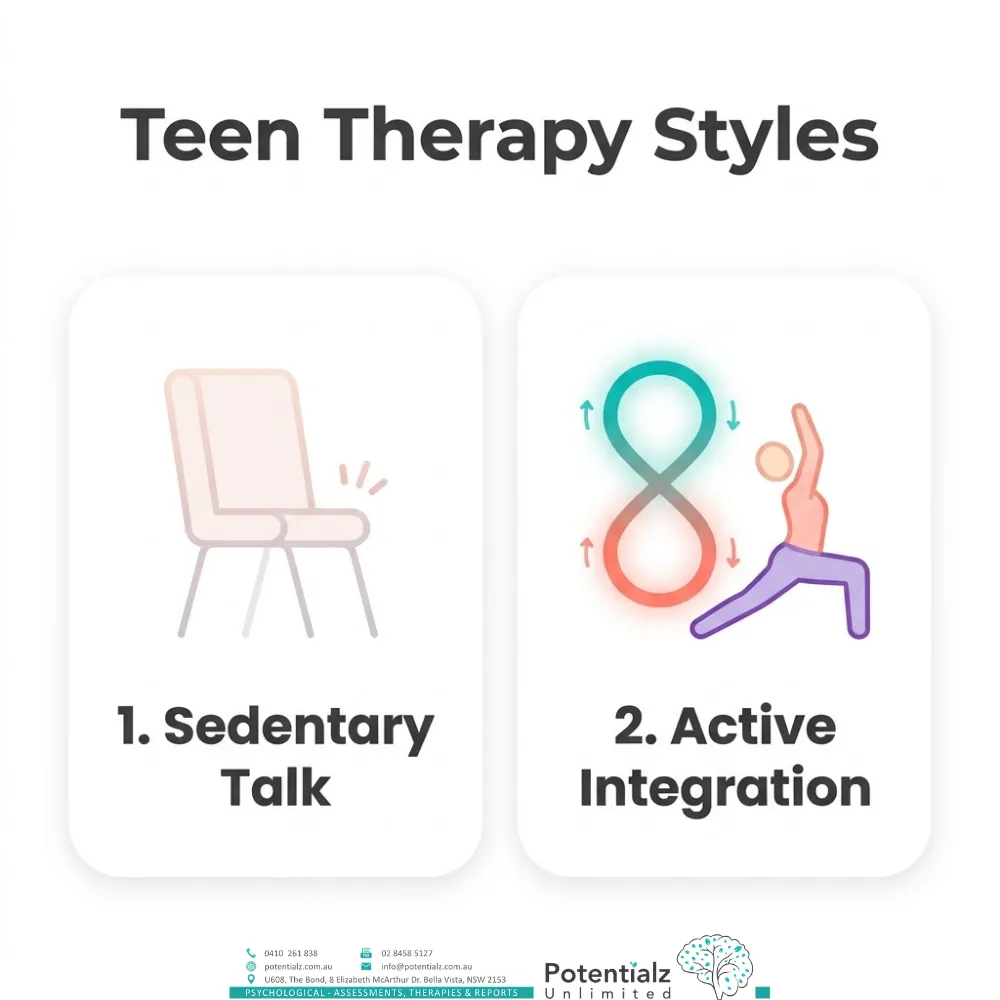
Talking therapies have real evidence behind them for adults. And they can absolutely work with teenagers — when they’re delivered in ways that account for adolescent development. The problem is when they aren’t.
Imagine being a teenager — your brain is wired for movement, experience, and social connection. You’re in the middle of working out who you are. You’re intensely aware of how you’re being perceived. And now an adult is asking you to sit still, make eye contact, and talk about your feelings for 50 minutes.
For many teenagers, that feels like a version of every uncomfortable conversation they were already trying to avoid.
Research by Shirk et al. (2011) found that therapeutic alliance with adolescents is a significantly stronger predictor of outcomes than it is with adults — and that alliance with teenagers is much harder to build through purely verbal, question-and-answer interaction. Engagement requires active collaboration, shared activities, and a counsellor demonstrating genuine curiosity about the teenager’s world rather than about their symptoms.
This doesn’t mean abandoning evidence-based practice. It means delivering it in forms that a young person can actually receive.
The Integrative Holistic Alternative
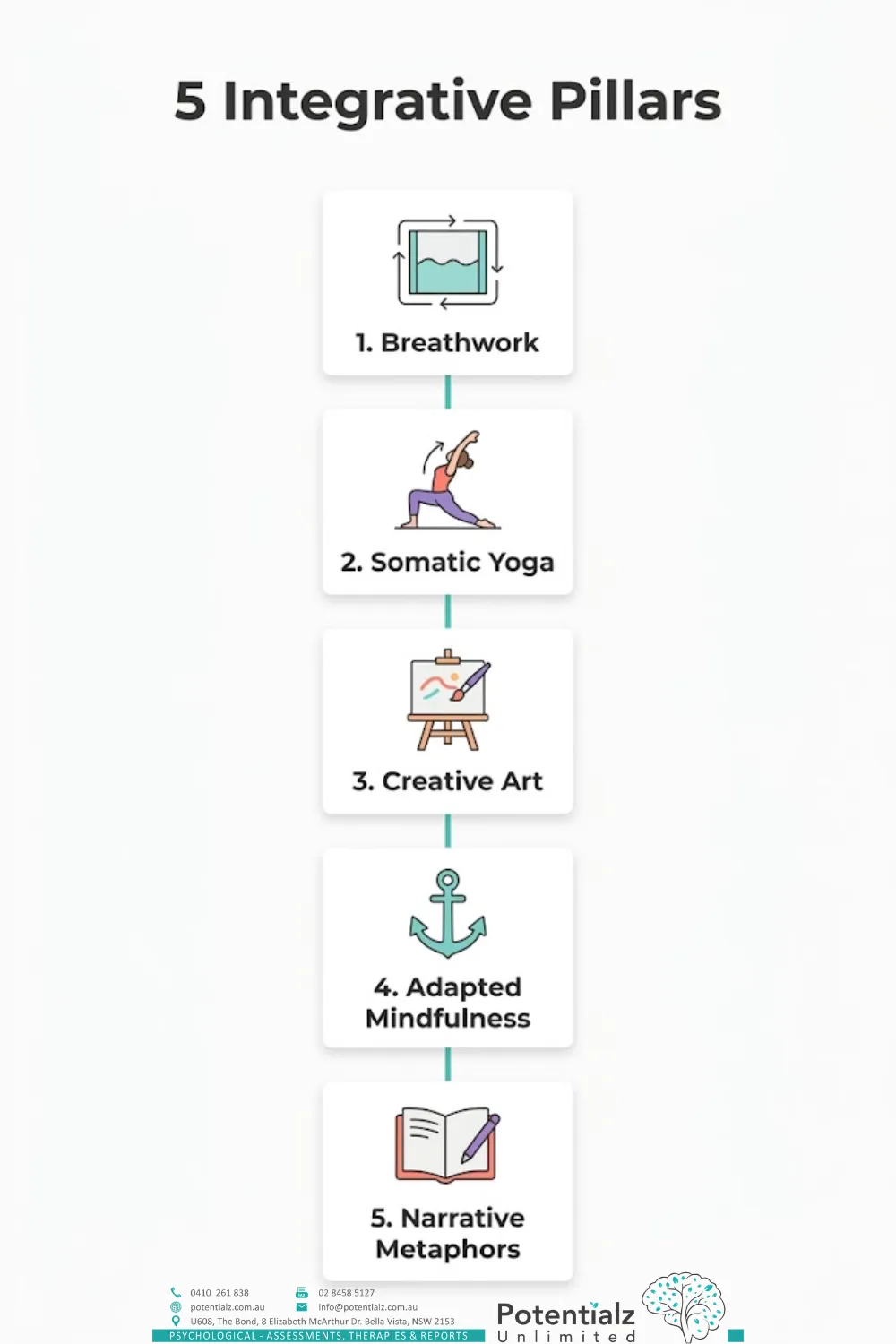
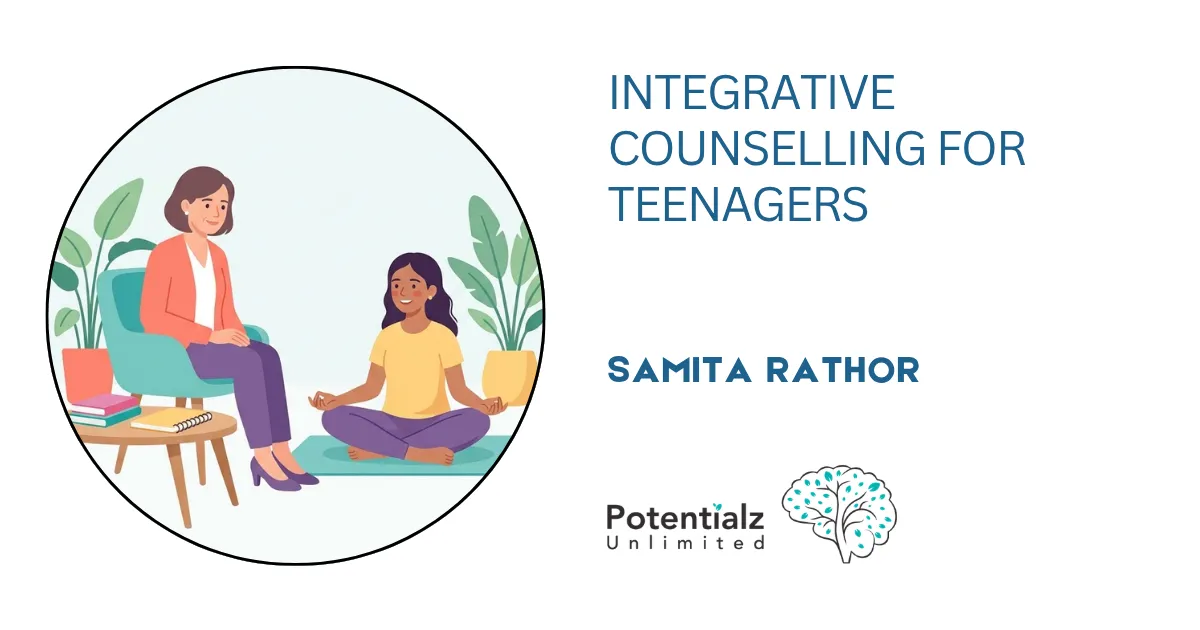
An integrative holistic approach to teen counselling weaves together several modalities alongside conversation:
Breathwork and nervous system regulation: Teenagers experiencing anxiety, panic, anger, or emotional flooding benefit enormously from learning how to use their breath to regulate their physiological state. Techniques like box breathing and Bhramari humming breath are accessible, practical, and can be used by teenagers outside of sessions — during exam stress, before a difficult social situation, or when things escalate at home.
Movement and yoga-informed practice: The adolescent body is not designed to sit still. Movement-based activities — even brief, chair-based stretching or yoga sequences — help discharge the nervous system activation that makes verbal processing difficult. For teenagers whose sense of self is closely tied to their body (which is most teenagers, navigating puberty), somatic practices that build body awareness and positive body relationship have particular relevance.
Creative expression: Art, writing, music, and narrative creation offer alternative languages for experiences that haven’t yet found words. A teenager who cannot describe their anxiety can often draw it, write a character who experiences it, or express it in a metaphor. And then the counsellor can work with that.
Mindfulness adapted for adolescents: Standard adult mindfulness practices can feel long, boring, or confronting for teenagers — particularly those with trauma histories for whom focusing inward feels unsafe. Adapted mindfulness — shorter practices, movement-based, eyes-open options, sensory anchoring — makes these tools genuinely useful rather than frustrating.
Narrative therapy: Narrative approaches invite teenagers to see themselves as the author of their own story rather than as a problem to be fixed. Externalising the problem — “Anxiety is the thing that shows up before tests. It’s not who you are” — creates the kind of respectful distance that helps teenagers engage. This approach is particularly powerful for identity work in adolescence, which is inherently about constructing and revising a sense of self.
Common Presentations in Teenager Clients
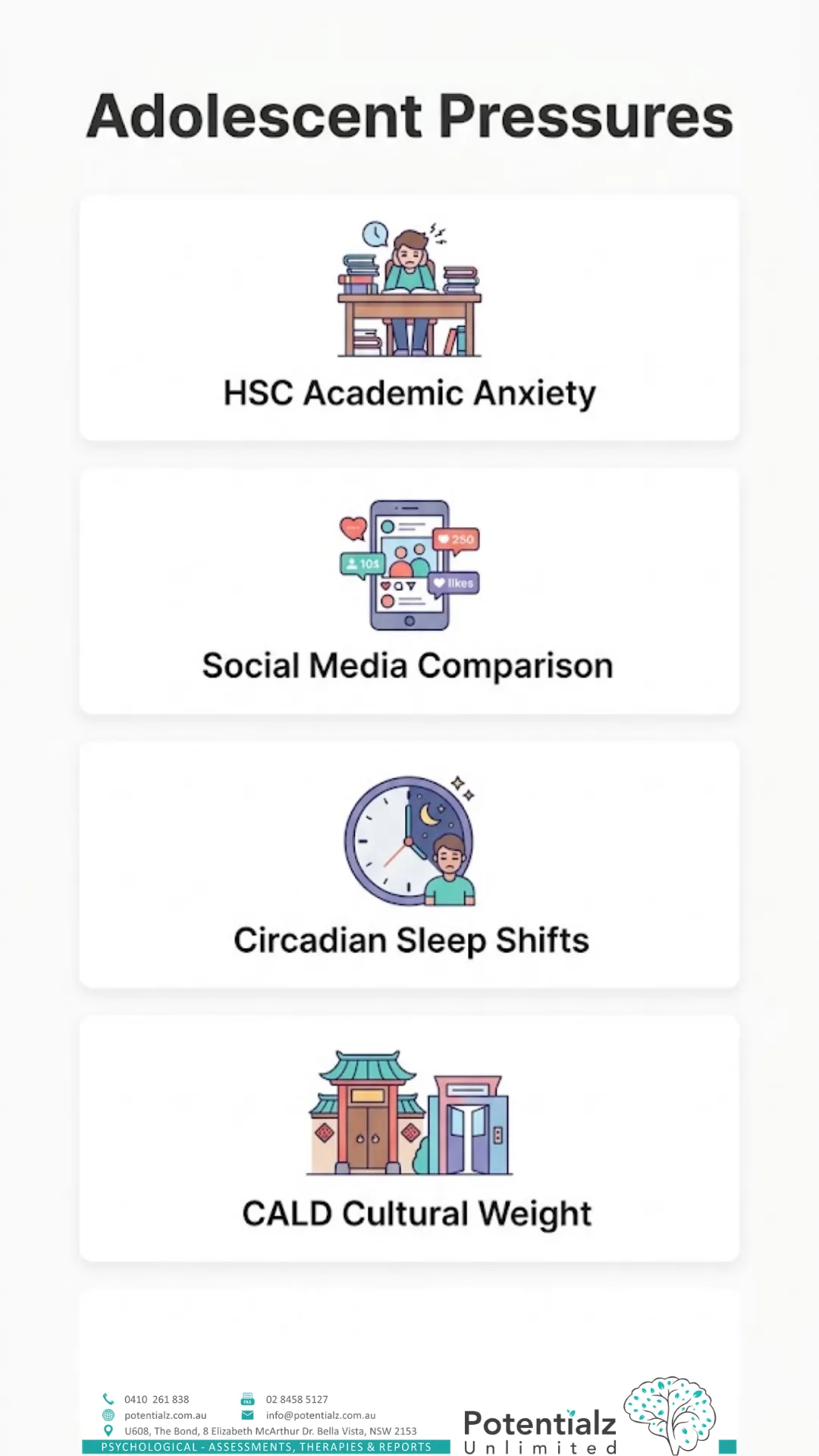
Anxiety and Academic Pressure
Anxiety is the most common presentation in adolescent mental health settings across Australia. And in my experience, the academic pressure many teenagers are carrying right now is unlike anything previous generations faced.
The HSC era — ATAR rankings, parental expectations, social comparisons, and an increasingly competitive landscape — has reached levels that many young people are genuinely struggling to manage. Integrative approaches teach teenagers specific skills for managing pre-exam physiology, restructuring catastrophic thinking about outcomes, and building realistic perspective about the relationship between academic performance and life quality.
Social Media Comparison and Low Self-Worth
Have you ever noticed what social media does to a teenager’s sense of worth? It’s not just screen time — it’s constant comparison to curated highlight reels. Follower counts as social currency. No private space left for identity development.
The research on this is extensive (Twenge et al., 2018). Conditions of chronic comparison, low self-worth, and mood instability follow. Counselling in this space focuses on media literacy, values clarification, building identity anchors that aren’t contingent on external validation, and creating genuine space for self-knowledge away from screens.
Identity Confusion and Belonging
Adolescence is fundamentally about identity formation. Who am I? Where do I belong? What do I believe? These are not problems to be solved — they are developmental tasks. But when identity exploration is complicated by neurodivergence, sexuality, gender, family dysfunction, migration history, or cultural dislocation, the process can become genuinely painful. Holistic counselling creates space for identity exploration without prescribing conclusions.
Family Conflict
Family tension is almost universal in adolescence and not always a sign of pathology. But when conflict is chronic, involves emotional or other forms of harm, or when communication has broken down completely, individual work with the teenager needs to be situated in a broader family understanding. I always hold the family system in mind, even when working individually with a young person.
Sleep Difficulties
Poor sleep in teenagers is epidemic — driven by blue light exposure, late-night phone use, academic pressure, anxiety, and the genuine circadian shifts in adolescent biology that make early school starts challenging.
Sleep disruption feeds every other mental health presentation. Anxiety worsens. Mood drops. Concentration fails. Emotional regulation degrades. Addressing sleep hygiene, screen habits, and bedtime anxiety can have cascading benefits across everything else.
Cultural Pressures on CALD Teenagers
Here’s something that often doesn’t get named in mainstream adolescent mental health settings — the particular weight that second-generation Australians from CALD backgrounds are carrying.
At home, there may be deeply held cultural values around family loyalty, education as the path to security, marriage within the community, gender roles, and deference to elders. At school and with peers, they encounter Australian social norms that may sit in direct tension with these expectations — norms around independence, social life, romantic relationships, gender expression, and individual self-determination.
The teenager sits at the intersection of these two worlds, often without permission to acknowledge the conflict. Admitting to parents that Australian peer culture feels more natural risks family rupture. Admitting to Australian peers that family obligations constrain choices risks social rejection. The inner conflict is constant and exhausting.
That’s not weakness. That’s an incredibly difficult position to be in.
Counselling in this context requires genuine cultural competence — not a superficial familiarity with cultural stereotypes, but a nuanced understanding of how cultural identity operates in everyday life, and the ability to hold space for ambivalence about culture without judgment in either direction.
I conduct sessions in English, Hindi, Tamil, Kannada, and Urdu, and I’ve worked extensively with CALD communities across Australia. Cultural safety is not an add-on in my practice — it’s foundational.
Developmental Appropriateness of Different Modalities
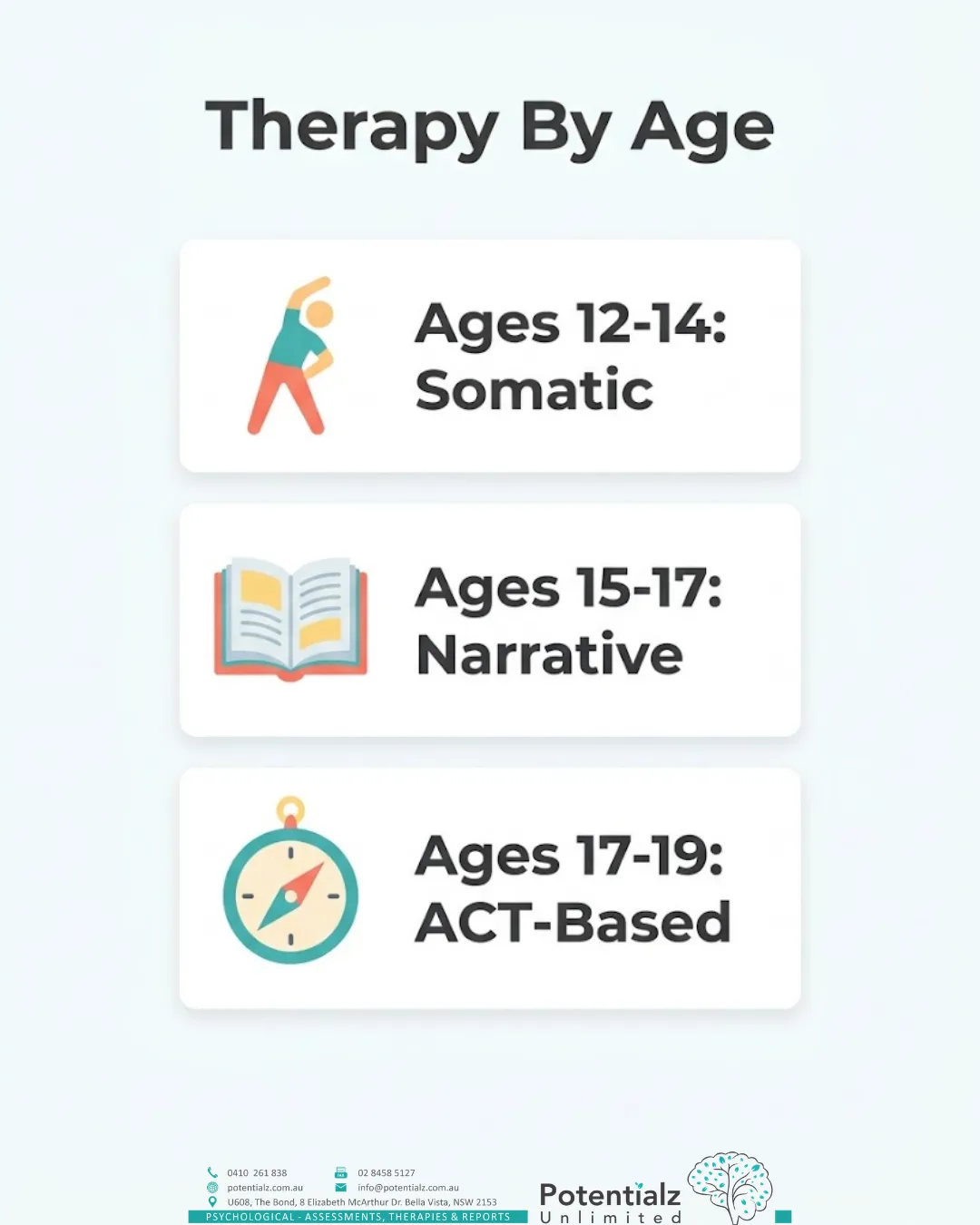
Not every approach is appropriate for every stage of adolescent development. Here’s a rough guide:
Early adolescence (12–14 years): This phase involves significant physical change and a heightened sensitivity to peer approval. Body-based approaches — movement, breath, somatic awareness — are particularly useful because they work with, rather than against, the intense body-consciousness of puberty. Sessions tend to be shorter and more activity-based. Verbal processing is woven in rather than dominant.
Middle adolescence (15–17 years): Identity work becomes central. Narrative therapy, values clarification, and creative expression are highly effective. This is often when teenagers begin to develop more genuine capacity for reflective verbal processing, particularly when the therapeutic relationship is strong.
Late adolescence (17–19 years): Young people in this phase often engage with more adult-style counselling approaches, particularly around future-focused anxiety, relationships, and the transition into adulthood. ACT-based work around values and acceptance is often well received.
When to Refer to a Psychologist Rather Than a Counsellor
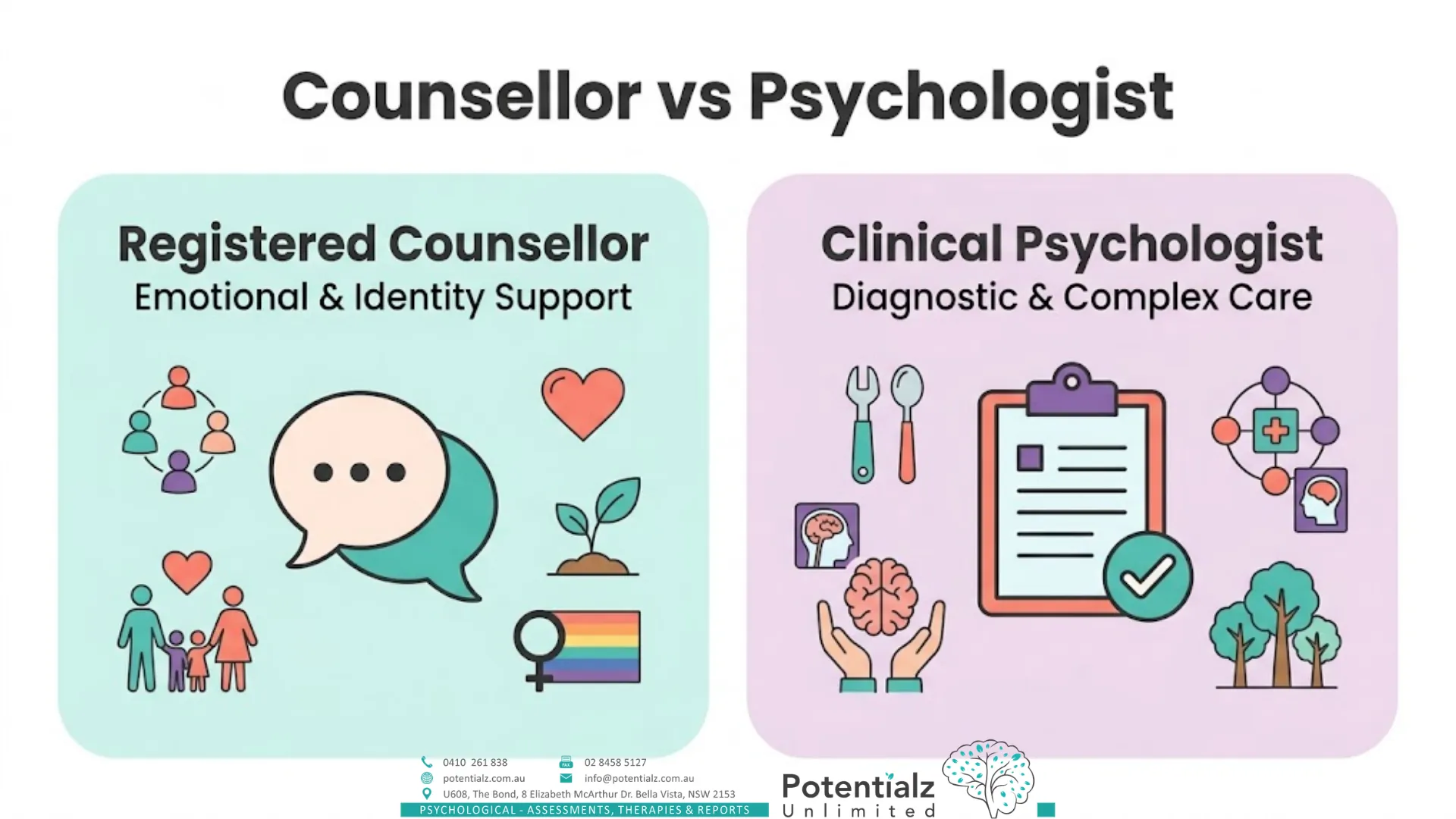
This is an important distinction for parents to understand. Counsellors and psychologists have different scopes of practice.
A counsellor is appropriate for most presentations involving emotional difficulties, family stress, identity work, relationship problems, mild to moderate anxiety and depression, and general wellbeing support. Counsellors are not trained to diagnose mental health conditions.
A psychologist with adolescent training is recommended when:
- There are concerns about a diagnosable condition such as an eating disorder, OCD, ADHD, autism spectrum, or a personality disorder requiring diagnosis
- Medication assessment or psychiatric evaluation may be needed (requiring a GP referral and often a psychiatrist)
- Presentations are severe, complex, or not responding to counselling
- There has been significant trauma requiring specialised trauma therapy
In practice, counsellors and psychologists work best as part of a collaborative network. If you come to Potentialz Unlimited and I determine that your teenager’s needs exceed the scope of counselling, I’ll be transparent about that and assist with appropriate referral. The priority is always the young person’s wellbeing.
How Potentialz Can Help
If your teenager is struggling — and you’re not sure where to start — I’d invite you to reach out.
At Potentialz Unlimited in Bella Vista, I offer integrative holistic counselling for teenagers that goes beyond traditional talk therapy. Drawing on evidence-based modalities alongside breathwork, movement, mindfulness, creative expression, and narrative approaches, sessions are designed to actually engage young people in the work of understanding themselves and building resilience.
I often recommend parents book an initial consultation first. We’ll talk through what’s happening, what your teenager has been willing to say and not say, and what an approach might look like that they could actually engage with. You don’t need to have this figured out before you call. That’s what the consultation is for.
Appointments are available in person at Unit 608, 8 Elizabeth Macarthur Drive, Bella Vista NSW 2153, as well as via telehealth. After-hours appointments are available for teenagers whose school schedules make daytime sessions difficult.
For families concerned about anxiety in young people, our anxiety support services provide more detailed information about available approaches.
Book: live.potentialz.com.au | Call: 0410 261 838
Potentialz Unlimited | Unit 608, 8 Elizabeth Macarthur Drive, Bella Vista NSW 2153 Hours: Mon–Fri 10am–7pm | Saturday & after-hours available | Telehealth via phone or Zoom Languages: English, Hindi, Tamil, Kannada, Urdu
References
Shirk, S. R., Karver, M. S., & Brown, R. (2011). The alliance in child and adolescent psychotherapy. Psychotherapy, 48(1), 17–24. https://doi.org/10.1037/a0022181
Twenge, J. M., Martin, G. N., & Campbell, W. K. (2018). Decreases in psychological well-being among American adolescents after 2012 and links to screen time during the rise of smartphone technology. Emotion, 18(6), 765–780. https://doi.org/10.1037/emo0000403
White, M., & Epston, D. (1990). Narrative means to therapeutic ends. Norton.
Kabat-Zinn, J. (2003). Mindfulness-based interventions in context: Past, present, and future. Clinical Psychology: Science and Practice, 10(2), 144–156. https://doi.org/10.1093/clipsy/bpg016
Siegel, D. J. (2013). Brainstorm: The power and purpose of the teenage brain. Scribe Publications.
AHPRA Disclaimer: Samita Rathor is an Accredited Counsellor and Psychotherapist and is not a registered psychologist under AHPRA. The information in this article is for general educational purposes only and does not constitute medical or psychological advice. If you are concerned about your teenager’s mental health, please consult a qualified health professional. In a mental health emergency, call Lifeline on 13 11 14, Kids Helpline on 1800 55 1800, or triple zero (000).
Crisis Resources: If your teenager or a young person you know needs immediate support — Kids Helpline 1800 55 1800 (24/7, for 5–25 year olds), Lifeline 13 11 14, Beyond Blue 1300 22 4636, headspace (headspace.org.au), or Emergency 000.
Related Reading
Knowledge Check Quiz
Test what you have just read. Choose your answer for each question, then submit to reveal the answers and your score.
Need Professional Support?
If you're experiencing mental health concerns, our team is here to help.